

Think a late shipment is a one-off? Not anymore.
Walmart rewired seller rules in 2026: eight hard thresholds, rolling 30- and 60-day windows, and fast algorithmic enforcement that can suppress listings.
Most seller-fulfilled orders now count against strict rates for cancellations, on-time delivery, tracking, refunds, returns, INR, response, and negative feedback, while WFS orders mostly don’t.
This post explains what changed, who gets hit, and what to do first: audit your top 20 SKUs against the new thresholds, fix tracking flows, and consider moving fragile SKUs to WFS.
High-Level Overview of the 2026 Walmart Marketplace Seller Performance Standards
Walmart shifted to a stricter, more data-driven seller performance framework in 2026. The new system tracks sellers using eight core metrics. Each one’s tied to a specific numeric threshold and rolling measurement window. Performance data rolls continuously across the last 30 or 60 days depending on the metric, so recent failures hit your account health faster than before.
Orders fulfilled through Walmart Fulfillment Services don’t count toward most seller-fulfilled performance calculations, which can protect brands that go that route. Sellers who fail one or more thresholds get notifications, see listings suppressed, face suspension, or lose selling privileges permanently if things aren’t fixed.
The eight 2026 performance metrics and their thresholds are:
- Cancellation Rate: ≤ 2%, measured over 30 days
- On-Time Delivery Rate: ≥ 90%, measured over 30 days
- Valid Tracking Rate: ≥ 99%, measured over 30 days
- Refund Rate: ≤ 6%, measured over 30 days
- Seller Response Rate: ≥ 95%, measured over 30 days (must respond within 48 hours)
- Negative Feedback Rate: ≤ 2%, measured over 60 days
- Return Rate: ≤ 6%, measured over 60 days
- Item Not Received Rate (INR): ≤ 2%, measured over 60 days
If you ship 1,000 orders over the last 30 days and cancel 21 of them, your cancellation rate hits 2.1 percent and you breach the threshold. The rolling window means every day adds new orders and drops old ones. Small, recurring failures compound quickly.
Comparison of 2026 Seller Performance Standards vs Prior Walmart Requirements

Walmart previously issued less frequent warnings, didn’t enforce numeric targets as tightly, and relied on subjective case-by-case reviews. Before 2026, return and INR data existed but weren’t published as hard thresholds in the Seller Center. Negative Feedback Rate was tracked informally but never enforced as a performance metric.
Starting in 2026, Walmart introduced transparent thresholds, rolling measurement windows, and immediate algorithmic enforcement. The introduction of Return Rate and INR on January 29, 2026 shifted part of the evaluation from shipping execution to post-delivery customer experience. Sellers now answer not just for how they ship, but for what buyers receive and how accurately listings matched the product.
| Standard (Pre-2026) | Standard (2026) | Strategic Impact |
|---|---|---|
| No published numeric thresholds for most metrics | Eight hard thresholds published; rolling 30 or 60 days | Sellers must monitor continuously; failures trigger fast enforcement |
| Negative Feedback informally tracked | Negative Feedback Rate ≤ 2% enforced with 60-day window | Product quality and listing accuracy now drive account health |
| Return and INR data not enforced as metrics | Return Rate ≤ 6%; INR ≤ 2%; both 60-day rolling windows | Post-delivery experience becomes a compliance metric; packaging, QC, and tracking rigor now required |
| Slower, case-by-case enforcement | Automated notifications; escalation to suppression, suspension, termination | Less subjective; faster remediation required or listings disappear |
Deep Dive Into Each 2026 Walmart Seller Metric and Its Operational Impact

Cancellation Rate
Cancellation Rate measures the percentage of orders you cancel after a customer places them. Walmart sets the threshold at 2 percent or lower, measured over a rolling 30-day window. Cancellations usually happen when inventory isn’t synced in real time, when you oversell a SKU across channels, or when you set ship windows you can’t meet and then cancel to avoid late shipments.
Common causes of cancellation failures:
- Inventory sync latency between your WMS and Walmart listings
- Overselling across multiple marketplaces without real-time stock reconciliation
- Conservative ship windows that you can’t meet when volume spikes
On-Time Delivery Rate
On-Time Delivery Rate measures the percentage of orders that reach customers by the promised delivery date. Walmart requires 90 percent or higher, calculated over the last 30 days. Failures usually trace to late carrier handoff, missed scans at drop-off locations, or unrealistic delivery windows set on your listings.
Valid Tracking Rate
Valid Tracking Rate measures the percentage of orders that have valid, working tracking numbers uploaded at the right time. The threshold is 99 percent or higher over a rolling 30-day window. You must upload tracking only after the carrier confirms handoff. Invalid tracking includes numbers that don’t exist in the carrier’s system, numbers entered before actual pickup, or numbers from carriers Walmart doesn’t recognize.
Common causes of tracking failures:
- Uploading tracking immediately after label creation but before carrier pickup
- Using regional or freight carriers not integrated with Walmart’s tracking validation
- Manual entry errors in tracking numbers
Refund Rate
Refund Rate measures the percentage of delivered orders where Walmart issues a refund to the customer. The threshold is 6 percent or lower, measured over 30 days. This metric covers seller-caused refunds. Damaged items, incorrect products shipped, wrong sizes or variants, and missing components.
Seller Response Rate
Seller Response Rate tracks the percentage of customer messages you answer within 48 hours. Walmart requires 95 percent or higher over a rolling 30-day window. If you receive 200 customer messages in the measurement window, you must respond to at least 190 within two days.
Common causes of response failures:
- Centralized support teams that don’t monitor Walmart message queues
- Weekend or holiday staffing gaps
- Manual workflow without alerts when messages arrive
Negative Feedback Rate
Negative Feedback Rate measures the percentage of delivered orders where customers leave negative product or seller reviews. Walmart introduced this as an enforced metric for the first time in 2026, with a threshold of 2 percent or lower over a rolling 60-day window. Feedback failures usually stem from product quality issues, inaccurate listing descriptions or images, missing components, or poor packaging that leads to damage in transit.
Return Rate
Return Rate measures the percentage of delivered orders that customers return. The threshold is 6 percent or lower, measured over the past 60 days. Walmart announced this metric on January 29, 2026. Returns spike when listing titles, images, or specifications don’t match what arrives, when sizing charts are wrong, or when packaging fails to protect the product.
Item Not Received Rate (INR)
Item Not Received Rate measures the percentage of orders where customers report they never received the item. Walmart requires 2 percent or lower, calculated over a rolling 60-day window. INR was added to the performance framework on January 29, 2026. INR reports usually come from missing or invalid tracking, incorrect ship-from locations or carrier selection, late shipments that customers assume are lost, or delivery confirmation failures.
Enforcement Actions and 2026 Account Health Consequences for Walmart Sellers
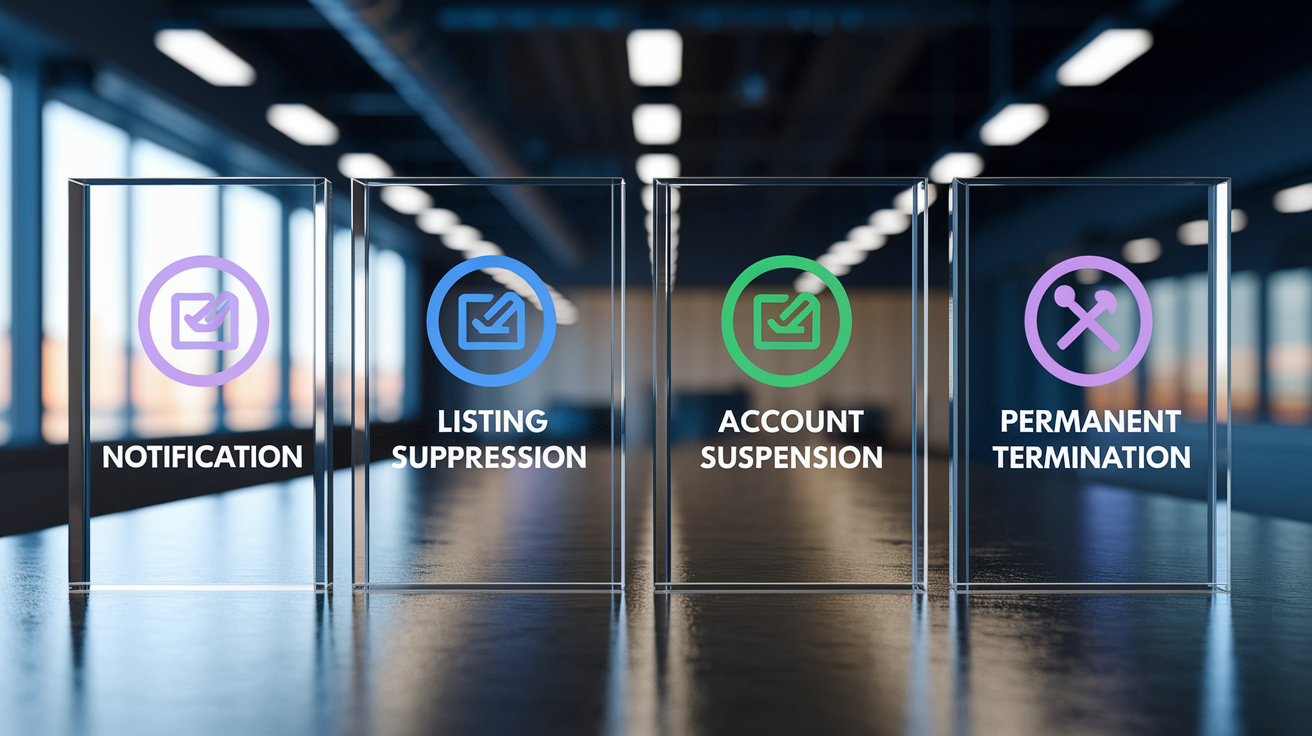
When you fail one or more thresholds, Walmart follows a tiered enforcement sequence. The speed of escalation depends on how many metrics you breach, how far below the threshold you fall, and whether you’ve been flagged before.
The first action is a notification alert. Walmart sends an email or posts a message in Seller Center identifying the metric you failed, showing your current performance number, and listing recommended corrective steps. You typically have a short window, sometimes as little as a few days, to show measurable improvement.
If you don’t fix the issue or if performance worsens, Walmart suppresses your seller-fulfilled listings. Suppressed listings disappear from search and browse. Customers can’t buy them. If you use WFS for some SKUs, those listings usually stay live because WFS orders don’t count toward most seller-fulfilled metrics. Continued failure leads to account suspension, which removes all your listings from the marketplace and freezes your selling ability. The final step is permanent termination, which revokes your selling privileges with no option to appeal or reactivate.
The enforcement sequence is:
- Notification Alert: Email and Seller Center message identifying failed metrics and required corrective actions; you have a short remediation window.
- Listing Suppression: Seller-fulfilled listings removed from search; WFS listings may remain active; you can still ship open orders but can’t receive new ones on suppressed SKUs.
- Account Suspension: All listings removed; selling frozen until you submit and Walmart approves a plan of action.
- Permanent Termination: Selling privileges revoked; no appeal allowed; account cannot be reinstated.
Appeal, Reinstatement, and Remediation Expectations Under the 2026 Rules

Walmart allows appeals for suppression and suspension. You can’t appeal a termination. To appeal successfully, you must submit a written plan of action that describes the root cause of each failed metric, the specific operational changes you made to fix it, and the preventative safeguards you put in place to stop it from happening again.
Appeals fail when sellers don’t include documentation showing the fixes are real, when the plan is vague about what changed operationally, or when the seller blames Walmart, customers, or carriers instead of taking ownership. Walmart reviews appeals manually, which can take several days.
Required elements in a successful appeal:
- Root cause analysis: Identify the operational breakdown that caused the metric failure (example: “Inventory sync ran once daily; oversells occurred between sync cycles”)
- Corrective actions taken: Describe specific changes already implemented (example: “Moved to real-time API sync; added SKU-level safety stock buffer of 5 units”)
- Preventative safeguards: Explain new monitoring or controls to catch issues early (example: “Daily dashboard checks at 9 AM; automated alert when cancellation rate exceeds 1.5%”)
- Supporting documentation: Attach screenshots of updated workflows, SOPs, or system configurations that prove changes are live
How Sellers Should Prepare for the 2026 Walmart Performance Standards

Preparation starts with continuous monitoring and ends with operational changes that keep metrics well below Walmart’s thresholds. Sellers who wait for a notification alert have already lost time, and suppression can happen quickly.
Recommended proactive strategies:
- Set up a daily performance dashboard that shows all eight metrics and their rolling 30 or 60-day values; review every morning before fulfillment starts
- Configure automated alerts when any metric crosses 75 to 80 percent of Walmart’s threshold (example: alert at 1.5 percent cancellation rate, 4.5 percent return rate, 1.5 percent INR)
- Audit your top 20 SKUs by order volume quarterly; fix listing inaccuracies, update images, correct sizing charts, and add missing product details
- Move high-risk SKUs to WFS if cancellations, returns, or INR are chronically elevated; WFS orders don’t count against most seller-fulfilled metrics
- Implement a QC sampling program. Inspect at least 5 percent of outbound shipments for accuracy, packaging quality, and completeness
- Require carriers to provide confirmed handoff scans before you upload tracking numbers to Walmart; choose carriers with high scan reliability and Walmart integration
- Centralize customer messaging with templates and automation to ensure response rates stay above 95 percent and replies go out within 24 hours
- Run daily inventory reconciliation between your WMS and Walmart catalog to catch oversells before orders arrive
- Document standard operating procedures for order handling, packing, shipping, and customer service; train all staff and audit compliance weekly
- Use Walmart’s Seller Performance API or third-party dashboards to pull metric data programmatically and track trends over time
By keeping internal performance metrics 20 to 25 percent better than Walmart’s published thresholds, you create a buffer that absorbs temporary spikes in cancellations, returns, or tracking issues without triggering enforcement. For example, if Walmart’s cancellation threshold is 2 percent, aim to stay at 1.5 percent or lower so a bad week doesn’t put you over the line.
Numeric Examples Illustrating 2026 Walmart Performance Thresholds

Understanding thresholds as absolute counts instead of percentages makes planning easier. When you know how many failures push you over the edge, you can set daily limits and catch issues before they compound.
| Metric | Threshold | Example Order Volume | Maximum Allowed Failures |
|---|---|---|---|
| Return Rate | ≤ 6% | 1,000 delivered orders in 60 days | 60 returns |
| Item Not Received Rate | ≤ 2% | 1,000 delivered orders in 60 days | 20 INR reports |
| Valid Tracking Rate | ≥ 99% | 1,000 orders in 30 days | 10 orders with invalid or missing tracking |
| Seller Response Rate | ≥ 95% | 200 customer messages in 30 days | 10 unanswered messages (must answer 190) |
If you ship 500 orders in 60 days, your maximum allowed returns drop to 30 and your maximum INR count drops to 10. At smaller volumes, every failure carries more weight. A single product listing with chronic quality issues can push an entire account over the threshold when order counts are low.
Strategic Impact of the 2026 Standards on Seller Growth and Fulfillment Choices
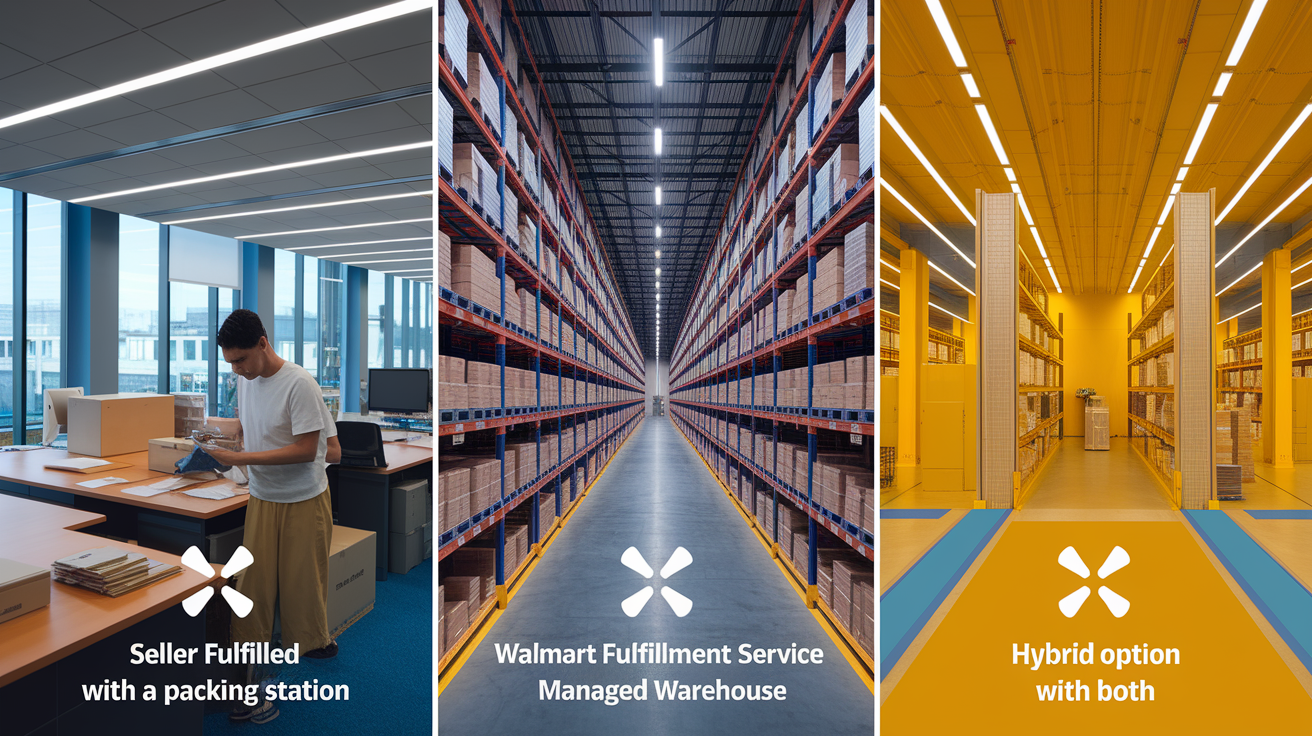
Fulfillment decisions now directly affect account health and growth potential. Sellers who choose WFS for high-return or high-cancellation SKUs shield those orders from most performance metrics, reducing enforcement risk. Sellers who remain entirely seller-fulfilled must invest more heavily in QC, tracking validation, and inventory accuracy to stay compliant.
The 2026 framework makes listing quality and shipping reliability first-class operational KPIs. Brands that monitor metrics daily, fix root causes before warnings arrive, and segregate WFS versus seller-fulfilled risk will capture more Buy Box share and sustain faster growth than competitors who react only after suppression.
Strategic considerations when choosing fulfillment methods:
- Seller-fulfilled: Full control over packing, carrier choice, and shipping speed; but all metrics apply and failures trigger enforcement
- WFS: Walmart handles storage, packing, and shipping; most seller-fulfilled metrics (cancellation, on-time delivery, valid tracking) don’t apply; you still own listing accuracy and product quality, which affect return rate and negative feedback
- Hybrid model: Move SKUs with high cancellation or return rates to WFS; keep fast-moving, low-return SKUs seller-fulfilled to control margin and fulfillment speed
- Financial impact: WFS fees reduce per-unit margin but eliminate costs of suppression, suspension, and lost Buy Box time; calculate breakeven based on your current defect rates and average enforcement recovery time
Final Words
Walmart’s 2026 update raises the bar: stricter numeric thresholds, two new metrics (Return Rate and INR), rolling 30–60 day windows, and the first enforceable Negative Feedback Rate. WFS orders are largely excluded, shifting risk to seller‑fulfilled SKUs.
This matters because failures add up fast and enforcement moves quicker. Do small, specific work: set 75–80% alerts, run SKU-level audits, tighten carrier handoffs, and test WFS for risky products.
If you act now, the Walmart Marketplace 2026 seller performance standards changes explained here become manageable.
FAQ
Q: What are the 2026 Walmart seller performance thresholds and measurement windows?
A: The 2026 Walmart seller performance thresholds are: Cancellation ≤2% (30–60d), On‑Time Delivery ≥90% (30–60d), Valid Tracking ≥99% (30–60d), Refund ≤6% (30–60d), Seller Response ≥95% (30d), Negative Feedback ≤2% (60d), Return Rate ≤6% (60d), INR ≤2% (60d).
Q: How do the rolling 30–60 day measurement windows affect evaluations?
A: Rolling 30–60 day windows mean Walmart recalculates each metric daily using the last 30–60 days of orders, so recent problems count immediately and short-term spikes can push you past thresholds fast.
Q: Are WFS orders included in these metrics?
A: WFS (Walmart Fulfillment Services) orders are excluded from most seller‑fulfilled metric calculations, so moving risky SKUs to WFS lowers your seller‑fulfilled exposure but still requires monitoring WFS-specific performance.
Q: Which metrics started enforcement on Jan 29, 2026?
A: The Return Rate and INR (Item Not Received) metrics began enforcement on Jan 29, 2026, both operating on a 60‑day window and subject to immediate evaluation by Walmart.
Q: What enforcement actions will Walmart take for metric breaches and the escalation timeline?
A: Walmart enforces breaches with Notification Alert, Listing Suppression, Account Suspension, then Permanent Termination; Negative Feedback and INR violations escalate faster, often moving from warning to suppression within days or weeks.
Q: How do I appeal a suppression or suspension?
A: To appeal suppression or suspension, include the root cause, corrective actions, preventative safeguards, and supporting evidence; missing or unclear documentation is the most common reason appeals are rejected.
Q: What quick fixes stop immediate metric erosion?
A: Quick fixes to stop metric erosion include pausing problem SKUs, shifting those SKUs to WFS, tightening carrier handoffs, and enforcing faster internal response SLAs for customer messages and claims.
Q: What monitoring and alerts should sellers set up for 2026 compliance?
A: Sellers should set weekly dashboard reviews, daily alerts at 75–80% of thresholds, SKU‑level audits, carrier tracking validity checks, and assign owners plus remediation SLAs for each alert.
Q: How do the 2026 standards differ from previous Walmart requirements?
A: The 2026 standards are stricter and more algorithmic, adding rolling windows, immediate enforcement for Return Rate and INR, precise numeric thresholds, and first‑time enforcement of Negative Feedback rate.
Q: Can you give a numeric example showing allowed failures under the new thresholds?
A: For 1,000 delivered orders: max 60 returns (6%), max 20 INR reports (2%), max 10 invalid trackings at 99% valid tracking, and max 20 cancellations at 2%.