


What if your growth partner only gets paid when your products actually sell?
That’s the core pitch of ecommerce accelerators: they buy your inventory upfront, run listings and ads on Amazon and Walmart, and pay you immediately while taking the sales risk.
That flips the usual agency model where you pay retainers whether sales move or not.
This post shows what accelerators are, why they often speed scaling for brands doing $1M–$5M in marketplace revenue, and what to check before you sign.
Defining an Ecommerce Accelerator and How It Rapidly Scales Online Stores

An ecommerce accelerator buys your inventory upfront, sells it on marketplaces like Amazon or Walmart, and only makes money when your products actually move. That’s different from agencies charging you monthly retainers whether you sell anything or not.
The accelerator puts its own cash on the line. It purchases stock from you at wholesale, handles everything from listing optimization to customer service, and profits from the margin between what it paid you and what it sells for. If your products sit unsold, the accelerator eats that loss.
This creates real alignment. You get paid immediately, which solves cashflow problems that strangle most growing brands. The accelerator takes on inventory risk and marketplace execution. Since it only wins when your stuff sells at good margins, there’s no incentive to waste ad spend or let listings underperform.
Three things make this model work:
Capital alignment through inventory ownership. The accelerator buys before it sells, removing your cashflow bottleneck and tying its success directly to yours.
Reseller mechanics that keep you in control. You still own your trademarks and branding. The accelerator just acts as your exclusive distributor across marketplaces.
Collaborative growth incentives. The accelerator invests in ads, content, and channel expansion only when data shows it’ll drive profitable returns.
Brands doing $1 million to $5 million annually on marketplaces get the most out of this. You’re big enough to matter but hitting walls like rising ad costs, shrinking margins, or lack of bandwidth to scale across channels. Brands already past $5 million often negotiate better partnership terms. Smaller brands might need to pay service fees until volume justifies the accelerator’s inventory investment.
How Ecommerce Accelerator Programs Work Behind the Scenes

When you join an accelerator, it starts with an inventory purchase. The accelerator buys enough stock to cover the first few weeks of sales, then sets up a replenishment schedule based on how fast things move. That upfront purchase puts cash in your account while shifting marketplace execution risk off your plate.
Accelerators spend on ads only when they see a clear path to profit. Many use proprietary analytics, AI bidding tools, and predictive models to find high conversion keywords and optimize budgets across channels. Wasted ad spend cuts into their margin, so there’s natural discipline around campaign efficiency.
Behind the scenes, they handle supply chain logistics, compliance, listing optimization, and brand protection. Tasks like product photography, A+ content, MAP enforcement, and removing unauthorized sellers all get managed without you lifting a finger. You focus on product development and strategy instead of daily marketplace firefighting.
Typical onboarding looks like this:
- Initial inventory order and wholesale agreement. The accelerator buys stock based on forecasted demand and locks in wholesale pricing and profit splits.
- Marketplace account setup and compliance. Listings get created or optimized, fulfillment methods configured, compliance boxes checked for each marketplace.
- Content and listing optimization launch. Product titles, descriptions, images, and backend keywords get rewritten using SEO and conversion best practices. A+ content goes live where available.
- Advertising and traffic acceleration. PPC campaigns launch on Amazon Sponsored Products, Walmart, and external channels. Budgets scale based on ROAS thresholds.
- Performance monitoring and replenishment cycles. Real-time dashboards track sales velocity, inventory, ad performance, profitability. Stock replenishment triggers automatically or through shared forecasts.
Comparing Ecommerce Accelerators, Agencies, and Aggregators

Understanding the differences matters when you’re choosing a growth partner.
Agencies charge 15 to 30 percent of gross revenue in management fees, plus separate cuts of ad spend. They don’t own inventory or share downside risk. They execute specific functions like PPC or SEO, but you pay them whether sales grow or not.
Aggregators sit on the opposite end. They acquire brands outright or take majority equity stakes. You get capital but lose control, and they impose standardized playbooks that might not fit your brand’s identity or market positioning.
| Model | Ownership | Cost Structure | Incentive Alignment | Scope of Services |
|---|---|---|---|---|
| Accelerator | Brand retains full equity and IP | Profit margin partnership or revenue share, no standard retainer | High – profits only when products sell | End-to-end: inventory, advertising, logistics, brand protection, expansion |
| Agency | No ownership transfer | Fixed fees (15–30% revenue) + ad spend percentages | Low – earns fees regardless of sales performance | Narrow: typically one function (ads, SEO, creative, etc.) |
| Aggregator | Acquires brand or takes majority stake | Upfront capital for equity or full acquisition | Medium – aligned to portfolio returns, not individual brand vision | Full operational control via acquisition-driven playbook |
Early stage brands with limited revenue may benefit from agencies that provide specific expertise without requiring inventory commitments. Brands approaching $1 million in annual sales and seeking rapid, capital efficient scaling often find accelerators the best fit, especially when cashflow and operational bandwidth are constraints. Founders ready to exit or seeking large capital infusions in exchange for equity should explore aggregator acquisition offers, understanding that brand autonomy and decision making authority will shift post transaction.
Key Services Provided by Ecommerce Accelerators to Boost Growth
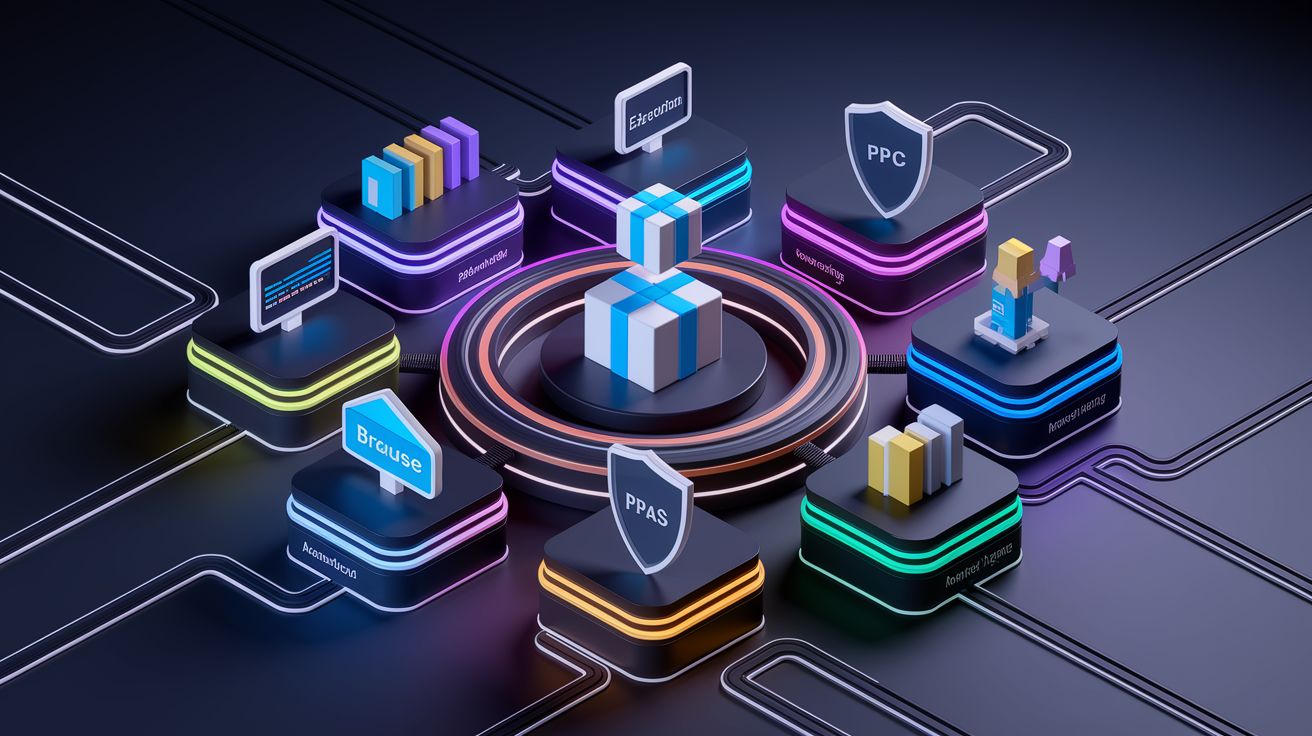
Ecommerce accelerators deliver a full stack of services designed to replace multiple vendors and internal hires with a single, financially aligned partner.
Listing optimization and SEO form the foundation. Accelerators rewrite product titles, bullet points, descriptions, and backend search terms using data driven keyword research and conversion best practices. This extends to visual content: product photography, infographics, lifestyle imagery, and A+ content modules that improve conversion rates and reduce bounce.
Advertising management represents one of the highest impact categories. Accelerators deploy adtech powered PPC strategies across Amazon Sponsored Products, Walmart Sponsored Products, and external channels including Meta, Google Shopping, Snap, and TikTok. Many programs use patented AI bidding engines that adjust bids in real time based on inventory levels, competitor activity, and profitability targets.
Accelerators also manage brand protection initiatives: MAP enforcement, counterfeit monitoring, and eliminating unauthorized third party sellers that erode pricing integrity and customer trust.
Fulfillment logistics and inventory forecasting prevent stockouts and reduce carrying costs. Accelerators coordinate with FBA, 3PL warehouses, and direct ship partners to ensure products arrive on time and meet marketplace performance standards. They also handle customer service inquiries, review solicitation and management, returns processing, and recovery of lost or damaged inventory.
For brands expanding internationally, accelerators provide localization services: translating listings, navigating customs and compliance requirements, and launching on region specific marketplaces like Tmall, Mercado Libre, and Rakuten.
Seven high impact service categories delivered by ecommerce accelerators:
- Listing optimization and organic SEO. Keyword research, content rewriting, backend optimization, and A+ content creation to maximize discoverability and conversion.
- Paid advertising and campaign management. AI driven PPC across Amazon, Walmart, Google, Meta, TikTok, and Snap with real-time budget optimization.
- Brand protection and MAP enforcement. Monitoring unauthorized sellers, enforcing minimum advertised pricing, and removing counterfeit listings.
- Fulfillment logistics and inventory planning. Coordinating FBA, 3PL, and direct fulfillment. Forecasting demand. Managing stockouts and overstock.
- Customer service and review management. Handling inquiries, processing returns, soliciting reviews, and responding to negative feedback.
- Multi-channel and international expansion. Launching on new marketplaces, localizing content, navigating compliance, and managing cross-border logistics.
- Data analytics and digital shelf intelligence. Real-time dashboards tracking sales velocity, ad performance, competitor pricing, search rank, and profitability by SKU.
These services unify into a growth engine because each function directly influences marketplace algorithm performance and consumer purchase decisions. Better listings increase organic rank, which reduces reliance on paid ads. Ads drive initial velocity that signals algorithm relevance, creating a compounding loop. Brand protection preserves pricing power and customer experience, which sustains profitability. Together, this integrated approach accelerates growth faster than brands can achieve by coordinating multiple agencies or building internal teams from scratch.
Evaluating Whether an Ecommerce Accelerator Is Right for Your Brand

Brands generating between $1 million and $5 million in annual marketplace revenue represent the sweet spot for ecommerce accelerator partnerships. At this scale, operational complexity and cashflow pressure typically outpace internal capacity, but you’re not yet big enough to make building a full in-house team more economical than outsourcing.
Rising advertising costs (Amazon sponsored ad bids increased roughly 48 percent between 2019 and 2025) and shrinking profit margins make the accelerator’s capital backed, performance aligned model especially attractive.
Accelerators solve specific pain points that signal readiness. If you face frequent stockouts because you can’t afford to carry sufficient inventory, an accelerator’s upfront purchase immediately alleviates working capital constraints. If you’re spending 15 to 30 percent of revenue on agency fees and still struggling to scale profitably, the accelerator’s profit share model eliminates fixed costs and aligns incentives. If your marketplace ads generate inconsistent returns or your listings rank poorly despite strong products, the accelerator’s data tools and optimization expertise can unlock growth that was previously out of reach.
Five signals that your brand is ready for an ecommerce accelerator partnership:
Marketplace revenue between $1M and $5M annually. Enough scale to justify accelerator investment, but not yet large enough to build full internal operations cost effectively.
Cashflow constraints limiting inventory purchases. You frequently run out of stock or can’t afford to order sufficient quantities to meet demand spikes.
High agency fees eroding profitability. You’re paying 15 to 30% of revenue in management fees plus ad spend percentages, and margin pressure is increasing.
Operational bottlenecks preventing multi-channel expansion. You want to launch on Walmart, Target, or international marketplaces but lack the bandwidth or expertise to execute.
Inconsistent advertising performance or declining organic rank. Your PPC campaigns deliver unpredictable ROAS, or your organic search visibility is declining despite product quality.
Top Ecommerce Accelerator Programs and What They Offer

Marketplace focused accelerators represent the most common category. Programs like Pattern lead the space. Pattern operates 22 global offices, employs more than 1,400 people, and manages brand partnerships across 60 plus marketplaces including Amazon, Walmart, Target, Tmall, and Mercado Libre.
These accelerators specialize in the buy sell inventory model, using proprietary data platforms and patented AI adtech to optimize listings, advertising, and fulfillment logistics. They rarely disclose program duration, acceptance rates, or detailed financial terms publicly. You’ll need to request specifics during partner evaluation.
Technology driven accelerators differentiate through advanced data infrastructure and automation. These programs emphasize AI powered bidding engines, predictive analytics, digital shelf monitoring, and real-time dashboards that give brands visibility into sales velocity, competitor pricing, and profitability by SKU. Some offer modular tools like ROI Hunter for cross-platform ad control or GEO Scorecards for international market opportunity assessment that brands can access even without full accelerator partnership.
Retail tech startup accelerators, including ecommerce focused tracks within Techstars and Y Combinator, operate on equity based cohort models and provide mentorship, curriculum, and investor networks rather than inventory capital. These programs suit earlier stage founders building technology platforms or novel retail models more than established brands seeking operational scale.
Four major ecommerce accelerator types:
Marketplace accelerators. Capital backed partners that buy inventory, manage listings, ads, fulfillment, and customer service across Amazon, Walmart, and international marketplaces. Profit via buy sell or revenue share models.
Technology driven accelerators. Programs emphasizing proprietary data platforms, AI powered advertising, predictive analytics, and digital shelf intelligence. Often modular, allowing brands to access tools without full partnership.
Retail tech startup accelerators. Equity based cohort programs (e.g., Techstars, Y Combinator) offering mentorship, curriculum, and investor access. Best for tech platform founders rather than established product brands.
Hybrid fulfillment-marketing accelerators. Partners providing integrated supply chain logistics (warehousing, 3PL, middle mile shipping) alongside advertising and content services. Common in DTC to marketplace transitions.
Case Studies and Proven Outcomes from Ecommerce Accelerator Partnerships

Quantifiable results from ecommerce accelerator partnerships demonstrate the model’s ability to deliver rapid, measurable growth across diverse brand categories and channels. These outcomes reflect the combined impact of capital infusion, optimized advertising, listing improvements, and operational execution working in concert rather than as isolated tactics.
Western Union achieved a 487 percent increase in organic search share of voice and a 36 percent rise in global online media exposure after partnering with an accelerator to optimize content and marketplace presence.
CNN Brasil saw a 91 percent increase in total pageviews, surpassing 1 billion pageviews in 2022, alongside a 19 percent boost in top 10 Google keyword rankings.
Adobe’s campaign generated over 25,200 download starts from organic search within six months, driven by a 648 percent increase in non-brand first page Google rankings that made organic search responsible for 49 percent of total visitors.
Levi’s Meta advertising campaigns improved delivery efficiency and ROAS by 38 percent compared to previous agency managed efforts.
An airline client’s accelerator led audit identified over $60 million in revenue opportunities, achieved $2.5 million in advertising cost savings, and discovered $17 million in incremental sales across previously underoptimized channels.
Five case study metrics showing accelerator impact:
Western Union: 487% increase in organic search share of voice. Driven by content optimization and SEO strategies that outpaced competitors in search visibility.
CNN Brasil: 91% pageview growth, surpassing 1 billion annual pageviews. Combined with a 19% boost in top 10 Google keyword rankings through accelerated content and technical SEO.
Adobe: 648% increase in non-brand first page Google rankings. Generated 25,200+ download starts from organic search in six months. Organic accounted for 49% of total visitors.
Levi’s: 38% ROAS improvement on Meta campaigns. Achieved through accelerator managed bidding, creative testing, and audience optimization versus previous agency performance.
Airline client: $60M revenue opportunity identified, $2.5M ad savings, $17M incremental sales. Discovered through comprehensive channel audit and accelerator led optimization across paid and organic channels.
Financial Models, Equity Terms, and What Accelerators Don’t Tell You Up Front
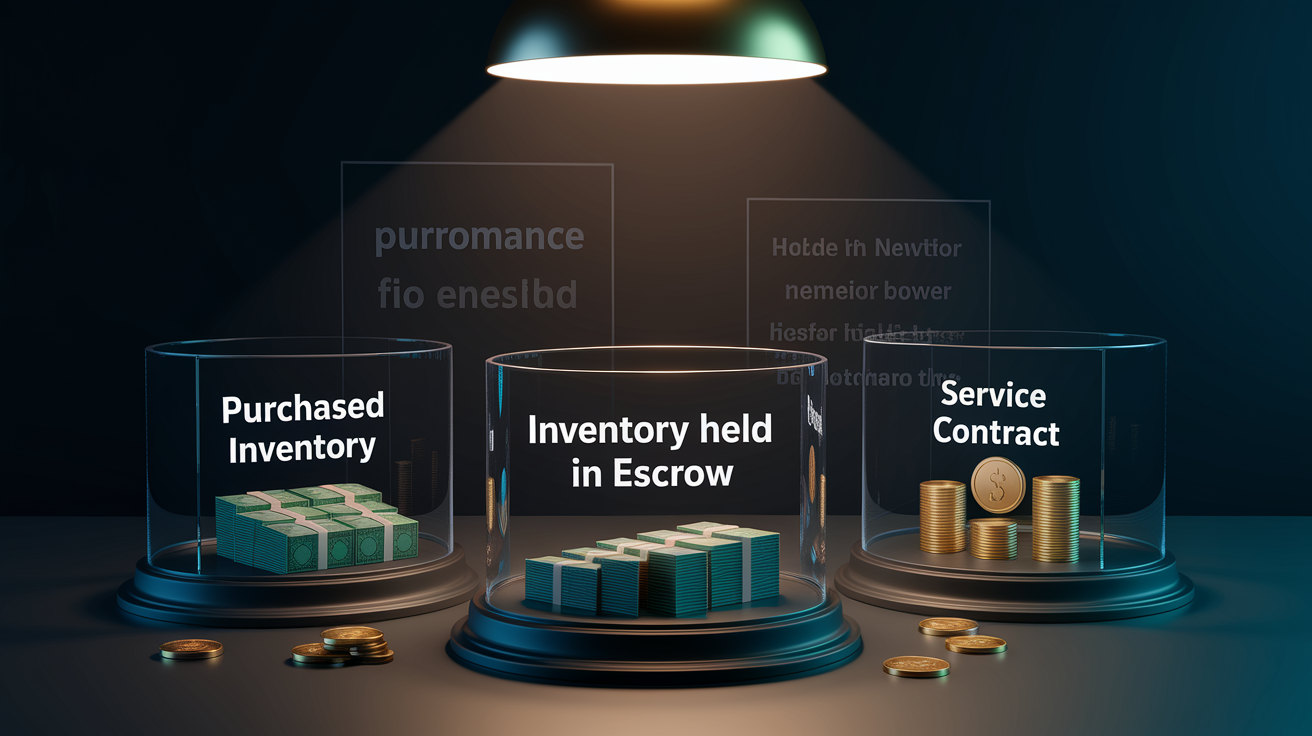
Most ecommerce accelerators don’t publish fee schedules, equity terms, program durations, or acceptance criteria on their websites. You’ll need to request details during initial conversations. This opacity creates information asymmetry that favors the accelerator during negotiation.
You need to proactively ask about wholesale pricing structures, profit margin splits, contract lengths, termination clauses, and any hidden fees tied to advertising spend, fulfillment, or international expansion before signing partnership agreements.
Three common financial models govern accelerator partnerships.
The inventory buy sell model transfers ownership of stock to the accelerator, which pays you a wholesale price upfront and retains the margin between wholesale cost and retail sale price after deducting advertising, fulfillment, and operational expenses.
Consignment or revenue share arrangements keep inventory ownership with you until the point of sale, with revenue split according to an agreed percentage after marketplace fees and costs.
Service partner fee models don’t involve inventory transfer. Instead, the accelerator provides operations, marketing, and logistics in exchange for a monthly retainer or performance based commission tied to sales growth or profitability milestones.
| Model | Ownership Impact | Cashflow Impact | Best For |
|---|---|---|---|
| Inventory Buy-Sell | Accelerator owns stock; brand retains IP and equity | Immediate wholesale payment; removes working capital strain | Brands needing cashflow relief and willing to accept lower per-unit margin in exchange for speed and scale |
| Consignment / Revenue Share | Brand owns inventory until sale; revenue split post-sale | Payment delayed until sale; no upfront capital infusion | Brands with sufficient cashflow seeking to preserve higher per-unit economics and maintain inventory control |
| Service Partner Fee | No inventory transfer; brand retains full ownership | Monthly fee or commission paid to accelerator; no capital relief | Larger brands ($5M+) with strong cashflow seeking operational expertise without relinquishing inventory ownership |
Things to Keep in Mind When Choosing an Ecommerce Accelerator

Transparency of financial terms should be non-negotiable. Ask for clear documentation of wholesale pricing, profit splits, fee schedules, and any variable costs tied to advertising, fulfillment, or channel expansion. Request sample contracts and insist on termination clauses that allow you to exit the partnership without punitive penalties if performance targets aren’t met within agreed timeframes.
Reporting access and data visibility determine whether you can monitor performance and make informed decisions. Ensure the accelerator provides real-time dashboards showing sales velocity, advertising spend and ROAS, inventory levels, and profitability by SKU. Weekly or bi-weekly performance reviews should be standard, not optional.
Cultural fit and strategic alignment matter as much as operational capability. Accelerators that understand your brand vision, respect your input on product and positioning decisions, and communicate proactively will deliver better long term results than partners focused solely on short term margin optimization.
Five reminders before committing to an ecommerce accelerator:
Request transparent financial terms in writing. Wholesale pricing, profit splits, all fees, termination clauses, and any hidden costs tied to advertising or fulfillment.
Verify reporting access and data ownership. Confirm you’ll receive real-time dashboards, regular performance reviews, and retain ownership of customer data and marketplace insights.
Assess cultural and strategic fit. Ensure the accelerator respects your brand vision, communicates proactively, and collaborates rather than dictates operational decisions.
Clarify global channel capabilities. If international expansion is a goal, confirm the accelerator has operational infrastructure and compliance expertise in your target markets.
Understand incentive alignment mechanisms. Ask how the accelerator’s compensation structure ties to your profitability, not just top line revenue, to ensure sustainable growth.
Final Words
You saw accelerators buy inventory upfront, act as marketplace resellers, run targeted ad spend, and optimize listings to push fast sales.
We compared them to agencies and aggregators, walked through core services and onboarding, shared case-study metrics, and flagged the financial questions founders must ask.
If you’re at $1–5M and need cash or a faster growth loop, audit cashflow, unit economics, and reporting access. If the checks pass, pilot a short program—an ecommerce accelerator can speed scale while keeping brand control.
FAQ
Q: What is an eCommerce accelerator?
A: An eCommerce accelerator is a capital-backed partner that buys inventory, lists and markets products on marketplaces, and only profits when products sell, helping brands scale faster without losing ownership.
Q: What is the 80 20 rule in eCommerce?
A: The 80/20 rule in eCommerce means roughly 80% of revenue or problems come from 20% of products or customers, so prioritize top SKUs and audiences to improve revenue and cut waste quickly.
Q: Is eCommerce a legit way to make money?
A: eCommerce is a legitimate way to make money, but it requires product-market fit, positive unit economics, and consistent execution in marketing, fulfillment, and customer service to be profitable at scale.
Q: What are the top 5 eCommerce platforms?
A: The top 5 eCommerce platforms are Shopify, Amazon Marketplace, WooCommerce, BigCommerce, and Magento (Adobe Commerce). Choose based on channel reach, customization needs, cost, and your team’s technical capacity.