

Still planning inventory with spreadsheets and guesswork?
That’s probably costing you both cash and missed sales.
AI inventory management uses machine learning plus live ERP, POS, and supplier signals to forecast demand, auto-create orders, and flag surprises before they bite.
The result: lower carrying costs, fewer stockouts, and better forecast accuracy in weeks, not quarters.
This post shows what changed, why it matters for your margins and cash flow, and the quick steps to test AI on the SKUs that move the needle.
Overview of AI-Driven Inventory Management
AI inventory management taps into machine learning and live data to automate forecasting, replenishment, and stock decisions. You’re not stuck with static reorder points or clunky spreadsheet formulas anymore. These systems chew through historical sales, supplier lead times, seasonality, promotions, and outside signals like weather, market shifts, or local events to predict demand down to the SKU and location. The algorithms tweak safety stock on the fly, fire off purchase orders when you hit thresholds, and call out weird stuff like surprise demand spikes or supplier hiccups. Businesses bring these in to cut manual planning work, unlock cash trapped in extra inventory, and dodge stockouts that kill revenue and trust.
You’ll see time-series models (ARIMA, Prophet), tree-based learning (XGBoost, Random Forest), and deep-learning setups (LSTM, Transformer networks) handling gnarly seasonal patterns. Reinforcement learning tests different order sizes and timing in simulation, then rolls out whatever works best. Real-time hooks into ERP, WMS, POS, and e-commerce platforms keep the AI fed with up-to-the-minute stock counts, sales speed, and supplier news, so it reacts in hours instead of weeks.
The payoff shows up fast. Pilot runs usually bump forecast accuracy 20 to 40 percent, slash stockouts 20 to 50 percent, and trim carrying costs 10 to 30 percent. That’s higher fill rates, faster turns, and cash freed up for growth. AI moves inventory management from putting out fires (“Why’d we run out?”) to running ahead of trouble (“We’ll need 800 units in Dallas by Thursday given current sales and that weather front coming through”).
Key Advantages of Using AI for Inventory Operations
AI kills the guesswork in demand planning and replenishment. Old-school inventory leans on static reorder points and people checking in periodically, which can’t keep up when the market moves. AI processes every transaction, supplier ping, and outside signal in near real time, dialing forecasts and safety stock constantly. That speed stops expensive stockouts (lost sales, rush shipping, brand damage) and pricey overstock that locks up cash, racks up storage fees, and risks obsolescence or discounts.
The operational win goes past forecasting. AI takes over routine jobs like purchase order creation, cycle count priority, allocation across warehouses, and flagging weird stuff. Supply chain and ops teams spend less time staring at spreadsheets and more time dealing with exceptions, talking to suppliers, and fixing processes. You get faster calls, fewer mistakes, and operations that scale without hiring proportionally.
What you gain:
- Fewer stockouts by catching demand jumps early and triggering orders before you run dry.
- Better forecast accuracy through machine learning that gets smarter every sales cycle.
- Lower carrying costs by spotting slow movers, tuning order sizes, and shrinking safety buffers when lead-time variation is low.
- Smarter replenishment that balances order frequency, minimum quantities, and supplier lead times to cut total landed cost.
- Cleaner data through automated cross-checks across ERP, WMS, and POS, surfacing mismatches for quick fixes.
- Faster decisions powered by real-time dashboards, automated alerts, and AI that explains what’s driving each forecast shift.
Essential Features Found in AI Inventory Management Systems
AI inventory platforms come with a shared toolkit built to replace manual forecasting, smooth out replenishment, and surface hidden risks. The forecasting engine pulls in 12 to 36 months of historical sales at SKU and location detail, then applies machine learning to predict what’s next. Better systems segment SKUs by speed and swing, using different algorithms for steady high-volume items (often classic time-series methods) versus choppy or new-product demand (classification or bootstrapping tricks). Forecast outputs refresh daily or weekly, feeding straight into ERP to adjust planned orders and safety levels.
Anomaly detection watches for patterns breaking down (sudden demand spikes, supplier delays, surprise returns, inventory shrinkage) and kicks off alerts or automated fixes. Real-time tracking ties into barcode scanners, RFID readers, IoT sensors, and e-commerce APIs to keep accurate on-hand counts across warehouses, stores, and shipments. Automated replenishment checks current stock against forecast demand and lead time, then builds purchase or transfer orders when levels drop below a calculated reorder point. The system can enforce business rules: minimum order quantities, preferred suppliers, budget caps, or approval flows for big orders.
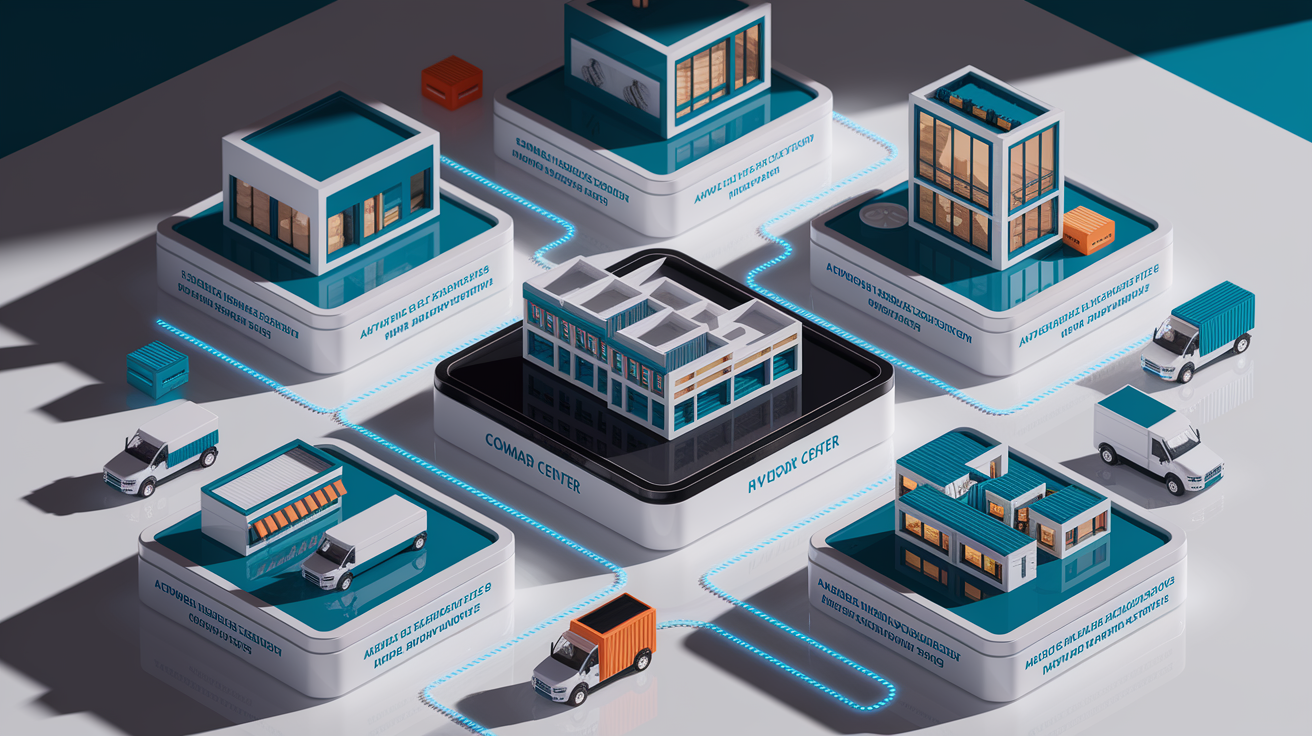
Multi-location optimization spreads inventory across distribution centers and retail spots to cut total cost while hitting service targets. The AI weighs regional demand swings, transport cost, cross-dock chances, and store constraints (shelf space, local promos) to recommend where stock should land before orders show up. Explainability features show which variables pushed each forecast (seasonality, recent promos, weather, competitor pricing) so planners can check model logic and adjust inputs when business conditions move outside past norms.
| Feature | Function |
|---|---|
| Demand Forecasting Engine | Predicts SKU demand using historical sales, seasonality, promos, and outside signals. Updates daily or weekly. |
| Anomaly Detection & Alerts | Spots unexpected demand spikes, supplier delays, inventory gaps, and quality problems. Triggers notifications or workflows. |
| Real-Time Inventory Tracking | Connects barcode, RFID, IoT, and API feeds to keep accurate on-hand, in-transit, and reserved counts across all locations. |
| Automated Replenishment | Calculates dynamic reorder points and quantities. Builds purchase or transfer orders. Enforces MOQ, supplier, and budget rules. |
| Multi-Location Optimization | Allocates stock across warehouses and stores to cut cost and meet service levels. Considers regional demand, transport cost, and capacity. |
Leading AI Inventory Management Software Options

Enterprise resource planning vendors bundle AI forecasting into their core suites. SAP Integrated Business Planning and Oracle NetSuite Demand Planning pack in machine-learning forecasting, multi-echelon optimization, and scenario modeling. These fit large enterprises running complex supply chains, global operations, and massive SKU counts. Pricing usually kicks off around $1,000 per month for mid-market NetSuite seats and climbs into tens of thousands monthly for SAP installs covering multiple modules, regions, and advanced analytics. Implementation runs three months for a tight NetSuite rollout to 12 or 18 months for full SAP with custom integrations.
Specialized planning platforms zero in on demand forecasting and inventory optimization. Relex Solutions, o9 Solutions, Kinaxis RapidResponse, and Blue Yonder Luminate bring deep AI forecasting, collaborative planning workflows, and advanced features like promotional lift modeling, new-product forecasting, and supply-risk simulation. These target mid-market and enterprise retailers, manufacturers, and distributors ready to invest in best-of-breed planning tech. Monthly subscriptions often land between $5,000 and $50,000 depending on modules, users, SKU volume, and integration complexity. One-time implementation fees can hit $100,000 to $250,000 for data integration, model tuning, and training.
Lightweight SaaS inventory tools serve small and mid-sized e-commerce and retail shops. Platforms like Cin7, Katana, and Zoho Inventory offer basic demand forecasting, automated reorder-point math, and integrations with Shopify, WooCommerce, QuickBooks, and Xero. Pricing typically sits between $50 and $1,000 monthly, with per-user or per-SKU tiers. These prioritize ease of use, fast onboarding, and visual dashboards over heavy machine learning. Implementation runs short (two to six weeks), making them accessible for businesses needing quick operational wins without big upfront spend.
Emerging AI-native platforms use agentic AI and pre-built automation workflows. These vendors offer visual app builders, no-code integration connectors, and modular AI workers handling specific tasks: demand forecasting, reorder triggering, supplier collaboration, returns classification, compliance tracking. Trials are common (14 days, no credit card required), and onboarding can start in 30 seconds using templates or data imports. Pricing models vary but typically align with SaaS subscription tiers and scale based on transaction volume or active AI workers.
Key differences:
- Enterprise suites provide end-to-end ERP integration but need significant implementation investment and change management.
- Specialized planning tools deliver the most advanced forecasting algorithms and collaborative workflows, suited for complex multi-echelon supply chains.
- Lightweight SaaS platforms offer fast time to value and low cost, ideal for small businesses with straightforward replenishment needs.
- AI-native solutions emphasize automation, modularity, and no-code customization, enabling rapid testing and incremental scaling.
How to Implement AI Inventory Management in Your Business
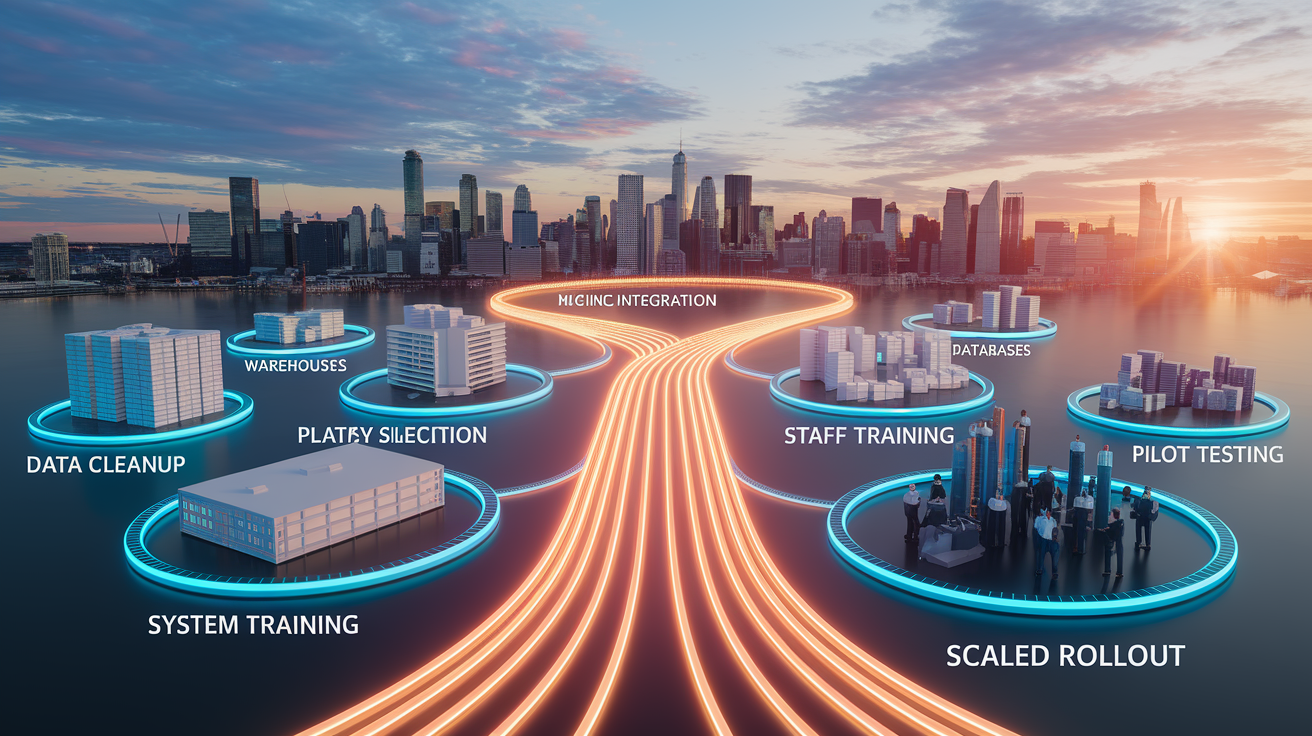
Start with a clear look at current inventory pain points, data readiness, and what you’re aiming for. Map stockout frequency, carrying-cost percentage, forecast accuracy by SKU class, and manual hours burned on replenishment and reconciliation. Pick which SKU categories, product lines, or distribution centers will deliver the highest ROI if forecasting and automation improve. This scoping exercise (typically two to six weeks) defines success metrics, locks in stakeholder buy-in, and uncovers data quality problems that need fixing before AI models can train effectively.
Steps to get it done:
-
Prepare and centralize historical data. Pull 12 to 36 months of SKU-level sales, supplier lead times, promotion calendars, price changes, returns, and relevant outside variables (weather, holidays, competitor moves). Clean and validate the data, making sure SKU identifiers match up, timestamps are accurate, and missing values get handled right.
-
Select the platform and pricing model. Compare vendors against feature needs (forecasting algorithms, integrations, explainability, multi-location support), implementation timeline, total cost (subscription plus integration and training), and vendor track record in your industry. Negotiate contract terms covering data ownership, SLA uptime, model retraining cadence, and exit or data-export rights.
-
Integrate with ERP, WMS, POS, and e-commerce systems. Use pre-built connectors or APIs to set up real-time data flows for sales transactions, inventory positions, purchase orders, and supplier shipments. Validate that the AI platform gets accurate, timely updates and can push forecast outputs and replenishment recommendations back into operational systems.
-
Train staff and define approval workflows. Educate planners, buyers, and warehouse managers on how the AI builds forecasts, calculates reorder points, and flags weird stuff. Set up human-in-the-loop controls for high-value orders, new-product launches, or supplier changes. Clarify roles: who reviews anomaly alerts, who approves automated purchase orders, and who monitors model performance.
-
Run a pilot on a limited SKU set or single location. Pick a representative slice of inventory (high-volume SKUs, a seasonal product category, or one distribution center) and operate the AI system alongside existing processes for 30 to 90 days. Measure baseline and pilot performance using KPIs: forecast accuracy (MAPE), fill rate, stockout incidents, days of inventory, and inventory turns.
-
Optimize models and scale rollout. Analyze pilot results, tune model parameters (seasonality windows, promotional lift factors, lead-time assumptions), and adjust automation thresholds. Once the pilot shows clear improvement, expand coverage to additional SKUs, locations, and workflows. Plan the full rollout in phases (six to 18 months depending on scale and integration complexity) with checkpoints to tackle data issues, integration bugs, and user adoption challenges.
Typical timelines show discovery and data readiness taking two to six weeks, pilot execution running three to six months, and full enterprise rollout spanning six to 18 months. Businesses often see measurable benefits (fewer stockouts, optimized reorder cycles, lower carrying costs) within the first few months after the pilot launches, with compounding returns as the AI learns from additional sales cycles and the organization refines processes around the new capabilities.
Cost and Pricing Considerations for AI Inventory Tools
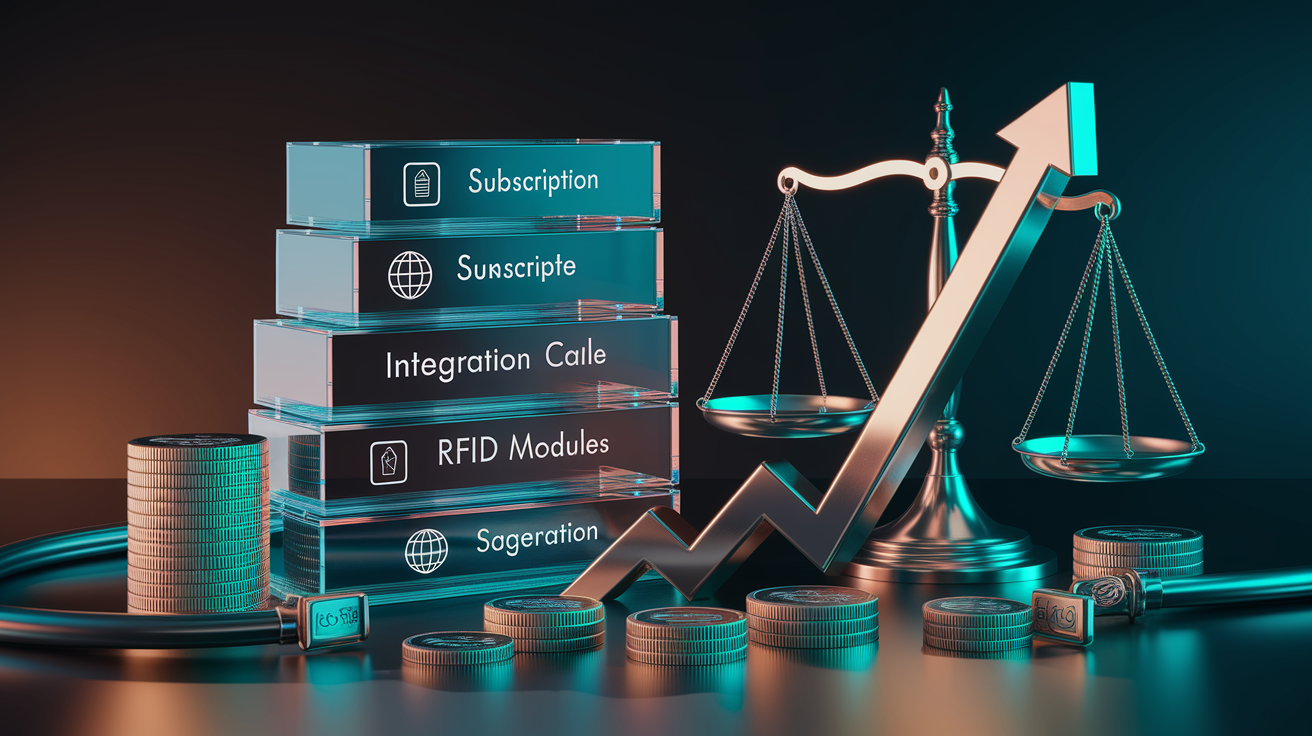
AI inventory management pricing swings widely based on deployment model, feature depth, SKU volume, and integration complexity. Small businesses using lightweight SaaS platforms typically pay $50 to $1,000 monthly for basic forecasting, automated reorder points, and integrations with e-commerce and accounting software. Mid-market companies adopting specialized planning tools or ERP-embedded AI modules face monthly subscription costs ranging from $500 to $5,000, often structured per user, per location, or per SKU tier. Enterprise deployments of advanced planning suites (SAP IBP, Blue Yonder, Kinaxis) can exceed $10,000 to $20,000 per month in recurring fees, with extra charges for premium support, consulting, and model customization.
One-time implementation costs add serious upfront investment for mid-market and enterprise solutions. Data integration, custom connectors, historical data migration, model configuration, and user training commonly cost $10,000 to $250,000 depending on how many systems you’re tying together (ERP, WMS, POS, supplier EDI, IoT sensors), data cleanliness, and customization needs. Hardware expenses pop up when deploying RFID or IoT tracking: passive RFID tags cost $0.10 to $2 each, fixed readers range from $1,000 to $10,000, and initial warehouse installations often total $10,000 to $100,000 for full coverage.
| Pricing Model | Typical Cost Range |
|---|---|
| SaaS Subscription (SMB) | $50 to $1,000/month. Per-user or per-SKU tiers. Minimal integration cost. |
| SaaS Subscription (Mid-Market) | $500 to $5,000/month. Often includes implementation fee of $10,000 to $50,000 for data integration and training. |
| Enterprise Suite License | $1,000 to $20,000+/month recurring. $50,000 to $250,000+ one-time implementation. Multi-year contracts common. |
| Usage-Based / API Calls | Variable monthly cost based on transaction volume or forecast API requests. Often paired with base subscription fee. |
ROI math centers on cutting inventory carrying costs and protecting revenue from fewer stockouts. A company holding $10 million in inventory at a 20 percent annual carrying cost spends $2 million per year on warehousing, insurance, obsolescence, and capital cost. If AI drops inventory levels by 15 percent without hurting fill rates, annual savings hit $300,000. Add $150,000 in recovered revenue from preventing stockouts, and total annual benefit approaches $450,000. With $100,000 to $200,000 in implementation costs plus $24,000 per year in SaaS fees, payback periods typically fall between six and 18 months, depending on inventory scale and forecast improvement.
Real-World Case Studies Showing AI Inventory Management in Action
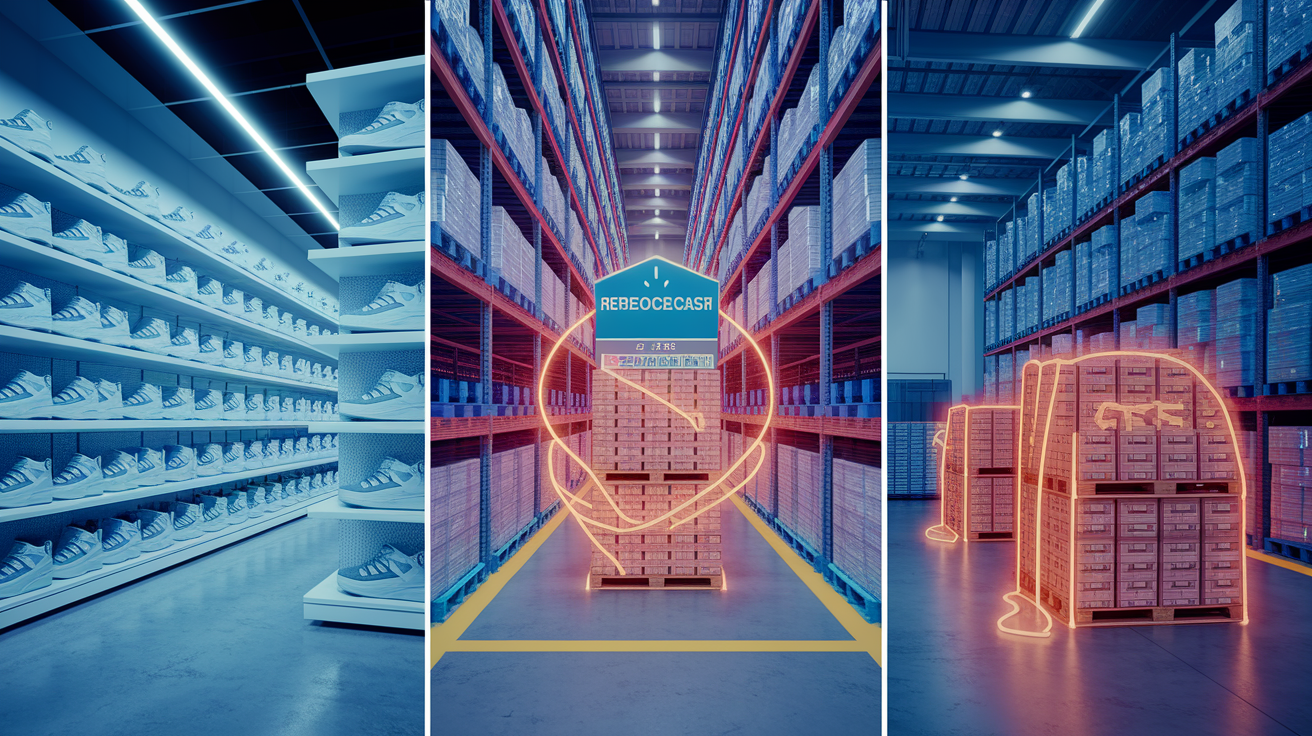
A national footwear retailer managing 15,000 SKUs across 200 stores rolled out AI forecasting to fix chronic stockouts of fast-selling sneaker styles and overstock of seasonal boots. Before AI, forecast accuracy hovered around 60 percent and stockouts hit 12 percent of weekly SKU-location combinations, driving lost sales and frustrated customers. The retailer piloted an AI demand-forecasting platform on 2,000 high-velocity SKUs across 50 stores, feeding in historical sales, promotion calendars, local weather data, and competitor pricing. Within three months, forecast accuracy climbed to 85 percent, stockouts dropped to 8 percent, and inventory turns jumped 18 percent. The AI automatically tweaked safety stock for regional demand swings (higher sneaker inventory in urban stores, reduced boot stock in warm climates) and flagged anomalies when sudden social media trends spiked demand for specific colorways. Annual carrying-cost savings topped $400,000, and recovered revenue from fewer stockouts added another $250,000.
A mid-sized beverage distributor serving 800 retail accounts faced unpredictable demand swings from weather, local events, and seasonal holidays. Manual reorder planning leaned on spreadsheet formulas and buyer gut feel, causing frequent shortages of popular SKUs during summer heat waves and excess inventory of slow movers after holiday peaks. The distributor brought in an AI inventory system that pulled POS data from key retail partners, regional weather forecasts, and historical sales patterns. The AI found temperature thresholds that triggered sports-drink demand spikes and adjusted safety stock dynamically for each product-geography pair. Lead-time variance modeling cut safety-stock buffers by 25 percent for reliable suppliers while boosting coverage for vendors with inconsistent delivery. Over 12 months, the distributor trimmed total inventory carrying costs by 12 percent, improved on-time-in-full delivery rates from 88 percent to 96 percent, and slashed emergency expedited shipments by 40 percent.
A direct-to-consumer electronics retailer with fast product lifecycles and high SKU churn struggled to balance inventory between rapid sellouts of new releases and markdowns on aging models. Traditional reorder-point logic couldn’t adapt fast enough to viral social media trends or competitor pricing moves. The retailer hooked up AI forecasting with Shopify sales data, Google Trends signals, and supplier lead-time feeds. The system caught early demand acceleration for a new wireless earbud model (sales velocity tripling within 48 hours) and automatically triggered expedited replenishment orders before stock ran out. At the same time, the AI flagged slow-moving inventory of an older laptop accessory, recommending a targeted markdown to clear stock before obsolescence. Six months post-implementation, the retailer cut stockouts on trending SKUs by 35 percent, trimmed markdown losses by 22 percent, and freed $180,000 in working capital previously locked up in excess slow-moving inventory.
Final Words
In the action: we covered what ai inventory management is, how it works (forecasting, anomaly detection, automated replenishment), and why it helps—fewer stockouts, lower carrying costs, and faster decisions. We also hit core features, top software options, implementation steps, pricing, and real-world results.
Watch metrics for 4–8 weeks during a small pilot and tweak forecasts and reorder rules as you go.
Start small, measure what matters, and scale. ai inventory management can pay off fast.
FAQ
Q: What is the 30% rule for AI?
A: The 30% rule for AI is a rough guideline suggesting organizations limit AI-driven automation or decision authority to about 30% initially, to manage risk, preserve human oversight, and iterate before wider rollout.
Q: What is the 80/20 rule in inventory?
A: The 80/20 rule in inventory means roughly 20% of SKUs generate about 80% of revenue or value, so prioritize forecasting, stock levels, and service for those high-impact items.
Q: What is the 10 20 70 rule for AI?
A: The 10 20 70 rule for AI describes allocating effort: about 10% to research and new models, 20% to pilots and fine-tuning, and 70% to production, monitoring, and operations.
Q: Is AI going to replace supply chain management?
A: AI replacing supply chain management is unlikely; AI will automate routine tasks, improve forecasting and routing, and shift SCM roles toward oversight, exception handling, and strategy.