
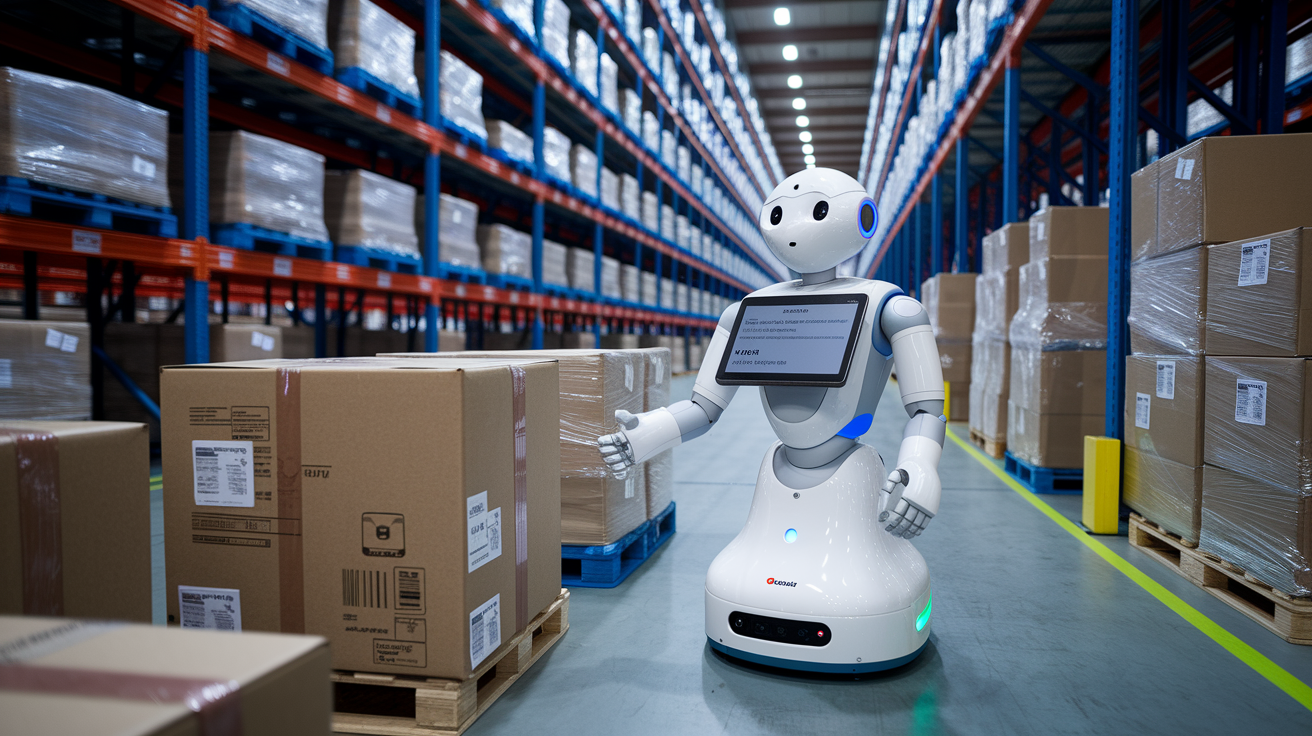

Is AI about replacing logistics teams or finally stopping the slow bleed in margins?
AI now solves four costly problems, wasted miles, tight warehouse labor, bad forecasts, and sudden equipment failures, by optimizing routes, automating picking, forecasting demand, and predicting maintenance.
That matters because these fixes typically cut costs, speed delivery, and free capital fast.
Expect 10–30 percent gains in the first year when you target the biggest cost center.
Thesis: start small, pick your highest-cost process, clean the data, and run a focused pilot to turn AI from promise into measurable savings.
Core Functions of AI Within Modern Logistics
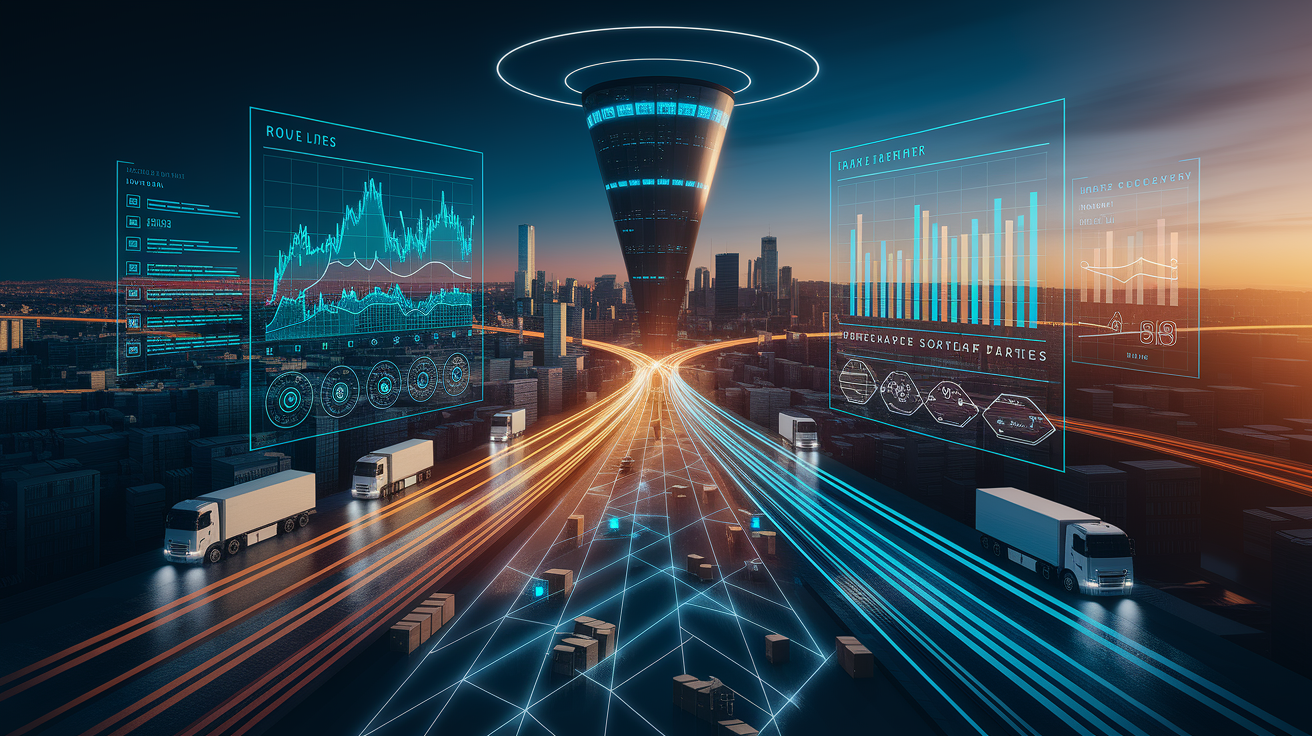
AI fixes four logistics problems that cost companies real money: routes that waste miles, warehouses short on labor, forecasts that miss the mark, and equipment that breaks at the worst time. Route optimization pulls in traffic, delivery windows, and fuel prices, then picks the path that saves both miles and minutes. These systems keep adjusting for wrecks, weather, and shifting priorities. Big carriers? They’re cutting millions of miles every year.
Warehouse automation puts vision-guided robots and learning algorithms to work. They identify, pick, pack, and sort without a human touching anything. Computer vision reads labels and barcodes, spots damage, measures boxes. Machine learning figures out where to store stuff based on how often it moves and how much space it takes. Predictive maintenance watches truck data, conveyor vibration, forklift diagnostics, then calls out failures days or weeks early. Repairs happen during planned downtime instead of mid-shift disasters.
Demand forecasting models pull in sales history, seasons, promotions, even local weather and events to predict what each SKU needs. These forecasts set safety stock levels and trigger reorders when inventory dips below the threshold. Put it all together and you’ve got AI targeting four different cost centers, each delivering 10 to 30 percent gains in efficiency, accuracy, or asset use within the first year.
Key Applications Reshaping Logistics Operations
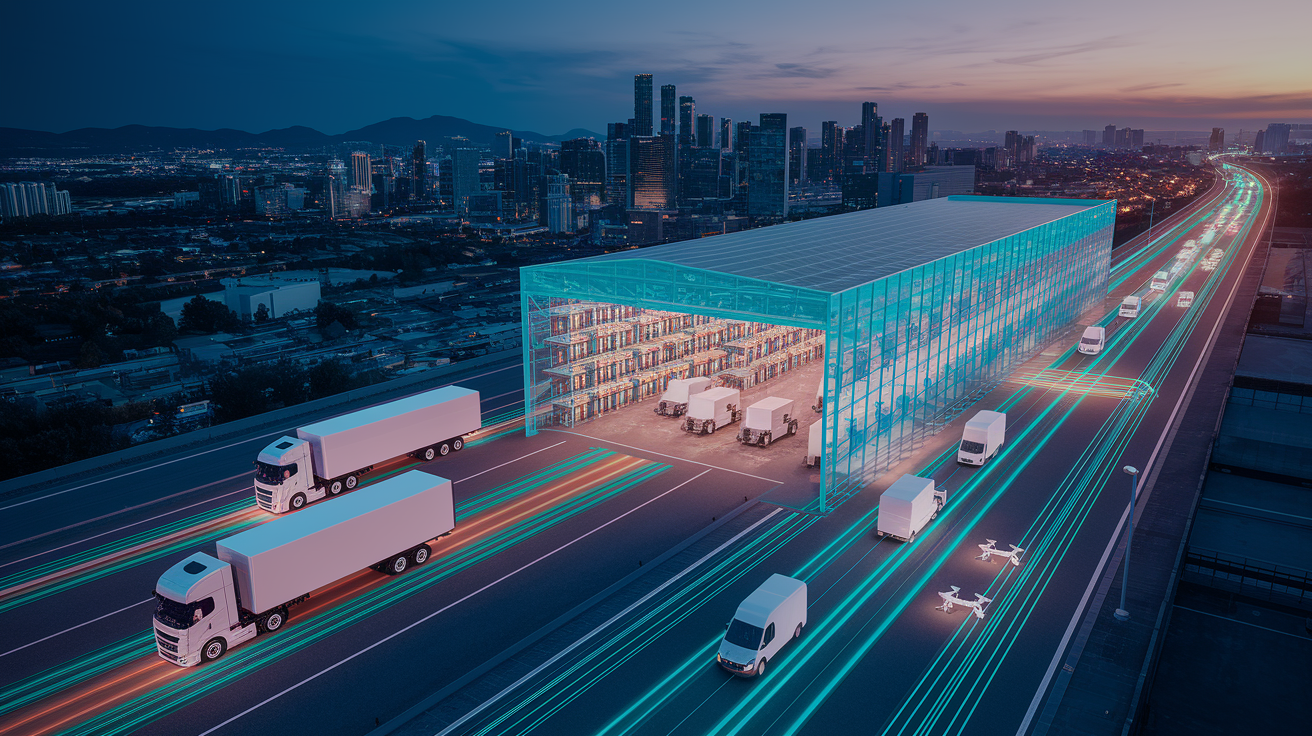
AI isn’t theory anymore. It’s running fleets, automating physical movement, managing the final delivery leg. Each application owns a distinct workflow, from dispatch to doorstep.
AI for Transportation Management
Transportation management systems with AI baked in automate load assignment, carrier selection, real-time rerouting. The system weighs hundreds of variables: driver hours-of-service limits, truck capacity, pickup and delivery windows, toll costs, live traffic. It assigns loads and sequences stops. When something goes wrong, it proposes alternate routes and updates customer ETAs without a dispatcher lifting a finger. For companies managing thousands of shipments daily, this kills the manual pricing and routing friction that slows everything down and drives up cost.
Fleet Optimization Systems
AI-driven fleet optimization balances fuel, vehicle wear, load density, driver schedules across entire fleets. Machine learning digs through historical trip data to find waste: trucks running light, excessive idling, routes that add unnecessary miles. The system adjusts loading to max out cube, routes trucks to cut deadhead miles (the empty return leg), schedules maintenance based on predicted component life instead of arbitrary intervals. U.S. trucks historically run about 30 percent empty. Fleets using AI routing and load matching? They’ve dropped that to 10 or 15 percent. That’s less fuel, fewer emissions, fewer driver hours.
Robotics and Automated Picking
Warehouse robotics lean on AI for navigation, object recognition, task prioritization. Autonomous mobile robots move inventory pods to human pickers or robotic arms, eliminating walk time. Computer vision identifies products on mixed-SKU shelves even when packaging varies or labels are hard to read. Machine learning predicts which items get ordered together, pre-positions them near packing stations to shorten cycle time. These systems handle volume spikes without adding proportional labor. A warehouse that would need 50 more workers during peak can add robotic units instead and reassign existing staff to exception handling and quality control.
AI in Last-Mile Delivery
Last-mile AI tackles the priciest part of the delivery trip. Route optimization sequences residential stops to cut left turns, hit delivery windows, adapt to real-time package adds or cancellations. Predictive models estimate accurate delivery windows by learning from historical traffic, parking availability, driver behavior at similar addresses. Some pilots use autonomous vehicles or drones for specific corridors: rural routes with low density or urgent medical deliveries where truck economics don’t pencil. Early runs report delivery times 30 to 60 percent faster for these constrained cases, though regulatory and infrastructure limits still keep broad rollout in check.
Benefits of Integrating AI Into Logistics Networks

AI cuts the three biggest variable costs: labor, fuel, inventory holding. Route optimization trims vehicle miles, warehouse automation moves labor from repetitive picking to higher-value work, demand forecasting lowers safety stock without raising stockout risk. Better forecasts cut emergency shipments, which smooths warehouse workload and improves vehicle use.
Companies using AI in logistics typically see these improvements:
Cost reduction: Transportation expense drops 5 to 15 percent through route optimization and load consolidation.
Accuracy gains: Order picking error rates fall as computer vision and robots replace manual work.
Inventory efficiency: Working capital tied up in stock decreases 20 to 30 percent while service levels hold steady or improve.
Speed: Delivery cycle times shorten 10 to 30 percent when AI handles real-time routing and exceptions.
Asset utilization: Predictive maintenance reduces unplanned downtime 20 to 50 percent, extends equipment life, lowers repair cost per asset.
Forecasting error drops 20 to 50 percent in mature setups, especially when models continuously retrain on fresh data. Warehouse throughput often jumps 10 to 40 percent after robotic automation. Large deployments, like the $775 million mobile-robot acquisition in 2012, pushed adoption across the industry. These benefits show up fastest when AI targets the highest-cost process first: transportation for carriers, inventory for retailers, labor for 3PLs. You’ll usually see performance gains within 3 to 6 months of a focused pilot. Full rollouts deliver sustained improvements over 12 to 24 months.
Implementation Strategies for AI in Logistics
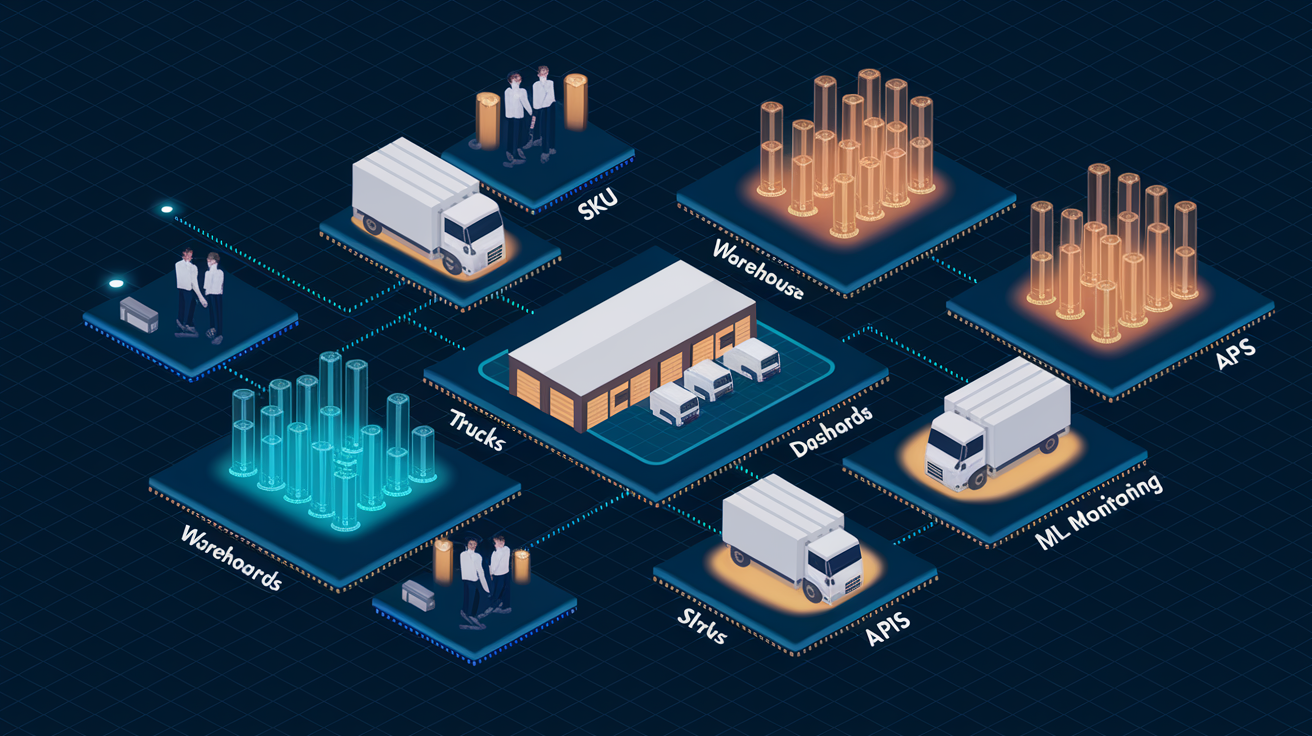
AI rollout follows a sequence: identify the highest-cost problem, pilot a solution on limited scope, measure against clear KPIs, then scale while building internal capability. Skip any step and you get stalled projects or models that test well but fail in production.
Start with data prep. AI models need clean, consistent input: SKU hierarchies, timestamps, location codes, telemetry. Inconsistent structures, missing fields, or siloed systems trash model accuracy and delay launch. Allocate 20 to 40 percent of initial effort to data mapping, master data management, integration work. This phase takes 2 to 6 months but determines whether the model works at all.
Next, run a targeted pilot. Pick one corridor, warehouse zone, or SKU cluster where baseline performance is well understood and improvement is measurable. Define success up front: cut route miles 10 percent, improve forecast accuracy 15 percent, halve picking errors. Deploy, measure daily, iterate quickly. Pilots often deliver measurable benefits in 3 to 6 months and cost $50,000 to $250,000 depending on scope and vendor involvement.
Phased rollout looks like this:
Baseline measurement: Document current performance (cost per shipment, forecast error, downtime hours) for the target process.
Data readiness: Clean and integrate data sources. Set up APIs or event streams between WMS, TMS, AI platform.
Pilot deployment: Implement AI on limited scope with clear acceptance criteria and KPIs.
Performance evaluation: Compare pilot results to baseline. Validate model accuracy and operational impact.
Scale incrementally: Expand to more warehouses, routes, or SKUs. Refine retraining cadence and monitoring dashboards.
Continuous improvement: Build MLops pipelines for automated retraining, drift detection, performance tracking. Plan for 10 to 20 percent of initial budget going to ongoing model maintenance.
Full enterprise deployments typically run $0.5 million to $10 million depending on scale, hardware needs (robots, IoT sensors), and internal skill availability. Companies without in-house data science teams often start with vendor-managed services, then build capability over 12 to 24 months through training and selective hiring.
Challenges and Limitations of AI in Logistics
Data quality is the most common roadblock. Models trained on incomplete shipment records, inconsistent SKU codes, or missing timestamps produce unreliable forecasts and bad routes. Legacy WMS and TMS systems often lack API connectivity, forcing manual exports or fragile batch integrations that add latency and error.
Integration complexity goes beyond technical plumbing. Logistics involves multiple partners: carriers, 3PLs, suppliers, marketplaces. Each has different data formats, update frequencies, willingness to share information. Establishing real-time flows across these partners requires contracts, middleware layers, fallback logic when feeds die. Plan for 6 to 12 month integration timelines for enterprise systems touching multiple partners and modes.
Skills shortages slow things down. Deploying and maintaining AI models requires data engineers, MLops specialists, solution architects who understand both machine learning and logistics workflows. Mid-sized companies often lack these roles, forcing reliance on consultants or vendor-managed services. Hiring takes time. Expect initial project teams of 3 to 8 specialists for a mid-sized rollout, with ongoing staffing for model monitoring and retraining.
High upfront costs deter pilots. Hardware investments (robots, IoT sensors, edge compute devices) add to software licensing and integration expense. A warehouse automation project may need $1 to 5 million in capital before generating measurable ROI. Transportation AI pilots need clean telemetry and API-ready TMS systems. Companies often mitigate this through phased budgets, vendor financing, or Automation as a Service models that shift capital to operating expense. Cybersecurity and regulatory risks require planning: protecting telemetry data, ensuring model explainability for safety-critical decisions, maintaining compliance with labor laws and privacy regs.
Real-World Examples of AI Transforming Logistics
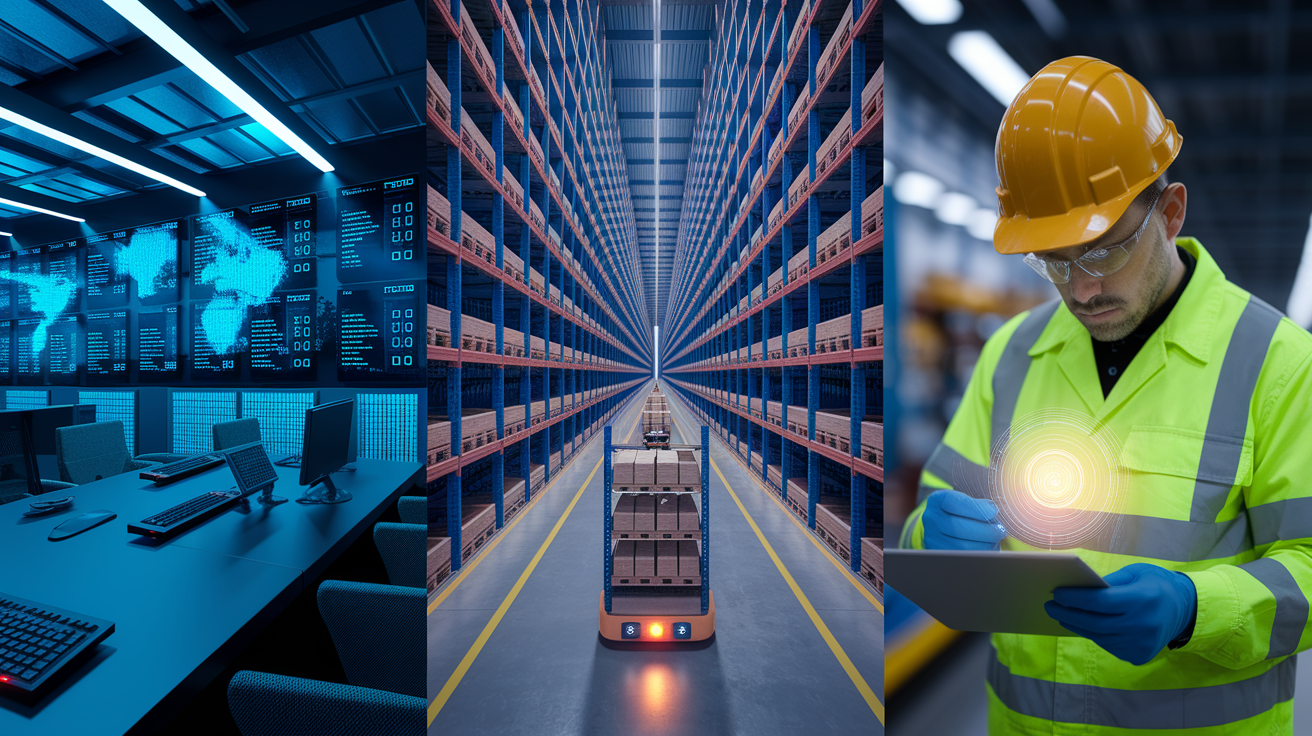
A large freight marketplace deployed machine learning for algorithmic carrier pricing. It analyzes hundreds of parameters: lane density, fuel costs, truck availability, seasonal demand. Provides instant, guaranteed rates. This killed the manual back-and-forth that previously delayed bookings by hours or days. The same platform applied routing algorithms to cut empty return miles from the industry average of roughly 30 percent down to 10 to 15 percent. Less fuel, fewer driver hours, lower carbon emissions, better asset use across the network.
Major retailers adopted mobile robotics and computer vision for warehouse fulfillment after the 2012 acquisition of robotic tech for $775 million signaled commercial viability. Robots navigate fulfillment centers on their own, bringing shelves to stationary pickers who no longer walk miles per shift. Computer vision reads mixed barcodes, detects packaging damage, verifies counts during cycle audits. These deployments report picking productivity increases of 10 to 40 percent and order accuracy improvements measured in basis points. Human workers shift from repetitive tasks to exception resolution and quality oversight.
Third-party logistics providers in Europe and North America use predictive maintenance models to monitor conveyor systems, forklifts, automated sorters. Sensors capture vibration, temperature, operational load. Anomaly-detection models flag components likely to fail within days or weeks. Maintenance teams schedule repairs during planned downtime instead of responding to emergency breakdowns. Early adopters report unplanned downtime cuts of 20 to 50 percent and lower maintenance cost per asset. Equipment lasts longer. Costly line stoppages that cascade through delivery schedules happen less often.
Final Words
We mapped how AI trims miles with route optimization, speeds picking through warehouse automation, sharpens demand forecasting, and reduces downtime with predictive maintenance.
Then we broke down practical applications—transportation management, fleet optimization, robotics, and last‑mile tools—and the measurable benefits they deliver.
We also covered implementation steps and the main constraints, like data quality, integration complexity, and upfront cost, plus real case wins that show clear payoff.
If you’ll move forward, start small: run a pilot, clean the data, measure results, and scale. ai in logistics can cut costs and speed delivery—real upside if you act.
FAQ
Q: Will logistics be replaced by AI?
A: Logistics will not be fully replaced by AI. AI automates routing, warehousing, and forecasting, but humans stay needed for exceptions, strategy, and equipment upkeep. Retrain teams for oversight, data, and maintenance roles.
Q: What are the 4 types of logistics?
A: The four types of logistics are inbound, outbound, third-party (3PL), and reverse logistics, covering materials coming in, finished goods going out, outsourced logistics services, and returns or recycling.
Q: Which 3 jobs will survive AI?
A: Three jobs likely to survive AI are logistics strategists/planners, maintenance and robotics technicians, and customer-experience or claims managers who handle complex exceptions and human judgment.
Q: What are the 7 pillars of logistics?
A: The seven pillars of logistics are planning, procurement/sourcing, production, inventory management, warehousing, transportation, and customer service, together covering flow, storage, and delivery.