


If your store still stores card numbers, you’re choosing bigger audits, higher costs, and extra risk.
Tokenization swaps card numbers for irreversible tokens before data hits your servers, so the real card number never touches your systems.
That shrinks PCI scope fast, and many vendors say merchants can avoid up to 95 percent of controls.
For small and mid-size stores without full compliance staff, that turns compliance from a months-long project into a checklist.
Read on to see how tokenization works, who benefits most, and the first checks to run on your payment vendor.
Understanding the Compliance Challenges Online Stores Face with Cardholder Data

When you start processing cards directly, your online store gets pulled into the Payment Card Industry Data Security Standard. PCI DSS, if you’re lucky enough not to have memorized the acronym yet. The major card networks built this framework to protect cardholder info, and it’s got a long list of technical, operational, and administrative controls that hit any business storing, processing, or transmitting those Primary Account Numbers. For most online merchants working without tokenization, that means treating basically every part of your checkout flow as part of a “cardholder data environment” that needs auditing. Your database, your server, your API endpoints, even your backup systems. Meeting the full PCI DSS requirements can mean wrestling with more than 300 individual security controls. What should be a straightforward e-commerce setup turns into this multi-layered security and documentation project that never quite ends.
The weight of managing a full cardholder data environment is real. Small and mid-sized stores usually don’t have dedicated compliance staff. But you’re held to the same baseline standards as enterprise retailers. Even one misconfiguration can trigger a violation. A log file that accidentally captures a card number, an unpatched checkout script, a backup stored without proper encryption. Any of those can increase audit costs, expose you to fines, or even cost you the ability to accept cards. Plenty of merchants end up spending more time on PCI paperwork than actually optimizing their payment experience.
Big compliance burdens that show up when you handle card data in scope:
- Documenting and securing every system component that might touch or store cardholder data. Web servers, databases, firewalls, third-party integrations, all of it.
- Running regular vulnerability scans and penetration tests across the entire in-scope environment. Often quarterly or more.
- Implementing strict access controls and role-based permissions for any employee or contractor who could interact with payment systems.
- Maintaining encryption for data at rest and in transit, plus managing cryptographic keys and certificates across multiple environments.
- Preparing detailed policy documentation and evidence artifacts for annual audits or self-assessment questionnaires that stretch into weeks of prep time.
Payment tokenization offers a way out. By replacing the Primary Account Number with an irreversible token at the moment of card capture and storing the real PAN in a secure vault run by a third party, tokenization removes cardholder data from your systems. When PAN never enters your infrastructure, most PCI requirements stop applying to your environment. Providers that handle the vault are typically Level 1 PCI-certified service providers in tier-4 data centers. Merchants using compliant tokenization platforms can sidestep up to 95 percent of the controls that would otherwise land on them. PCI compliance shifts from an all-consuming operational burden into something manageable, focused on a much smaller set of systems.
Why PCI Scope Expands When Online Stores Directly Handle Card Data
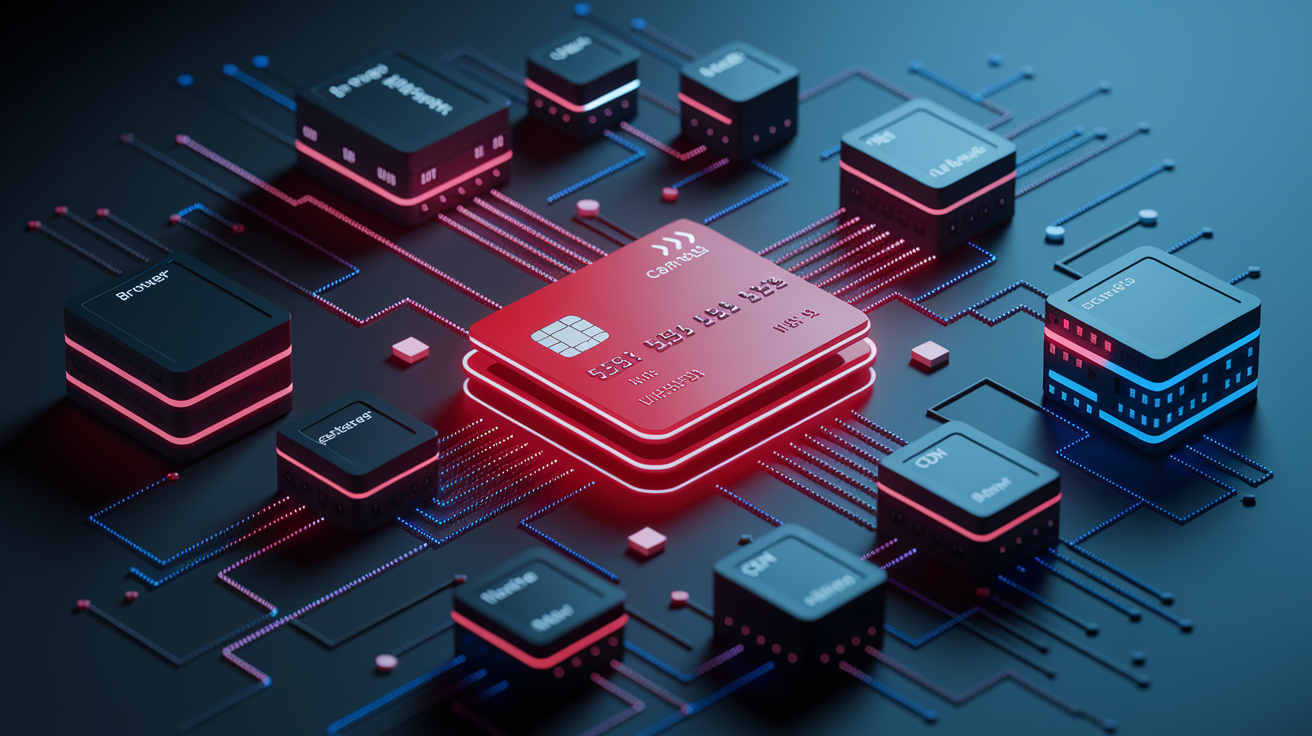
PCI DSS scope isn’t about what you intend to protect. It’s defined by every system, network segment, application, and data store that actually touches, processes, or transmits cardholder data. The second a customer types a card number into a checkout form on your server, that server’s in scope. If the POST request with the card number passes through a load balancer, application server, web application firewall, or reverse proxy before hitting a payment processor, every one of those components enters scope. If card data gets written to an application log for debugging, archived in a database backup, transmitted over an internal API, passed to an analytics platform for fraud scoring, or cached in a CDN, each of those systems and data flows has to be secured, documented, segmented, and audited under PCI DSS. This cascading expansion is why direct handling of PANs becomes a compliance problem that touches nearly every part of your technical stack.
Even well-meaning security measures can accidentally widen PCI scope if they involve cardholder data. You might implement encrypted storage for card numbers in a database to meet PCI Requirement 3. But that encryption introduces new obligations around cryptographic key management, access logging, secure key rotation, and backup procedures. Each one governed by more PCI controls. If you route card data through a fraud detection service before tokenization, that service and its integration points enter scope. If a third-party tag manager or customer support chat widget running on your checkout page can technically access form fields containing PANs, you’ve got to treat those scripts and their vendors as part of the cardholder data environment. Segmentation becomes critical but difficult. You have to prove that in-scope systems are isolated from the rest of your business network, which usually requires dedicated firewalls, VLANs, and continuous monitoring to show that cardholder data can’t leak into out-of-scope systems.
The burden grows because PCI DSS doesn’t care whether storage is intentional or accidental. If a PAN shows up in an error log, a web server access log, an email notification, or a database query trace, even for a fraction of a second, the system that created that log is in scope. You have to show that the log is protected, retained according to policy, encrypted or masked, and eventually purged. This is why merchants handling card data directly often find their “simple” checkout integration pulls their entire infrastructure into PCI scope. Firewall rule reviews, intrusion detection systems, file integrity monitoring, antivirus deployments, regular vulnerability scans, penetration tests, policy documentation, and quarterly or annual reporting that can eat up weeks of engineering and compliance team time.
Tokenization as the Primary Method to Reduce PCI Obligations for Online Stores
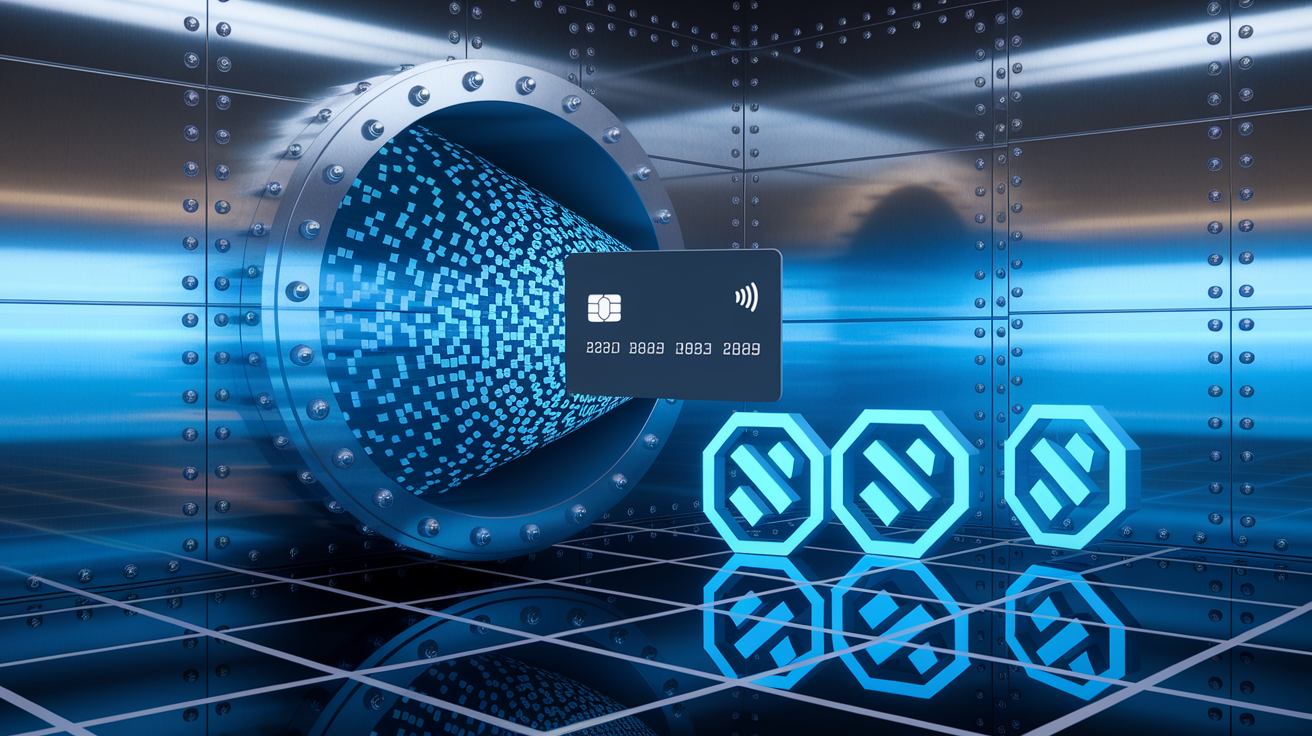
Payment tokenization works by swapping out the Primary Account Number (that 13 to 19 digit card number payment networks treat as sensitive) with a randomly generated, unique identifier called a token. The swap happens at the earliest possible moment in the payment flow, ideally before the PAN ever touches your servers or databases. Once the customer submits their card details, the data goes directly to a secure tokenization vault run by a third-party service provider. The vault stores the real PAN in a hardened environment. Usually tier-4 data centers with physical access controls, redundant power and network infrastructure, continuous security monitoring. You receive only the token in return. That token becomes the persistent identifier used for authorization requests, recurring billing, refunds, and any future transaction tied to that customer’s payment method. Because the token is non-reversible (meaning it can’t be mathematically or programmatically converted back into the original PAN without access to the secure vault), it carries no value to an attacker and isn’t classified as sensitive cardholder data under PCI DSS.
The token lifecycle starts the moment cardholder data is captured. In a properly set up system, the PAN travels directly from the customer’s browser or mobile app to the tokenization service provider via an encrypted channel, bypassing your web servers entirely. The provider validates the card format, generates a unique token, stores the PAN in the vault, and returns the token to you. From that point forward, your systems (order database, customer record, subscription billing engine, analytics platform) only ever see and store the token. When you need to charge the card, you send the token and transaction details to your payment gateway or processor. They retrieve the real PAN from the vault, route the authorization request through the card networks, and return the result. The vault maintains the mapping between token and PAN, but that mapping is locked behind strict access controls, logging, and authentication mechanisms that PCI auditors verify during the provider’s annual Level 1 service provider assessment. This separation of duties is why tokenization reduces your PCI scope. If the PAN never lives in your infrastructure, your systems aren’t part of the cardholder data environment for storage and transmission purposes.
There are two broad categories of tokens you’ll run into:
- Vaulted tokens are persistent identifiers created and stored long term. Commonly used for card-on-file scenarios, subscription billing, and one-click checkout experiences where the customer expects to reuse the same payment method across multiple transactions without re-entering card details.
- Transient tokens are short-lived, single-use tokens generated for one specific transaction and then tossed. Often used when you don’t need to store payment credentials beyond the immediate purchase.
- Token uniqueness varies by provider. Some vaults issue a globally unique token per PAN, while others issue unique tokens per merchant or per channel. Even if two merchants tokenize the same card, the tokens they receive are different and can’t be cross-referenced.
- PAN mapping and retrieval are tightly controlled operations. Only authorized systems, typically the payment gateway or processor integrated with the vault, can exchange a token for the underlying PAN. Every retrieval event is logged with timestamps, user identifiers, and request metadata for audit trails.
Globally, more than six billion tokens are reported to be in use. Widespread adoption across online, mobile, and omnichannel commerce. The reason PCI DSS treats tokens as non-sensitive is straightforward. A token, by itself, can’t be used to start a fraudulent transaction on any other system or network. It’s worthless outside the specific tokenization ecosystem that issued it. An attacker who steals a database full of tokens gains no ability to reconstruct card numbers, make purchases at other merchants, or extract cash value. This design is what allows tokenization to break the chain of PCI obligations that would otherwise apply to any system holding payment credentials.
How Tokenization Simplifies Key PCI DSS Requirements for E‑Commerce Merchants

Tokenization delivers PCI scope reduction by changing your data handling responsibilities. Instead of running a full cardholder data environment that has to meet hundreds of individual security controls, you outsource the most sensitive functions (secure collection, transmission, storage, and retrieval of PANs) to a third-party provider whose entire business model is built around maintaining PCI Level 1 compliance. The result is a real simplification across three core areas of PCI DSS: how card data is collected and transmitted, how it’s stored, and what annual validation and audit obligations fall on you. Each of these simplifications translates into fewer systems to secure, less documentation to produce, and lower compliance costs.
Simplifying Customer Payment Data Collection and Transmission
When you use client-side or hosted tokenization, the cardholder enters their payment details into a form field or iframe that’s served and controlled by the tokenization provider, not by your own web application. The card data is encrypted in the browser and sent directly to the provider’s vault over a secure channel. Your server never sees the PAN in the HTTP request, never writes it to application logs, never passes it through middleware or load balancers. This “direct to vault” data flow removes your web servers, application servers, reverse proxies, and any intermediate network components from PCI scope for data transmission. PCI DSS Requirement 4, which requires encryption of cardholder data across open, public networks, is satisfied by the provider’s implementation. Your obligation shrinks down to ensuring that the integration itself (the JavaScript library or SDK that starts up the tokenization form) is loaded securely and hasn’t been tampered with by third-party scripts or content injection attacks.
Eliminating PAN Storage Obligations Through Secure Token Vaulting
PCI DSS Requirement 3 governs the protection of stored cardholder data. It’s one of the most technically demanding areas of the standard, covering encryption, access controls, key management, retention policies, and secure deletion procedures. When tokenization is done right, you don’t store PANs at all. Only tokens, which PCI DSS doesn’t classify as sensitive authentication data. The provider’s vault becomes the sole repository for PANs. Because that vault is independently assessed and certified as PCI Level 1 compliant, you can rely on the provider’s controls rather than building and maintaining your own encrypted storage infrastructure. This shift eliminates your obligations around cryptographic key generation, rotation, and destruction. It removes the need for hardware security modules or key management services in your environment. And it wipes out the complex data retention and purging workflows you’d otherwise need to document and audit annually. Your databases, file systems, backups, and disaster recovery environments no longer contain cardholder data, so they fall outside the scope of PCI storage requirements.
Reducing Annual PCI Validation and Audit Surface
Every year, you’ve got to complete a Self-Assessment Questionnaire or undergo a formal on-site audit by a Qualified Security Assessor, depending on your transaction volume and your acquiring bank’s policies. The complexity and length of that validation process is tied directly to how much of your environment is in scope. Merchants who handle and store PANs across their own infrastructure typically complete SAQ-D, the most comprehensive questionnaire. It covers all PCI DSS requirements and can take several weeks of dedicated effort to document, review, and submit. Merchants who use a compliant tokenization provider and make sure PANs never enter their systems may qualify for SAQ-A, a much shorter questionnaire designed for merchants who fully outsource payment processing and cardholder data handling. SAQ-A can often be done in a matter of days rather than weeks. The exact SAQ type depends on your specific integration pattern. Whether your servers ever touch PAN, whether the checkout form is hosted by you or fully outsourced, and whether any other systems can access or log cardholder data. But the direction of change is consistent. Fewer in-scope systems mean less audit surface, lower assessor fees, and faster annual validation cycles.
| Requirement Category | Impact of Tokenization |
|---|---|
| Secure transmission of cardholder data | Provider handles encryption; your network components and application servers are removed from transmission scope when using client-side tokenization. |
| Storage and retention of PANs | You store only tokens; PAN storage, encryption, key management, and retention obligations shift entirely to the provider’s vault. |
| Access controls and logging | Your access control and logging requirements are scoped to systems that handle tokens, not PANs; provider maintains logs for PAN access and retrieval events. |
| Vulnerability management and segmentation | Fewer of your systems require patching, scanning, and network segmentation when PAN handling is outsourced; segmentation effort focuses on isolating token-handling components. |
| Annual validation and audit effort | You may shift from SAQ-D (multi-week effort, all requirements) to SAQ-A or other reduced-scope questionnaires (days instead of weeks). |
Implementation Patterns That Maximize PCI Scope Reduction With Tokenization

Not all tokenization integrations deliver the same level of PCI scope reduction. The specific technical pattern you choose (where card data is captured, how it’s transmitted, and when it’s converted into a token) determines which systems remain in scope and which obligations you can offload to the provider. If you want to achieve the maximum possible reduction in PCI scope, you need to adopt integration patterns that prevent the Primary Account Number from ever entering your own infrastructure. That means choosing client-side tokenization, hosted payment forms, or direct to vault flows over server-side tokenization methods that route PANs through your servers before tokenization occurs. The difference between these patterns isn’t subtle. Client-side and hosted methods can remove entire application stacks from PCI scope, while server-side tokenization reduces risk but still leaves you operating a cardholder data environment subject to most PCI DSS controls.
Client-side tokenization works by embedding a JavaScript library or SDK from the tokenization provider directly into your checkout page. When the customer enters their card number, CVV, and expiration date, those values are captured by the provider’s code running in the browser, encrypted locally, and sent directly to the provider’s vault without passing through your web server. Your backend receives only the token, which you can then store in your order database and pass to a payment gateway for authorization. This pattern ensures that the PAN never appears in your HTTP request logs, application logs, load balancer logs, or any middleware sitting between the browser and your server. Because your infrastructure never processes or transmits the PAN, those systems are removed from PCI transmission scope. The one catch is that you have to make sure the client-side tokenization script itself is loaded securely. Over HTTPS, with subresource integrity checks, and without interference from third-party scripts or browser extensions that could intercept form data before tokenization occurs.
Simplifying Customer Payment Data Collection and Transmission
Hosted payment forms take the client-side approach one step further by offloading not just tokenization but the entire payment form rendering and data collection to the provider. In a hosted form integration, the customer is either redirected to a payment page served by the provider or you embed a secure iframe on your checkout page that displays the provider’s form. Either way, the card data never passes through your domain or infrastructure. The provider collects the PAN, tokenizes it, and returns the token to your callback endpoint along with an authorization result or transaction receipt. Hosted forms are the simplest path to minimal PCI scope because your systems never touch, process, or transmit cardholder data at any stage of the transaction. The trade-off is reduced control over the look and feel of the checkout experience, though modern hosted form solutions offer extensive customization options through CSS and branding APIs. Merchants who care more about compliance simplicity than total design control often find that hosted forms deliver the fastest path to SAQ-A eligibility.
Eliminating PAN Storage Obligations Through Secure Token Vaulting
Server-side tokenization is the pattern where your checkout form submits card data to your own web server, and the server then forwards the PAN to the tokenization provider to receive a token in return. This approach is more flexible from a development perspective. It lets you perform custom validation, fraud checks, or pre-processing before tokenization. But it comes with a significant compliance cost. Because the PAN transits your server, that server enters PCI scope, along with any load balancers, application firewalls, and network segments it crosses. You have to encrypt the data in transit, make sure it’s not logged or cached, segment the server from other systems, and document all of these controls for PCI audits. Server-side tokenization reduces risk compared to storing PANs in your database, but it doesn’t remove you from operating a cardholder data environment. For merchants who already have server-side integrations in place, migrating to client-side or hosted methods is the most effective way to close the remaining PCI gap.
Reducing Annual PCI Validation and Audit Surface
Common pitfalls that can wreck scope reduction:
- Accidentally logging or caching PANs in application logs, web server access logs, error monitoring services, or analytics platforms before tokenization occurs. That brings those systems back into scope even if tokenization is implemented elsewhere in the flow.
- Failing to segment tokenization endpoints from the rest of your infrastructure, allowing lateral movement of data or access that defeats the isolation benefits of tokenization.
- Using a tokenization provider that isn’t independently assessed or PCI Level 1 compliant. That forces you to treat the provider’s systems as part of your own cardholder data environment and assume responsibility for controls that should be the provider’s obligation.
Choosing a PCI‑Compliant Tokenization Service Provider

Picking a tokenization provider isn’t just a technical decision. It’s a compliance delegation. When you outsource PAN storage and handling to a third party, you’re relying on that provider’s security controls, audit practices, and operational resilience to satisfy a big chunk of your own PCI obligations. If the provider’s controls fail or if they’re not actually PCI-compliant, you remain liable for any breach or compliance violation that results. That makes vendor due diligence a critical step in any tokenization project. The baseline requirement is straightforward. The provider must be a PCI DSS Level 1 Service Provider, which means they’ve undergone an annual on-site audit by a Qualified Security Assessor and received an Attestation of Compliance confirming their cardholder data environment meets all applicable PCI requirements. You should get a current copy of that AOC, verify that it covers the specific tokenization services you intend to use, and confirm that the assessment scope includes the vault, key management systems, and any APIs or integration points you’ll interact with.
Beyond the AOC, you should evaluate the physical and logical security of the provider’s vault infrastructure. Best providers operate vaults in tier-4 data centers, which are designed with redundant power, cooling, network connectivity, and physical access controls that meet or exceed the requirements for high-security environments. Tier-4 facilities typically include 24/7 on-site security personnel, biometric access controls, video surveillance, and strict change management procedures for any hardware or software modifications. On the logical security side, the provider’s vault should enforce strong authentication and role-based access controls, maintain comprehensive audit logs for every PAN retrieval or token mapping operation, and implement secure deletion mechanisms that ensure cardholder data is irrecoverably purged when a merchant or customer requests removal. QSAs who assess tokenization providers routinely check identity validation procedures, password policies, firewall configurations, intrusion detection systems, data retention policies, encryption methods for data at rest and in transit, and internal testing and code review processes to ensure that vulnerabilities are identified and fixed before they can be exploited.
Vendor due diligence steps:
- Request and review the provider’s current Attestation of Compliance and confirm that the assessment was conducted by a PCI SSC-approved QSA and covers tokenization services.
- Verify that the provider is listed on the PCI Security Standards Council’s public registry of validated Level 1 service providers.
- Confirm that the provider’s vault infrastructure operates in tier-4 or equivalent high-security data centers with documented physical access controls and redundancy.
- Review the provider’s data retention and deletion policies to ensure that PANs aren’t retained longer than necessary and can be securely purged on request.
- Get evidence of the provider’s logging and monitoring capabilities, including how PAN retrieval events are tracked, who has access to those logs, and how long logs are retained.
- Include contractual language that requires the provider to notify you of any security incidents, changes to PCI compliance status, or material changes to vault infrastructure or security controls.
Avoiding Common Misconceptions That Can Undermine PCI Scope Reduction

The most persistent misconception about payment tokenization is that it wipes out PCI DSS obligations entirely. It doesn’t. Tokenization is a scope reduction tool, not a compliance elimination tool. Merchants who adopt tokenization still have PCI responsibilities. Those responsibilities are just smaller, more focused, and easier to document than they would be if you handled and stored PANs across your own infrastructure. A related misconception is that any tokenization integration will automatically qualify you for the shortest and simplest Self-Assessment Questionnaire. In reality, SAQ eligibility depends on the specific implementation pattern. If PANs ever touch your servers, even briefly, or if your checkout flow allows card data to be logged, cached, or transmitted through your systems before tokenization, you remain in broader PCI scope and may not qualify for reduced SAQs. Your acquiring bank or a Qualified Security Assessor makes the final call on which SAQ applies, based on evidence of how the payment flow actually works in production.
Another common error is assuming that the tokenization provider holds all responsibility for PCI compliance once the contract is signed. While the provider is responsible for securing the vault, maintaining Level 1 compliance, and protecting PANs stored within their environment, you remain responsible for securing the systems that interact with tokens. The web application, the APIs that send tokens to payment gateways, the databases that store tokens alongside customer records, and any third-party services or scripts that run on the checkout page and could theoretically intercept card data before tokenization occurs. You also have to make sure that no cardholder data leaks into logs, backups, analytics platforms, or email notifications. Any system that captures PAN is brought back into scope, even if tokenization is implemented elsewhere. This is why proper integration, continuous monitoring, and periodic re-validation of data flows are essential. A single misconfiguration or code change can silently reintroduce PCI scope and compliance obligations that tokenization was meant to remove.
Common pitfalls that can leave you with full PCI scope unchanged:
- Implementing server-side tokenization without securing the transmission path, logging, or intermediate processing steps. That keeps your infrastructure in scope for data handling even though tokens are eventually issued.
- Failing to update SAQ documentation or notify the acquiring bank after implementing tokenization. Auditors end up assessing you under full-scope PCI requirements because the integration wasn’t formally recognized or validated.
- Using a tokenization provider that isn’t PCI Level 1 compliant or failing to get and review the provider’s current AOC. That forces you to treat the provider’s systems as part of your own cardholder data environment and assume responsibility for controls that should be externally validated.
- Allowing third-party scripts, tags, or browser extensions to access payment form fields before tokenization. That can result in PAN being intercepted, sent to external domains, or logged outside the tokenization flow, bringing those integrations and any affected systems back into PCI scope.
Preventing Future PCI Compliance Risks Through Operational Controls

Tokenization reduces PCI scope at the moment of implementation, but keeping that reduced scope over time requires ongoing operational discipline. Merchants who successfully deploy tokenization can find themselves back in full PCI scope months or years later if development teams introduce changes that accidentally reintroduce cardholder data into your systems. Common risk vectors include logging enhancements that capture request payloads containing PANs, new analytics or fraud detection integrations that process pre-tokenized data, backup systems that archive databases or log files without sanitizing card data, or code deployments that bypass client-side tokenization and route card data through your server for custom validation or processing. Each of these changes can reopen PCI scope, trigger the need for additional controls, and increase audit effort. The solution is to treat PCI scope as a dynamic, actively managed boundary rather than a one-time configuration, and to build continuous monitoring and validation into your change management and incident response processes.
Merchants who use tokenization still have to complete annual Self-Assessment Questionnaires, maintain documented incident response plans, and perform quarterly vulnerability scans of any systems that interact with payment data or tokens. The difference is that the scope of those activities is narrower and the effort required is smaller. Vulnerability scanning can be limited to the specific web servers, APIs, and network segments that handle tokenization API calls and checkout flows, rather than scanning the entire e-commerce platform and backend infrastructure. Similarly, the incident response plan should address scenarios where token mapping or API credentials are compromised, but doesn’t need to include breach notification procedures for PAN exposure if PANs are never stored in your systems. Role-based access controls should be enforced for any API or administrative interface that can retrieve PANs from the token vault, even though that retrieval is performed by the payment gateway rather than by your staff. Audit logs from the tokenization provider should be reviewed periodically to confirm that PAN retrieval events align with legitimate transaction volumes and that no unexpected or unauthorized access has occurred.
Ongoing operational controls to maintain reduced PCI scope:
- Periodic code reviews and security testing to make sure that payment handling code hasn’t been modified in ways that capture or log PAN data before tokenization occurs.
- Logging and monitoring policies that explicitly prohibit the storage of PANs in application logs, web server access logs, error logs, or third-party monitoring tools, with automated alerts or log scrubbing tools to detect and redact any accidental captures.
- Vendor and third-party integration reviews before deploying new analytics platforms, fraud tools, chat widgets, or marketing tags on checkout pages to confirm that those scripts can’t access or transmit payment form data before tokenization.
Maintaining proper segmentation between systems that handle tokens and systems that should never interact with payment data is also essential. If your internal CRM, inventory system, or customer support tool can access the order database where tokens are stored, those systems enter a gray area of PCI scope and have to be evaluated to confirm they don’t have the ability to retrieve PANs by calling the tokenization provider’s API. Firewall rules, network access controls, and API authentication mechanisms should enforce the principle that only authorized payment gateways and transaction processing services can exchange tokens for PANs, and all such exchanges should be logged and auditable.
When Merchants Should Seek Professional PCI or QSA Assistance

Figuring out the correct Self-Assessment Questionnaire type, confirming that a tokenization integration actually removes systems from PCI scope, and producing the evidence required for annual validation are tasks that benefit from professional guidance. Especially for merchants who process high transaction volumes, operate complex multi-channel checkout flows, or are subject to on-site PCI audits rather than self-assessment. A Qualified Security Assessor brings expertise in interpreting PCI DSS requirements, evaluating data flows, and identifying hidden scope traps that you and your developers may overlook. QSAs confirm that your implementation aligns with the conditions required for reduced-scope SAQs, validate that the tokenization provider’s AOC is current and applicable, and help you document the segmentation, logging, and access control measures that auditors and acquiring banks expect to see. For merchants moving from SAQ-D to SAQ-A or from full on-site audits to self-assessment, the time and cost savings enabled by tokenization are significant. Multi-week audit prep cycles can shrink to a few days. But only if the integration is done correctly and you can demonstrate that PANs truly never enter your environment.
When you should consult a QSA or your acquiring bank includes scenarios where the payment flow is complex or non-standard. Like when you operate multiple checkout paths across web, mobile app, and point of sale channels, each with different tokenization integrations. It also includes situations where you have custom fraud detection logic, customer support workflows, or reporting tools that interact with payment data and where it’s unclear whether those tools should be considered in scope. Acquiring banks and payment processors often have specific requirements or preferred tokenization providers. Confirming compatibility and SAQ eligibility before development begins can prevent costly rework or compliance gaps. QSAs can also help you prepare for the shift from self-assessment to formal audit as transaction volumes grow, making sure that documentation, logging, and evidence collection practices meet the higher standards required for on-site assessments. The investment in professional PCI assistance is typically small relative to the cost of operating a full-scope cardholder data environment. And it provides assurance that the scope reduction you achieve through tokenization will be recognized and validated by auditors and card networks.
Final Words
In the action, tokenization is the fastest way to shrink PCI scope: remove PAN from your systems, shift storage to a certified vault, and cut the number of controls you must meet.
Pick client-side or direct-to-vault flows, confirm the provider’s Level 1 PCI and AOC, and keep simple operational controls in place.
If you want a one-line takeaway on how payment tokenization improves PCI compliance for online stores: it keeps PAN out of your environment, often moving you from SAQ-D to SAQ-A and greatly reducing audit time. Do the checks and you’ll cut risk and compliance work fast.
FAQ
Q: What is tokenization in online payments and what is its purpose in PCI compliance?
A: Tokenization in online payments replaces the primary account number (PAN) with an irreversible token, keeping PAN out of merchant systems and dramatically shrinking PCI scope and related compliance obligations.
Q: How does tokenization protect your credit card details during an online or contactless transaction and what are its advantages in payment processing security?
A: Tokenization protects card details by exchanging PAN for non-reversible tokens during online or contactless flows, making intercepted data useless. Advantages: lower breach risk, reduced PCI scope, simpler recurring billing, and easier audits.