


Think your Etsy shop is safe? Think again.
Etsy’s 2026 prohibited items rewrite removes template and scanned vintage loopholes, bans resale of unmodified natural goods, and bars many service and money-transfer listings.
That matters because listings removed or flagged can tank sales and trigger account penalties, and enforcement is already retroactive to July 15, 2025.
This checklist shows what changed, who is most at risk, and the 30-day audit steps to protect your top SKUs.
Key 2026 Etsy Prohibited Item Policy Changes
Etsy dropped its biggest policy rewrite on June 10, 2025, and it’s not subtle. The update pulls out language that used to let you lean on template designs, scan vintage stuff and call it yours, or flip unmodified natural materials. If you built a shop around commercial design packs, digitized ephemera, or raw gemstone resale, you’re looking at immediate listing trouble. They also added explicit bans on certain service listings: personal coaching, therapy, tutoring, and anything that exists just to move money around.
The changes hit both what you can sell and how you describe it. Etsy scrubbed the allowance for items “based on a templated design or pattern.” Only work derived from your own original design qualifies now. This hits print-on-demand shops hard. Digital download stores selling scanned vintage prints. Anyone relying on licensed commercial templates. At the same time, the Services Policy expanded to allow modification work (ring resizing, garment hemming) while banning crowdfunding, tip jars, donation listings, and add-ons with no physical product attached. That includes express-shipping-only listings or tailoring slots sold separately from an actual item.
The enforcement window is live and retroactive for removals dated July 15, 2025 or later. You’ve got a 90-day appeal window. Sellers who ignore this update risk listing removal, suppressed shop rankings, and escalating account actions. The sharpest compliance deadline? Right now. Audit all active listings within 30 days and prioritize your top 10% revenue-generating SKUs first.
Newly prohibited or tightened categories under the 2026 update:
- Template-based products, including items created with commercial design files or pattern licenses
- Digital scans of vintage photographs, books, patterns, or ephemera sold as downloads
- Unmodified natural items resold without value-added work (raw rocks, gemstones, seashells purchased and relisted)
- Service listings for personal therapy, tutoring, training, coaching, or similar consultative work
- Money-transfer listings: tips, donations, raffles, crowdfunding, gift cards, referral codes, and add-on-only listings with no physical item
- Party favors, generic tools, and seasonal décor that don’t meet the “Sourced by a seller” original-design test
Category-by-Category Breakdown of Newly Prohibited Items
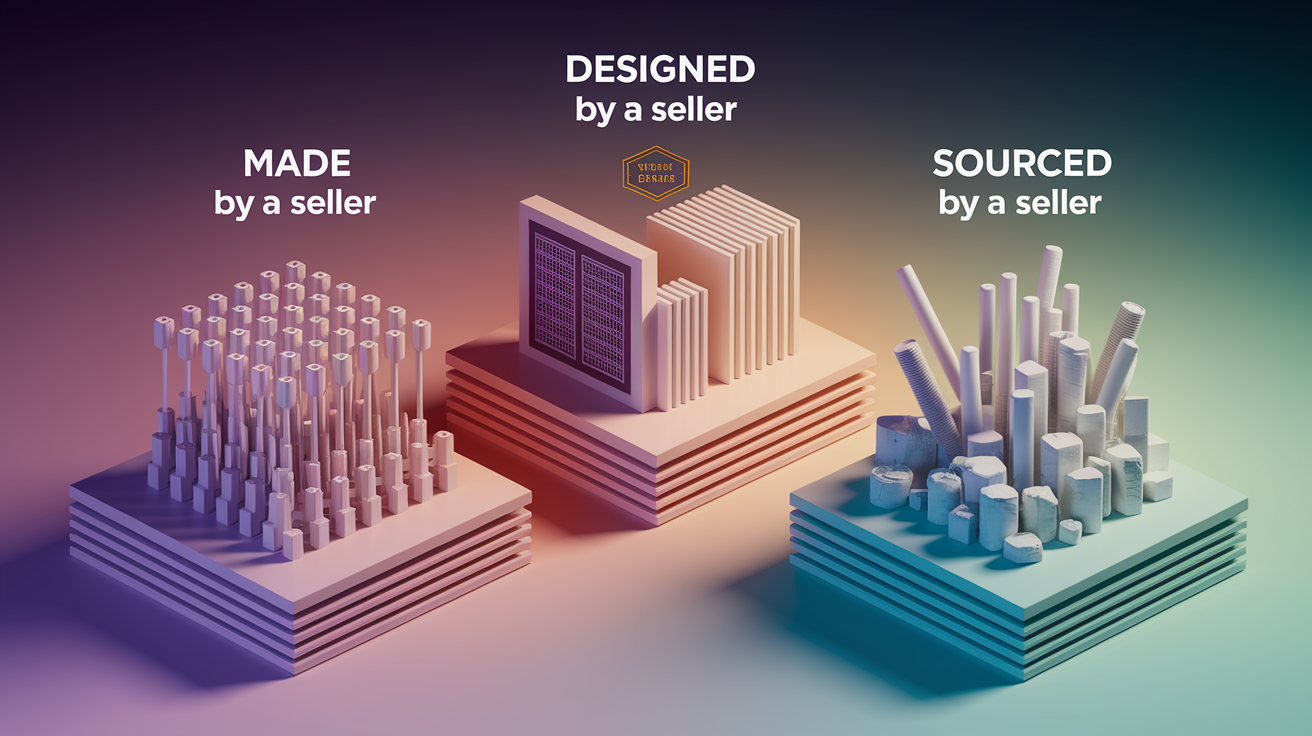
The 2026 update restructured how Etsy defines compliance across its three core qualifying paths: Made, Designed, and Sourced. Under “Made by a seller,” the platform removed permission to use templated designs or patterns, even if you hold a commercial license. Physical items produced with computerized tools (laser cutters, digital printers, CNC machines) must now be based entirely on your own original design work. If you bought a design file from a creative marketplace or licensed a pattern from another artist, that listing no longer qualifies.
“Designed by a seller” no longer includes references to “qualifying vintage items” or ready-made templates from production partners. Vintage now lives exclusively under the “Handpicked by a seller” category. Digital bundles that package scanned vintage prints, books, or ephemera fall into a gray zone. Etsy hasn’t issued blanket clarification on digitized vintage, but removal activity suggests scanned items sold as downloads without original creative transformation are at high risk.
The “Sourced by a seller” category saw explicit removals. Party favors, previously listed under Party supplies, were stripped from the allowed list. Etsy also added detailed examples of items that don’t qualify as sourced: generic cooking tools or ingredients, repair tools, gardening supplies, cosmetic supplies, and certain party or seasonal items. Costumes, party favors, and holiday décor that aren’t tied to a single, specific gathering or celebration are now disallowed in the Sourced category. Sellers listing metaphysical supplies (herbs, crystals, spell books) can only sell these items if they meet another qualifying category, such as a vintage spell book or a crystal handpicked from nature. Resold commercial spell-work kits don’t qualify.
Service listings saw the biggest expansion in prohibited types. While Etsy now explicitly permits modification services (restoring a buyer’s item, photographic retouching, color-correction of a buyer’s image), it introduced a detailed ban list: personal therapy, tutoring, training, coaching, and any listing created to transfer money. That includes tip jars, donations, raffles, crowdfunding, charitable-donation listings where the only item is a digital download, add-ons with no physical item (express shipping sold alone), tailoring services sold separately from a garment, jewelry alterations sold as standalone listings, gift cards, and referral codes.
Major categories with new prohibitions in 2026:
- Digital downloads: scanned vintage prints, patterns, books, or ephemera sold without original creative work
- Natural items: raw rocks, gemstones, seashells, and similar materials purchased retail and resold unmodified
- Template-based goods: any physical or digital product created using commercial templates, licensed patterns, or design files from other artists
- Service listings: personal therapy, tutoring, coaching, training, money-transfer listings, tip jars, donation/raffle/crowdfunding listings, gift cards, referral codes, and add-ons with no associated physical item
- Party and seasonal items: party favors, costumes, and holiday décor that don’t meet “Sourced by a seller” criteria or aren’t tied to a single, specific event
Old vs. New Etsy Policy Comparison Chart
| Item Category | Before 2026 Policy | 2026 Updated Policy |
|---|---|---|
| Template-based physical items | Allowed if based on a templated design or pattern, including commercial licenses | Prohibited. Only original designs by the seller are permitted |
| Digital vintage scans (photos, books, patterns) | Allowed under “Designed by a seller” or as qualifying vintage items | Removed from policy language; scanned vintage items sold as downloads are now high-risk and subject to removal |
| Unmodified natural items (rocks, gemstones, shells) | Permitted as resale under “Sourced by a seller” | Prohibited. Must be incorporated into a created item or handpicked from nature by the seller |
| Party favors and seasonal décor | Allowed under “Sourced by a seller” Party supplies | Party favors removed from policy; seasonal/party items must be tied to a single, specific celebration and meet original-design criteria |
| Service listings (coaching, tutoring, therapy) | Not explicitly prohibited; gray area | Explicitly banned. Personal therapy, tutoring, training, coaching, and similar services are disallowed |
| Money-transfer listings (tips, donations, gift cards) | Loosely restricted; some sellers used workaround listings | Explicitly banned. Includes tips, donations, raffles, crowdfunding, gift cards, referral codes, and add-ons with no physical item |
Step-by-Step Seller Compliance Tasks for 2026

You need to audit every active listing and complete remediation before Etsy’s automated detection or manual review flags your shop. Start with high-risk categories and top revenue SKUs, then work down to lower-volume listings.
- Log in to Shop Manager and open the Policy Violations page. Review all flagged listings and note removal dates. If removed on or after July 15, 2025, you’ve got 90 days from removal to appeal.
- Export your full product catalog into a spreadsheet with columns: Listing ID, Title, SKU, Category, Price, Quantity, Risk Level, Compliance Status, Required Docs, Uploaded (Y/N), Last Reviewed, Action Owner.
- Flag all template-based listings. Search for products created using commercial design files, licensed patterns, or ready-made templates. Mark these as “Remove” or “Rework” and document the original design elements you contributed.
- Review all digital downloads. Remove scanned vintage prints, books, patterns, or ephemera that lack original creative transformation. If you added original artwork or design elements, document that work and update listing descriptions to clarify your contribution.
- Audit natural-item listings. Identify raw rocks, gemstones, seashells, or similar materials purchased retail and resold without modification. Either remove the listing or rework the product into a created item (jewelry, décor) that demonstrates original design.
- Check service listings. Disable any listings offering personal therapy, tutoring, training, coaching, or money-transfer functions (tips, donations, crowdfunding, gift cards, referral codes, express-shipping-only add-ons, standalone tailoring/alteration slots). Enable only modification-service listings that restore, repair, retouch, or color-correct a buyer’s item.
- Add required AI-art disclosures. If you sell AI-generated or AI-assisted art, ensure you meet Etsy’s “original design” standard and apply the exact disclosure wording required by current Creativity Standards. Retain prompt logs and creation records.
- Verify sourcing and documentation. Collect and upload certificates of analysis (COA) for CBD/hemp products, safety data sheets (SDS) for cosmetics and chemicals, test reports for electronics, and reseller permits or manufacturer invoices linking product to supplier. Store documentation for at least 180 days after sale.
Complete the full audit within 30 days. Etsy’s automated detection flags listings continuously, and manual reviews escalate quickly during high-traffic periods. Delayed remediation compounds enforcement risk and suppresses shop-wide search placement.
Enforcement Timeline and What Happens if You Don’t Comply
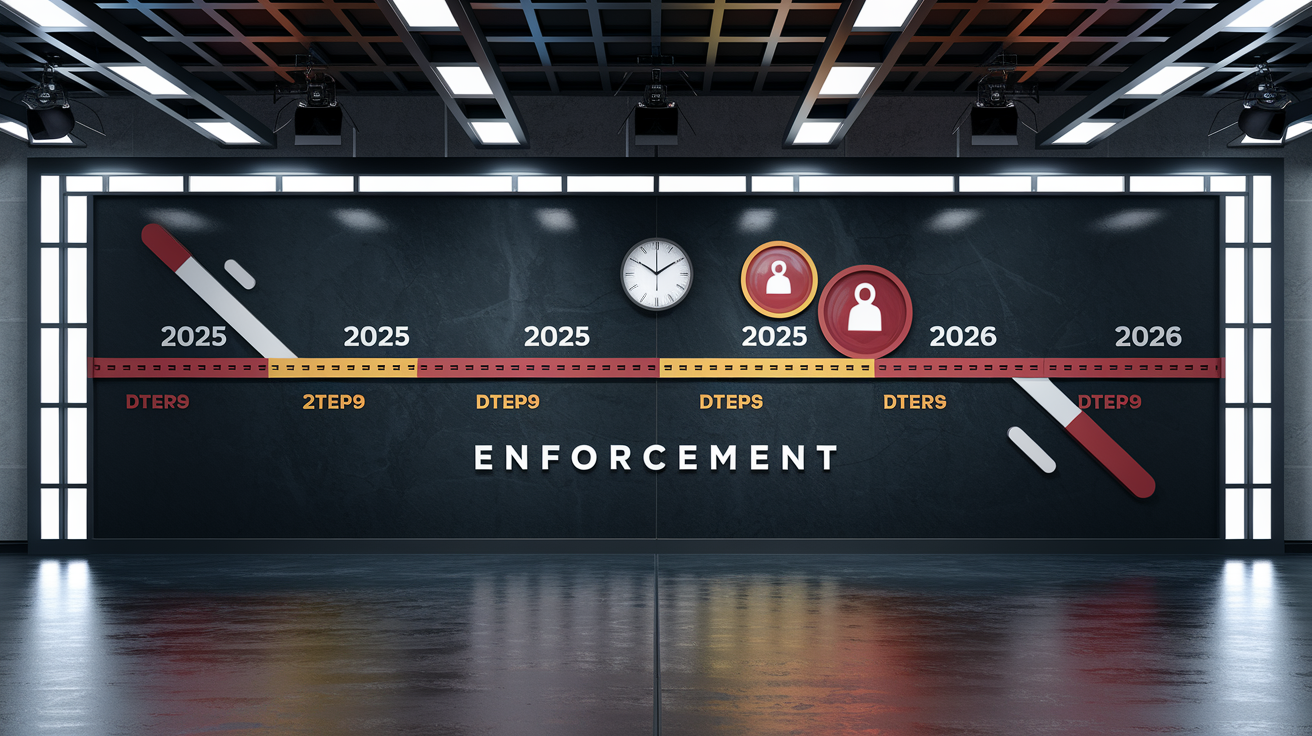
Etsy’s enforcement started immediately on June 10, 2025, with automated scans for flagged keywords, images, and category violations. Listings removed on or after July 15, 2025 qualify for appeal within a 90-day window from the removal date. If you miss that window, the listing stays down permanently unless Etsy reverses the decision during a broader policy clarification. The platform doesn’t send advance warnings for most violations. Listings disappear, and sellers receive a removal notice with the violated policy cited.
The typical enforcement sequence begins with automated listing removal within 24 to 72 hours of detection or complaint. Repeated violations trigger manual shop reviews, which can result in temporary suspension (commonly 7 to 30 days) or permanent account termination. Severe single violations (counterfeit goods, illegal drugs, child-endangerment items) can skip intermediate steps and move directly to account closure. Sellers who accumulate three or more major policy violations face permanent bans, with limited appeal options and no guarantee of reinstatement.
Financial consequences hit fast. Removed listings lose revenue immediately. Shops with multiple flagged violations see suppressed search rankings across all products. Payment holds may lock payouts until you provide documentation or resolve appeals. If you depend on promoted listings or Etsy Ads, violating listings can disqualify you from paid placement, cutting visibility by 30 to 50 percent overnight. Model the impact: if more than 10 percent of your revenue comes from high-risk categories, allocate a dedicated compliance lead and set a 48-hour response SLA for takedown notices.
Enforcement actions to expect:
- Automated listing removal within 24 to 72 hours of detection, with no advance warning
- Manual shop review and temporary suspension (7 to 30 days) for repeated or unremedied violations
- Permanent account termination after 3+ major violations or a single severe breach (counterfeit, illegal substances, child endangerment)
- Payment holds and ad-eligibility suspension until appeals are resolved or documentation provided
Common Violations and Realistic Seller Scenarios

Sellers frequently stumble on template-based products because they assume a commercial license equals compliance. One common scenario: you purchase a design pack from a creative marketplace, customize the colors and text, and list the final product. Under the old policy, that workflow was explicitly allowed. Under 2026 rules, it’s prohibited. Etsy now requires the underlying design to originate with you. If you can’t prove original design authorship, the listing gets pulled.
Digital vintage scans trip up heritage and ephemera shops. You digitize a collection of 1940s botanical prints and sell high-resolution downloads. Before June 2025, that qualified as vintage. Now, Etsy removed vintage from the “Designed by a seller” path, and scanned items sold as downloads without original creative work are being removed without warning. Sellers who add original artwork, curated layout design, or educational content have a stronger compliance case, but Etsy hasn’t published clear guidelines. Clarification requests to support are recommended.
Natural-item resellers face immediate risk. You buy raw gemstones or seashells from a wholesaler, photograph them, and list them individually. The old policy allowed this under “Sourced by a seller.” The 2026 update requires you to either handpick the items from nature yourself or incorporate them into a created item (jewelry, home décor, art). If you can’t demonstrate value-added work, the listing fails the policy test.
Service listings create hidden violations. You list a “custom tailoring consultation” as a standalone product with no physical garment attached, or you offer a “personal coaching session” delivered via video call. Both are now explicitly banned. Similarly, sellers who created tip-jar listings, donation slots, or express-shipping add-ons with no associated product are flagged and removed. Even if your intention was to provide a legitimate service, the listing structure violates the money-transfer prohibition.
Typical seller mistakes under 2026 policy:
- Listing physical items created with licensed design files or commercial templates, assuming the license grants compliance
- Selling scanned vintage prints, patterns, or books as digital downloads without original creative transformation
- Reselling raw rocks, gemstones, or seashells purchased retail, without incorporating them into a handmade item
- Offering personal therapy, tutoring, coaching, or training services as standalone listings
- Creating tip jars, donation listings, crowdfunding campaigns, gift cards, or express-shipping-only add-ons that transfer money without a physical product
Final 2026 Seller Audit Checklist

- Open the Policy Violations page in Shop Manager and resolve every flagged listing immediately. Appeal removals dated July 15, 2025 or later within 90 days.
- Export your full product catalog and flag all listings created with templates, commercial design packs, or licensed patterns. Remove or rework to demonstrate original design.
- Review all digital downloads and remove scanned vintage prints, books, patterns, or ephemera that lack original creative work.
- Audit natural-item listings and confirm every rock, gemstone, or shell listing shows value-added creation or was handpicked from nature by you.
- Disable service listings for personal therapy, tutoring, coaching, training, and any listing created solely to transfer money (tips, donations, crowdfunding, gift cards, referral codes, express-shipping-only add-ons, standalone tailoring slots).
- Add required AI-art disclosures where applicable and retain prompt logs and creation records proving original design authorship.
- Enroll in Offsite Ads if you want ChatGPT Instant Checkout visibility (US sellers only, single-item purchases, requires enrollment).
- Use Marketplace Insights to run up to 15 keyword searches per week (unlimited for paid subscription) and align titles, tags, and attributes with current search behavior.
- Verify Instant Transfer eligibility in Payment Settings. Confirm you accept the fee structure (1% fee, $0.25 minimum, $1.00 cap, $500 max per transfer, one per day).
- Recalculate pricing for U.S. buyers to absorb percentage-based customs duties (flat-fee tariff transition ended February 28, 2026). Verify tax treatment of Etsy service fees if operating in Texas or Washington state.
Final Words
Scan your catalog now for newly banned items, tightened rules, and risky listings. Don’t wait.
This post summarized key 2026 Etsy prohibited-item changes, gave a category breakdown, a before/after comparison, step-by-step compliance tasks, enforcement timing, common violations, and a 10-point audit checklist.
Run the Etsy 2026 prohibited items policy update seller compliance checklist across your top SKUs this week, fix or remove problem listings, and keep sourcing docs handy. Small effort now saves account headaches and lost sales. You’ve got this.
FAQ
Q: What are the alternatives to Etsy in 2026?
A: The alternatives to Etsy in 2026 include Shopify (own store), Amazon Handmade, eBay, Depop, Big Cartel, and Faire; choose by control, fees, audience, and wholesale versus direct-to-consumer needs.
Q: How much does Etsy take from a $100 sale?
A: Etsy takes roughly $9.95 on a $100 sale: $0.20 listing fee, 6.5% transaction fee ($6.50), plus payment processing around 3% + $0.25 (~$3.25). Exact totals vary by country and payment method.
Q: Why is Etsy shutting down shops?
A: Etsy is shutting down shops primarily for policy violations—prohibited items, IP or safety complaints, repeated rule breaches, or fraud. Sellers should check account notices, remove violations, and file appeals if eligible.
Q: Can you make $10,000 a month on Etsy?
A: You can make $10,000 a month on Etsy, but it’s uncommon; it requires high-margin products, steady traffic, repeat buyers, off-platform marketing or wholesale, plus consistent optimization and scaling.