


Think returns are just a customer service headache?
They’re not. They eat margin, clog warehouses, and push customers away.
With average ecommerce return rates of 18 to 30 percent, returns are core operations, not an edge case.
This post shows a practical returns management framework—clear policy, fast inspection and grading, automation, and smart disposition—so you can cut processing time, protect resale value, and lower costs.
Read on for the exact steps to streamline your reverse logistics and what to check first.
The Essential Guide to Managing Ecommerce Returns
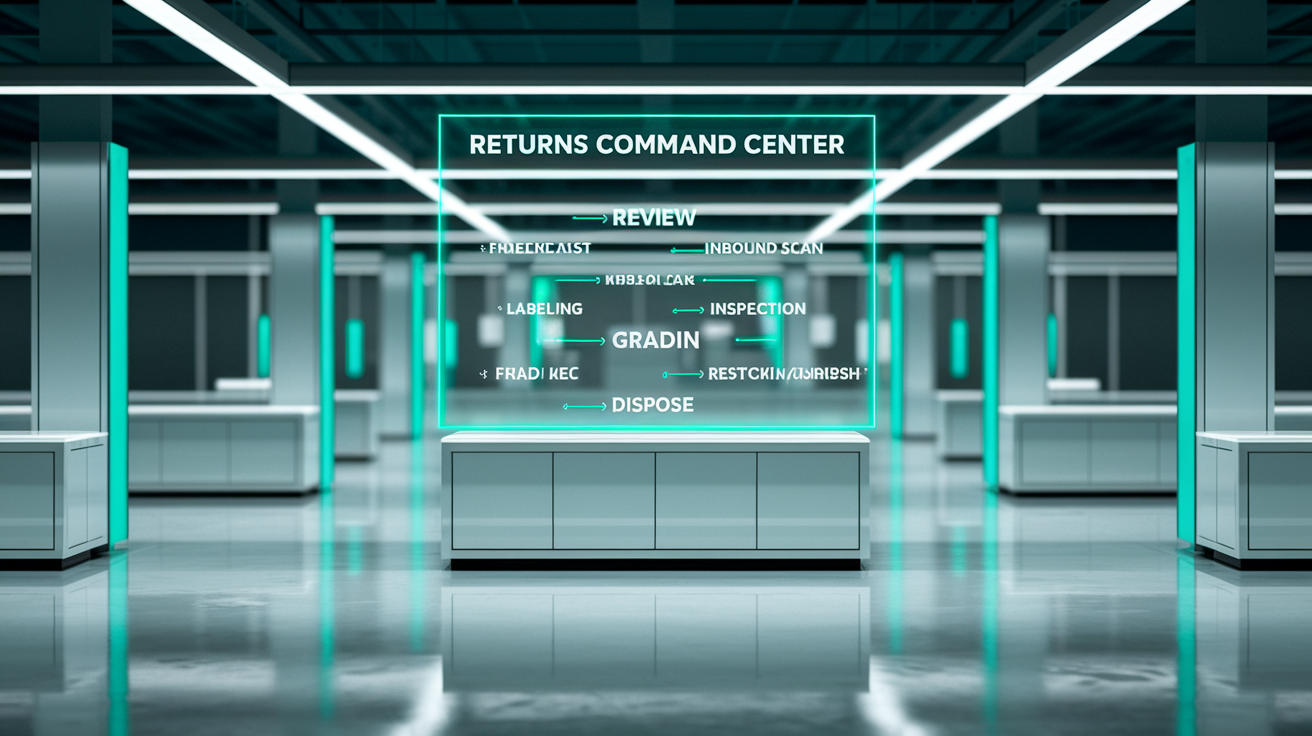
An ecommerce returns management framework is the full system you use to handle product returns from the moment someone asks to send something back until you’ve figured out what to do with the inventory. It matters because it hits your margins, your inventory turnover, how smoothly your warehouse runs, and whether customers come back. Without solid workflows, returns stack up. Processing slows. Customers get annoyed. Restocking delays cost you money.
Ecommerce return rates sit between 18% and 30% depending on what you’re selling. Apparel and fashion? You’re looking at the high end. Electronics and home goods land somewhere in the middle. That kind of volume means returns aren’t some edge case. They’re core operations.
The return process follows a pretty predictable path. Customer kicks off a return request, usually through a self-service portal or support ticket. You approve or deny it based on your policy rules and fraud checks. If it’s approved, they get a return label and packing instructions. Item ships back to your warehouse or returns center, gets scanned when it arrives. Then comes inspection and grading. Your warehouse team checks condition, packaging, whether it can be resold. Finally, you make a call: restock it, send it to refurbishment, route it to liquidation, recycle it. Customer gets a refund, exchange, or store credit.
Running returns with a standard workflow solves three big problems. Processing time drops because your team knows exactly what to do at each step, so returns move faster from arrival to resolution. Customer satisfaction goes up because clear timelines and updates cut down on uncertainty and support tickets. And it protects your margins. Faster inspection and restocking preserve resale value, and consistent grading reduces loss from damaged or unsellable inventory. A well-run returns operation turns a necessary cost center into something that actually gives you an edge.
Standard ecommerce return workflow (6 steps):
Step 1: Customer starts the return and an RMA (return merchandise authorization) gets created in your system.
Step 2: You approve or deny based on policy rules, purchase history, and fraud signals.
Step 3: Generate and send a return label and packing instructions.
Step 4: Inbound scan at the warehouse or return center when the item shows up.
Step 5: Inspect and grade the returned product for condition, completeness, and whether you can resell it.
Step 6: Route to restock, refurbishment, secondary channel, or disposal, and process the refund, exchange, or store credit.
Crafting an Effective Ecommerce Return Policy

A strong ecommerce return policy is simple, transparent, and easy to find on every product page and at checkout. Policy clarity directly affects conversion rates and customer trust. People who can’t find clear return rules often bail on their carts, especially for pricier stuff. At the same time, vague policies create legal risk. Consumer protection laws in a lot of places require clear disclosure of return timelines, conditions, and refund methods. A well-designed policy protects both the customer and your business by setting expectations up front.
Timelines, conditions, and exceptions shape how customers behave and how much operational load you’re carrying. Short windows (14 to 21 days) reduce abuse and cut down on worn-item returns, but they can scare off cautious buyers. Standard 30-day windows balance buyer confidence with operational control. Extended windows of 60 to 90 days work for high-ticket or gift-friendly categories, where people appreciate flexibility. Conditions matter just as much. Your policy should spell out whether items need to be unworn, unopened, or in original packaging, and which categories are final sale (personalized products, intimate apparel, perishables). Exceptions like extended holiday return windows or VIP customer treatment add flexibility without making the base policy confusing.
Five things every ecommerce return policy must include:
Return window: The number of days from delivery during which returns are accepted.
Item condition requirements: Clear rules on packaging, tags, wear, and completeness.
Refund method and timing: Whether customers get their original payment method back, store credit, or an exchange, and how many business days refunds take.
Return shipping responsibility: Who pays for return shipping, and whether labels are pre-paid or customer-paid.
Exclusions and non-returnable items: Categories that are final sale, like custom products, hygiene items, or clearance goods.
Optimizing the Operational Return Workflow
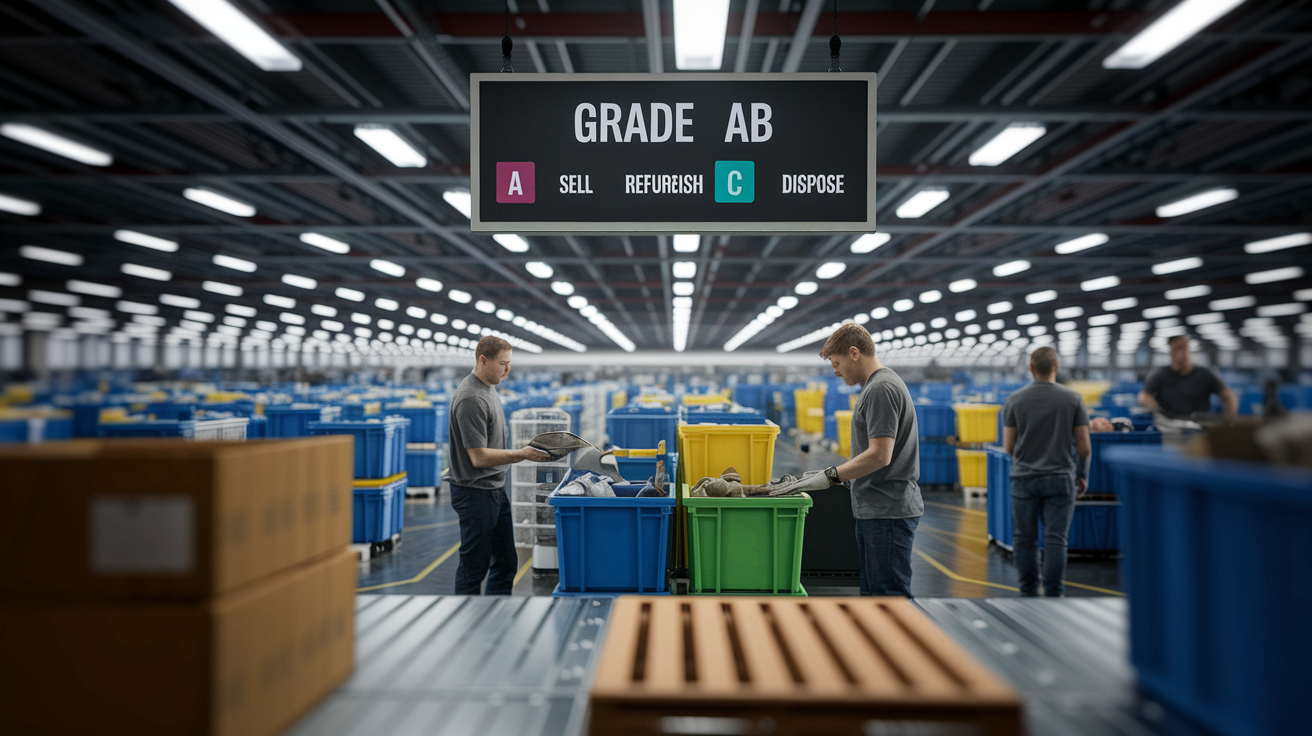
Streamlining receiving and inspection is where most warehouses gain speed and reduce loss. Faster processing means items spend less time out of stock, packaging stays intact, and resale potential stays high. The operational return workflow starts when a package hits the returns dock. Staff scan the inbound label to link the physical item to the RMA in your system, then move it to a dedicated returns inspection area. Inspection criteria usually include packaging condition (sealed, torn, reusable), product condition (new, lightly used, damaged), completeness (all accessories, manuals, tags present), and functionality (for electronics or mechanical items). Each returned item should get categorized within 24 to 48 hours to avoid backlog and inventory uncertainty.
Standard criteria for sorting returned items fall into four groups. Grade A items are resale-ready. They show up in original packaging, undamaged, and complete, so they move straight back to sellable inventory. Grade B items need minor refurbishment or repackaging. Light cosmetic issues, missing manuals that can be replaced, or resealed boxes. These go to a refurbishment queue before restocking. Grade C items aren’t suitable for primary resale but still have value. Heavily worn packaging, minor defects, or outdated stock. Route these to outlet channels, liquidation partners, or secondary marketplaces. Grade D items have no resale value. Damaged beyond repair, missing critical components, or hygiene concerns. These go to recycling or disposal.
Reducing bottlenecks and errors starts with dedicated zones and clear documentation. Set up a physical returns area separate from outbound fulfillment to avoid mixing up inventory. Use visual grading guides (photos or samples of each grade category) posted at inspection stations so every team member applies the same standards. Implement barcode or RFID scanning at every step: inbound receipt, inspection station, and final disposition. This creates a digital trail and flags items stuck in the workflow. Run daily or weekly audits to catch items sitting too long in inspection queues. For high-volume operations, assign one person as the returns coordinator to monitor flow, resolve edge cases, and escalate issues before they become backlog.
Ecommerce Return Automation Tools and Software

Automation cuts manual approvals, reduces processing errors, and improves tracking accuracy. Returns software replaces spreadsheets and email threads with rule-based workflows that handle routine decisions instantly. Common features include customer self-service portals, automated return label generation, instant refunds for VIP customers, and real-time inventory updates when items are restocked. The value is speed and consistency. Routine returns that meet policy rules get approved in seconds, labels generate automatically, and customers get updates without waiting for a support agent. This frees your warehouse and service teams to focus on exceptions, fraud review, and high-value customer issues.
Here’s how self-service and automated verification work in practice. A loyal customer with ten past purchases and zero return history starts a return for a $40 item within the 30-day window. The system auto-approves, generates a prepaid label, and emails it immediately. No human review needed. For a $300 order from a first-time buyer flagged for inconsistent shipping and billing addresses, the system routes the request to manual review, where a fraud analyst checks order history and device fingerprints before approving. For damaged items, photo upload requirements trigger automatic routing to a quality-control queue, where the team checks whether the issue is fulfillment error, carrier damage, or product defect.
| Tool Type | Key Features | Operational Benefits |
|---|---|---|
| Self-Service Portal | Customer-initiated RMA, label generation, reason-code capture, exchange suggestions | Reduces support volume, speeds approval, improves reason-code accuracy |
| Automated Approval Engine | Rule-based policy checks, fraud scoring, auto-approve/deny, VIP routing | Cuts manual review time, ensures policy consistency, flags high-risk requests |
| Label & Shipping Integration | Pre-paid label generation, multi-carrier support, tracking updates, consolidation routing | Lowers shipping costs, improves tracking visibility, simplifies customer experience |
| WMS/OMS Integration | Real-time inventory sync, auto-restock for Grade A, disposition routing, lot tracking | Prevents stock-out errors, accelerates resale, maintains inventory accuracy |
| Analytics & Reporting | Return-rate dashboards, reason-code analysis, SKU-level trends, fraud detection metrics | Surfaces product issues, identifies fraud patterns, guides policy adjustments |
Reverse Logistics and Return Shipping Strategies

Reverse logistics planning is critical for cost control because return shipping and handling often eat up 40% to 60% of the total cost per return. Reverse logistics includes carrier selection, label generation, routing decisions, and the physical movement of goods from customer to warehouse or refurbishment center. Good planning means choosing carriers with competitive return rates, negotiating volume discounts, and using regional routing to cut distance and handling steps. Without a plan, returns trickle in through inconsistent channels, creating unpredictable costs and delays.
Carrier options and return label strategies vary by business size and geography. For domestic returns, partnering with a single national carrier simplifies tracking and rate negotiation. Prepaid labels (where you cover return shipping) reduce friction and improve customer satisfaction, but they also bump up cost. A hybrid approach uses prepaid labels for loyal customers or high-value orders, and customer-paid labels for first-time buyers or low-margin items. Returnless refunds are another option. When the cost of inbound shipping and processing exceeds the item’s resale value, let the customer keep the product and issue a refund anyway. This works well for low-cost accessories, bulky items with high return-shipping costs, or non-resellable goods like opened hygiene products.
Techniques for better routing, consolidation, and processing at regional hubs reduce both cost and carbon emissions. Instead of routing every return to a central warehouse, use regional return centers or third-party logistics (3PL) partners located closer to customer clusters. Consolidated shipments (where a 3PL collects returns over several days and ships them in bulk to the main warehouse) cut per-unit shipping costs. At the hub level, rapid disposition decisions prevent inventory from sitting idle. Set service-level agreements (SLAs) with 3PL partners: items must be inspected and dispositioned within 48 hours of arrival. Use data to spot high-return zip codes or regions, then adjust fulfillment and return routing to minimize round-trip distance.
Preventing Ecommerce Return Fraud

Return fraud takes several common forms. Wardrobing is when people buy items planning to use them once and return them. Common in apparel, especially around events. Empty box returns happen when a customer sends back a box with no product inside or a substitute item of lower value. Counterfeit item swaps involve returning a fake version of a branded product. Serial returners abuse generous policies by returning a high percentage of purchases, sometimes to resell items or game promotional offers. Each type erodes margin and inventory integrity, and the scale of the problem is growing. 93% of retailers report return fraud or abuse as a significant issue.
High-impact monitoring and verification methods focus on behavior scoring and physical checks. Platforms use behavior scoring to flag accounts with suspicious patterns: high return rates (above 50%), frequent high-value returns, mismatched shipping and billing addresses, or returns clustered around promotional windows. Serial-number matching works for electronics. Capture serial numbers at fulfillment and again at inspection to confirm the same unit came back. Photo requirements during the return request help verify item condition before approval. Weight checks at receiving catch empty boxes or substituted items. Requiring original packaging or tags deters wardrobing, though you’ve got to balance that against customer experience for legitimate returns.
Six techniques to reduce fraud risk:
Behavior-based policy tiers: Offer free returns to customers with low return rates and strong purchase history. Require return fees or manual review for high-risk accounts.
Serial-number tracking: Capture and verify serial numbers for electronics, high-value items, and branded goods to prevent swaps.
Photo upload requirements: Ask customers to upload photos of the item and packaging before approval to confirm condition and deter false claims.
Restocking inspection protocols: Train warehouse staff to check for common fraud indicators. Wrong item, empty box, damaged seals, missing accessories.
Return-window enforcement: Strict cutoffs reduce the opportunity for long-term use and return.
Fraud-detection software: Use tools that analyze return patterns, flag anomalies, and auto-deny or route suspicious requests for manual review.
Customer Communication and Expectations During Returns

Communication timing directly affects customer anxiety and support-ticket volume. Proactive communication can cut support tickets by up to 40% by answering the question customers ask most: “Where is my refund?” or “Did you receive my return?” Each stage of the return process (approval, label sent, item received at warehouse, inspection complete, refund issued) should trigger an automatic email or SMS update. Transparency at each step builds trust and reduces the feeling that the process is slow or unclear.
Recommended notification types and triggers include five key touchpoints. First, send an instant confirmation when the return request is approved, including the return label, packing instructions, and expected refund timeline. Second, notify the customer when the carrier picks up or scans the return package. Third, send a message when the warehouse receives and scans the item. This confirms the return is in your hands. Fourth, update the customer after inspection is complete and the item has been graded and dispositioned. Fifth, send a final notification when the refund is processed or the exchange ships. Each message should include next steps and realistic timelines. Skip vague phrases like “soon” and use specific windows like “Your refund will appear in 3 to 5 business days.”
Transparency increases trust and loyalty because it removes uncertainty. Customers who know exactly where their return stands are less likely to call support, dispute charges, or leave negative reviews. Clear communication also sets realistic expectations about processing speed. If inspection takes two business days and refunds take another three to five days to appear, say so up front. When delays happen (carrier issues, inspection backlog, high volume during holiday returns), proactive messages that acknowledge the delay and provide a new timeline prevent frustration from turning into complaints or chargebacks.
Cost Reduction Methods for Ecommerce Returns

Major cost drivers in ecommerce returns include return shipping, warehouse labor for inspection and restocking, lost margin from damaged or unsellable returns, and the opportunity cost of inventory sitting in inspection queues instead of being available for resale. Return shipping alone can cost $5 to $15 per item depending on carrier, package size, and distance. Labor costs vary by complexity. Simple apparel inspection might take two minutes per item, while electronics requiring functionality testing can take ten minutes or more. Packaging loss and product damage during the return journey reduce resale value by 10% to 30%, and that loss compounds when items can’t be restocked at all.
Prevention often beats operational reduction because it stops the return before it happens. Pre-purchase education (accurate product descriptions, detailed sizing charts, high-quality images, and video demonstrations) reduces “not as expected” returns. Fit finders and virtual try-on tools cut bracketing (ordering multiple sizes with the intent to return most of them). Packaging improvements protect products in transit, reducing damage-related returns. Consolidation strategies, like encouraging exchanges instead of refunds or offering store credit with a small incentive, keep revenue that would otherwise be lost.
Six proven strategies to reduce return expenses:
- Improve product-page accuracy: Use natural-light photos, 360-degree views, size charts with model measurements, and close-ups of materials to set correct expectations.
- Offer fit and compatibility tools: Put fit finders on apparel, compatibility checkers on electronics, and dimension visualizers on furniture.
- Encourage exchanges over refunds: Offer free return shipping only for exchanges, or provide a store-credit bonus (like “Get 110% back in store credit”) to keep revenue.
- Automate routine decisions: Use rule-based approval and instant refunds for low-risk returns to cut labor costs.
- Negotiate carrier rates and use regional hubs: Consolidate return volume with fewer carriers and route to the nearest processing center to reduce shipping distance and cost.
- Use returnless refunds for low-value items: When the cost of processing exceeds resale value, let the customer keep the item and issue a refund. This cuts reverse-shipping and handling costs entirely.
Sustainability and Eco‑Friendly Return Options

Traditional return processes create significant environmental impact through redundant shipping, excess packaging, and landfill waste. Every returned item travels twice (once to the customer and once back to the warehouse), doubling fuel consumption and emissions. Returned products often arrive in damaged packaging that can’t be reused, creating additional cardboard and plastic waste. Items that fail inspection or grading frequently end up in landfills, especially in categories like fast fashion where resale margins are thin and secondary-market demand is low.
Sustainable alternatives focus on refurbishment, recycling programs, and greener shipping options. Refurbishment extends product life by repairing minor defects, replacing packaging, or bundling returned items as “open-box” or “like-new” at a discount. Recycling programs partner with specialized vendors to disassemble electronics, recover materials, and responsibly dispose of components that can’t be reused. Greener shipping options include carbon-offset programs, consolidated return shipments to reduce trips, and local drop-off points that get rid of individual return packages. Returnless refunds also serve sustainability goals. When a low-value item would travel hundreds of miles only to be discarded, letting the customer keep it eliminates waste and emissions. A lot of brands now use sustainability as a differentiator, promoting refurbishment and recycling programs in return-policy messaging to connect with eco-conscious customer values.
Key Metrics and KPIs for Ecommerce Return Management

Core KPIs to watch include return rate percentage, reason codes, processing time, recovery value, and fraud incidence. Return rate is calculated as (returns ÷ total orders) × 100 and should be tracked at the overall business level, by category, and by SKU. Apparel commonly sees 20% to 40% return rates, while electronics and home goods typically fall between 5% and 15%. Reason codes (captured during the return request) explain why customers return items: wrong size, damaged, not as described, changed mind, defective, or other. Processing time measures the hours or days from warehouse receipt to final disposition (restock, refurbish, or discard). Recovery value tracks the percentage of original product value recovered through resale, refurbishment, or secondary channels. Fraud incidence is the percentage of returns flagged or confirmed as fraudulent.
Reading trends and reason codes reveals patterns that drive action. A spike in “wrong size” returns for a specific SKU signals a sizing-chart issue or inconsistent fit across production batches. A surge in “not as described” returns points to product-page content problems (missing details, misleading images, or incomplete specifications). An increase in “damaged” returns may indicate fulfillment-packaging failures or rough carrier handling. When reason codes show that more than 10% of returns are preventable (caused by fulfillment errors, inaccurate descriptions, or sizing issues), trigger an audit of the affected SKUs and fix the root cause.
Using insights to improve products, operations, and policies closes the feedback loop. High return rates on a particular SKU should prompt a product-development review. Are materials, construction, or quality-control standards failing? Sizing or fit issues should trigger updates to size charts, model specifications on product pages, or the addition of fit-finder tools. Operational insights (like long processing times or low recovery rates) highlight bottlenecks in warehouse workflows or grading inconsistencies. Policy insights emerge when segmenting return behavior by customer type. If VIP customers have low return rates and high lifetime value, extend their return windows or waive fees. If first-time buyers show high fraud risk, tighten approval rules or require photo verification. Data-driven adjustments to products, operations, and policies reduce future return rates, cut costs, and improve customer satisfaction at the same time.
Final Words
In the action, we walked through a practical playbook: a returns framework, clear policy, operational workflows, automation tools, reverse logistics, fraud controls, customer updates, cost cuts, sustainability, and KPIs.
Faster processing and clearer rules reduce costs, boost resale value, and cut support tickets.
Next steps: audit your top 20 SKUs for return drivers, simplify your policy, pilot an automated RMA flow, and start tracking return rate, processing time, and recovery value.
Apply these steps and ecommerce returns management becomes a source of margin and customer trust. Small changes, measurable upside.
FAQ
Q: What is return management in the ecommerce industry?
A: Return management in the ecommerce industry is the end-to-end process for handling returns—initiation, approval, receiving, inspection, and resolution. Standardizing it cuts cost, speeds processing, and preserves customer trust.
Q: What are the 5 C’s of ecommerce? What are the 7 C’s of e-commerce?
A: The 5 C’s of e-commerce are context, content, community, customization, and commerce; the 7 C’s add communication and connection, covering site design, product info, social proof, personalization, messaging, networks, and transactions.
Q: How to improve ecommerce returns?
A: Improving ecommerce returns involves clearer product pages and sizing guides, simpler return policy, faster refunds, automated RMA flows, better packaging and quality checks, plus pre-purchase education to reduce avoidable returns.