


Your payment processor is quietly taking revenue from every order.
Merchant services, the gateway, processor, and merchant account, are the plumbing that moves money and decides your true margin, fraud risk, and settlement timing.
Pick the wrong one and fees, declined sales, or slow payouts quietly eat profit.
This post compares Stripe, PayPal, Square, Adyen, and Authorize.net and shows who wins for domestic shops, hybrid retailers, global brands, and high-volume sellers.
Read on to audit fees, settlement speed, and fraud tools so you can pick the processor that actually helps your bottom line.
Understanding Core Ecommerce Merchant Services for Online Stores

Ecommerce merchant services are the plumbing that gets money from your customer’s card into your bank account. Three pieces work together: a payment gateway grabs checkout data and encrypts it, a processor talks to card networks to approve or decline the charge, and a merchant account holds the cash before it lands in your operating account. When someone clicks “pay,” the gateway sends encrypted card details to the processor, which pings the issuing bank, runs fraud checks, and either greenlights the sale or kills it. Approved funds drop into your merchant account and settle in your bank 1–3 business days later.
Most providers accept Visa, Mastercard, Discover, and American Express by default, plus digital wallets like Apple Pay and Google Pay. The standard ecommerce card fee across major platforms is 2.9% + $0.30 per transaction. That’s interchange plus a small markup. It applies to U.S. domestic card-not-present sales. Cross-border transactions and currency conversion tack on extra cost. Many platforms now support 65+ payment integrations, process across 230 countries, and handle 140+ currencies, so you can sell almost anywhere without custom development.
To meet baseline buyer expectations, you need:
- Fraud checks that score and flag suspicious orders in real time.
- Secure transmission through tokenization and TLS encryption so card data never sits exposed.
- Multi-currency support so customers can pay in their local currency without mental math.
- Digital wallets that speed up checkout and cut down on typing mistakes.
- PCI compliance via certified infrastructure that takes security weight off your shoulders.
- Fast settlement so cash hits your bank next business day instead of sitting in limbo for a week.
Key Payment Features Inside Modern Ecommerce Merchant Service Platforms

Security starts with tokenization, which swaps card numbers for random tokens, and end-to-end TLS encryption that protects data while it moves. Most platforms support 3D Secure (3DS and 3DS2), adding an authentication step that satisfies European SCA rules and shifts liability away from you. Device checks scan browser fingerprints, IP addresses, and behavior patterns to catch bots, stolen cards, and account takeovers before authorization happens.
Fraud scoring has shifted from static rules to machine-learning systems that adjust risk thresholds automatically. Stripe Radar uses purchase patterns across millions of merchants to score each transaction in milliseconds. Flag high-risk orders for manual review or block them outright. PayPal’s Seller Protection covers chargebacks when you meet certain conditions. These tools cut false declines, which matter because blocking a real customer costs you that sale and probably future ones too.
Developer flexibility determines how fast you can launch and how clean your maintenance stays. Modern gateways offer REST APIs, client-side SDKs, and webhooks that push real-time events (authorization, settlement, refund) straight into your order-management or accounting system. Sandbox environments let you test card flows, simulate disputes, and validate 3DS logic before touching real money.
Omnichannel & POS Sync
When you sell online and in physical stores, POS systems that sync with your ecommerce merchant account unify inventory, customer profiles, and settlement into one ledger. Square and similar providers update stock counts instantly when a sale happens anywhere, preventing oversells and simplifying fulfillment. Finance sees one consolidated payout instead of reconciling separate batches from retail terminals and web checkouts, which cuts close time and cleans up bank statements.
Comparing Ecommerce Merchant Service Providers: Stripe vs PayPal vs Square vs Adyen vs Authorize.net
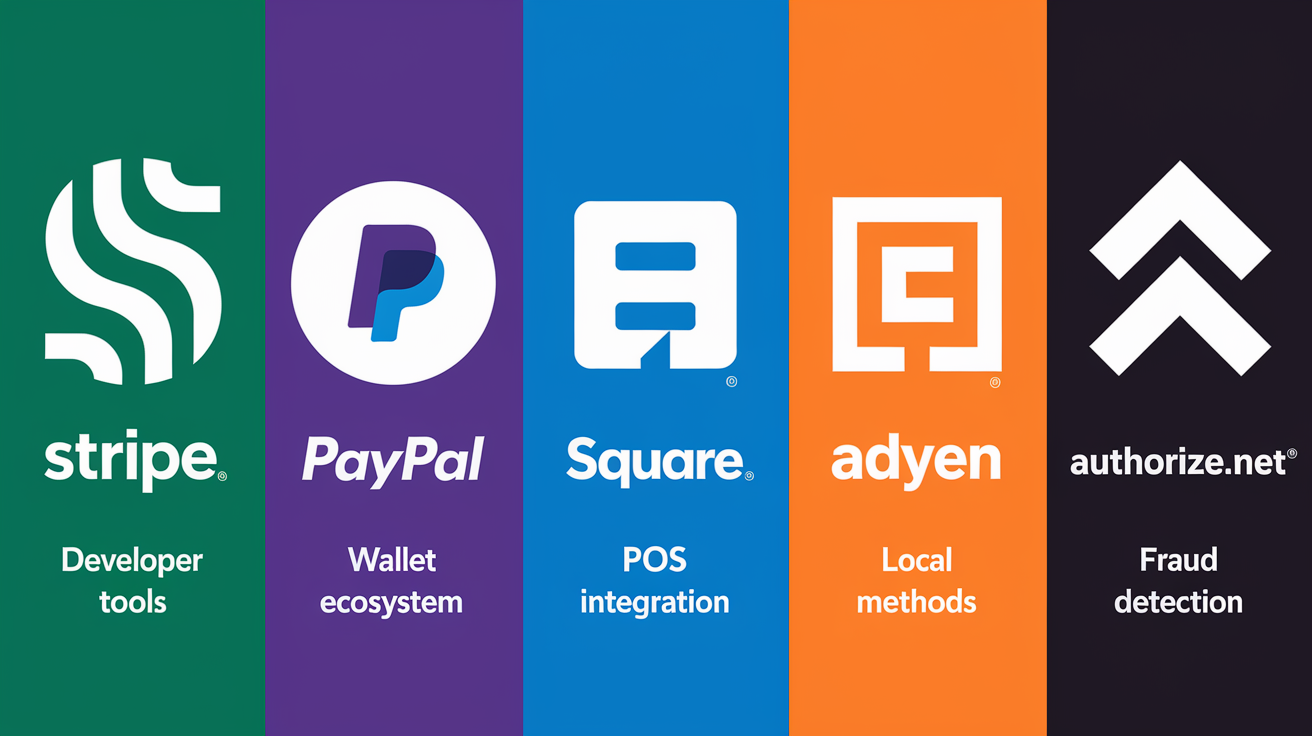
All five cover the basics: major card networks, digital wallets, fraud tools, and developer docs. They encrypt transactions, maintain PCI Level 1 certification, and support webhooks for event-driven workflows. Each offers a sandbox for testing, dashboards for refunds and transaction logs, and plugins or API libraries that work with Shopify, WooCommerce, BigCommerce, and custom storefronts. That baseline coverage means switching cost is lower than it used to be. Most merchants can migrate in a few days without rewriting checkout logic.
Differences show up in scale, reach, and what each provider does best. Adyen processes payments across 200+ countries and supports 250+ local payment methods (SEPA Direct Debit in Europe, Alipay in China, iDEAL in the Netherlands), making it the pick for global sellers who need one system handling region-specific flows. Square combines ecommerce processing with next-business-day deposits and tight POS integration, which helps retailers running hybrid operations. Stripe is developer-first, with extensive API documentation, subscription-billing tools, and a broad app marketplace. PayPal brings consumer trust and handles its own wallet, Venmo (U.S.), and Pay Later financing, which can lift conversion when buyers prefer account-based payments. Authorize.net positions itself as a pure gateway with direct card-network connections and advanced fraud detection, often paired with a separate merchant account from a bank or ISO.
| Provider | Baseline Fees | Global Reach | Key Strength |
|---|---|---|---|
| Stripe | 2.9% + $0.30 | 46+ countries, 135+ currencies | Developer tools, subscription billing |
| PayPal | 2.9% + $0.30 | 200+ markets | Consumer trust, wallet ecosystem |
| Square | 2.9% + $0.30 online; 2.6% + $0.10 in-person | U.S., Canada, U.K., Australia, Japan | POS sync, next-day deposits |
| Adyen | Custom pricing | 200+ countries, 250+ payment methods | Global local methods, enterprise scale |
| Authorize.net | 2.9% + $0.30 + $25/mo gateway | U.S., Canada, U.K., Europe, Australia | Gateway reliability, fraud detection |
Choose based on where you sell and what you’re optimizing for. Microbusinesses selling domestically benefit from flat-rate simplicity and fast onboarding. Stripe, PayPal, or Square all work. International brands need multi-currency settlement and local payment rails, which pushes you toward Adyen or Stripe’s global features. High-volume merchants should negotiate custom interchange-plus pricing, where Stripe and Adyen both offer volume discounts. If you already have a merchant account from your bank, Authorize.net as a standalone gateway might cost less than an all-in-one provider.
Payment Pricing Models & Ecommerce Fee Structures Explained

Flat-rate pricing charges the same percentage and fixed fee on every transaction. 2.9% + $0.30 is the market standard for U.S. online card sales. It’s simple to forecast and works well when average order value stays consistent. Interchange-plus separates the card network’s interchange fee from the processor’s markup, making it the most transparent model. A Visa consumer credit card might carry 1.80% + $0.10 interchange, the processor adds 0.30% + $0.05, so the total is 2.10% + $0.15. Interchange-plus rates drop as volume grows, and they show exactly what the networks take versus what your provider earns. Tiered pricing groups transactions into “qualified,” “mid-qualified,” and “non-qualified” buckets with different rates. Qualified might be 1.79%, mid-qualified 2.49%, non-qualified 3.49%. But the definitions are opaque and merchants often pay more than expected when cards downgrade into higher tiers.
Cross-border premiums add 1%–2% when the cardholder’s bank sits outside your country, and currency conversion adds another ~1% if the card’s currency differs from your settlement currency. So a domestic U.S. sale at 2.9% can become 4.9% for an international Mastercard paid in euros. Settlement timing varies too. Most providers batch payouts once daily and land funds in your bank 2–3 business days after the transaction date, but Square offers next-business-day deposits for standard accounts, and many platforms sell instant payout for 0.5%–1.5% of the transfer amount if you need cash same-day.
Other fee categories worth tracking:
- Setup fees for account activation, hardware, or software licenses (often waived for self-serve platforms).
- Maintenance fees like monthly flat charges for gateway access, dashboards, or compliance tools ($25/month is common for gateway-only accounts).
- Chargeback fees. Stripe charges $15 per dispute (refunded if you win), PayPal typically charges around $20.
- Currency-conversion premiums above mid-market exchange rate, sometimes hidden in the effective rate you see on statements.
Ecommerce Security Requirements: PCI, Fraud Tools, and Customer Authentication

PCI compliance is mandatory for any business that stores, processes, or transmits card data. Most ecommerce merchant service providers operate at PCI Level 1, the strictest tier, and handle encryption, tokenization, and secure data storage on your behalf. So your PCI responsibility shrinks to completing an annual Self-Assessment Questionnaire (SAQ). SAQ A applies when you use a fully hosted payment page or iframe that never touches your server. SAQ A-EP applies when you capture card details on your site but send them directly to the gateway via client-side JavaScript. Both are far simpler than building your own card vault and enduring quarterly scans and audits.
Fraud detection tools layer on top of PCI infrastructure. Modern systems use device fingerprinting (browser type, screen resolution, plugins), IP geolocation, velocity checks (how many transactions from this card in the past hour), and machine-learning models trained on millions of purchase patterns. Stripe Radar scores every transaction and lets you set rules. Block all orders above $500 from a new account, require 3D Secure for international cards above $200, flag mismatched billing/shipping countries. PayPal’s Seller Protection covers eligible transactions when you ship to the confirmed address and meet other conditions, effectively shifting chargeback liability to PayPal. Authorize.net includes customizable fraud filters and secure customer-data storage with reference tokens that replace raw card numbers in your database.
SCA & 3D Secure
Strong Customer Authentication (SCA) became mandatory in the European Economic Area under PSD2, requiring two-factor verification for most online payments. 3D Secure 2 (3DS2) satisfies SCA by prompting cardholders to authenticate via SMS code, biometric scan, or bank-app approval during checkout. Compared with the old 3D Secure 1 pop-up flow, 3DS2 is faster, mobile-optimized, and supports risk-based exemptions. Low-value or low-risk transactions can skip the extra step. Implementing 3DS2 shifts liability for fraudulent transactions to the card issuer, which protects you from chargebacks on stolen cards. Most gateways handle 3DS2 automatically when the card and merchant are both in SCA scope, but you should test the flow in sandbox to confirm the user experience doesn’t break your conversion rate.
International & Multi‑Currency Ecommerce Merchant Service Capabilities

Displaying prices in the shopper’s local currency and offering familiar payment methods lifts conversion and reduces cart abandonment. A German buyer who sees prices in euros and can pay via SEPA Direct Debit or Sofortüberweisung (instant bank transfer) completes checkout faster than one forced to convert USD in their head and trust a foreign merchant with a credit card. Providers like Adyen support 250+ local payment methods across 200+ countries. You activate iDEAL in the Netherlands, Alipay in China, OXXO cash vouchers in Mexico, and Boleto Bancário in Brazil from a single integration. No need to contract with regional acquirers or manage separate settlement accounts.
Cross-border fees and currency conversion add cost but unlock global sales. When a U.S. merchant accepts a European card, the issuing bank is overseas, so the processor adds a cross-border premium (often +1%) on top of the base rate. If the card is denominated in euros and your merchant account settles in dollars, currency conversion adds another ~1%, bringing the effective rate from 2.9% to roughly 4.9%. Some platforms let you open multi-currency settlement accounts. Receive euros in a euro account, pounds in a GBP account, so you avoid conversion fees and can use those balances to pay suppliers or ad spend in the same currency.
Multi-currency pricing and smart routing further improve margins. When you price a product at £49.99 instead of showing “$49.99 (approx. £38)” you remove exchange-rate confusion and psychological friction. Smart routing algorithms pick the least expensive acquirer or card scheme for each transaction based on geography, card type, and current interchange, which can save 0.1%–0.3% per sale at high volume. These features matter most when international revenue exceeds 20% of total sales and you process enough volume to justify the setup effort.
Subscription Billing, Recurring Payments & ACH Options for Ecommerce Brands
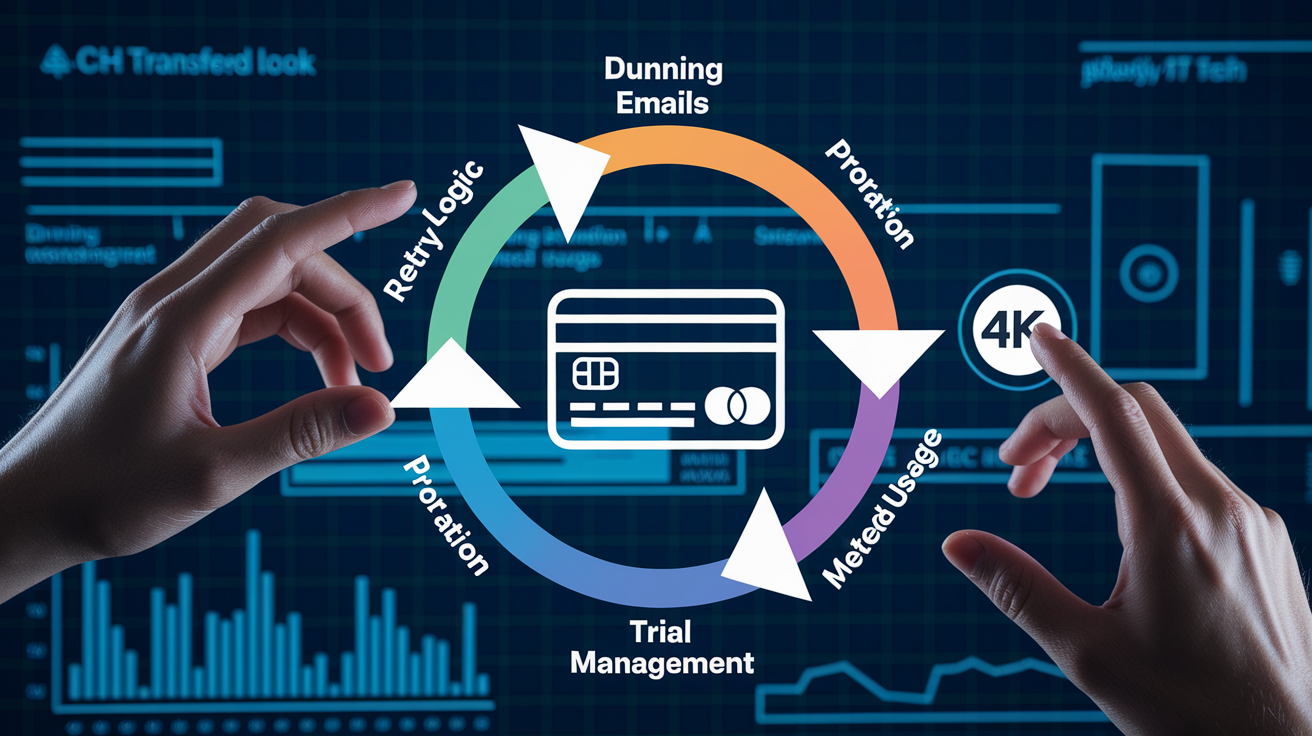
Recurring billing requires more than capturing a card once. Subscription platforms need retry logic when payments fail, dunning emails to recover expiring cards, proration when customers upgrade mid-cycle, metered billing for usage-based pricing, and trial management that converts free users to paid without manual intervention. Stripe Billing offers all of these out of the box, plus webhooks that trigger lifecycle events in your CRM or product when a subscription renews, cancels, or enters dunning. PayPal and Square support basic recurring plans (charge the same amount every month) but lack advanced metering and proration unless you build it yourself or add third-party subscription middleware.
ACH (Automated Clearing House) or bank debit dramatically lowers transaction cost for high-ticket or high-frequency payments. Stripe ACH Debit charges 0.8% capped at $5 per transaction, so a $1,000 subscription costs $5 instead of $29 with a card. ACH settlement takes 3–5 business days versus 1–2 for cards, and return rates (customer insufficient funds or disputes) run slightly higher, but the savings justify the delay for B2B SaaS, wholesale orders, and membership programs. 2Checkout’s subscription plan prices at 4.5% + $0.45, which works for digital-goods sellers who want one provider to handle global VAT, fraud screening, and recurring billing without separate contracts.
Key subscription-billing considerations:
- Dunning tools that send automated email sequences alerting customers before and after a failed charge, with retry schedules that spread attempts over days to catch temporary declines.
- Retry logic using smart algorithms that retry failed payments at optimal times (avoiding weekends, spacing attempts 24–72 hours apart) to maximize recovery without annoying the customer.
- Proration rules for automatic calculation of credits and charges when a customer upgrades, downgrades, or cancels mid-cycle, so invoices stay accurate.
- Subscription lifecycle management including trial-to-paid conversion tracking, churn analytics, cohort retention reports, and integration with customer-success tools to reduce cancellations.
Ecommerce Merchant Account Setup, Onboarding & KYC Requirements

Standard merchant onboarding asks for your legal business name, Employer Identification Number (EIN) or Social Security Number (for U.S. sole proprietors), bank account routing and account numbers, business address, a description of what you sell, and a government-issued photo ID for the business owner. Most platforms run instant background checks against fraud databases and credit bureaus. Low-risk businesses selling physical goods with clear product descriptions often get approved in minutes and can start processing test transactions immediately. Full verification completes within 24–72 hours once the provider reviews your website, confirms your identity documents, and validates your bank details with micro-deposits or instant account verification.
High-volume merchants, international sellers, and certain product categories trigger enhanced due diligence. If your website shows incomplete product information, placeholder images, or vague terms of service, underwriters will request additional documentation. Supplier invoices, business licenses, proof of inventory, processing history from a previous provider. The review can stretch to a week or more, and you might face rolling reserves (the processor holds 5%–10% of each day’s sales for 90–180 days) or delayed payouts until you establish a track record.
High-Risk Merchant Underwriting
High-risk industries (CBD, supplements, adult products, travel, firearms, subscription boxes with high chargeback rates) face stricter underwriting, higher fees (often 3.5%–5.5% + $0.30), and mandatory reserves. Many mainstream providers (Stripe, Square, PayPal) decline high-risk applications outright or terminate accounts after a pattern of chargebacks emerges. Specialized high-risk processors (Host Merchant Services, Durango Merchant Services, SMB Global, Soar Payments) accept these verticals but require detailed business plans, chargeback-mitigation strategies, and sometimes personal guarantees. If your product category appears on a high-risk list, apply to a specialized provider first. Attempting to hide your business model from a standard processor will result in account freezes and held funds when the truth comes out.
Ecommerce Platform Integrations: Shopify, WooCommerce, BigCommerce & Custom APIs
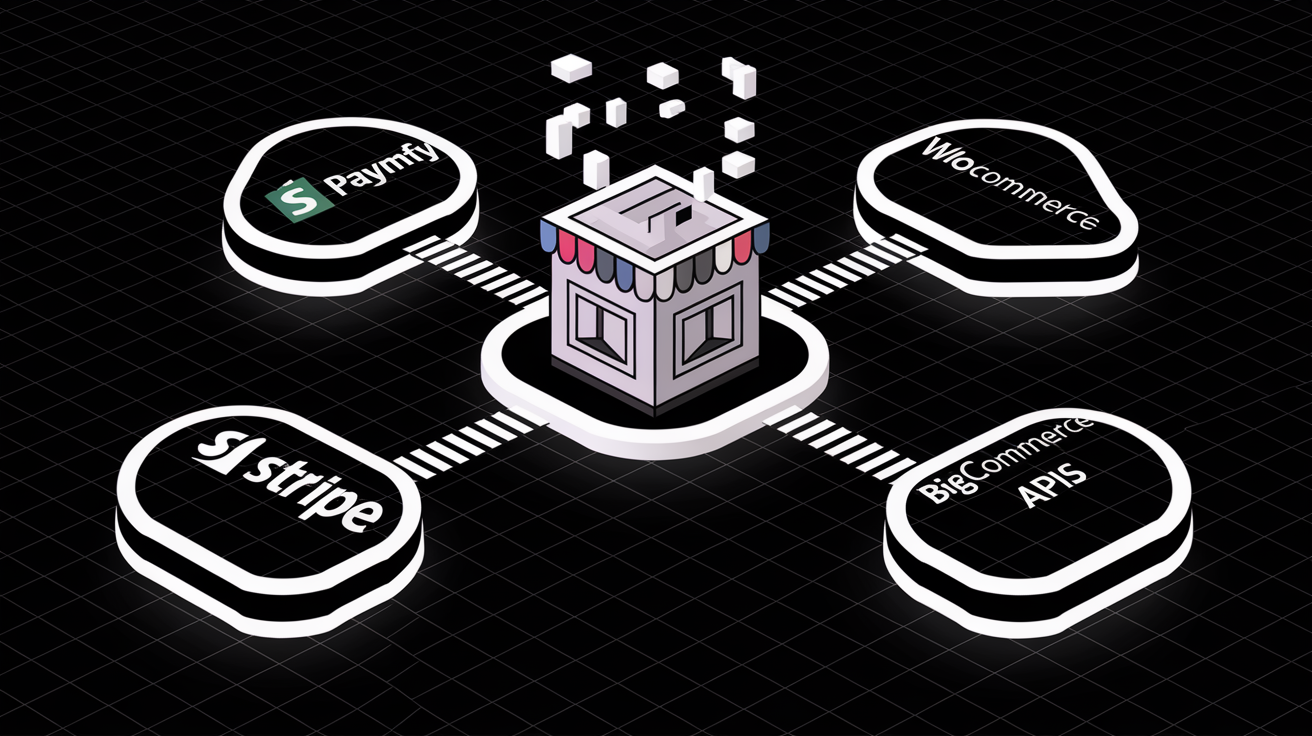
Using a native payment gateway on Shopify (Shopify Payments, powered by Stripe) eliminates the 0.5%–2.0% additional transaction fee that Shopify charges when you choose an external gateway. That fee structure pushes most Shopify merchants toward the built-in option unless they need a feature (like split payouts for a marketplace) that Shopify Payments doesn’t support. PayPal is also natively integrated and doesn’t trigger the extra fee, so many stores enable both Shopify Payments and PayPal Express to cover card buyers and wallet users without paying double platform fees.
WooCommerce and BigCommerce operate as plugin ecosystems where you install an official extension from Stripe, PayPal, Square, or Authorize.net. WooCommerce’s flexibility means you can swap gateways by deactivating one plugin and activating another, though you’ll need to update checkout settings, test card flows, and migrate stored payment tokens if you offer subscription products. BigCommerce includes gateway partnerships that simplify PCI compliance. When you use a supported provider like Braintree or Adyen, the checkout iframe or redirect handles tokenization automatically, keeping your server out of PCI scope. Magento (Adobe Commerce) supports deep customization via REST and GraphQL APIs, which benefits headless storefronts that render checkout in a single-page app. All major processors provide SDKs and detailed API docs for custom builds.
API, SDK, and sandbox testing let you validate payment logic before going live. Sandbox environments simulate approvals, declines, 3D Secure challenges, and webhook events so you can write automated tests that catch regressions when you update your checkout code. Stripe, PayPal, and Square all provide test card numbers that trigger specific responses. “4000 0000 0000 0002” always declines, “4000 0000 0000 3220” triggers 3DS authentication. Running these scenarios in CI/CD pipelines prevents bugs that would otherwise surface when real customers attempt checkout on launch day.
| Platform | Native Gateways | External Gateway Notes |
|---|---|---|
| Shopify | Shopify Payments (Stripe), PayPal Express | External gateways incur 0.5%–2.0% additional fee per transaction |
| WooCommerce | WooCommerce Payments (Stripe), PayPal Checkout | Plugin ecosystem; install any supported gateway without extra platform fee |
| BigCommerce | PayPal, Stripe (via app), Square | No additional platform fee; partner gateways handle PCI tokenization via iframe |
| Magento / Adobe Commerce | Braintree (PayPal), Authorize.net | Full API access; custom integrations common for headless and B2B flows |
Chargeback Management, Disputes & Fraud-Loss Prevention

Chargebacks happen when a cardholder disputes a transaction with their issuing bank. Either because the charge is fraudulent, the product never arrived, or the customer doesn’t recognize the merchant name on their statement. The bank pulls the sale amount plus a chargeback fee from your merchant account, and you have 7–75 days (depending on card network and reason code) to submit evidence proving the transaction was legitimate. Stripe charges a $15 dispute fee, refunded if you win. PayPal’s fee typically runs around $20 and is not refunded. High chargeback ratios (above 0.9% of transaction count) trigger card-network monitoring programs that can raise your fees, impose fines, or terminate your merchant account.
Preventing chargebacks starts before the sale. Clear product descriptions, realistic delivery estimates, and recognizable statement descriptors reduce “I didn’t buy this” disputes. Address Verification Service (AVS) checks that the billing address matches the card on file, Card Verification Value (CVV) confirms the buyer has the physical card. 3D Secure shifts liability to the issuer for authenticated transactions. Fraud-scoring tools flag high-risk orders for manual review. Look at velocity (multiple orders from the same IP in a short window), mismatched billing/shipping locations, disposable email domains, and device fingerprints that appear on known fraud lists.
When a dispute arrives, respond with:
- Proof of delivery like tracking numbers, signed delivery confirmations, photos of the package at the customer’s door.
- Customer communication including email threads showing the buyer acknowledged receipt, requested support, or confirmed satisfaction.
- Transaction details such as IP address, device fingerprint, AVS/CVV results, 3DS authentication logs.
- Terms of service with screenshots of your refund policy and the customer’s acceptance during checkout.
- Duplicate-charge evidence. If the dispute claims the customer was charged twice, show only one settled transaction in your records.
Clear, organized evidence submitted within the deadline wins 20%–40% of disputes, which lowers your effective chargeback rate and protects your processing account from network penalties.
Reporting, Analytics & Financial Reconciliation Tools for Merchants
Payment dashboards surface transaction logs, refund activity, payout schedules, and dispute status in real time. Most providers let you filter by date range, payment method, card brand, and outcome (approved, declined, refunded, disputed), then export results as CSV for reconciliation in Excel or your accounting system. Real-time monitoring via webhooks pushes events (authorization, capture, refund, chargeback) to your backend as they happen, so your order-management system updates inventory, triggers fulfillment, and records revenue without manual batch imports at end of day.
Settlement reporting formats vary. Stripe provides daily balance transactions that show gross sales, fees, refunds, adjustments, and net payout line by line. PayPal’s transaction history includes buyer email, shipping address, and item details, which helps match payments to orders when customers use a different name at checkout. Square’s sales reports break down online versus in-person revenue, tip amounts, and tax collected, which simplifies sales-tax filing. Choose a provider whose export format matches your accounting software (QuickBooks, Xero, NetSuite) or invest in middleware (like Zapier or a dedicated reconciliation tool) that maps payment data to your chart of accounts automatically.
Accounting & ERP Sync
Direct integrations between payment processors and accounting platforms reduce manual data entry and close the books faster. Stripe’s QuickBooks connector syncs daily payouts, fees, and refunds as journal entries. Xero’s PayPal integration imports transactions and matches them to invoices. For larger operations running ERP systems (NetSuite, SAP, Microsoft Dynamics), API-based sync pulls transaction records, updates AR ledgers, and reconciles bank deposits in near real time. CSV batch imports still work when APIs aren’t available. Export your settlement report each morning, map columns to your ERP’s import template, and load the file. Either path eliminates the “mystery deposits” problem where finance teams can’t trace a $3,847.21 bank deposit back to specific orders.
Selecting the Best Ecommerce Merchant Service for Your Business Type
High-volume merchants benefit most from interchange-plus pricing and ACH options. Once monthly card volume exceeds $50,000, negotiate custom rates. Processors will lower markup to 0.20%–0.40% over interchange, which can save $200–$500 per month compared with flat 2.9% pricing. For orders above $500, offer ACH or bank transfer at checkout. Stripe’s 0.8% capped at $5 beats 2.9% + $0.30 on a $1,000 sale ($5 ACH fee versus $29.30 card fee). High volume also unlocks account managers, faster support response, and flexibility on reserve policies.
Subscription businesses need advanced billing tools (dunning, proration, metered usage, trial management), so Stripe Billing or a dedicated subscription platform (Recurly, Chargebee) is the best fit. PayPal and Square support basic recurring payments but lack the automation required to manage hundreds or thousands of subscribers without manual intervention. If you sell both one-time and subscription products, confirm your gateway can store payment tokens securely and charge them on schedule without forcing customers to re-enter card details.
International sellers require multi-currency support and local payment methods. Adyen’s 250+ payment options cover most markets. Stripe supports 135+ currencies and methods like SEPA, iDEAL, and Alipay. Check settlement options. Some providers only settle in your home currency and force conversion at their FX rate, while others let you hold balances in multiple currencies and pay suppliers or ad platforms without round-trip conversion fees. Cross-border fees will add 1%–2%, so model the effective rate before committing.
Business types and recommended fits:
- Microbusiness (under $10k/month): flat-rate simplicity, fast onboarding, no monthly fees. Stripe, PayPal, Square.
- SMB ($10k–$100k/month): consider interchange-plus if margins are tight, prioritize strong platform integrations. Stripe, Authorize.net, Braintree.
- Enterprise ($100k+/month): negotiate custom rates, demand dedicated support, evaluate split-payout or marketplace features. Adyen, Stripe (custom pricing), Braintree.
- Subscription business: dunning, proration, metering. Stripe Billing, Recurly, Chargebee.
- Marketplace: split payouts, onboard sub-merchants, compliance tools. Stripe Connect, Adyen MarketPay.
- Global merchant: local methods, multi-currency settlement, cross-border optimization. Adyen, Stripe (global mode), 2Checkout/Verifone.
Cost-Saving Strategies & Fee Optimization for Ecommerce Merchant Services
Negotiate rates once you hit consistent monthly volume. Processors rarely advertise discounts, but account managers have authority to lower interchange markup when you process $50,000+ per month or commit to annual volume minimums. Document your current effective rate (total fees divided by total sales), competitors’ offers, and your chargeback ratio before the call. Clean processing history and low disputes give you leverage.
Reduce chargebacks and fraud to keep your effective rate low. Every chargeback costs the disputed amount plus $15–$20 in fees, and high ratios trigger network penalties that raise your base rate or terminate your account. Implement AVS, CVV, and 3D Secure. Use fraud scoring to block high-risk orders before authorization. Write clear statement descriptors so customers recognize charges. Send shipping confirmations with tracking links. A 0.2% chargeback rate saves thousands in fees and protects your processing privileges.
Optimize checkout UX to improve approval rates and reduce abandonment. One-click checkout with saved cards shortens the purchase flow and prevents typos that cause declines. Mobile-optimized payment forms with autofill, large tap targets, and inline validation reduce friction on phones, where over 60% of ecommerce traffic originates. A/B test checkout variations (guest checkout versus mandatory account creation, express wallets above card forms, trust badges near the “pay” button) and measure completion rate, not just page load speed.
Additional optimization levers:
- Avoid unnecessary cross-border fees. If most customers are domestic, confirm your gateway routes to a local acquirer instead of an international one that adds +1% premiums.
- Use ACH for high-ticket sales. Offer bank transfer at checkout for orders above $300. The 0.8% fee (capped at $5) beats card rates and appeals to cost-conscious B2B buyers.
- Batch refunds strategically. Some processors charge per refund transaction. Issuing one $50 refund costs the same as five $10 refunds, so batch small adjustments when possible.
- Monitor interchange qualification. Ensure your integration passes Level II/Level III data (tax, line items, customer code) for B2B or corporate card transactions. Qualifying for lower commercial-card interchange can save 0.3%–0.5% per sale.
- Review statement monthly. Processors occasionally apply incorrect fees, misclassify transactions, or add new charges without clear notice. Catch errors early and dispute them within 60 days.
Final Words
in the action, we walked through what ecommerce merchant services do—the checkout flow, security tools, pricing models, provider comparisons, cross-border rules, subscription and ACH options, onboarding, integrations, chargeback handling, and reporting.
Match your choice to scale: interchange-plus for high volume, developer-friendly APIs for headless shops, and global providers for many markets. Run a 2-week audit of top SKUs and test saved-card checkout.
Choosing the right ecommerce merchant services cuts fees, reduces fraud risk, and keeps conversion steady. You can tighten margins and move faster.
FAQ
Q: What is an ecommerce merchant?
A: An ecommerce merchant is a business or individual that sells goods or services online and uses merchant services (payment gateway, processor, merchant account) to accept and settle digital payments.
Q: What are the 4 types of e-commerce?
A: The four types of e-commerce are B2C (business-to-consumer), B2B (business-to-business), C2C (consumer-to-consumer), and C2B (consumer-to-business), each describing who sells to whom.
Q: What is the top 3 ecommerce in the US?
A: The top 3 ecommerce retailers in the US are Amazon, Walmart, and eBay, ranked by online sales and traffic; they lead in marketplace scale, logistics, and customer reach.
Q: What is an example of a PSP?
A: An example of a PSP is Stripe, which routes card and wallet payments, provides a gateway, fraud tools, and settlement services for online merchants.