


Most ecommerce teams pour money into ads and then wonder why acquisition costs stay high.
That’s because selling online isn’t just about traffic or checkout—it’s a journey with five stages that each shape conversion and lifetime value.
In this post we’ll map those stages—awareness, consideration, purchase, retention, and advocacy—and show the key touchpoints that push or pull customers at each moment.
You’ll get conversion strategies and small tests to stop leaks, lift conversion, and make repeat revenue more predictable.
Core Overview of the Ecommerce Customer Journey
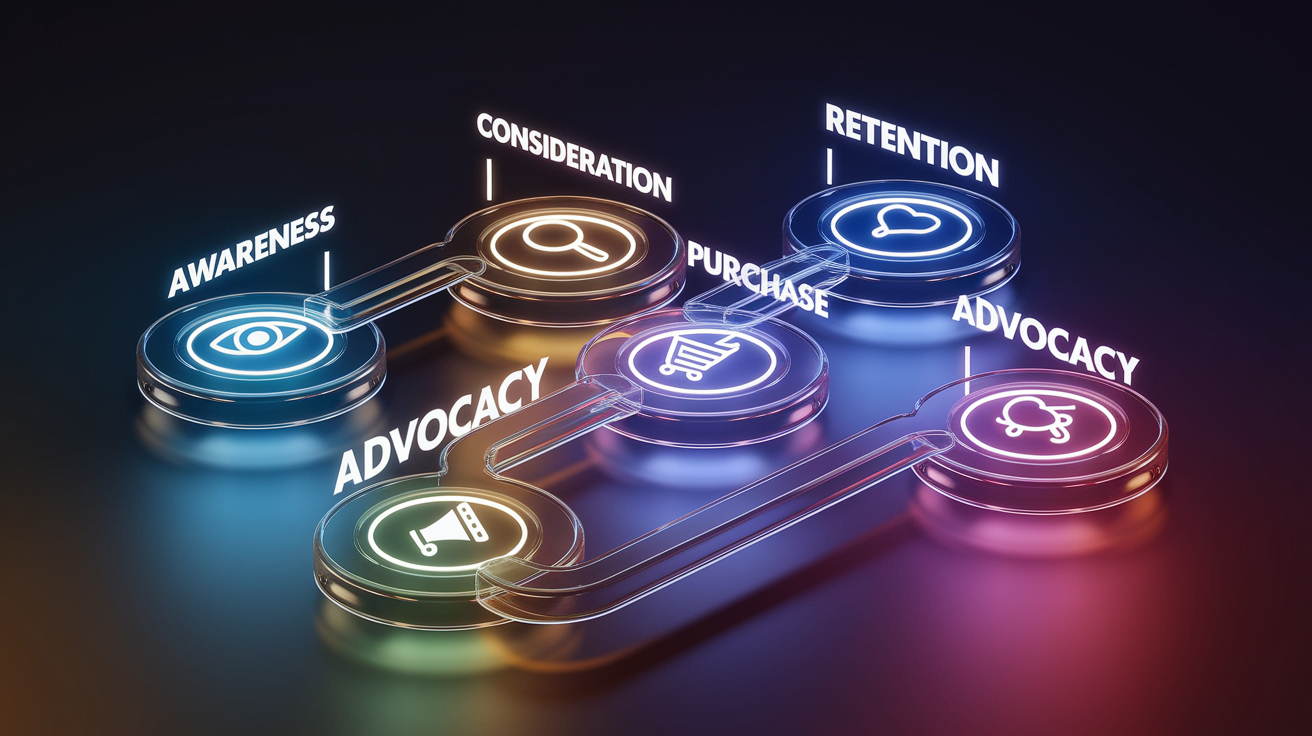
The ecommerce customer journey is the full set of interactions a shopper has with an online brand, starting when they first hear about you and continuing through repeat purchases and word-of-mouth promotion. It’s not just one transaction. It’s every touchpoint where someone decides whether to trust you, buy from you, or tell their friends about you.
When you understand this journey, you can spot where people are dropping off and fix it. You can personalize what you’re saying based on where someone is in the process. And you can stop wasting money on tactics that don’t actually move people closer to buying.
Mapping these stages helps you improve conversion rates and customer lifetime value. Once you see the journey visually, you can test specific changes at the moments that matter most. Maybe your checkout is confusing. Maybe your product pages don’t answer the right questions. Maybe you’re not following up after someone buys. Whatever it is, you can measure what happens when you fix it.
Most journeys break down into five stages:
- Awareness is when someone first finds out you exist, usually through an ad, search result, or piece of content.
- Consideration is when they’re actively comparing you to other options, reading reviews, and deciding if you’re the right fit.
- Purchase is the checkout process where intent turns into revenue.
- Retention is everything that happens after the sale to keep them coming back.
- Advocacy is when happy customers leave reviews, refer friends, and create content about your brand.
Each stage needs different messaging, different metrics, and different touchpoints. If you align your tools and team priorities to these stages, you can systematically improve both how efficiently you acquire customers and how much they’re worth over time.
Awareness Stage Breakdown
Awareness is where people enter your funnel. They might click a paid search ad, see an Instagram post, watch a YouTube review, or stumble on a blog article you wrote. At this point, most of them don’t know your brand. They’re researching a problem, scrolling for inspiration, or reacting to something that caught their attention.
Typical touchpoints include Google search results, Facebook or Instagram ads, TikTok videos, YouTube product reviews, blog posts that rank for category keywords, and referral links from affiliates or press coverage. Your goal isn’t conversion yet. It’s brand recognition and getting people onto your site, social profiles, or email list.
Success here depends on showing up where your audience already is and explaining what you do in seconds. You measure awareness through impressions, reach, new sessions, click-through rates, and traffic source data in your analytics.
Consideration Stage Breakdown
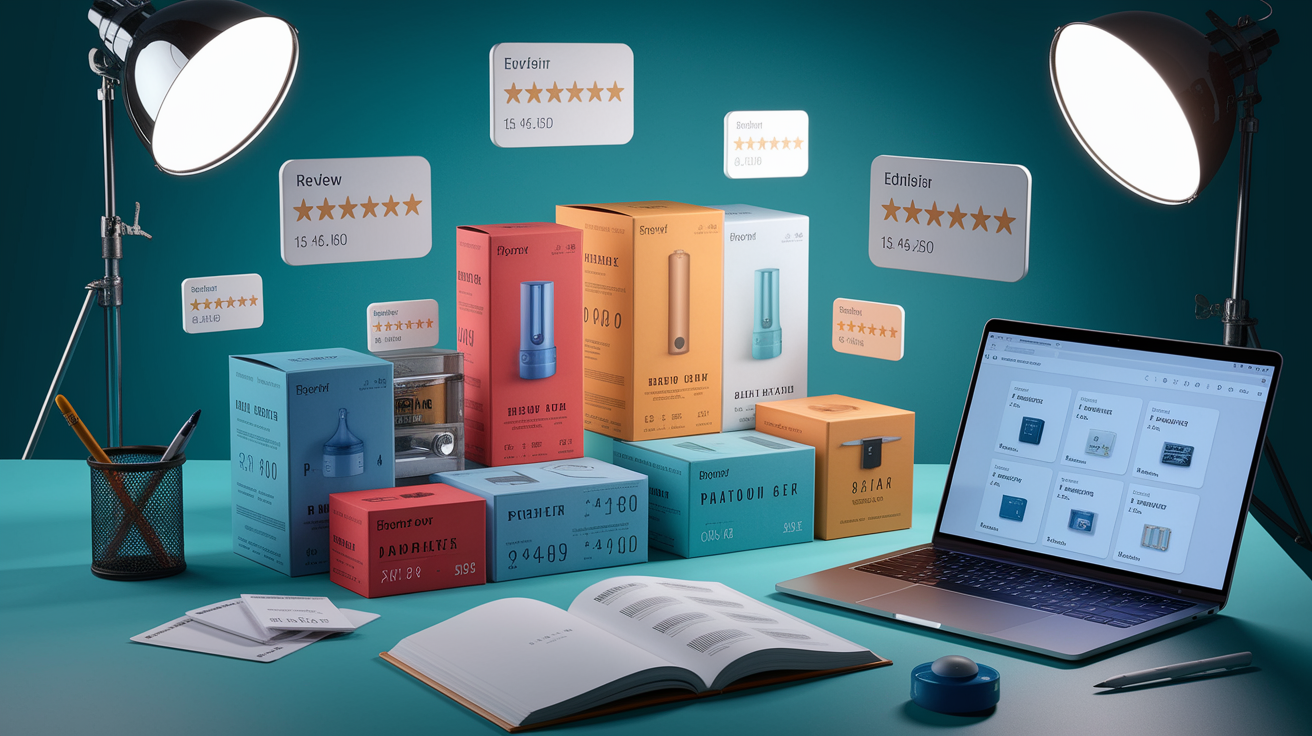
During consideration, shoppers know you exist. Now they’re deciding whether to actually buy. They compare prices, read product descriptions, check reviews, look for proof that you’re legit, and evaluate your shipping costs and return policy. This stage can take seconds for impulse buys or weeks for expensive items.
Onsite elements that build trust include customer reviews and star ratings, clear product images and specs, comparison charts, upfront shipping and return info, and trust badges like secure checkout icons or money-back guarantees. Offsite, people might check third-party review sites, Reddit threads, or what influencers are saying. The longer someone’s consideration window, the more places they’ll check before deciding.
Common comparison factors:
- Price compared to alternatives and whether it feels worth it.
- Number of reviews, how recent they are, and the average rating.
- Brand credibility signals like press mentions, social proof, or certifications.
Your job is to reduce ambiguity. If someone can’t quickly figure out “Is this the right product?” or “Can I trust this store?” they’ll leave and keep researching somewhere else.
Purchase Stage Breakdown

The purchase stage starts when someone adds something to their cart and ends with order confirmation. This is peak intent and peak abandonment risk. Any friction here costs you money directly.
Your checkout flow, payment options, surprise fees, page speed, and trust signals all determine whether someone completes the order. Best practices include minimizing steps, offering guest checkout, showing a progress indicator, displaying security badges, and supporting multiple payment methods like Shop Pay or Apple Pay. Any surprise at this stage can kill the sale. Hidden shipping costs. Forced account creation. A slow payment page. Unclear error messages when something goes wrong.
You should also offer live chat or chatbot support for checkout questions. Even small hesitations can derail a purchase.
Four friction points that tank conversions:
- Shipping costs or taxes only revealed at the last step.
- Forcing people to create an account before buying.
- Complicated multi-step checkout with no sense of progress.
- Limited payment options or payment errors.
Test variations here. One-page checkout versus multi-step. Different button copy. Where you place trust badges. Small changes often produce measurable lift in conversion rate and average order value.
Retention Stage Breakdown

Retention starts the second someone places an order. Post-purchase communication like order confirmation, shipping updates, and delivery notifications set expectations and reduce anxiety. After delivery, your email flows, personalized offers, loyalty programs, and customer service determine whether someone buys again.
Email is your most scalable retention tool. Automated sequences can ask for reviews, recommend related products based on what they bought, announce restocks or new arrivals, and offer discounts to bring back customers who haven’t ordered in a while. Personalization matters. Using first-party data to tailor recommendations and messaging drives higher engagement and repeat purchases than generic blasts.
Service quality also shapes retention. Fast, helpful responses to problems build trust and make future orders more likely. Loyalty programs that reward repeat purchases with points, early access, or exclusive perks give people a reason to come back instead of shopping around.
Track repeat purchase rate, purchase frequency, and customer lifetime value to measure retention performance. Then prioritize improvements that extend how long customers stay active.
Advocacy Stage Breakdown
Advocacy is when satisfied customers voluntarily promote your brand. They leave product reviews, refer friends, post user-generated content on social media, and engage with your posts. Advocacy is valuable because it’s trusted, scalable, and usually free.
You can encourage it by making it easy and rewarding. Send post-purchase emails asking for reviews with a direct link. Run referral programs that offer discounts to both the referrer and the new customer. Launch social campaigns inviting people to share photos or stories. User-generated content also acts as social proof for new prospects during the consideration stage.
Three primary advocacy touchpoints:
- Product reviews and ratings on your site or third-party platforms.
- Referral programs with trackable links and incentives.
- Social shares, tags, and mentions on Instagram, TikTok, or Facebook.
Measure advocacy through Net Promoter Score, review volume and sentiment, referral conversion rates, and tagged social mentions. High advocacy signals strong product-market fit and efficient customer acquisition because your customers are doing unpaid marketing work.
Mapping the Ecommerce Customer Journey
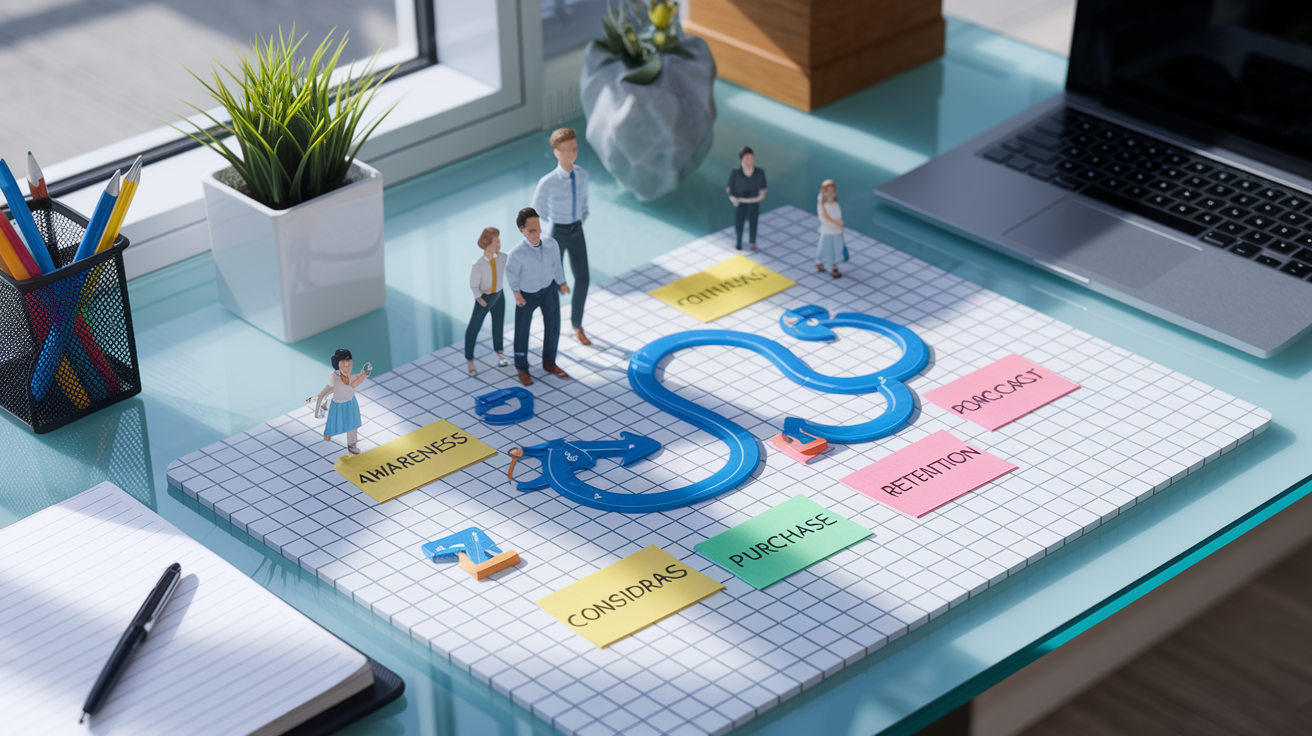
A customer journey map is a visual representation of how shoppers move through each stage, which touchpoints they hit, what goals they have, and where friction slows or stops them. Maps help cross-functional teams see the full picture and coordinate improvements.
You build journey maps using data from analytics platforms like Google Analytics or Triple Whale, session replays, funnel reports, customer surveys, and support tickets. Combining quantitative data (drop-off rates, time between sessions, conversion paths) with qualitative insights (why customers hesitate, what questions they ask) produces a map grounded in real behavior instead of assumptions.
| Stage | Key Touchpoints | Customer Goals | Common Friction Points |
|---|---|---|---|
| Awareness | Ads, SEO, social posts, influencer mentions | Discover new brands, find solutions to a problem | Irrelevant targeting, unclear value proposition, slow site load |
| Consideration | Product pages, reviews, comparison tools, retargeting ads | Evaluate fit, compare options, validate trust | Missing product details, low review volume, hidden shipping costs |
| Purchase | Cart, checkout, payment options, order confirmation | Complete purchase quickly and securely | Unexpected fees, forced account signup, payment errors |
| Retention | Email flows, loyalty programs, customer service, reorder prompts | Receive order on time, get help if needed, find reasons to return | Slow support response, generic emails, unclear return process |
| Advocacy | Review requests, referral programs, social tags, UGC campaigns | Share positive experiences, get rewarded for referrals | No clear ask, complicated referral process, lack of incentive |
Key Touchpoints Across the Journey
Touchpoints are specific moments when a customer interacts with your brand. These interactions shape perception, influence decisions, and either move the journey forward or cause people to leave. Understanding which touchpoints matter most at each stage lets you prioritize what to optimize and where to spend your time.
Digital touchpoints include paid ads (search, social, display), organic search results, product pages, email campaigns, live chat or chatbot interactions, checkout flows, and post-purchase communication like order updates, review requests, and win-back emails. Physical or hybrid touchpoints might include packaging inserts, SMS notifications, or phone support. Each touchpoint should have a clear purpose and a measurable outcome.
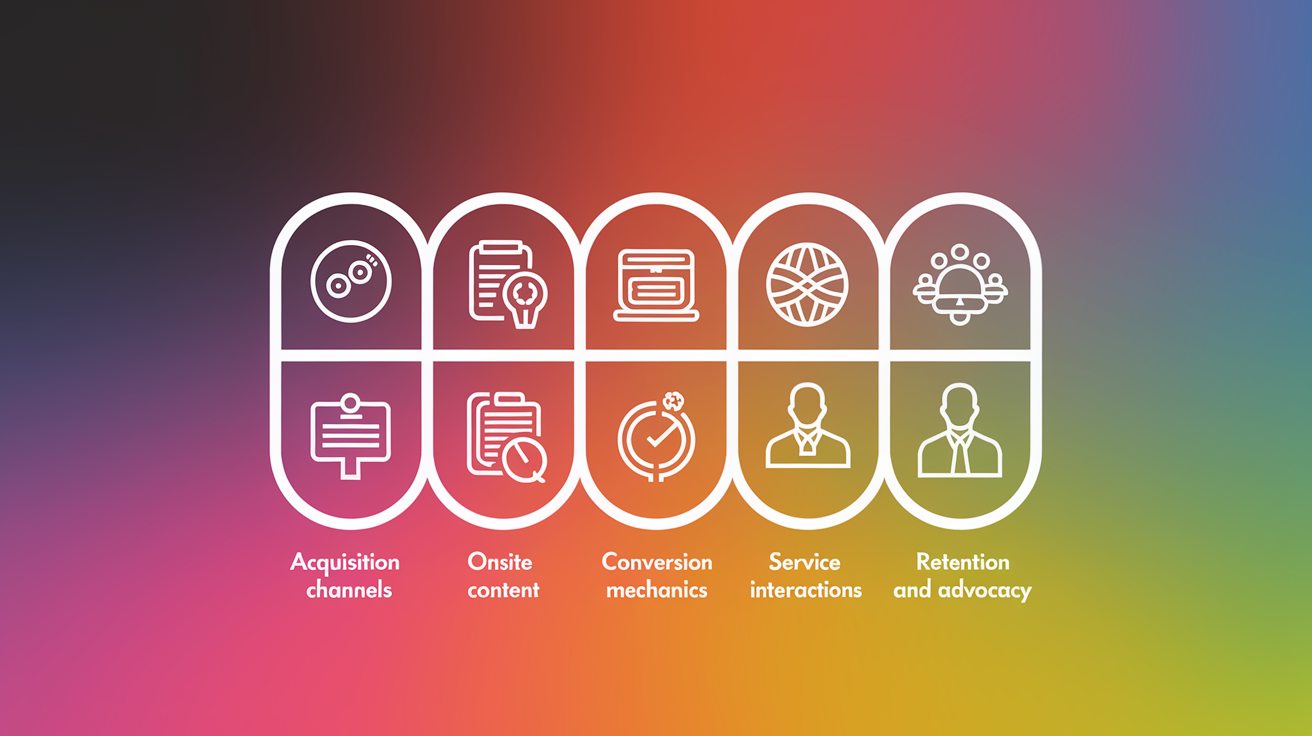
Five critical touchpoint categories:
- Acquisition channels like ads, SEO, affiliates, and influencers that drive first visits.
- Onsite content including product pages, category pages, blog posts, FAQs, and review sections.
- Conversion mechanics like cart, checkout, payment options, and trust signals.
- Service interactions such as live chat, email support, chatbots, and return portals.
- Retention and advocacy prompts like post-purchase emails, loyalty dashboards, and referral links.
Map which channels drive awareness versus conversion. Identify high drop-off pages. Test improvements to your highest-traffic or highest-value touchpoints first. Small fixes at high-volume touchpoints often produce larger revenue impact than perfecting low-traffic pages.
Metrics for Evaluating Each Stage

Measuring the customer journey requires stage-specific KPIs. If you track awareness with conversion metrics or loyalty with click-through rates, you’ll get misleading signals. Each stage has distinct goals, so you need to monitor the right indicators to understand performance and prioritize what to test.
Awareness metrics focus on reach and traffic quality. Consideration metrics track engagement and intent signals. Purchase metrics measure conversion efficiency. Retention metrics evaluate repeat behavior and lifetime value. Advocacy metrics capture how effectively customers promote your brand.
Dashboards that segment these metrics by stage make it easier to spot where the journey breaks down and where incremental improvements will have the largest impact.
| Stage | Recommended Metrics |
|---|---|
| Awareness | Impressions, reach, new sessions, traffic sources, click-through rate (CTR), cost per acquisition (CPA) |
| Consideration | Pages per session, time on site, product page views, add-to-cart rate, bounce rate, email open and click rates |
| Purchase | Conversion rate, cart abandonment rate, checkout completion rate, average order value (AOV), payment success rate |
| Retention | Repeat purchase rate, purchase frequency, customer lifetime value (CLV), churn rate, retention rate, subscription renewal rate |
| Advocacy | Net Promoter Score (NPS), review count and sentiment, referral rate, social shares, user-generated content volume |
Examples of Effective Ecommerce Customer Journeys
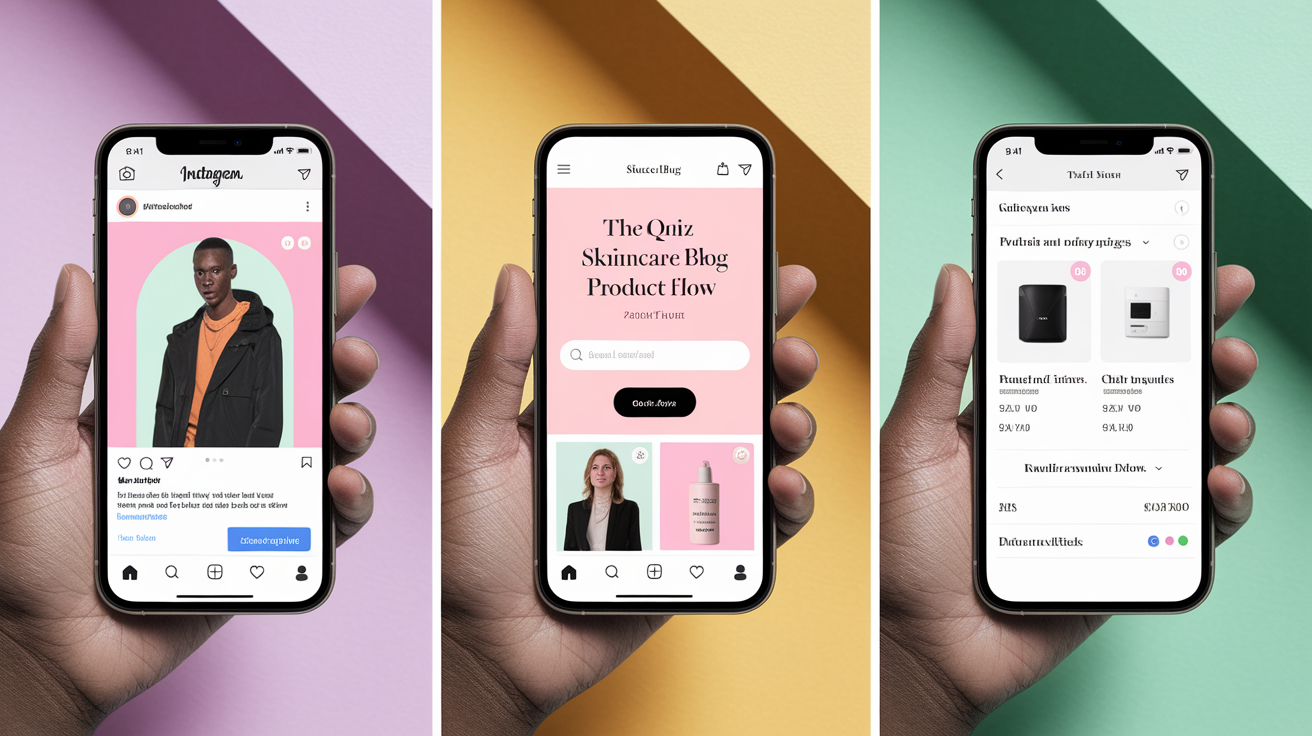
An apparel brand runs Instagram story ads that link to a curated landing page featuring seasonal collections. The landing page includes high-quality product photos, size guides, customer reviews, and a persistent chat widget. Checkout offers Shop Pay for one-click purchase and guest checkout for first-timers. After the sale, they send a shipping update with a personalized “style it with” email recommending complementary items. Thirty days later, a loyalty email offers early access to the next collection.
This journey reduces friction at every stage, uses first-party data to personalize communication, and builds repeat behavior through timely, relevant touchpoints.
A skincare brand drives awareness through educational blog content optimized for search terms like “how to treat dry skin” and “best vitamin C serum.” Readers land on product pages with ingredient breakdowns, clinical study summaries, and before-and-after photos. The consideration stage is supported by a quiz that recommends a routine based on skin type and concerns. Cart abandonment triggers an email with a limited-time discount and testimonials.
After purchase, customers receive a welcome email with usage tips, a review request at 30 days, and a reorder reminder when the product is likely running low. The journey aligns content type to intent at each stage and uses automation to scale personalized follow-up.
An electronics retailer attracts shoppers through comparison content (best budget headphones, laptop buying guides) and retargets visitors with dynamic product ads. Product pages display detailed specs, video reviews, warranty information, and real-time stock levels. Checkout includes multiple payment options and clear delivery estimates.
Post-purchase, the brand sends setup guides, accessory recommendations, and a referral program offer. Support is proactive. Chatbots handle common questions, and phone support is available for complex issues. This journey prioritizes clarity and trust during consideration, minimizes purchase friction, and turns buyers into advocates through helpful post-purchase content and incentives.
Final Words
You now have a clear map of the five stages—awareness, consideration, purchase, retention, advocacy—and the touchpoints and metrics that matter most.
Use that map to find the biggest friction points: audit top 20 SKUs for checkout issues, test a simplified cart for 2 weeks, and set one retention flow to win repeat buyers.
Treat the ecommerce customer journey as a living plan. Iterate fast, measure the lift, and the compounding gains will follow.
FAQ
Q: What is the typical ecommerce customer journey and what are its five stages?
A: The typical ecommerce customer journey is the path from first discovery to loyal promotion. The five stages are awareness, consideration, purchase, retention, and advocacy. Map these to touchpoints to boost conversions.
Q: What are the 7 C’s of e commerce?
A: The 7 C’s of e-commerce are context (site design), content (product info), community (user interaction), customization (personalization), communication (two-way messaging), connection (integrations), and commerce (checkout/payments).