


Still wiring your checkout to every local PSP and praying it all works?
Payment orchestration fixes that.
It sits between your checkout and the mess of processors, routing transactions, retrying failed authorizations, vaulting tokens, and normalizing reporting.
That matters: orchestration can lift authorization rates 2 to 5 percent, turning declines into real revenue, and it cuts engineering time when you expand channels or countries.
This post compares the leading orchestration platforms and shows which one fits your setup so you can act fast.
Leading Payment Orchestration Platforms for Multi‑Channel Retailers

Payment orchestration platforms sit between your checkout and the mess of processors, gateways, and alternative payment methods your customers expect. Instead of hardcoding integrations to each provider, you get one API that routes transactions intelligently, retries failed authorizations, vaults tokens across channels, and consolidates reporting. If you’re juggling online, mobile, in‑store, and marketplace sales, orchestration cuts engineering overhead, lifts authorization rates, and speeds up expansion into new markets or payment methods.
The business case is simple. A 2 to 5 percent uplift in authorization rates turns into recovered revenue. Automated failover during processor outages keeps sales flowing when a single PSP goes down. Process £10 million annually? You can recover £200,000 in previously declined transactions with smarter routing and retry logic. Orchestration also kills the operational chaos of reconciling settlement files, fraud alerts, and chargeback notifications across multiple dashboards.
- Spreedly is an established vault‑first orchestrator with 100+ gateway connections. Strong if you’re prioritizing credential portability and centralized token management.
- Primer offers a no‑code workflow builder for rapid routing changes and experimentation. Suited to product teams needing frequent payment flow updates without engineering releases.
- Gr4vy delivers cloud‑native orchestration with containerized instances and configuration‑driven workflows. Designed for speed of change and global compliance needs.
- Paydock is APAC‑focused with ~30 PSP integrations and subscription lifecycle support. Best for Australian and Asia‑Pacific retailers.
- CellPoint Digital provides omnichannel orchestration tailored to travel and retail, emphasizing cross‑channel token syncing and in‑person payment flows.
- Zooz (PayU) combines emerging‑market gateway + orchestration with AI‑driven routing. Strong in Central and Eastern Europe, Latin America, and Africa.
- APEXX gives you enterprise‑grade routing with deep fraud stack integrations and marketplace split‑payment support. Fits complex multi‑entity retailers.
High‑volume retailers processing across multiple regions typically prioritize platforms offering advanced routing logic, broad PSP coverage, and unified reconciliation. Fast‑growing brands expanding into new markets benefit from orchestrators with strong local payment method libraries and rapid integration timelines. Subscription and recurring‑revenue retailers need account updater support, dunning workflows, and token vaulting to minimize involuntary churn.
Core Features to Compare Across Payment Orchestration Providers

Intelligent routing is the headline capability. Platforms analyze card BIN, issuer, geography, transaction amount, and processor performance to select the optimal path in real time. Advanced routing engines run A/B tests, apply cost‑based optimization, and trigger automatic retries through alternate processors when authorizations fail. You should validate whether routing rules are merchant‑configurable, whether rule changes deploy instantly or require engineering releases, and whether the platform explains routing decisions in transaction logs.
Fraud and risk integrations vary widely. Some orchestrators embed native fraud screening with customizable rule sets. Others integrate third‑party fraud vendors like Forter, Signifyd, or Riskified via pre‑built connectors. Omnichannel token vaulting ensures a customer who saves a card online can reuse it in‑app or at a POS terminal without re‑entering credentials. Network tokenization and account updater services reduce declines caused by expired or reissued cards, particularly critical for subscription retailers where involuntary churn erodes recurring revenue.
Global payment coverage determines speed to market. Platforms with pre‑built connectors to local acquirers and alternative payment methods (PIX in Brazil, Bizum in Spain, Swish in Sweden) let you launch in new regions without negotiating individual PSP contracts or building country‑specific integrations. Reconciliation and settlement reporting must normalize data from dozens of processors into a single exportable format, saving finance teams from manually stitching together settlement files, fee breakdowns, and chargeback data.
Key evaluation criteria for retail operations:
- Routing transparency. Can you trace why a transaction took a specific path and replay routing decisions for failed authorizations?
- Connector depth. Verify PSP integrations are production‑ready, not catalog placeholders. Test checkout flows for your critical payment methods.
- Multi‑channel support. Confirm token vaulting works across web, mobile SDK, POS, and marketplace channels with consistent 3D Secure handling.
- Change velocity. Measure how quickly you can deploy new routing rules, add a PSP, or roll back a configuration without engineering sprints.
- Finance‑friendly reporting. Ensure reconciliation exports include normalized processor names, settlement timing, fees, and chargeback status for automated month‑end close.
Platform‑by‑Platform Breakdown

Spreedly
Spreedly operates as a vault‑first orchestration layer connecting retailers to over 140 payment gateways through a normalized API. The platform’s core strength is credential management: tokenized card data stored in Spreedly’s vault remains portable, so you can switch PSPs or add new processors without re‑collecting customer payment information. Network tokenization and account updater services reduce declines from expired cards. Spreedly fits retailers with engineering teams who want maximum PSP flexibility, centralized token control, and the ability to test new gateways without rewriting checkout code. Routing capabilities are present but less advanced than dedicated routing‑first platforms. Reconciliation features require manual configuration.
Primer
Primer’s visual workflow builder lets non‑technical teams design complex payment flows (cascading fallbacks, conditional routing by card type or geography, split payments for marketplaces) without writing code. The platform provides a centralized vault, provider‑agnostic 3D Secure handling, and real‑time dashboards with alerting. Primer works best for mid‑market retailers and fast‑growing e‑commerce brands whose product teams need to iterate on payment logic weekly or launch new checkout experiments without waiting on engineering backlogs. The no‑code interface reduces time to market, but the platform’s value depends heavily on monitoring and safe change controls to prevent accidental routing errors in production.
Gr4vy
Gr4vy positions itself as cloud‑native orchestration, offering configuration‑driven workflows and containerized payment instances that meet data residency and compliance requirements. The platform reports connectivity to 400+ PSPs, payment methods, and risk services globally. Gr4vy’s architecture is designed for rapid change: you can update routing rules, add processors, and test new flows without code deployments. The platform fits retailers prioritizing speed of experimentation and global compliance, particularly those expanding into regulated markets with strict data localization rules. Cloud‑first deployment may conflict with procurement teams requiring on‑premises options. Integration depth per PSP requires validation during sandbox testing.
Paydock
Paydock focuses on Australian and Asia‑Pacific markets, offering orchestration with subscription lifecycle support, recurring billing, and dunning workflows. The platform connects to ~30 PSPs and emphasizes operational control for subscription retailers managing involuntary churn. Paydock provides unified dashboards, automated reconciliation, and account updater services. It’s best suited to mid‑market subscription businesses and retailers operating primarily in APAC geographies. If you’re expanding beyond the Asia‑Pacific region, verify PSP coverage in target markets. Connector density outside APAC is lower than global‑first platforms.
CellPoint Digital
CellPoint Digital specializes in omnichannel orchestration for travel and retail, with cross‑channel token syncing and support for in‑person payment flows. The platform enables buy‑online‑pickup‑in‑store scenarios, mobile wallet integration, and unified reporting across online, in‑app, and POS channels. CellPoint fits retailers operating physical and digital storefronts who need a single payment token to work seamlessly across all channels. The platform’s strength is omnichannel token portability and compliance with regional card schemes. Routing intelligence and fraud stack integrations are less emphasized than pure‑play orchestrators.
Comparative Feature Matrix
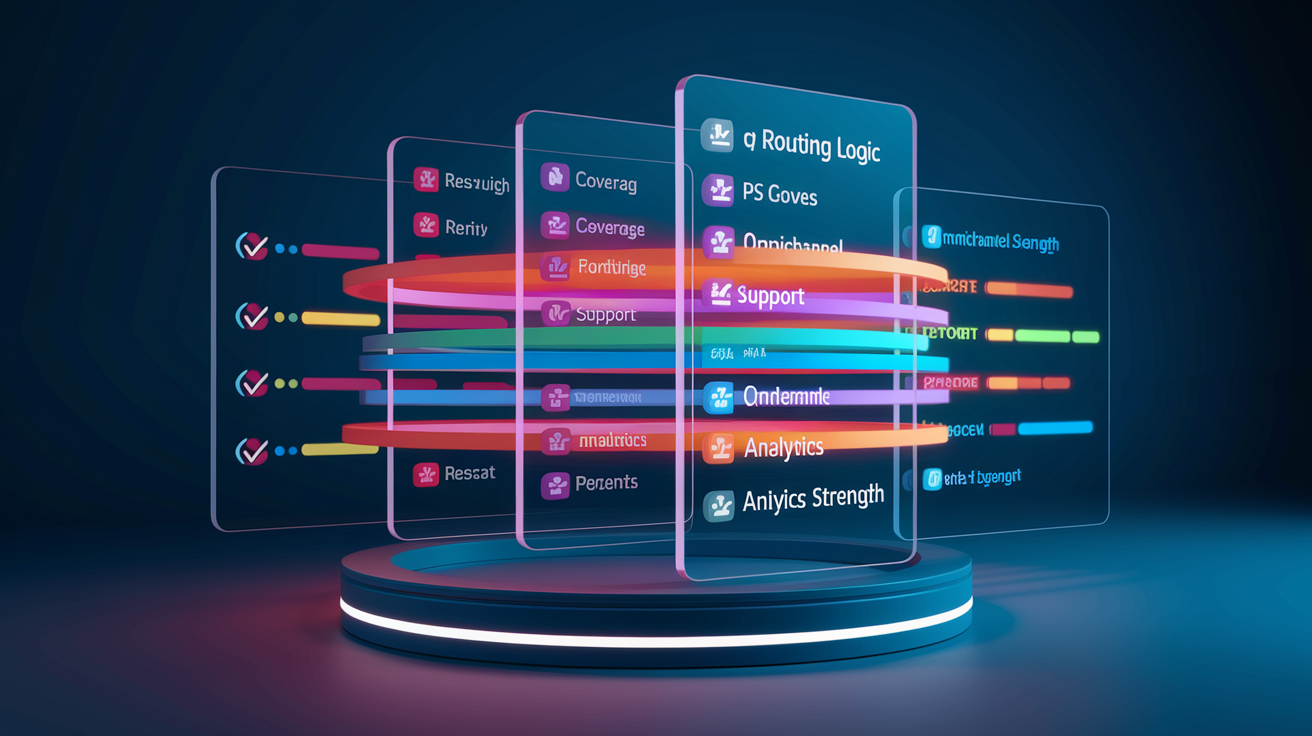
| Platform | Routing Logic | PSP Coverage | Omnichannel Support | Analytics Strength |
|---|---|---|---|---|
| Spreedly | Basic cascading, manual rules | 140+ gateways | Token portability across channels | Transaction logs, export‑focused |
| Primer | Visual workflow builder, conditional routing | 100+ PSPs | Unified vault, web + mobile SDK | Real‑time dashboards, alerting |
| Gr4vy | Configuration‑driven, rapid rule changes | 400+ PSPs and methods | Cloud instances per region | Experimentation‑focused, A/B testing |
| Paydock | Subscription‑optimized, dunning workflows | ~30 PSPs, APAC‑focused | Web, mobile, recurring billing | Unified reconciliation, churn metrics |
| CellPoint Digital | Omnichannel token routing | Moderate PSP coverage | Web, mobile, POS, in‑store | Cross‑channel transaction tracing |
You should validate PSP counts by requesting the full connector list filtered by your target markets and payment methods. Catalog numbers often include inactive or region‑locked integrations that don’t apply to your business. Test routing explainability by reviewing transaction logs in a sandbox environment: can you clearly see why a transaction routed to PSP A instead of PSP B, and can you replay that decision after a decline?
Pricing Structures and Total Cost Considerations

Most payment orchestration platforms use a combination of setup fees, monthly platform fees, and per‑transaction charges layered on top of existing PSP processing costs. Usage‑based pricing ties platform fees to transaction volume, typically ranging from £500 to £5,000 per month for mid‑market retailers, with per‑transaction fees adding 0.05 to 0.15 percent on top of gateway rates. Enterprise retailers often negotiate tiered pricing with volume discounts and custom SLAs. Integrated orchestration‑capable platforms (those combining payment processing and orchestration) advertise no separate platform fees and claim per‑transaction pricing 30 to 50 percent lower than maintaining multiple PSPs through a standalone orchestration layer.
You must model total cost including orchestration platform fees, PSP processing fees, and currency conversion spreads. A standalone orchestrator adding 0.10 percent per transaction on a £10 million annual volume costs an additional £10,000 annually before accounting for setup and monthly platform fees. Transparent FX management through integrated platforms can save 2 to 4 percent on cross‑border transactions, offsetting orchestration costs for international retailers. Hidden costs emerge when platforms charge separately for premium routing features, compliance vaults, network tokenization, or expanded PSP integrations beyond a base tier.
Common additional cost factors:
- Premium routing modules. AI‑driven or cost‑optimized routing rules may require enterprise‑tier pricing.
- Compliance and regional vaults. Data residency or on‑premises deployment adds infrastructure and support costs.
- Integration modules. Pre‑built connectors to fraud vendors, tax engines, or subscription platforms may incur per‑module fees.
- Professional services. Implementation, migration support, and routing optimization consulting are typically billed separately at enterprise scale.
Omnichannel Retail Use Cases

Buy‑online‑pickup‑in‑store workflows require a single payment token to authorize online and settle at the point of pickup, with refund capabilities spanning both channels. Orchestration platforms with omnichannel token vaulting let customers save a card during web checkout and reuse it in a mobile app or at a POS terminal without re‑entering credentials. This reduces friction, improves conversion, and ensures 3D Secure authentication persists across channels. If you operate physical and digital storefronts, you depend on cross‑channel token syncing to deliver unified customer experiences and avoid duplicate fraud checks.
Mobile checkout and in‑app purchases benefit from orchestration’s ability to route transactions based on device fingerprinting, geography, and card issuer. Mobile SDKs from orchestration platforms embed routing logic directly into iOS and Android apps, enabling automatic failover to backup processors when the primary gateway is slow or unavailable. Retailers launching mobile‑first shopping experiences use orchestration to test payment methods (Apple Pay, Google Pay, local wallets) without rewriting native code for each processor.
International expansion accelerates when orchestration platforms offer pre‑built connectors to local acquirers and alternative payment methods. If you’re entering Brazil, you can add PIX support in days instead of negotiating a direct contract with a Brazilian PSP, integrating APIs, and certifying compliance. Multi‑PSP redundancy protects revenue during processor outages: individual PSPs average 2 to 4 significant disruptions per year, and orchestration automatically routes transactions to a backup gateway when the primary processor fails, maintaining authorization rates during incidents.
Pros and Cons of Leading Platforms

| Platform | Pros | Cons |
|---|---|---|
| Spreedly | Vault portability, 140+ gateways, centralized credential management | Routing less advanced than routing‑first platforms; reconciliation requires manual setup |
| Primer | No‑code workflows, rapid iteration, strong product‑team control | Value depends on monitoring and safe change controls; PSP coverage needs validation |
| Gr4vy | Cloud‑native, rapid configuration changes, 400+ PSPs and methods | Cloud‑first may conflict with data residency or procurement constraints; finance reporting needs testing |
| Paydock | Subscription‑optimized, strong APAC coverage, dunning workflows | Limited PSP coverage outside Asia‑Pacific; less suited to high‑complexity global routing |
| CellPoint Digital | Omnichannel token syncing, unified in‑store + online flows | Routing intelligence and fraud integrations less emphasized than pure‑play orchestrators |
You should prioritize platforms whose strengths align with your operational bottlenecks. Vault portability matters most when planning PSP migrations or managing multi‑entity payment structures. No‑code configuration accelerates time to market for product teams but requires governance and rollback controls to prevent production errors. Cloud‑native architecture simplifies global deployment but may require additional compliance documentation for regulated industries.
Best Platform Recommendations by Retailer Size and Channel Complexity

Small and mid‑market retailers processing under £5 million annually benefit from platforms offering simplified setup, low engineering overhead, and rapid time to market. Primer’s no‑code workflow builder and Paydock’s subscription‑focused orchestration fit this profile, allowing product and operations teams to manage payment flows without dedicated engineering resources. These retailers should prioritize platforms with transparent pricing, fast implementation timelines (2 to 4 weeks), and pre‑built integrations to their primary e‑commerce platform. Single‑market retailers with low payment complexity may not need orchestration at all. The added cost, latency risk, and engineering overhead outweigh benefits when a single reliable PSP suffices.
Mid‑market retailers processing £5 to 50 million annually across multiple channels typically need flexible routing, omnichannel token vaulting, and the ability to add PSPs quickly as they expand into new markets. Spreedly’s vault‑first approach and Gr4vy’s cloud‑native orchestration suit this segment, offering PSP flexibility without heavy enterprise implementation timelines. These retailers should validate connector depth for their target markets, test routing transparency in sandbox environments, and confirm that reconciliation exports integrate cleanly with existing finance systems. Implementation typically takes 3 to 6 months, with ongoing routing optimization as volumes and markets grow.
Enterprise retailers processing over £50 million annually require advanced routing logic, global redundancy, and deep integration with fraud, tax, and subscription platforms. APEXX’s enterprise‑grade routing, CellPoint Digital’s omnichannel orchestration, and integrated orchestration‑capable platforms combining payment processing with routing intelligence fit this profile. Enterprise buyers should run RFPs requesting uptime SLAs (target 99.99 percent), detailed routing explainability, stage‑by‑stage rollout support, and reference customers with similar transaction volumes and market footprints. Custom pricing, dedicated account managers, and migration assistance are standard at this scale. Implementation timelines stretch to 6 to 12 months for complex multi‑entity and multi‑region deployments.
Final Words
We compared the leading payment orchestration platforms — what they do, the core features to compare, individual vendor strengths, pricing models, and which setups fit SMBs to enterprises.
Bottom line: orchestration reduces declines, centralizes tokenization, and adds smart routing for web, app, and in‑store flows. That protects conversion and supports global expansion.
Next steps: audit top SKUs for decline drivers, shortlist 2–3 vendors, run a short pilot, and measure declines and AOV. Use this guide to find the best payment orchestration platforms for multi-channel retailers and move quickly.
FAQ
Q: What are the top 5 payment gateways?
A: The top 5 payment gateways are Stripe, PayPal, Adyen, Square, and Authorize.Net — chosen for broad global coverage, developer APIs, in-person support, and enterprise payment features.
Q: Who is PayPal’s biggest competitor?
A: PayPal’s biggest competitor is Stripe, due to developer-first APIs, merchant payment links, and a growing global processing footprint and broad product set for online merchants.
Q: What is the largest PSPS in the world?
A: The largest PSP in the world by processed volume is FIS Worldpay, with Adyen and Stripe among the closest competitors; rankings vary by metric and region.
Q: What is the best payment processor for a small business?
A: The best payment processor for a small business depends on needs: use Square for in-person sales, Stripe for online commerce, and PayPal for quick setup; match choice to sales mix and fees.