


Is a rule meant to cut fraud quietly killing your checkout conversion?
Strong Customer Authentication (SCA) under PSD2 forced two independent factors on most EU/UK card payments, and early rollouts trimmed conversion by 1–8 percentage points, with mobile suffering most.
But this isn’t just regulation pain: merchants that implement modern 3D Secure 2.0, send richer data, and use exemption logic can run 50–85% of payments frictionless and recover sales.
Thesis: SCA raised the security bar and added real checkout friction unless you invest in tech and routing. First step: audit 3DS2 integration and exemption coverage.
How SCA Shapes Ecommerce Checkout Performance in Europe Today
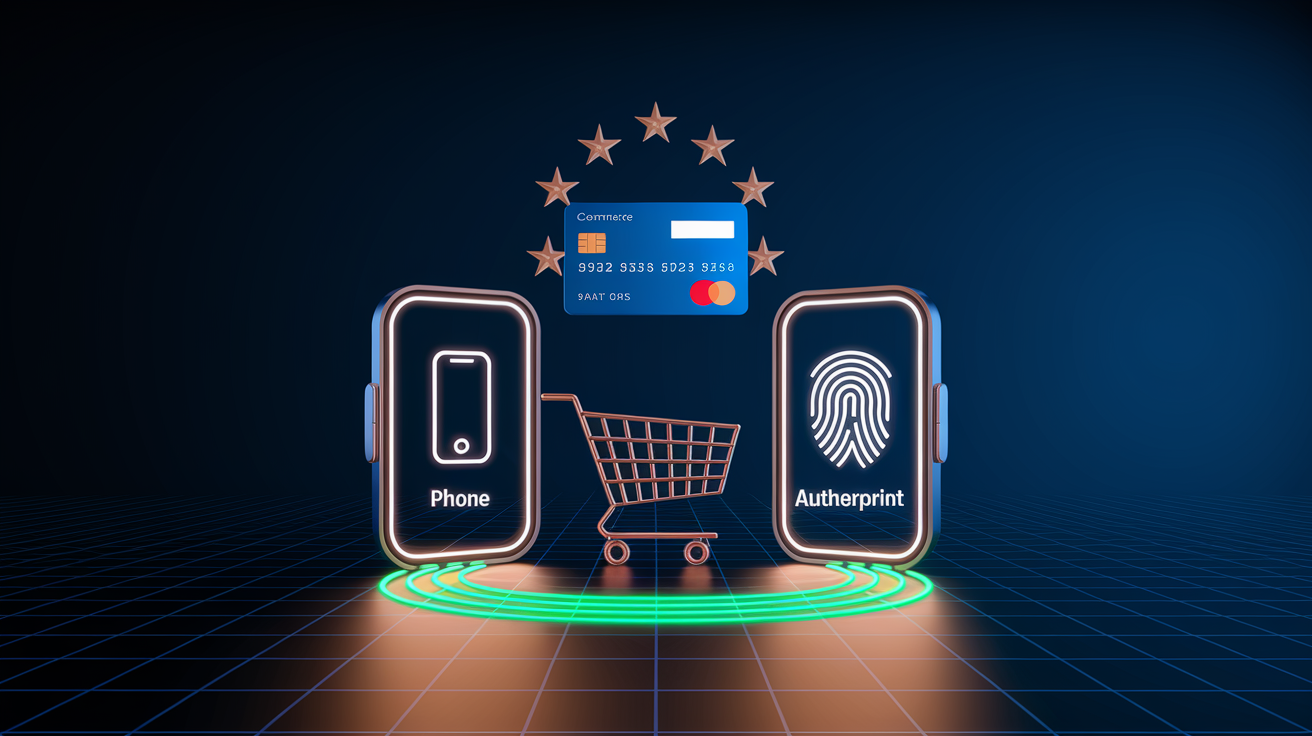
Strong Customer Authentication under PSD2 makes European shoppers verify their identity with two independent factors during most online card payments. The rule kicks in when both the customer’s bank and the merchant’s bank sit inside the EU or UK. SCA enforcement rolled out across Europe between 2019 and 2022, forcing every ecommerce checkout to add authentication steps that didn’t exist before or were optional. The regulation aims to cut fraud, but the immediate side effect was measurable friction right when customers tried to complete a purchase.
Early SCA implementations caused conversion rate drops ranging from 1 to 8 percentage points, depending on how merchants and payment processors handled the new requirements. Mobile shoppers hit the hardest obstacles. Cart abandonment increases of 5 to 20 percent were common when outdated 3D Secure 1 flows or poorly designed challenge screens appeared mid-checkout. Markets that moved quickly to 3D Secure 2.0 technology, combined with strategic use of exemptions, saw frictionless authentication rates climb to 50–85 percent. That means half or more of transactions completed without interrupting the customer. Full adoption across most EU and UK markets finished by late 2021 or early 2022, though issuer behavior still varies enough to create inconsistent approval and challenge rates from one bank to another.
Conversion impact: Worst-case naive rollouts dropped checkout completion by 1–8 percentage points. Optimized setups recovered to near zero net loss within months.
Mobile abandonment surge: Redirects and legacy flows pushed mobile abandonment up 5–20 percent before native app based authentication closed the gap.
Frictionless rates: Modern 3DS2 implementations deliver 50–85 percent frictionless approvals when issuer, acquirer and merchant data align.
Issuer variability: Access Control Server implementations differ by bank, causing inconsistent challenge logic and pass rates across countries and card programs.
Device differences: Mobile historically suffered worst. 3DS2 native SDKs with biometrics now bring mobile performance close to desktop when properly deployed.
The current state across Europe shows mature 3DS2 adoption in large markets, but issuer upgrades remain uneven. Merchants that invested in full data integration, exemption strategies and UX refinement report stable or improved conversion. Those relying on minimal gateway configurations or lagging issuers still face friction and lost sales. Recovery happens when implementation quality improves, not when the regulation softens.
Regulatory Foundations of SCA and Their Checkout Implications

The Payment Services Directive 2 was published in the Official Journal of the European Union on December 23, 2015. Regulatory Technical Standards defining Strong Customer Authentication were validated by the European Commission in November 2017 and by the European Parliament in March 2018, then entered into force on September 14, 2019. Most European Economic Area countries enforced SCA for ecommerce by 2021, with UK markets following similar timelines post-Brexit. The European Banking Authority updated the RTS in April 2022, extending the maximum authentication validity period from 90 to 180 days for some use cases.
SCA mandates that customers present at least two independent authentication elements from three categories: knowledge (something you know, like a password or PIN), possession (something you have, such as a registered phone or token), and inherence (something you are, typically biometric data like a fingerprint or face scan). The RTS also requires dynamic linking. Each authentication must cryptographically bind the transaction amount and the payee identity so the customer sees exactly what they’re approving. This prevents replay attacks and ensures the authenticated transaction matches what the customer intended to authorize.
These technical requirements reshape checkout flows because merchants can’t silently process card payments without involving the customer’s bank in real time anymore. Every card not present transaction must either pass through an authentication challenge or qualify for a regulatory exemption. Liability for fraud shifts depending on who requested exemptions and whether SCA was applied, pushing merchants and payment service providers to build new routing logic, data pipelines and fallback strategies just to maintain approval rates.
Authentication Technologies Transforming SCA Checkout Flows

EMVCo’s 3D Secure 2.0 protocol became the dominant technical standard for card based SCA in ecommerce because it supports mobile apps, digital wallets, in-app payments and richer contextual data exchange. Merchants and payment service providers using 3DS2 can send more than 100 device and transaction data elements (browser fingerprint, IP geolocation, delivery address, cart contents, purchase history) to the card issuer’s risk engine during the authentication request. The issuer’s Access Control Server evaluates this data in real time and decides whether to approve the payment silently (frictionless) or request an active customer challenge. Versions 2.2 and later are required to unlock low-risk exemptions. Version 2.3.1 adds support for Web Authentication API, FIDO credentials and persistent device binding, enabling passwordless checkout on supported browsers.
One-time passwords delivered by SMS were the most common legacy authentication method before PSD2, but European regulators and security standards bodies now consider SMS alone insufficient because possession of a phone number isn’t reliably independent from knowledge of a password. SMS OTP also creates poor user experience. Customers must wait for a message, switch apps or devices, then manually type a six-digit code before it expires. App based push authentication paired with biometric verification (fingerprint or face unlock) inside a banking app provides stronger security, faster completion and higher success rates because both possession (the registered device) and inherence (the biometric) are validated in one step without typing.
Risk based authentication and Transaction Risk Analysis let payment service providers and issuers approve low-risk payments without an active challenge if fraud rates stay below regulatory thresholds set by the European Banking Authority. The acquirer or merchant’s PSP requests the exemption by flagging the transaction as low-risk based on behavioral signals, device reputation, purchase patterns and merchant fraud history. The issuer’s ACS performs its own risk assessment and decides whether to honor the exemption request or force a challenge anyway. When both sides agree the transaction is low-risk, the customer completes checkout without interruption.
Technical maturity has improved significantly since 2019. Early SCA periods relied on 3DS1 redirects that broke mobile flows and caused timeouts. Modern 3DS2 implementations with native mobile SDKs, biometric authentication and issuer-acquirer data sharing reduce friction over time as more issuers upgrade their ACS platforms and fraud models mature. The result is that frictionless approval rates climb and challenge-pass rates improve when the technical stack is current.
Exemptions Under SCA and Their Effect on Checkout Friction

Exemptions under SCA allow specific transaction types to skip active customer authentication without violating PSD2, reducing checkout friction when regulatory conditions are met. The primary exemption categories are low-value payments, recurring transactions, whitelisting (trusted beneficiaries), merchant-initiated transactions and low-risk TRA exemptions. Each exemption carries precise numeric thresholds and operational constraints that payment service providers and issuers must respect to remain compliant and eligible for liability protection.
Low-value payment exemptions typically apply to transactions at or below €30, but only if the customer hasn’t made more than five consecutive exempt payments or if the cumulative value of exempt payments in the last 24 hours stays under approximately €100. Once either threshold is crossed, the issuer must require SCA on the next transaction. Recurring payment exemptions apply to subscription or installment arrangements where the amount and frequency are fixed. SCA is required on the first payment, and subsequent identical charges can process without re-authentication unless the terms change. Trusted beneficiary whitelisting allows customers to add a merchant to an approved list maintained by their bank. Once whitelisted, future payments to that merchant are exempt until the customer or issuer removes the entry. Merchant-initiated transaction exemptions cover payments triggered by the merchant using stored credentials (such as account top-ups or variable subscription billing) where the customer previously consented but isn’t present at the time of charge. Low-risk TRA exemptions are available when both the merchant’s payment service provider and the issuer’s fraud rates fall below European Banking Authority reference thresholds, and the transaction amount is below €500. Higher thresholds exist for lower fraud rates.
| Exemption Type | Threshold/Rule | Checkout Impact |
|---|---|---|
| Low-Value Payment | ≤€30 per transaction; max 5 consecutive or ~€100 cumulative without SCA | Reduces friction for small purchases; issuer enforces SCA when limit reached |
| Recurring Payment | Fixed amount and frequency; SCA on first payment only | Subscriptions renew silently; prevents monthly re-authentication abandonment |
| Trusted Beneficiary (Whitelist) | Customer adds merchant to issuer-maintained whitelist after one SCA | Eliminates SCA on repeat purchases from same merchant once whitelisted |
| Merchant-Initiated Transaction | Merchant triggers charge using stored credentials with prior consent | Enables account top-ups and variable billing without customer interruption |
| Transaction Risk Analysis (TRA) | Fraud rates below EBA thresholds; transaction ≤€500 (or higher if fraud very low) | Frictionless approval for majority of transactions when risk models mature |
Merchants strategically apply exemptions by routing transactions through different request flags in the 3DS flow, monitoring cumulative thresholds in real time and encouraging customers to whitelist their store after the first purchase. Proper exemption use can cut active authentication rates from 100 percent to 20–30 percent of total volume, materially reducing abandonment while keeping fraud within acceptable bounds. However, over-reliance on exemptions without tight fraud controls risks losing TRA eligibility, forcing all future transactions into challenge flows and spiking abandonment rates overnight.
How SCA Influences Authorization Rates and Declines

SCA introduces new points of failure between the moment a customer submits payment details and final authorization. Before PSD2, most declines came from insufficient funds, expired cards or basic fraud blocks. Now a significant share of declines originates during the authentication step. Customers abandon the challenge screen, the one-time password expires, the banking app times out, or the issuer’s Access Control Server rejects the authentication attempt for reasons unrelated to card validity. These authentication-layer declines appear as failed transactions even though the underlying card and account are fine.
Issuer ACS variability is the largest external factor affecting authorization performance under SCA. Banks that invested early in modern ACS platforms with mobile-optimized challenge flows, biometric support and real-time risk scoring deliver higher challenge-pass rates (often above 80 percent) because customers complete authentication quickly and successfully. Banks running outdated ACS software or relying solely on SMS one-time passwords see lower pass rates due to timeout failures, delivery delays and manual entry errors. Merchants have limited control over which issuer a customer’s card belongs to, so authorization success depends partly on issuer infrastructure that sits outside the merchant’s stack. Markets with mature issuer ecosystems show consistently higher approval rates than regions where ACS upgrades lag.
Mitigation strategies focus on improving the data and intelligence sent upstream and building operational resilience when authentication fails. Merchants that pass complete 3DS2 data (accurate IP address, full billing and shipping postal codes, device fingerprint, cart contents) help issuers make better risk decisions and approve more transactions frictionlessly. Implementing intelligent retry logic allows failed authentications to be reattempted with adjusted parameters or alternate payment methods presented immediately, recovering sales that would otherwise be lost. Continuous tuning of Transaction Risk Analysis thresholds and close collaboration with payment service providers to monitor fraud rates keeps TRA exemptions active, bypassing the authentication step entirely for low-risk transactions. As issuer risk models mature and learn from real transaction outcomes, challenge rates drop and approval rates climb over time without changing the merchant’s checkout code.
Country-by-Country Variations in European SCA Performance
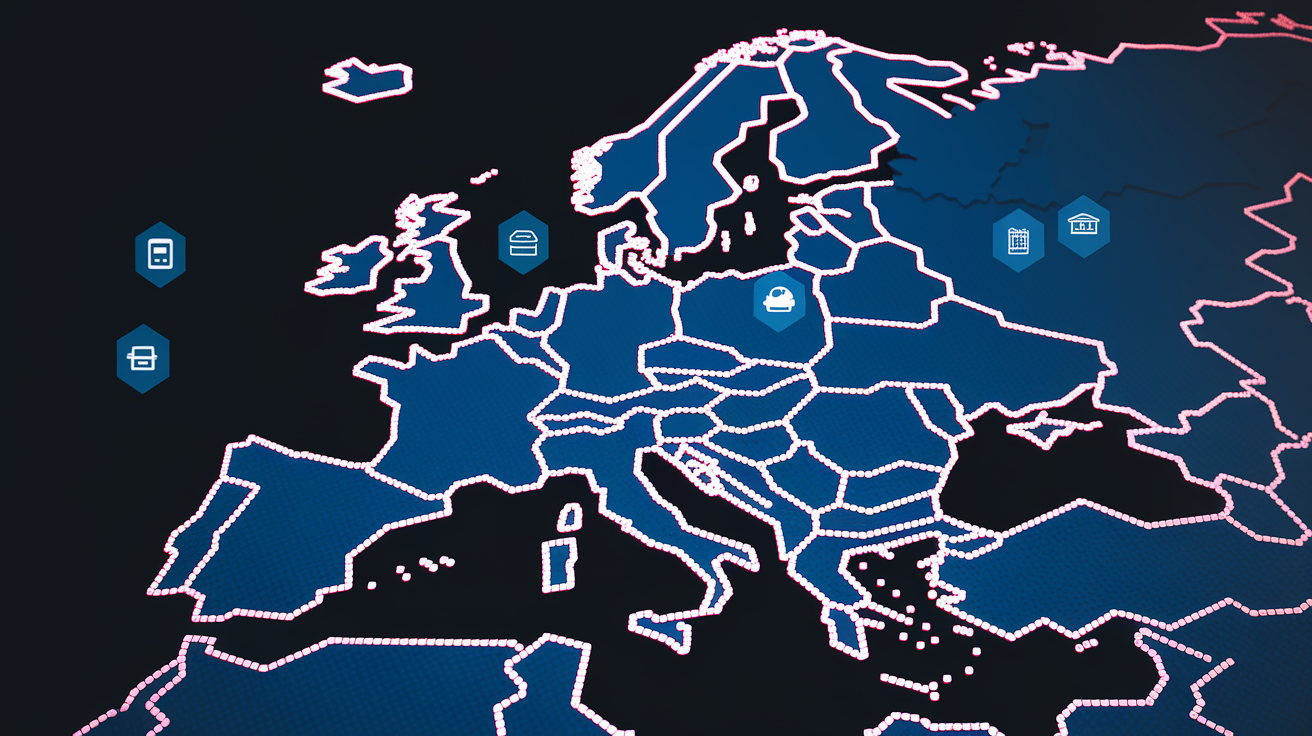
Enforcement timelines across Europe varied from initial soft launches in 2019 to hard deadlines in 2021 and 2022, with some national regulators granting extensions or phased rollouts to ease issuer readiness pressure. The UK began enforcing SCA for ecommerce on January 1, 2021, and extended to face-to-face contactless payments in September 2021. Large EU markets including Germany, France and the Netherlands completed enforcement by late 2021. Nordic countries showed earlier issuer maturity and higher mobile-banking adoption, resulting in smoother transitions and faster frictionless-rate improvements. Southern and Eastern European markets experienced longer adjustment periods due to lower digital-wallet penetration and slower issuer ACS upgrades.
Issuer maturity differences: Banks in the UK and Nordics upgraded to modern Access Control Servers earlier, delivering higher frictionless approval rates and better mobile UX from day one.
Exemption availability and usage: TRA adoption varies by acquirer and national payment ecosystems. Some markets aggressively route low-risk transactions through exemptions while others remain conservative, forcing more challenges.
Mobile readiness: Markets with high smartphone banking-app penetration (Nordics, UK, Netherlands) adapted faster to app based biometric authentication. Markets relying on SMS OTP saw higher abandonment.
Risk threshold interpretation: National supervisory authorities and individual issuers interpret European Banking Authority guidance with slight differences, leading to inconsistent exemption acceptance rates across borders.
Merchants operating across multiple European countries must test market by market because a checkout flow optimized for UK issuers may underperform in Italy or Poland due to issuer behavior, customer banking habits and local exemption policies. Cross-border performance can’t be assumed uniform. Running parallel A/B tests in each geography and monitoring frictionless rates, challenge-pass rates and abandonment by country reveals where technical or UX adjustments are required. Payment service providers with regional issuer relationships can offer country-specific routing and exemption strategies that improve approval rates beyond what a single global configuration delivers.
Impact of SCA on Mobile vs Desktop Checkout

Mobile checkout suffered the steepest conversion drops during early SCA rollouts, with abandonment increases reaching 5 to 20 percent where legacy 3D Secure 1 redirects or SMS one-time password flows were used. The core problem was user experience. Mobile browsers redirected customers to standalone authentication pages that broke the checkout context, required switching apps to retrieve a text message, then manually re-entering a six-digit code before a short timer expired. On smaller screens with slower typing, these steps created enough friction to push many customers out of the funnel entirely. Desktop checkout fared better initially because larger screens and physical keyboards made form-filling easier, but desktop flows often required out-of-band authentication on a separate device (the customer’s phone), adding cross-device coordination friction.
3D Secure 2.0 native SDKs significantly improved mobile performance by embedding the authentication challenge directly inside the merchant’s app or mobile-optimized web page, eliminating the jarring redirect. Native implementations let customers authenticate using the device’s built-in biometric sensors (fingerprint or face unlock) without leaving the checkout screen or typing anything. When the customer’s banking app is installed on the same device, the 3DS2 flow triggers a push notification that opens the banking app, verifies identity with biometrics, and returns the customer to checkout in seconds. This in-app, biometric-first approach brought mobile frictionless authentication rates close to desktop levels and cut challenge-abandonment rates by half or more compared to redirect based flows.
Best practices for mobile-first merchants include implementing full 3DS2 SDK integration for iOS and Android native apps, optimizing the mobile-web authentication iframe for speed and clarity, preferring biometric and app based authentication over SMS OTP wherever issuer support allows, and pre-checking card BINs to detect issuer capabilities before starting the authentication flow. Mobile checkout monitoring should track frictionless rate, challenge-pass rate and abandonment separately from desktop because device-specific issues (old operating system versions, missing banking apps, poor network connectivity) affect mobile outcomes differently. Merchants with mobile-majority traffic should prioritize exemption strategies (TRA, whitelisting, recurring payments) to reduce the share of transactions requiring active authentication, since every avoided challenge preserves mobile conversion.
Case Studies Illustrating Real-World SCA Checkout Impacts

Anonymized case studies from European merchants reveal how different implementation strategies produced measurably different outcomes during and after SCA rollout. These patterns come from post-implementation reviews shared by payment service providers, industry working groups and merchant retrospectives aggregated into best-practice guidance. The examples below illustrate the range of results and the levers that mattered most.
Merchant A, a large multi-category retailer with established fraud controls, implemented EMVCo 3D Secure 2.2 with full data integration, applied Transaction Risk Analysis exemptions where fraud rates qualified, and deployed scheme tokenization for repeat customers using stored cards. After three months of tuning, frictionless authentication rates reached approximately 70 percent of total transaction volume, and net checkout conversion improved by 2 percentage points compared to the pre-SCA baseline, driven primarily by reduced fraud chargebacks and fewer false declines.
Merchant B, a mobile-first marketplace selling fashion and electronics, initially launched SCA using redirect based 3DS1 style flows inherited from their legacy gateway, resulting in a 15 percent rise in mobile cart abandonment within the first month. After switching to native 3DS2 SDKs with in-app biometric authentication and optimizing challenge-screen UX, mobile abandonment dropped by half and converged toward desktop abandonment rates within two months.
Merchant C, a subscription-box service billing customers monthly, migrated recurring payments to merchant-initiated transaction flows using stored credentials with prior customer consent, preserving subscription renewal revenue with almost zero SCA friction since authentication was required only on the initial signup payment.
| Merchant | Strategy | Outcome |
|---|---|---|
| Merchant A (large retailer) | 3DS2 + TRA exemptions + scheme tokenization | ~70% frictionless rate; +2pp net conversion vs baseline |
| Merchant B (mobile marketplace) | Switched from 3DS1 redirects to native 3DS2 SDKs with biometrics | Cut mobile abandonment increase from 15% to ~7% within two months |
| Merchant C (subscription service) | MIT flows for recurring billing with stored credentials | Near-zero SCA friction on renewals; preserved revenue continuity |
Across these cases, the common success factors were early adoption of 3DS2 technology, close collaboration with payment service providers to apply exemptions correctly, and continuous measurement with rapid iteration on UX and routing logic. Merchants that treated SCA as a one-time compliance checkbox without ongoing optimization saw persistent conversion drag. Those that built measurement dashboards, ran A/B tests and invested in fraud-rate management to preserve TRA eligibility recovered quickly or came out ahead.
Key Technical Challenges When Implementing SCA

Integrating Strong Customer Authentication into an existing ecommerce stack involves coordinating multiple systems (merchant checkout code, payment gateway APIs, 3D Secure servers, card-scheme directory servers and issuer Access Control Servers) with precise data flows and tight timeout windows. The complexity stems from the real-time nature of authentication, the variability of issuer behavior and the volume of technical detail required to maximize frictionless approvals and challenge-pass rates. Many merchants underestimate the engineering effort until they hit integration bugs, data-quality issues or issuer edge cases that tank approval rates in production.
3DS2 SDK integration across web and mobile: Native iOS and Android SDKs require embedding binary libraries, handling asynchronous callbacks and managing app permissions for biometric sensors. Web implementations must coordinate iframes, redirects and browser compatibility.
ACS variability and issuer inconsistency: Every card issuer’s Access Control Server behaves slightly differently. Challenge-screen UX, timeout policies, data-field requirements and exemption acceptance vary, making it impossible to test all combinations before launch.
Collecting and sending 100+ 3DS data elements: Accurate data on device fingerprint, IP address, billing/shipping postal codes, cart contents and customer history requires instrumenting multiple parts of the checkout flow and backend systems. Incomplete or incorrect data reduces frictionless approval rates.
Mobile redirect and cross-app flow fragility: Out-of-band authentication requiring customers to switch from browser to banking app and back introduces failure points. App not installed, deep-link failures, session timeouts result in abandoned transactions.
SMS OTP delivery delays and input errors: SMS based one-time passwords suffer from carrier latency, international delivery failures and high manual-entry error rates, especially on mobile keyboards.
Issuer device-security scoring: Some issuers decline transactions if the customer’s smartphone operating system is outdated or security patches are missing, introducing decline reasons that merchants can’t directly control or even detect in advance.
Payment service providers and gateway platforms mitigate much of this complexity by abstracting 3DS server operations, maintaining issuer integrations and providing managed SDKs with pre-built challenge UIs. Merchants using full-service PSPs can offload the hardest technical work, but must still supply accurate transaction and customer data, configure exemption routing rules and monitor performance metrics to catch issuer-specific issues. For merchants building custom integrations or managing their own 3DS server, the investment in engineering time, testing infrastructure and ongoing issuer relationship management is substantial.
Best Practices for Reducing Friction and Increasing SCA Success Rates

User-experience optimization starts with the authentication challenge screen itself (the moment the customer is asked to prove their identity). Successful implementations use native UI components that match the merchant’s brand and device platform, display clear instructions in the customer’s language, show transaction amount and merchant name (dynamic linking) prominently and offer multiple authentication options when the issuer supports it (biometric, app push, SMS fallback). The challenge screen should load instantly, provide real-time feedback and avoid generic error messages that leave the customer confused. On mobile, the screen must be thumb-friendly with large touch targets and support biometric sensors directly rather than forcing manual input. Timeout thresholds should be adaptive (shorter for app based biometric flows, longer for SMS OTP when network latency is expected) to reduce false abandonment from premature expiration.
Technical improvements focus on maximizing the data quality and completeness of the 3DS2 authentication request. Merchants should pass the full set of optional data elements: browser IP address (not a CDN or proxy IP), complete billing and shipping postal codes, shopping-cart line items with SKU and category, device fingerprint captured via the 3DS Method, and customer account history including previous purchase count and dates. Issuers use these signals in their risk models to decide frictionless vs challenge. Missing fields reduce confidence and push more transactions into active authentication. Configuring Transaction Risk Analysis correctly requires ongoing fraud-rate monitoring to ensure the merchant’s PSP stays below European Banking Authority reference thresholds, enabling low-risk exemption requests that bypass authentication entirely for the majority of transactions. Merchants with tight fraud controls can maintain TRA eligibility and achieve frictionless rates above 60 percent consistently.
Tokenization and stored-credential strategies reduce SCA frequency by converting one-time purchases into recurring or merchant-initiated flows. When a customer saves their card for future purchases, the merchant can request scheme tokenization (replacing the card number with a unique token) and use that token for subsequent transactions under the merchant-initiated transaction exemption, requiring SCA only on the first token creation. Subscription businesses benefit most. Initial signup requires full SCA, but every renewal processes silently as a recurring fixed-amount payment. Even non-subscription merchants can reduce SCA friction by encouraging customers to store credentials and presenting returning customers with one-click checkout that triggers MIT flows rather than fresh authentications.
Monitoring practices should include weekly reviews of key performance indicators segmented by device type, country and card issuer. Track frictionless authentication rate (target 50–70 percent for mature implementations), challenge-pass rate (aim for above 80 percent), cart-abandonment delta attributable to SCA (limit to under 3 percentage points), authorization approval rate and fraud rate relative to TRA thresholds. Build dashboards that surface issuer-specific outliers. If one major bank shows a 40 percent challenge-pass rate while others exceed 80 percent, investigate UX compatibility or data issues specific to that issuer’s ACS. Run structured A/B tests on challenge-screen UX, exemption routing rules and authentication-method preferences to identify incremental wins. SCA optimization is continuous, not a one-time project.
Measurement, KPIs and Continuous Optimization Under SCA
Measurement is the only way to separate SCA-related performance changes from seasonal variation, marketing shifts or platform updates. Before drawing conclusions about SCA impact, establish clean pre-SCA baselines for conversion rate, cart abandonment, authorization approval rate and fraud rate by device type and country. Track these same metrics weekly after SCA enforcement to detect trends and attribute changes correctly. Controlled A/B testing (holding a small percentage of traffic on legacy flows or testing different exemption strategies in parallel) provides the cleanest read on cause and effect.
Essential KPIs include frictionless authentication rate (the percentage of transactions approved without presenting a challenge to the customer), challenge-pass rate (the percentage of authentication challenges successfully completed by customers), cart-abandonment delta (the change in abandonment rate attributable to SCA vs baseline), fraud rate as a percentage of transaction value and authorization approval rate broken out by device and issuer. Frictionless rate is the single most predictive metric for conversion preservation. Merchants achieving 60–70 percent frictionless approval typically report minimal net conversion loss because the majority of customers never encounter friction. Challenge-pass rate identifies UX problems. If pass rates drop below 75 percent, the challenge screen or authentication method is causing abandonment or technical failures. Abandonment delta quantifies the business cost of SCA. Keeping incremental abandonment under 3 percentage points indicates successful optimization.
Structured A/B experimentation should test variables that directly affect friction and approval: challenge-screen UX variations (native vs iframe, instruction copy, button size), exemption routing rules (TRA thresholds, whitelist prompts), authentication-method preferences (biometric-first vs SMS OTP fallback) and retry logic after failed challenges (immediate retry, alternate payment method, saved-payment fallback). Each test should run long enough to reach statistical significance and be segmented by device and country because mobile, desktop, UK and German traffic may respond differently. Document what works, then roll winning variants to all traffic and move to the next test.
| KPI | Target Benchmark | Why It Matters |
|---|---|---|
| Frictionless Authentication Rate | 50–70% | Higher frictionless rates mean fewer customers see a challenge; predicts conversion preservation |
| Challenge-Pass Rate | >80% | Measures UX quality and technical reliability of the authentication step; low pass rate signals UX or issuer problems |
| Cart Abandonment Delta | <3 percentage points | Quantifies incremental abandonment caused by SCA; keeping delta low preserves revenue |
| Fraud Rate (% of transaction value) | Below EBA TRA thresholds | Staying under regulatory fraud thresholds preserves eligibility for low-risk exemptions and higher frictionless rates |
Final Words
in the action, we ran through how SCA under PSD2 reshaped checkout — where friction hit conversion, how exemptions and 3DS2 help, and why issuer behavior and mobile matter.
You saw data: early conversion drops of 1–8pp, mobile abandonment spikes, and frictionless rates rising to 50–85% with good 3DS2 or TRA.
Practical fixes: implement 3DS2 SDKs, use tokenization and exemptions, tune TRA, monitor KPIs, and run market-by-market tests.
The impact of strong customer authentication on ecommerce checkout in europe is significant but controllable. With the right tech and testing, you can recover conversions and cut fraud.
FAQ
Q: What does 111 strong customer authentication required mean?
A: The 111 “strong customer authentication required” response means the issuer requires SCA for that payment, triggering a 3DS challenge. Action: send full 3DS2 data or attempt an applicable exemption to avoid decline.
Q: What does SCA stand for in banking?
A: SCA stands for strong customer authentication, a PSD2 rule requiring two independent factors (knowledge, possession, inherence) to verify payments and reduce fraud in card-not-present transactions.
Q: What are the EU regulations for credit card authentication?
A: The EU regulations for card authentication are PSD2 and its RTS, which mandate SCA (two-factor plus dynamic linking) across EU markets, rolled out between 2019 and 2022 with some local variation.
Q: What is the purpose of customer authentication in digital banking?
A: The purpose of customer authentication in digital banking is to confirm payer identity, prevent fraud and unauthorized transactions, and ensure transactions are securely linked to user intent, protecting revenue and trust.