

Think labeling and testing are optional for marketplace listings?
They’re not.
Federal, state, and marketplace rules all demand specific tests, labels, and technical files, and you, the seller, are legally on the hook.
Miss one requirement and your listing can be suppressed, your account penalized, or you could face fines and recalls.
This post cuts through the noise: here’s which standards likely apply to your products (SKUs), the labels and third-party tests you must have, and the practical workflow to get compliant before the first unit ships.
Core Regulatory Requirements for Marketplace Product Compliance
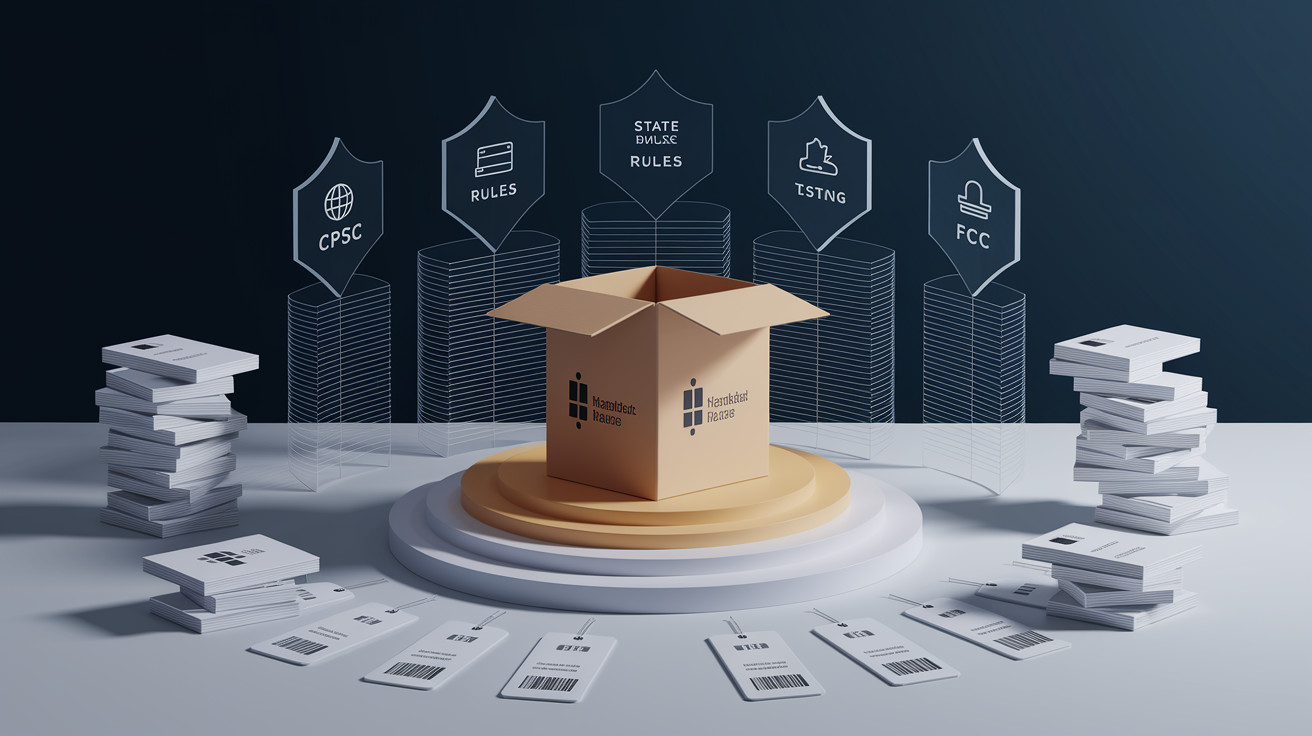
Every product you list on a major marketplace has to clear a stack of safety and labeling rules. Federal, state, local, and then the platform itself. You’re the one legally on the hook for making sure every SKU complies with mandatory safety standards, labeling rules, testing protocols, and documentation requirements. Doesn’t matter if you made it, bought it from a supplier down the street, or imported it from overseas.
Federal agencies like the CPSC, FDA, and FCC set the baseline. Then states pile on. California’s Prop 65 chemical warnings, New York’s textile flammability standards, and dozens of other state-specific mandates can all apply to the same product at once. After that, the marketplaces add their own gatekeeping. They’ll ask for test reports, certifications, and label files before your listing goes live or when they flag you during an audit.
You’ve got to run the full compliance workflow before the first unit ships. Figure out which standards apply. Get third-party lab testing done where required. Generate or obtain certificates of conformity. Design and apply compliant labels. Keep detailed technical files ready for marketplace or regulatory review. None of this is optional. Incomplete or missing documentation gets your listing suppressed, your account warned, or your seller privileges revoked.
Here’s what you need to handle:
- All mandatory federal safety standards for your product category. CPSIA for kids’ products, FCC Part 15 for radio devices, FDA registration for certain food and cosmetic items.
- State-specific requirements like California Prop 65 warnings, New York button-battery notices, Oregon flame-retardant restrictions.
- Accredited third-party labs to run safety, chemical, electrical, or performance tests and give you official test reports.
- Compliance certificates like Children’s Product Certificates (CPC) for items aimed at kids under 12, or General Certificates of Conformity (GCC) for CPSC-regulated consumer products.
- Product and packaging labels with tracking codes, country-of-origin marks, hazard warnings, age grading, material composition.
- Complete technical files. Test reports, declarations of conformity, manufacturing records, label artwork, user instructions, supplier emails. Organized so you can submit them fast when asked.
- Ongoing monitoring of regulatory updates, marketplace policy changes, and enforcement actions so your products stay compliant everywhere you sell them.
Mandatory Labeling Requirements for Marketplace Products
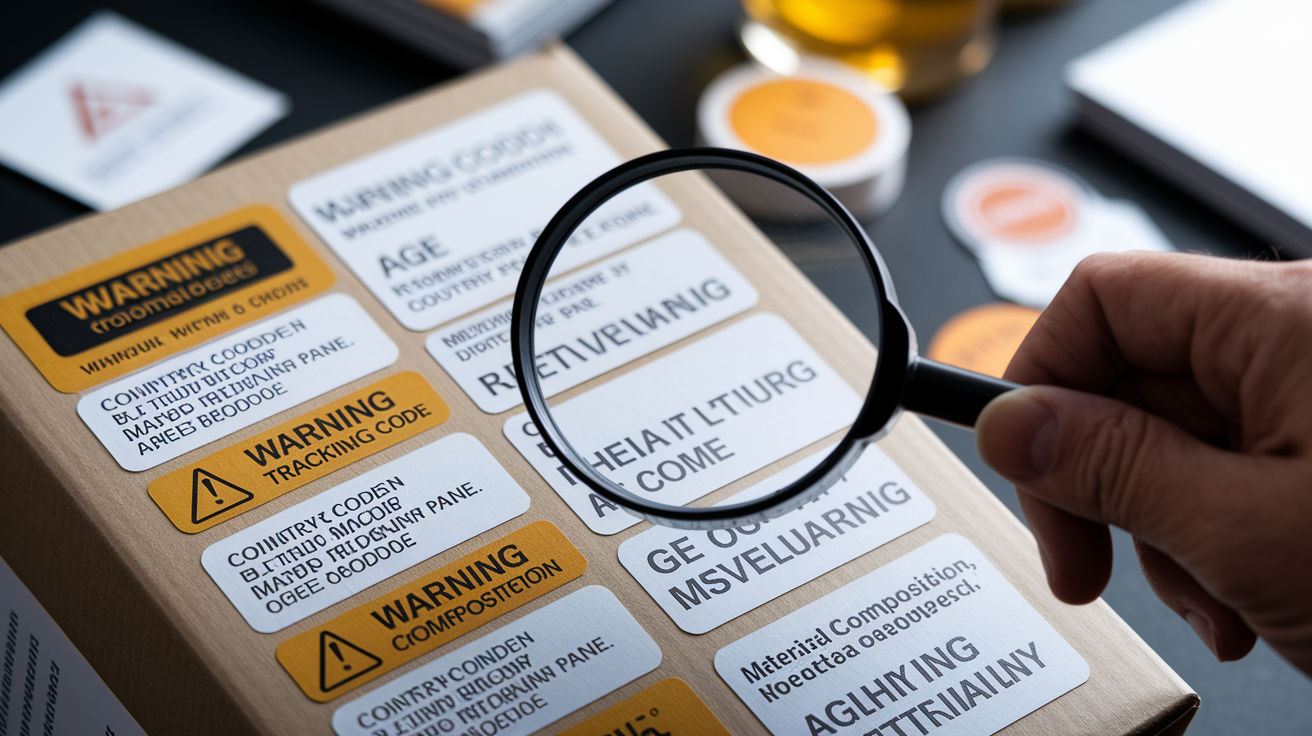
Labels are your first line of defense. They communicate safety, regulatory compliance, and consumer protection info. They have to be accurate, readable, durable, and placed where people can actually see them on both the product and the packaging. Missing or wrong labeling is one of the fastest ways to get delisted, fined, or sued.
Every product category has its own labeling mandates, and lots of jurisdictions add extra disclosure requirements on top of federal minimums. If you’re selling in the U.S., country-of-origin disclosure is mandatory on nearly all consumer goods. Kids’ products need CPSIA tracking labels with manufacturing date, batch number, and manufacturer or private-labeler identity so recalls can happen fast if there’s a safety defect. Hazardous materials, batteries, small parts, age-restricted items all trigger specific warning-label obligations. Miss one and you’re looking at civil penalties or worse.
Here are the label elements you need to verify and apply:
- Manufacturer or private-labeler name, full mailing address, contact info. Displayed prominently on the product or packaging.
- Country of origin stated clearly in English. “Made in China,” “Assembled in USA.”
- CPSIA tracking label for children’s products. Production date, batch or run number, sourcing details.
- Age-grading statements and small-parts choking warnings for toys and products meant for kids under three.
- Hazard warnings. Flammability notices, chemical exposure alerts, battery ingestion risks, electrical shock cautions.
- Material-composition disclosures. Fiber content for textiles, ingredient lists for cosmetics, allergen declarations for food.
- California Prop 65 warnings when your product contains chemicals known to cause cancer, birth defects, or reproductive harm above safe-harbor levels.
| Label Type | Purpose |
|---|---|
| Country of Origin | Disclose where the product was manufactured or assembled; required by U.S. Customs and FTC. |
| CPSIA Tracking Label | Enable rapid recall by providing batch, date, and manufacturer data for children’s products. |
| Age Grading & Warnings | Inform consumers of minimum safe age and choking or other hazards for toys and children’s items. |
| Hazard & Safety Warnings | Alert users to fire, chemical, electrical, or physical risks; often required by CPSC or ASTM standards. |
| Proposition 65 Notice | Satisfy California’s chemical-disclosure law for products containing listed substances. |
| Material Composition | Provide fiber content, ingredient lists, or allergen declarations as mandated by FTC, FDA, or CPSC. |
Product Testing Standards and Certification Requirements

Third-party testing turns regulatory text into measurable proof that your product meets the standards. Marketplaces and regulators both require independent, accredited lab testing for lots of categories. Kids’ products, electronics, cosmetics, textiles, anything with inherent hazard potential. Testing has to happen before you offer the product for sale, and you need to keep official test reports as part of the permanent technical file for each SKU.
Accredited labs evaluate products against published safety standards. ASTM F963 for toys, UL standards for electrical devices, CPSIA limits for lead and phthalates, EN 71 for European toy safety. The lab gives you a formal test report with methods used, samples tested, results obtained, and pass or fail for each requirement. If your product passes, you use those reports to generate or support compliance certificates. A CPC for items subject to CPSIA rules, or a GCC for other CPSC-regulated consumer products. These certificates must have your legal business name, not your supplier’s or manufacturer’s name. You’re the responsible party under U.S. law and marketplace policy.
Testing isn’t a one-time thing. You’ve got to re-test when you change suppliers, modify product design or materials, introduce new color variants that alter chemical composition, or when regulatory standards get updated. Random batch testing and ongoing quality assurance catch defects or supplier non-conformities before they reach consumers and trigger recalls or enforcement actions.
Common required test types:
- Chemical testing for lead content, phthalates, cadmium, other restricted substances in paints, plastics, textiles, metal components.
- Mechanical and physical testing for sharp edges, small parts, bite strength, tension, torque, impact resistance in toys and children’s products.
- Flammability testing for textiles, mattresses, children’s sleepwear to verify compliance with CPSC and ASTM flammability standards.
- Electrical safety and electromagnetic interference (EMI) testing for battery-operated devices, chargers, radio-frequency products under UL and FCC rules.
- Microbial and stability testing for cosmetics, personal-care items, dietary supplements to ensure safety, shelf life, and label-claim accuracy.
Marketplace-Specific Compliance Policies (Amazon, eBay, Etsy)

Amazon
Amazon runs the most comprehensive and strictly enforced product compliance infrastructure among major marketplaces. You’ll navigate the Amazon Compliance Dashboard, which centralizes ASIN status monitoring, compliance notifications, document uploads, and deadline tracking. Amazon issues compliance requests with grace periods that typically run 30 to 90 days. After that, non-responsive listings get suppressed or removed. The platform requires submission of test reports, certificates of conformity, Safety Data Sheets (SDS), and high-resolution images showing all sides of packaging. That includes visible warning labels, ingredient lists, safety information.
Amazon enforces category-specific gatekeeping, locking certain product types behind pre-approved compliance checks. Electronics must include declarations for CE, FCC, RoHS, and WEEE. Children’s products require CPCs and third-party lab reports. Cosmetics and chemicals demand SDS files and ingredient disclosures. Food and dietary supplements need allergen declarations, nutritional panels, FDA registration proof for U.S. sales. Amazon also mandates a Responsible Person (VP) for CE-marked products sold in the EU, a role formalized by the July 2021 EU product monitoring regulation. The VP must be established in the EU, handle post-market surveillance, maintain technical files, and serve as the regulatory contact point for customs and enforcement authorities.
Missing or deficient documentation triggers generic rejection messages. “Please provide a verifiable declaration of conformity that includes all relevant, mandatory safety standards. We do not accept your test report.” You’re left to identify and correct gaps without detailed guidance. Repeat failures or high-risk violations can escalate to account suspension, loss of FBA eligibility, exclusion from Prime, and permanent category bans.
eBay
eBay’s compliance framework is less centralized than Amazon’s but equally binding. You’ve got to self-certify that your listings comply with all applicable laws and eBay’s Product Safety policies. Those policies prohibit recalled items, products subject to safety alerts, and goods that fail to meet mandatory standards. eBay doesn’t provide a unified compliance dashboard. Instead, enforcement happens through reactive listing removals, email notifications, account restrictions triggered by automated scans, buyer complaints, or regulatory agency referrals.
The platform requires you to maintain test reports, certificates, and safety documentation on file and provide them when requested. For children’s products, eBay expects CPCs and ASTM-compliant test reports. For electronics, you must demonstrate FCC and UL compliance. eBay’s Verified Rights Owner (VeRO) program also intersects with compliance, as brand owners frequently report listings that violate safety or labeling standards alongside intellectual-property claims. Persistent non-compliance or failure to respond to eBay’s documentation requests results in listing takedowns, selling limits, account suspension.
Etsy
Etsy’s compliance requirements focus heavily on handmade, vintage, and craft-supply categories, but if you’re offering mass-produced or imported goods you face the same federal and state obligations as sellers on Amazon or eBay. Etsy requires you to ensure that all products meet applicable safety standards, carry correct labeling, and include necessary warnings. The platform’s Terms of Use make sellers solely responsible for compliance, and Etsy reserves the right to remove listings or close shops that violate safety laws.
Etsy doesn’t offer a dedicated compliance portal, so you’ve got to proactively manage testing, certification, and documentation. For children’s products, Etsy sellers must obtain CPCs and third-party lab reports. Cosmetics and personal-care items must comply with FDA and state labeling rules, including ingredient disclosure and allergen warnings. Vintage items and craft supplies aren’t exempt from safety obligations if they pose risks like lead in paint or small-part choking hazards. Etsy relies on automated screening, manual review, and community reporting to identify non-compliant listings, and enforcement actions include immediate delisting, shop suspension, and permanent bans for repeated violations.
Key platform differences in compliance enforcement:
- Amazon: Centralized dashboard, mandatory document uploads, strict deadlines, category locks, VP requirements for EU sales.
- eBay: Decentralized enforcement, reactive removals, seller self-certification, VeRO program intersection, no unified portal.
- Etsy: Seller responsibility emphasized, no dedicated compliance tools, proactive testing and labeling required, community-driven flagging.
Required Documentation and Recordkeeping for Compliance

Complete, organized, and accessible documentation is the backbone of defensible product compliance. Marketplaces, customs authorities, and regulatory agencies can request proof of compliance anytime, and if you can’t produce the required paperwork you’re facing immediate listing removal, account suspension, fines, or enforcement actions. Every document must bear your legal business name. Supplier or manufacturer names alone don’t cut it. Files must be current, traceable, and retained for the full lifecycle of the product plus any applicable statute-of-limitations period.
You need to assemble and maintain a technical file for each SKU. All test reports, certificates, declarations of conformity, label artwork, user instructions, supplier communications. When a marketplace issues a compliance request, response speed matters. Platforms typically allow 30 to 90 days for document submission, but delays reduce your selling time and risk permanent delisting. Store files in digital formats with version control, backup copies, and clear naming conventions that map documents to ASINs, SKUs, or product identifiers.
Recordkeeping also supports internal quality control and supplier management. Documented product changes, batch testing results, and audit trails enable rapid recall execution if a safety issue emerges, limit liability exposure, and demonstrate good-faith compliance efforts to regulators and legal counsel.
Essential documents you must obtain, organize, and retain:
- Children’s Product Certificate (CPC) for products intended for children age 12 and under, listing all applicable CPSC rules and certifying that the item passed required tests.
- General Certificate of Conformity (GCC) for CPSC-regulated consumer products not subject to children’s-product rules, declaring compliance with applicable standards.
- Third-party laboratory test reports issued by accredited labs, detailing test methods, sample descriptions, results, pass/fail determinations for each standard.
- Safety Data Sheets (SDS) for products containing chemicals, hazardous materials, or substances subject to workplace or consumer disclosure rules.
- Declarations of Conformity for CE-marked products, UKCA-marked items, or FCC-regulated devices, signed by the responsible party and listing all applicable directives and standards.
- Technical construction files including engineering drawings, bills of materials, component specifications, design-validation records.
- Product and packaging label artwork files showing all required markings, warnings, tracking labels, language translations in high resolution.
- Supplier communications, purchase orders, product-change notifications documenting sourcing, version control, quality-assurance agreements.
Cost Expectations for Compliance Testing and Labeling

Compliance is a cost center that directly affects product margins, time to market, and competitive positioning. You’ve got to budget for third-party testing, certification prep, label design and printing, translation services, and ongoing monitoring before launching any new SKU. Costs vary widely based on product complexity, the number of applicable standards, lab accreditation requirements, and the volume of SKUs in your catalog. Delay compliance or try to bypass testing requirements and you’ll end up with far higher costs through listing removals, inventory destruction, fines, and lost revenue.
Third-party laboratory testing is typically the largest single expense. Simple products with few regulatory touchpoints, like a basic textile item, might require only flammability and fiber-content testing. That can cost as little as a few hundred dollars. Complex electronics with radio-frequency emissions, battery safety, and electrical-hazard risks can require multiple test protocols and certifications, pushing total testing costs into the mid-four-figure range per SKU. High-risk categories like medical devices, children’s toys, or cosmetics often fall at the upper end of the cost spectrum because of stringent standards and repeat batch testing.
Labeling and documentation prep add incremental costs but are essential for marketplace approval and regulatory defensibility. Label design must incorporate all required warnings, disclosures, formatting rules, and printing or embossing durable labels onto products and packaging incurs per-unit costs that scale with order volume. Translation services are necessary when selling into EU or UK markets, where labels and user instructions must appear in the local language. Compliance consultants and regulatory attorneys provide value by reducing the risk of rejection, accelerating approvals, and ensuring that certifications withstand marketplace audits, but their fees must be factored into launch budgets.
Typical cost ranges you should plan for:
- Third-party laboratory testing: $500 to $5,000 per test, with electronics, toys, and cosmetics often requiring multiple tests per SKU.
- Children’s Product Certificate or General Certificate of Conformity prep: $500 to $1,500 per SKU when engaging a compliance consultant.
- CE Marking or UKCA testing and certification: $1,000 to $10,000 depending on product complexity and applicable directives.
- FCC certification for radio-frequency devices: $2,000 to $5,000 per model.
- Label design, artwork creation, compliance review: $500 to $2,000 per SKU.
- Translation services for multi-language labeling and instructions: $200 to $1,000 per language.
- Technical file assembly and documentation support: $1,000 to $3,000 per product line.
- Ongoing compliance monitoring subscriptions and regulatory update services: $200 to $2,000 annually.
Frequent Compliance Errors and How Sellers Can Avoid Them
Most compliance failures come from gaps in knowledge, rushed timelines, or over-reliance on suppliers who don’t understand marketplace-specific documentation requirements. Sellers assume that a product purchased from a factory or wholesaler arrives compliance-ready, only to discover that supplier-provided test reports are outdated, lack the seller’s business name, or cover standards that don’t apply to the destination market. These errors trigger listing suppression, missed sales windows, and costly rework cycles that could’ve been avoided with upfront diligence.
Another common mistake is submitting incomplete or incorrect labeling. Sellers overlook mandatory warning statements, apply labels that are illegible or not durable, or fail to include country-of-origin markings. Marketplaces increasingly require high-resolution images showing all sides of the packaging, and missing or non-compliant images now serve as grounds for listing rejection even when the physical product is correctly labeled. Misunderstanding the distinction between mandatory and voluntary standards also trips up sellers. Platforms like Amazon expect electronics to meet UL standards even though UL certification isn’t federally mandated, because failure to meet those consensus standards creates unacceptable risk.
The seven most frequent compliance issues sellers face:
- Relying on supplier-provided test reports that list the manufacturer’s name instead of your legal entity, rendering the reports unacceptable for marketplace submission.
- Missing or incomplete Safety Data Sheets for products containing chemicals, batteries, or materials subject to hazard-communication rules.
- Incorrect or absent CE marking on products sold in the EU, or failure to appoint a Responsible Person as required under July 2021 regulations.
- Incomplete product labeling like missing country-of-origin marks, CPSIA tracking labels, age warnings, or Prop 65 notices.
- Failure to obtain third-party testing for children’s products, electronics, or other high-risk categories before listing, leading to immediate suppression upon marketplace review.
- Submitting outdated certifications or test reports that don’t reflect the current product version, supplier, or regulatory standards.
- Ignoring marketplace compliance requests or missing deadlines, resulting in listing removal, account warnings, or suspension without the opportunity to cure deficiencies.
Final Words
Start by confirming your top SKUs meet core safety rules: required standards, correct labels, and necessary third-party tests. We covered labeling elements, testing and certification, marketplace rules, required documents, cost ranges, and common seller mistakes.
Do this fast: audit your top 20 SKUs for labels and test reports, fix listings on Amazon/eBay/Etsy, and centralize certificates for audits.
These steps cut risk and keep inventory live. Product safety compliance for marketplace sellers labeling and testing is doable, and it pays off.
FAQ
Q: What is product safety compliance?
A: Product safety compliance is meeting the laws, standards, and marketplace rules that prove a product is safe, including required testing, labeling, certifications, and documented evidence before sale.
Q: What is marketplace compliance?
A: Marketplace compliance is following a marketplace’s specific rules for listings, restricted products, required documentation, and safety standards, ensuring accuracy and certificates to avoid listing removal or account suspension.
Q: What are the three basic steps to ensure product compliance?
A: The three basic steps to ensure product compliance are: identify applicable regulations and marketplace rules, test and certify products (use third-party labs when required), then label correctly and keep records for audits.
Q: What is product compliance testing?
A: Product compliance testing is testing a product against safety standards to prove it meets requirements, usually producing lab test reports or certificates from accredited labs for regulators and marketplaces.