


Think all cloud e-commerce platforms are the same? They’re not. Cloud based e commerce platforms shift hosting, security, and scaling to a vendor so you skip buying servers and hiring full-time DevOps, which speeds launches and cuts rollout risk. But the tradeoff between speed and deep customization matters. This post compares top solutions (Shopify, Adobe, Salesforce, commercetools, SAP), shows who benefits, compares typical costs and architectures, and gives clear next steps so you can pick the right platform for your team, timeline, and budget.
Overview of Modern Cloud Commerce Platforms and Their Core Advantages
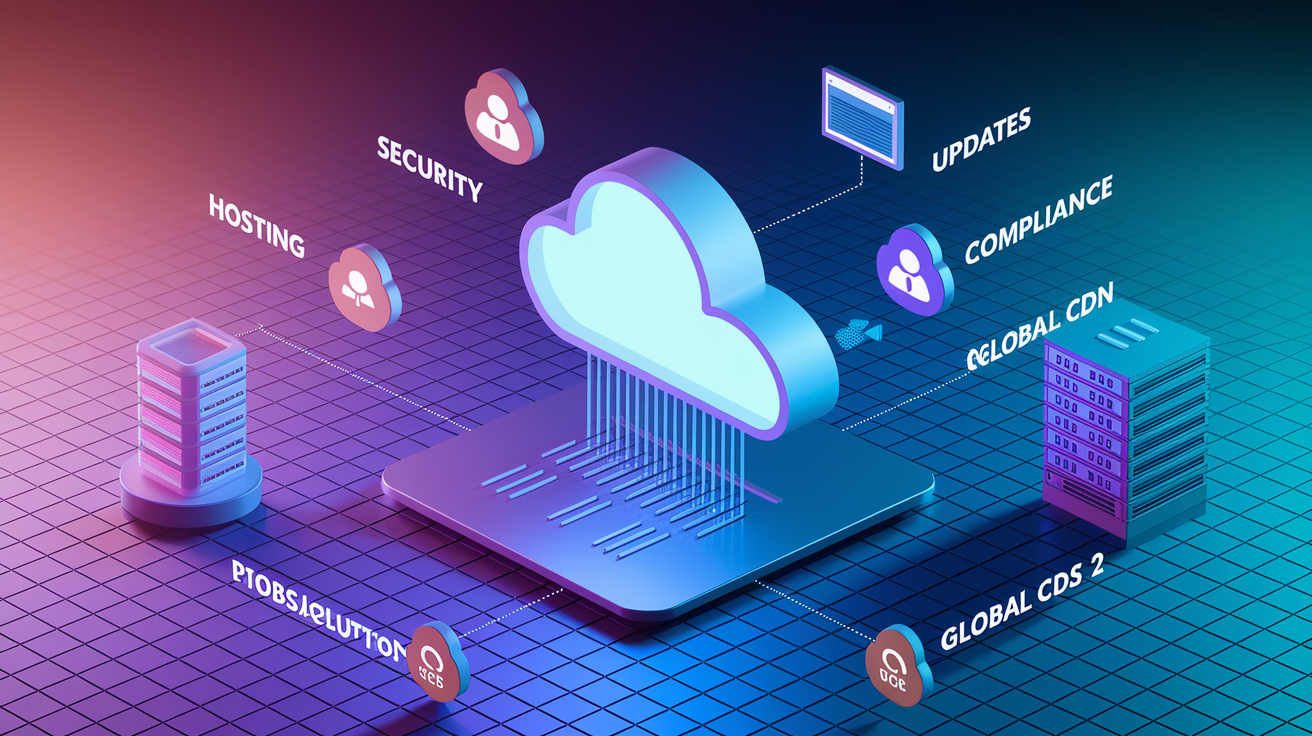
Cloud based e commerce platforms shift your store’s hosting, security updates, database management, and scaling to remote servers that a vendor manages. You’re not installing software on your own data center. The vendor runs the application and infrastructure, and you access everything through a web browser or API. Moving from on-premise servers to cloud commerce solutions means you don’t have to buy, configure, and maintain physical hardware or hire full-time DevOps teams just to keep things running.
Typical cloud ecommerce platforms take care of automatic software updates, security patches, database backups, uptime monitoring, and global content delivery through CDNs. Vendors also handle achieving and maintaining compliance certifications like Level 1 PCI‑DSS and SOC 2 Type II. You manage your catalog, orders, customers, and integrations. The platform provider manages infrastructure, security, and the performance layer underneath.
Measured benefits of moving to cloud commerce:
- 20% faster implementation compared to on-premise builds, according to EY research
- 23% lower implementation costs on average
- 15% incremental revenue growth post-migration
- 3× higher likelihood of staying on budget during rollout
- Elastic scaling that handles Black Friday and Cyber Monday traffic spikes without manual provisioning
Scalable online store infrastructure lets your site absorb sudden traffic surges (product launch, influencer mention, seasonal peak) by automatically spinning up additional server capacity and routing requests through geographically distributed CDN nodes. When traffic drops, resources scale back down. You only pay for what you use. This elasticity matters most during events like Black Friday, when a static, overprovisioned environment might cost 70% more than a cloud deployment that scales on demand.
Comparing Leading Cloud Based E Commerce Platforms and Their Strengths
Shopify supports more than 875 million customers globally and holds roughly 12% of all US ecommerce. The platform delivers a 99.9% uptime SLA and can handle up to 40,000 checkout starts per minute. Shopify’s ecosystem includes over 8,000 prebuilt apps. Shopify Plus (targeted at high-volume merchants) starts around $2,300 to $2,500 per month depending on contract length. The platform offers unified B2B and direct-to-consumer capabilities, modular Checkout Components for customization, native AI assistants for operations, and headless support through Hydrogen and Oxygen frameworks.
Adobe Commerce (formerly Magento Commerce) provides deep customization and tight integration with Adobe Experience Cloud for content personalization and customer journey orchestration. It includes native B2B features like company accounts, custom pricing grids, quote management, and multi-level approvals. Adobe Commerce doesn’t publish fixed pricing. Total annual cost of ownership often reaches five or six figures for complex enterprise implementations. Independent analysis shows Adobe’s average TCO runs about 29% higher than Shopify’s for similar scope and scale.
Salesforce Commerce Cloud positions commerce as part of the broader Salesforce Customer 360 ecosystem. This enables tight CRM integration, unified customer data through Data Cloud, and AI-driven personalization. The platform supports both composable and packaged B2B patterns. Implementation timelines commonly extend to five months, and return on investment typically shows up around 18 months. Salesforce Commerce Cloud carries a four-dollar-sign cost perception and works best for organizations already standardized on Salesforce CRM and marketing tools.
commercetools is a pure API-first, MACH-certified (Microservices, API-first, Cloud-native, Headless) platform designed for enterprises building custom commerce stacks. It offers modular building blocks for cart, catalog, pricing, and promotions, with native multi-region and multi-currency support. Pricing is custom and usage-based, tied to order volume, services consumed, and support tier. SAP Commerce Cloud runs as a platform-as-a-service designed for SAP-centric enterprises. Deep S/4HANA and ERP integration, a flexible data model, and extensive B2B workflow capabilities. Pricing is also custom and enterprise-negotiated.
| Platform | Strengths | Typical Pricing Signal | Ideal Use Case |
|---|---|---|---|
| Shopify | 875M+ customers, 99.9% SLA, 40k checkouts/min, 8,000+ apps | $2,300–$2,500/month (Plus) | Fast launch, SaaS simplicity, SMB to mid-market |
| Adobe Commerce | Deep customization, Adobe Experience Cloud integration, B2B native | Five to six-figure annual TCO; ~29% higher than Shopify | Enterprise content/personalization, complex workflows |
| Salesforce Commerce | CRM integration, Customer 360, Data Cloud, AI personalization | Enterprise custom; ~5-month implementation, ~18-month ROI | Salesforce-standardized orgs, unified customer data |
| commercetools | API-first MACH, modular cart/catalog/promotions, multi-region | Usage-based custom pricing | Composable stacks, multi-brand or multi-region |
| SAP Commerce Cloud | S/4HANA integration, flexible data model, complex B2B | Custom enterprise negotiation | SAP-centric enterprises, deep ERP coupling |
Platform Types Within Cloud Based E Commerce Solutions
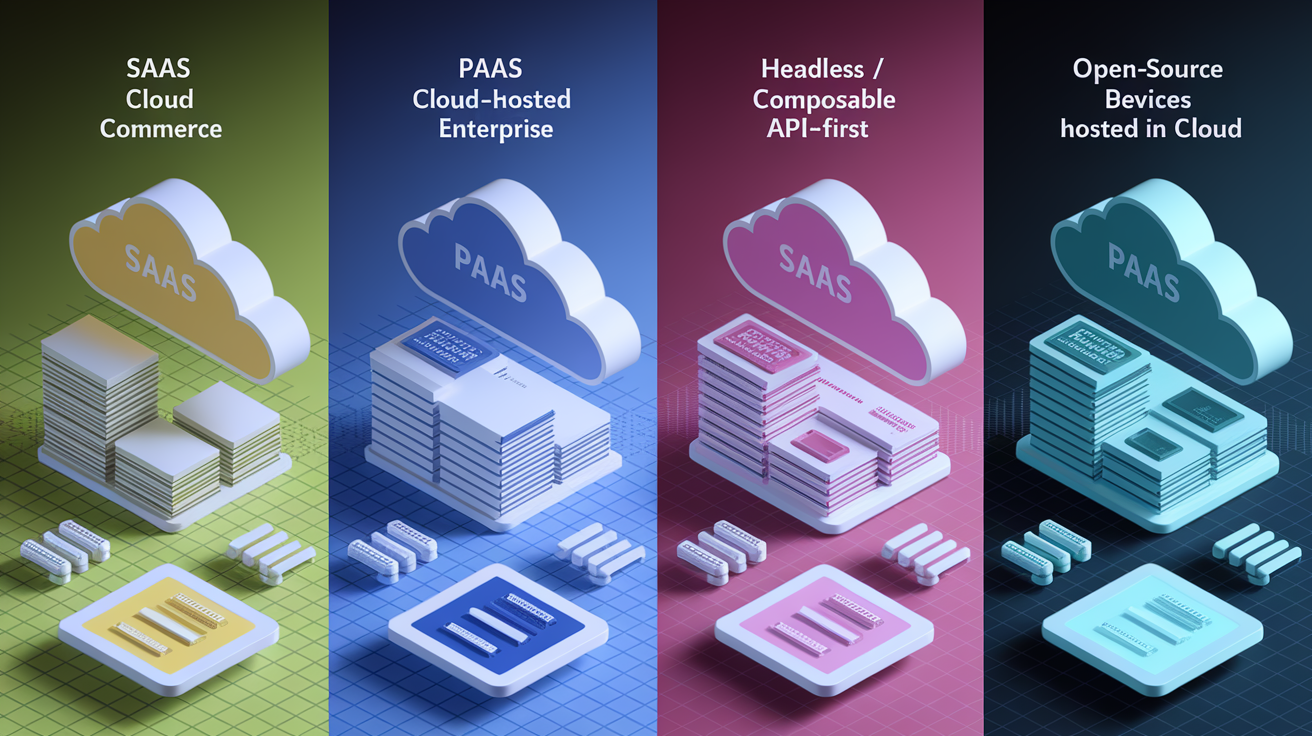
Cloud based e commerce platforms come in four main architectural patterns. Each has different levels of vendor management, customization depth, and operational responsibility. Picking the right model depends on your launch timeline, team size, legacy system constraints, and budget for ongoing engineering.
SaaS Cloud Commerce
SaaS platforms are fully managed. The vendor handles hosting, database operations, security patches, and uptime monitoring. You configure catalogs, checkout flows, and integrations through admin dashboards and prebuilt apps. SaaS is the fastest path to launch. It’s perfect for teams of five people or fewer who need to go live in under 60 days. The tradeoff? Limited ability to modify core platform code or data models. Customization happens through app integrations, theme templates, and API extensions rather than editing the engine itself.
PaaS / Cloud‑Hosted Enterprise
Platform-as-a-service or cloud-hosted enterprise solutions give you more configurability and responsibility than SaaS. You get access to backend code, data schemas, and workflow logic. This lets you mirror complex legacy ERP rules or unique business processes. This model works when you have 20 years of custom pricing, approval, or order-routing logic that can’t be simplified into a SaaS workflow. Implementation timelines typically run three to six months, and you need a team of five to fifteen developers to build, test, and maintain the customizations.
Headless / Composable API‑First
Headless commerce separates the backend commerce engine (catalog, cart, checkout, order management) from the frontend presentation layer. All interactions happen through APIs. This lets you build hyper-custom storefronts, mobile apps, in-store kiosks, or voice experiences without being locked into a vendor’s templated theme system. Best for brands that need non-templated, design-led experiences across multiple touchpoints. The tradeoff is higher integration and operational overhead. You need dedicated frontend developers and API orchestration logic, and implementation timelines often extend to four to six months.
Open‑Source Hosted in Cloud
Open-source platforms like WooCommerce or self-hosted Magento Open Source can run on cloud infrastructure (AWS, Google Cloud, Azure), but hosting alone doesn’t make them “managed.” You still own responsibility for software updates, security patches, plugin compatibility, and database tuning. This model offers maximum control and no recurring platform license fees, but you need to budget for 24/7 DevOps or agency support. If you can’t hire or retain a full-time DevOps engineer, avoid this path. Unpatched open-source stores become security and performance liabilities quickly.
The central tradeoff across all four models is speed versus flexibility. SaaS delivers the fastest time-to-market with the least operational burden, but limits deep customization. PaaS and headless architectures offer greater control and adaptability, but require larger engineering teams and longer implementation cycles. Custom cloud solutions provide maximum flexibility and eliminate vendor dependency, but carry the highest upfront cost and ongoing maintenance responsibility.
Pricing Models and Total Cost of Ownership for Cloud Based E Commerce Platforms
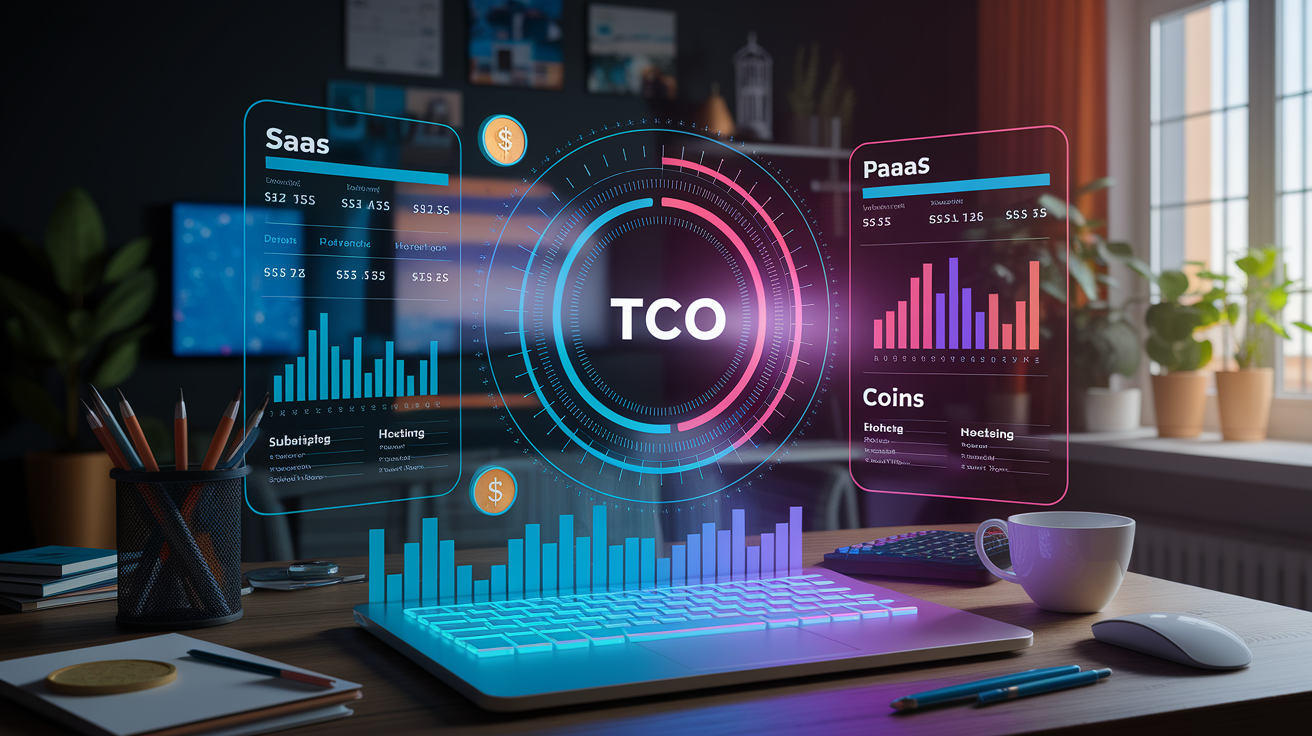
Shopify Plus subscriptions start around $2,300 to $2,500 per month on longer-term contracts, with fees that scale as a percentage of revenue once you exceed certain thresholds. BigCommerce enterprise tiers begin near $1,500 per month. Custom cloud builds (whether headless composable stacks or self-managed open-source deployments) carry upfront project costs commonly ranging from $100,000 to over $500,000. Plus ongoing hosting, maintenance, and developer expenses with no recurring platform subscription. All models also incur payment processing fees, typically 2.2% to 3.5% per transaction. For a merchant processing $1 million in annual revenue, payment fees alone cost $22,000 to $35,000 per year.
Total cost of ownership extends well beyond the headline platform subscription. Third-party apps and integrations run $50 to $500 per month each. A store using ten integrations for ERP sync, email marketing, loyalty, reviews, and tax automation can spend $500 to $5,000 per month ($6,000 to $60,000 annually) just on app fees. Implementation complexity also drives cost. Migrating legacy data, building custom workflows, and integrating with existing ERP or warehouse management systems often require professional services billed at $150 to $300 per hour. A platform advertised at $50,000 per year can balloon to $500,000 in total annual cost once you add implementation services, middleware, integrations, and experienced developer time.
Seven hidden TCO escalators to budget for:
- Extent and complexity of custom checkout, pricing, or promotion logic
- Number of third-party systems requiring real-time or batch integration (ERP, CRM, PIM, WMS, tax, fraud)
- Professional services and agency hours for migration, build, and ongoing optimization
- Multi-region or multi-brand deployments that require separate storefronts, currencies, and compliance
- Premium support tiers, dedicated account management, and SLA guarantees
- PCI compliance readiness for custom builds ($20,000 to $50,000+ in audit and remediation)
- Cloud hosting and infrastructure for headless or custom solutions ($1,000 to $10,000+ per month)
SaaS platforms front-load simplicity. You pay a predictable monthly fee, and the vendor absorbs infrastructure, security, and maintenance costs. PaaS and headless models shift some of those costs onto your team in the form of developer salaries, middleware licenses, and cloud hosting bills. Custom cloud solutions eliminate ongoing platform fees but require the largest upfront investment and the most skilled in-house or agency team to maintain performance, security, and feature parity over a three to five-year lifecycle.
Security, Compliance, and Availability Expectations for Cloud Commerce Platforms
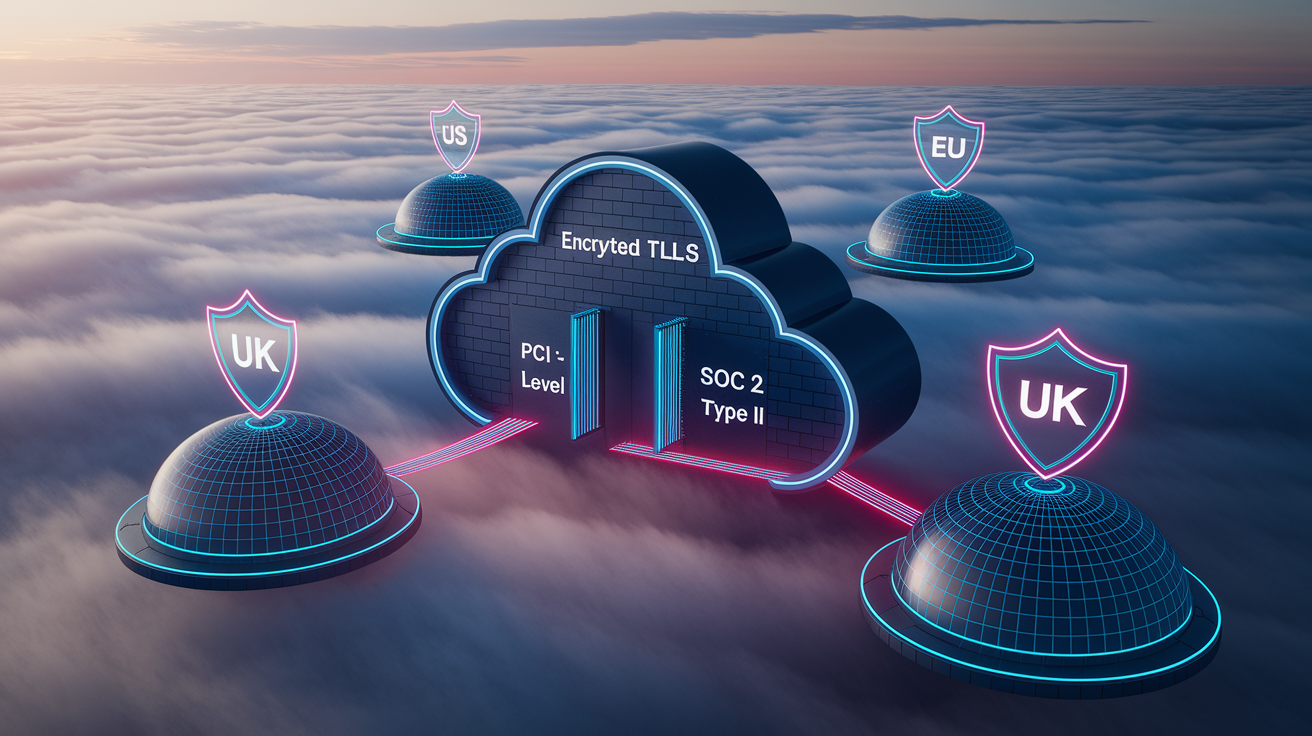
Modern SaaS ecommerce platforms provide Level 1 PCI‑DSS compliance. That means the vendor has met the highest standard for processing, storing, and transmitting cardholder data. Merchants using tokenized payment flows (where the platform or payment gateway handles card details) inherit much of that compliance coverage and avoid the cost and complexity of annual PCI audits. Leading platforms also publish SOC 2 Type II reports, which verify that security controls for confidentiality, availability, and integrity are both designed and operating effectively over time. Shopify maintains a 99.9% uptime SLA. Vendors like Salesforce and Adobe provide similar guarantees backed by global CDN delivery and automated failover.
Vendor-managed security also includes regular automated backups, third-party penetration testing, and continuous monitoring for anomalies. GDPR and CCPA compliance features (data portability APIs, customer data deletion workflows, and configurable data residency options) are built into most enterprise SaaS platforms. Multi-region merchants can choose where customer data is stored (US, EU, UK) to meet local regulatory requirements without custom engineering. All traffic is encrypted in transit using TLS, and sensitive data is encrypted at rest in vendor-managed databases.
Open-source platforms hosted in the cloud still require the merchant or agency to apply security patches, monitor vulnerabilities, and configure firewalls and intrusion detection. A custom-built cloud commerce solution must budget $20,000 to $50,000+ for initial PCI readiness assessment, penetration testing, and remediation. Ongoing security responsibilities include rotating credentials, updating dependencies, patching the operating system, and responding to CVE alerts. If your team can’t dedicate resources to 24/7 security operations, a managed SaaS or PaaS platform is the safer choice.
Scaling, Performance, and Infrastructure Capabilities in Cloud Based E Commerce Platforms
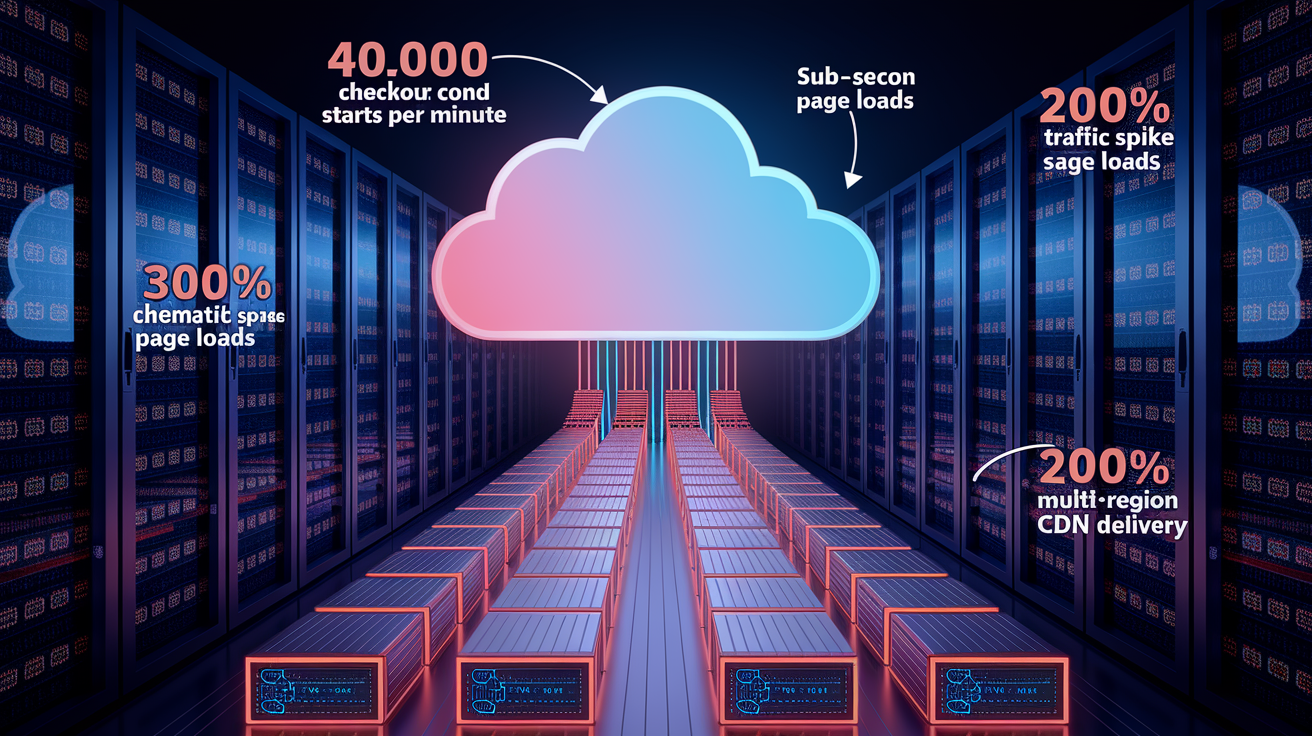
Cloud commerce platforms automatically allocate additional compute, memory, and bandwidth during traffic surges, then scale resources back down when demand returns to baseline. This elasticity is essential for seasonal peaks like Black Friday and Cyber Monday, product drops, flash sales, or viral social media events. Shopify’s infrastructure can handle up to 40,000 checkout starts per minute. The platform has demonstrated the ability to absorb multi-hundred-percent traffic spikes without downtime. Skullcandy migrated to a cloud platform in 90 days and reduced homepage load time from 2.8 seconds to 0.8 seconds. Then they supported a 200% traffic spike during the holiday season while delivering 45% year-over-year revenue growth.
Four performance benchmarks that define enterprise-grade cloud commerce:
- 40,000+ checkout starts per minute sustained without degradation
- 200% traffic spike absorption during peak events with zero downtime
- Sub-one-second page load times through global CDN edge caching and image optimization
- Multi-region CDN delivery that serves assets from nodes closest to each visitor, reducing latency and improving conversion
Multi-region delivery isn’t just about speed. It also supports compliance and localization. A global CDN lets you serve European customers from EU data centers, meeting GDPR data residency requirements, while US customers connect to US nodes. Cloud platforms with built-in internationalization features handle currency conversion, language localization, and duty/tax calculation at checkout without requiring separate storefronts or complex middleware. Uptime and availability matter most during the narrow windows (Friday through Monday of Thanksgiving weekend, December gifting deadlines, or limited product launches) when a single hour of downtime can cost six or seven figures in lost revenue.
Integrations, Extensibility, and Headless Capabilities for Cloud Commerce Systems
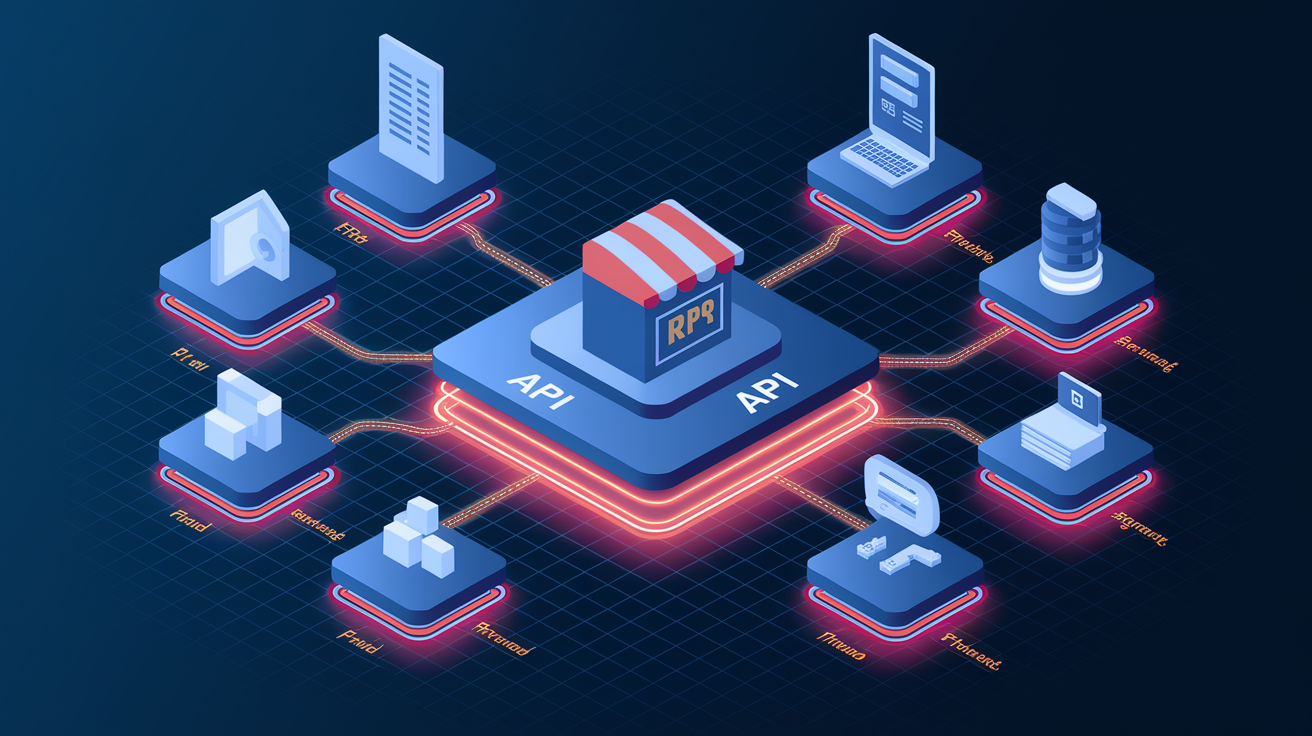
Shopify’s app ecosystem includes over 8,000 prebuilt integrations covering ERP sync (NetSuite, SAP, Microsoft Dynamics), email and SMS marketing (Klaviyo, Attentive), loyalty and referrals (Yotpo, LoyaltyLion), advanced search and merchandising (Algolia, Searchspring), tax automation (Avalara, TaxJar), and fraud prevention (Signifyd, Riskified). Salesforce Commerce Cloud integrates natively with Customer 360, Service Cloud, Marketing Cloud, and Data Cloud. This enables unified customer profiles, predictive AI recommendations, and closed-loop attribution across all touchpoints. commercetools provides modular API endpoints for catalog, cart, pricing, promotions, and inventory. Enterprises can compose a stack from best-of-breed services rather than accepting a monolithic suite.
Headless commerce architecture decouples the frontend presentation layer from the backend commerce engine, communicating exclusively through APIs. This separation lets you build custom React, Vue, or Next.js storefronts, native mobile apps, voice assistants, in-store kiosks, or IoT experiences. All powered by a single product catalog and order management system. The benefit is complete control over user experience and design. The cost is a larger engineering team (typically five to fifteen developers), longer implementation timelines (four to six months), and ongoing responsibility for API orchestration, caching strategies, and frontend performance optimization.
Extensibility becomes critical for B2B commerce, multi-brand operations, and international expansion. B2B buyers expect features like company account hierarchies, role-based approval workflows, custom contract pricing, net payment terms, and bulk order upload. Multi-brand merchants need to share a single inventory and fulfillment system while presenting distinct storefronts, pricing, and promotions for each brand. International sellers require multi-currency checkout, localized content, region-specific payment methods (iDEAL in the Netherlands, Boleto in Brazil), and automated duty and import tax calculation. Platforms that expose robust APIs and support headless architecture make these requirements achievable without rebuilding the entire commerce engine.
| Integration Type | Typical Use | Complexity Level |
|---|---|---|
| ERP / Accounting | Order, inventory, and financial data sync (NetSuite, SAP, QuickBooks) | High |
| Marketing Automation | Email, SMS, push campaigns triggered by behavior (Klaviyo, Braze) | Medium |
| Tax & Compliance | Real-time sales tax, VAT, duties calculation (Avalara, Vertex) | Medium |
| Fraud & Risk | Machine-learning fraud detection and chargeback prevention (Signifyd, Sift) | Low to Medium |
Migration, Implementation Timelines, and Vendor Selection Framework
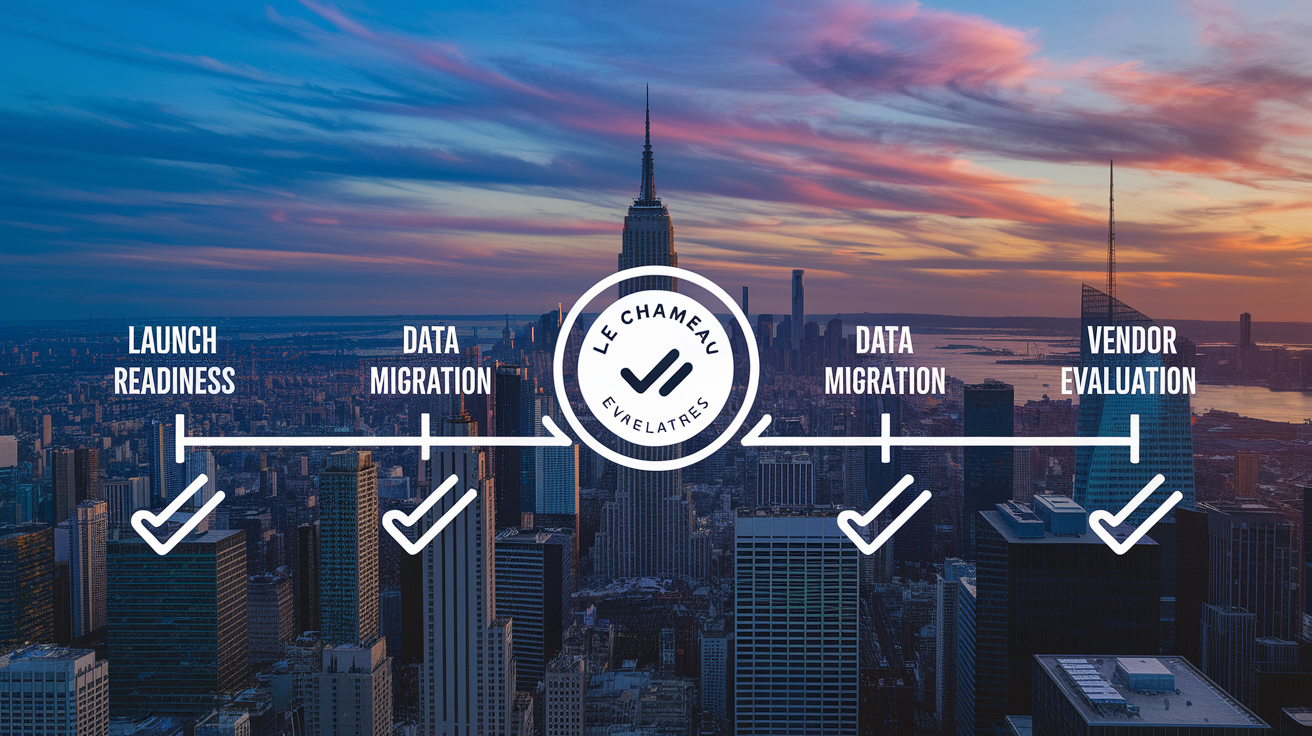
SaaS platforms like Shopify or BigCommerce can launch basic stores in two to eight weeks when product catalogs are clean, integrations are minimal, and the team uses out-of-the-box themes. Complex SaaS builds (custom checkout flows, ERP integrations, multi-currency support, and headless frontends) extend timelines to twelve weeks or longer. PaaS and headless implementations typically require three to six months because of custom development, API orchestration, testing cycles, and data migration. Salesforce Commerce Cloud projects have been observed taking up to five months from kickoff to launch. Custom cloud builds that involve legacy ERP integration, multi-region compliance, and bespoke workflow logic commonly span four to eight months and cost $100,000 to $500,000 or more.
Team requirements scale with platform complexity. A basic SaaS setup can be managed by one to three developers or a small agency team. PaaS, headless, or composable implementations need five to fifteen developers with skills in backend APIs, frontend frameworks, DevOps, and integration middleware. Custom cloud solutions often require dedicated full-time engineers for frontend, backend, infrastructure, and ongoing maintenance. Plus product managers and QA resources to coordinate releases. Le Chameau (a heritage brand founded in 1927) completed a migration to a managed cloud platform in five weeks, reported a 65% reduction in total cost of ownership, and realized immediate cost savings of roughly £170,000.
Migration challenges include exporting clean product, customer, and order data from the legacy platform. Rebuilding custom discount logic, tax rules, and shipping rate tables in the new system. Reconfiguring integrations with ERP, WMS, CRM, and marketing tools. And validating that checkout flows, payment gateways, and fraud rules work identically or better. Many legacy platforms make data export difficult or charge fees for bulk extracts. Plan for significant data-cleaning effort (duplicate SKUs, inconsistent attributes, orphaned customer records) before the migration cutover. Budget at least 20% more time than the vendor estimates, and plan for a three to five-year minimum platform commitment because switching again is expensive.
Six-step vendor selection framework:
- List must-have integrations at launch (ERP, payments, tax, shipping, analytics) and confirm each vendor offers prebuilt connectors or well-documented APIs.
- Define non-negotiables (timeline, budget ceiling, compliance requirements, data residency) and eliminate any vendor that can’t meet them.
- Assess team capability and confirm you have the in-house or agency skills required for the platform’s customization model (SaaS admin vs API development vs full-stack engineering).
- Request proof of implementation timelines, ownership of ongoing maintenance, and live performance tests using your actual product catalog and expected traffic volume.
- Model TCO at 1×, 2×, and 5× your current revenue to understand how subscription fees, transaction fees, and integration costs scale as you grow.
- Validate migration and export paths so you’re not locked in. Confirm you can export all customer, order, and product data in standard formats (CSV, JSON) without vendor permission or ransom fees.
Real-World Performance Benchmarks and Case Outcomes Using Cloud Based Platforms
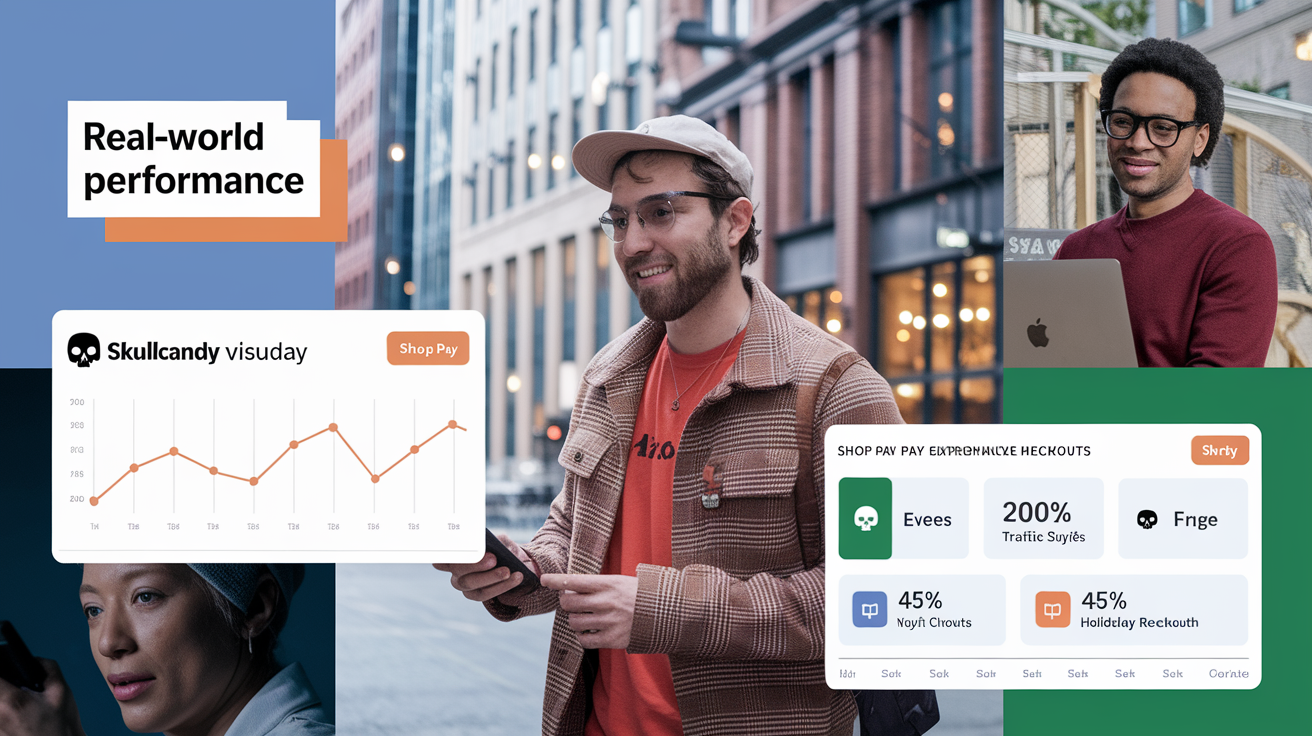
Skullcandy completed a 90-day migration to a cloud platform and immediately saw homepage load time drop from 2.8 seconds to 0.8 seconds. The new infrastructure supported a 200% traffic spike during a product launch and delivered 45% year-over-year holiday revenue growth between 2023 and 2024. Lull migrated to a managed cloud commerce platform and adopted Shop Pay as its primary express checkout option. Shop Pay quickly accounted for 80% of all express checkouts, contributed a 14% conversion lift during Black Friday and Cyber Monday, and the Shop App channel represented roughly 1% of total order volume. A meaningful new acquisition channel without additional ad spend. Le Chameau executed a five-week migration, reduced total cost of ownership by 65%, and realized immediate cost savings of £170,000.
EY research across enterprise migrations found that moving to a managed cloud platform produced 20% faster implementations, 23% lower implementation costs, 15% incremental revenue growth post-launch, and merchants were three times more likely to finish on time and stay within budget. These outcomes aren’t automatic. They depend on clean data, realistic scoping, experienced implementation partners, and choosing a platform model that matches your team’s capabilities and timeline constraints.
Three biggest measurable improvements from cloud platform migrations:
- Speed: 90-day migrations and 20% faster implementations compared to on-premise or legacy replatforming projects
- Performance: sub-one-second page loads and zero downtime during 200% traffic spikes, enabling higher conversion and customer satisfaction
- Cost: 65% TCO reductions and 23% lower implementation costs, with predictable monthly fees replacing unpredictable infrastructure and maintenance expenses
Future Trends in Cloud Based E Commerce Platforms
API-first microservices architecture is becoming the default for enterprise cloud commerce. Instead of monolithic platforms that bundle catalog, checkout, promotions, content, and search into a single rigid application, composable stacks let you connect best-of-breed services through APIs. Algolia for search, Contentful for content management, Stripe for payments, Shippo for fulfillment. Gartner’s 2025 analysis found that only 19 of 160 evaluated platforms met the threshold for enterprise-grade composability, scalability, and support. As more vendors adopt MACH principles (Microservices, API-first, Cloud-native, Headless), the number of viable composable platforms will grow, and integration tooling will mature.
AI is moving from experimental feature to operational requirement. Leading platforms now offer AI-powered product recommendations, dynamic content personalization, automated merchandising that adjusts collections based on inventory and demand signals, and conversational agents that handle common customer service inquiries. Shopify’s native AI assistant helps operators draft product descriptions, generate marketing copy, and troubleshoot checkout issues. Adobe Commerce uses Adobe Sensei for predictive search and personalized promotions. These AI tools reduce manual work, improve customer experience, and free up merchant teams to focus on strategy rather than repetitive content tasks.
Global scaling and automation will define the next generation of cloud commerce platforms. Merchants increasingly operate across dozens of countries, each with unique payment preferences, tax rules, shipping carriers, and return expectations. Cloud platforms are embedding more localization features (automatic currency conversion, region-specific checkout fields, local payment methods, and duty/tax calculation) so that international expansion doesn’t require separate storefronts or custom code. Automation extends to inventory sync, order routing, fraud detection, and customer service, reducing the operational overhead of high-volume, multi-channel commerce. The vendors that combine microservices flexibility, embedded AI, and turnkey global infrastructure will capture the largest share of enterprise cloud commerce over the next three to five years.
Final Words
Cloud moves hosting, scaling, and security to vendors so you launch faster and handle traffic spikes without late-night infra fights.
We compared Shopify, Adobe, Salesforce, and commercetools; explained SaaS vs PaaS vs headless vs open source; and covered pricing, security, scaling, integrations, migrations, and measurable results.
If you’re evaluating cloud based e commerce platforms, run a short 60-day pilot on top SKUs, map hidden costs, and score vendors on SLA and integrations.
Do that and you’ll get faster time-to-market and lower operational risk.
FAQ
Q: What is a cloud-based e-commerce platform?
A: A cloud-based e-commerce platform is software hosted and managed by a vendor in the cloud, handling hosting, updates, security, and scaling so merchants can focus on products, marketing, and orders.
Q: What are the top 5 ecommerce platforms and examples of cloud-based platforms?
A: The top 5 e-commerce platforms are Shopify, Adobe Commerce (Magento), Salesforce Commerce Cloud, commercetools, and SAP Commerce Cloud; they cover SaaS, enterprise customization, CRM integration, headless APIs, and B2B needs.
Q: What are the 4 types of e-commerce?
A: The four types of e-commerce are B2C (business-to-consumer), B2B (business-to-business), C2C (consumer-to-consumer), and C2B (consumer-to-business), each defined by who sells and who buys.