

Sending TikTok users off-app to check out? That’s how you lose sales.
TikTok Shop fixes that, putting your storefront inside the app so discovery, product pages, and checkout happen without redirects.
That change kills mobile friction and boosts impulse buys, especially for Gen Z and trend-led categories like beauty, fashion, and gadgets.
Thesis: if you sell visual, fast-decision products, set up Shop, tag items in short videos and LIVE, and optimize mobile-first listings to turn views into orders.
How TikTok Shop Supports Ecommerce Growth
TikTok Shop works as an in-app storefront that cuts out the redirect between finding something and buying it. You set up a Shop profile on your main account, upload your products, and tag items straight into short videos, LIVE streams, and posts. When someone taps a tagged product, they land on a detail page with images, specs, pricing, and reviews. All inside TikTok. Checkout happens right there, which kills the friction that usually murders mobile conversion. LIVE shopping lets hosts pin products during a stream, push limited-time deals, and answer questions live, turning urgency and social proof into instant sales.
The platform’s got over 1 billion monthly active users. 60% of Gen Z in the US checks TikTok at least monthly, and 67% of all users are under 35. Gen Z makes up more than 55% of social commerce buys on the platform, and 78% say they’ve purchased something after seeing an influencer feature it. That mix of scale, young buyers, and actual purchase intent makes TikTok Shop deadly effective if you’re targeting younger shoppers who prefer impulse buys driven by discovery. The algorithm surfaces products based on behavior and interest, not just follower count, so a brand new shop can blow up fast if the content hits.
High performers include beauty, fashion, lifestyle accessories, home decor, and tech gadgets. Products that benefit from visual demos, quick decisions, and trend participation. Items tagged in videos tied to popular sounds or challenges (#TikTokMadeMeBuyIt) often spike in conversion because the format shortens the path from “I want that” to cart. Native checkout, algorithmic reach, and the weight of creator endorsements all stack up to boost conversion compared to sending traffic off-platform.
Setting Up a TikTok Shop Account for Ecommerce Sellers

You need to be 18, have a valid phone and email, and run a TikTok Business account. As of June 2023, TikTok Shop’s live in the United States, United Kingdom, and select Asian markets including Indonesia, Malaysia, Thailand, Vietnam, Philippines, Singapore, Hong Kong, and Chinese mainland. Regional rollout continues, but access isn’t automatic. You request it and wait for approval. Not every country’s open yet. You’ve got to comply with local ecommerce laws, community guidelines, and TikTok’s product rules. Physical products only. No weapons, adult items, illegal goods, or counterfeits. IP compliance is mandatory.
Business verification and identity checks happen before approval. You’ll upload tax docs like an EIN if you’re in the US, business registration certificates, and a full product catalog. Some regions ask for a selfie holding your ID to confirm who you are. This KYC process usually takes a few days, though timelines shift based on region and whether your docs are complete. Once verified, you can link an existing store (Shopify, WooCommerce, BigCommerce, Wix) or manually upload products.
Building your catalog means adding high-quality images and short videos, writing clear benefit-focused descriptions, setting pricing and variants (size, color), and categorizing each SKU properly for discovery. Mobile-first visuals matter. Listings render on small screens, so images should be clean, bright, and show the product in use or on real people. Descriptions should be short. Three or four benefit bullets, not feature dumps. Competitive pricing and transparent shipping details lift conversion and cut cart abandonment.
Approval depends on complete, compliant documentation and a catalog that meets quality standards. Incomplete filings or missing tax info will delay or block you. Once approved, you customize your storefront branding, enable product tagging in videos, and start posting. Here’s the flow:
- Create a TikTok Business account via TikTok Ads Manager or upgrade an existing personal account to Business.
- Request TikTok Shop access through TikTok Seller Center. Confirm your region’s available before applying.
- Complete KYC and tax verification by uploading required documents (tax ID, business registration, identity proof) and wait for approval.
- Connect your ecommerce platform or manually upload your product catalog with images, descriptions, pricing, and variants.
- Finalize storefront branding (profile image, bio, Shop tab design) and publish your first tagged products and videos.
Integrating TikTok Shop With Shopify and Other Ecommerce Platforms
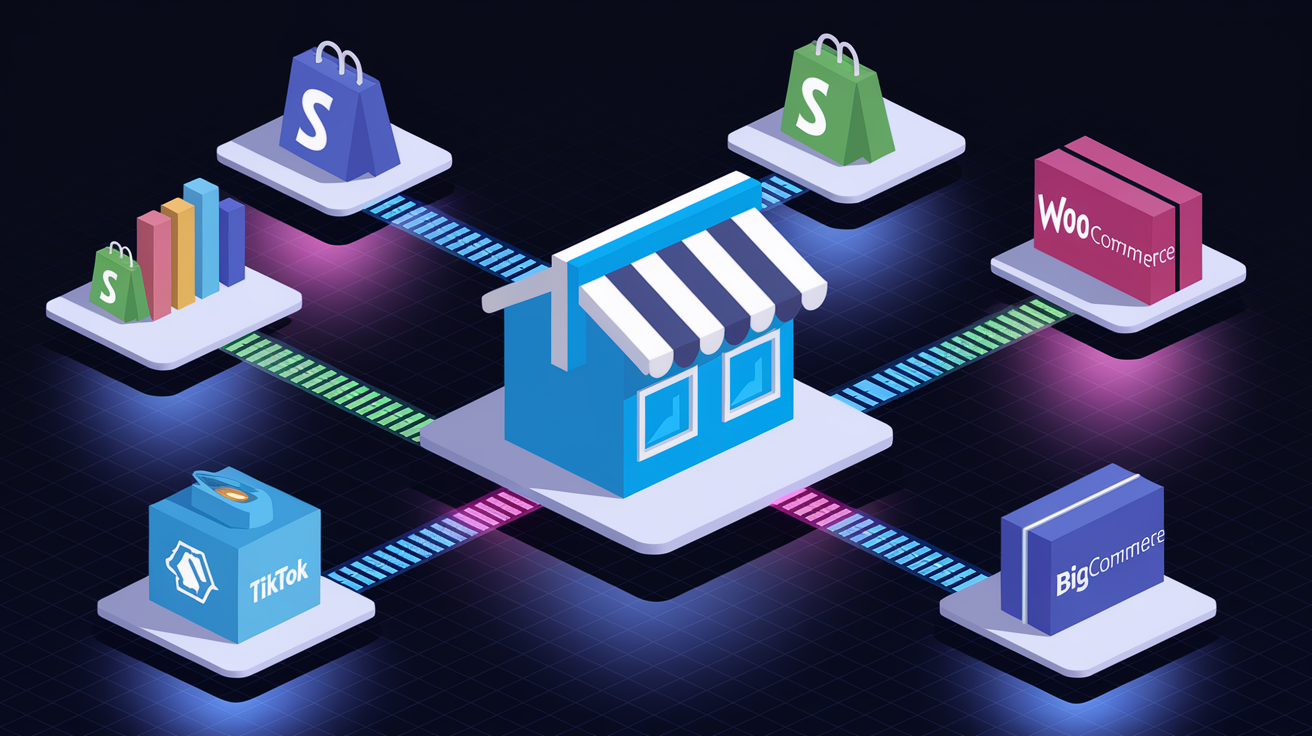
Hooking TikTok Shop up to platforms like Shopify, WooCommerce, or BigCommerce centralizes inventory and orders. Integration keeps product feeds updated in real time, so stock levels, pricing tweaks, and new SKUs flow automatically from your main store to TikTok. This prevents oversells, cuts manual catalog updates, and speeds up fulfillment by putting orders in a single dashboard. You can manage TikTok orders alongside other channels, automate shipment notifications, and sync transaction data to accounting software like QuickBooks.
API-based syncing’s available via the TikTok Shop API for direct catalog integration and workflow automation. Third-party platforms like Productsup offer feed optimization and data mapping that transform standard ecommerce catalogs into TikTok-ready formats. Optimized titles, trend-aligned messaging, social-commerce-specific tags. Real-time inventory updates and automated repricing reduce the lag that causes support headaches and lost sales. Integration platforms also give you reporting dashboards that pull metrics across channels, making it easier to track TikTok Shop performance against other sales sources.
| Platform | Integration Benefit |
|---|---|
| Shopify | One-click catalog sync, unified order management, automated inventory updates, and native TikTok pixel for attribution. |
| WooCommerce | Real-time product feed export, order consolidation in WooCommerce dashboard, and plugin-based automation for shipping and stock. |
| BigCommerce | Automated catalog publishing, centralized multi-channel inventory, and integrated analytics for cross-platform performance. |
| Productsup / API tools | Feed optimization, advanced data mapping, trend-aligned product tagging, and batch updates for large catalogs. |
Product Listing Optimization for TikTok Shop
TikTok’s mobile-first interface demands visuals that render clearly on small screens and grab attention in under two seconds. Product images should be high-res, well-lit, and show the item in context. On a person, in a room, being used. Multiple angles and lifestyle shots build confidence faster than a single white-background shot. Including a short video (10 to 15 seconds) that demonstrates function, unboxing, or before-and-after results seriously lifts conversion, especially in beauty, fashion, and home.
Descriptions need to prioritize benefits over specs. Instead of “100% cotton, machine washable,” write “stays soft wash after wash, no shrinking.” Keep it to three or four punchy bullets. Titles should include the product type and a differentiator. “Oversized Hoodie – Extra Soft Fleece” beats “Hoodie.” Accurate categorization improves discoverability through TikTok’s search and recommendation engine. Variant accuracy (sizes, colors) prevents order errors and returns. Pricing should be competitive on the platform. Users compare quickly. Get customer reviews and ratings up as soon as they start appearing. They’re social proof and they lift trust.
Trend relevance matters. If a sound, hashtag, or format’s gaining traction and it aligns with your product, adapt messaging and creative to ride it. Say #morningroutine is trending and you sell skincare. Tag products in a quick AM routine video. Feed accuracy’s critical. Outdated inventory, wrong pricing, or missing variants hurt conversion and damage seller reputation. Regular catalog audits and quick updates when stock or offers change keep the shop performing.
- Use multiple high-quality images and at least one short video per listing to show the product in action.
- Write concise, benefit-focused descriptions with three to four clear bullets instead of long feature lists.
- Make sure all product variants (size, color, material) are accurately listed to prevent fulfillment errors and returns.
- Align product titles and tags with current platform trends and popular search terms for better algorithmic distribution.
- Get customer reviews and star ratings up as soon as they’re available to build trust and social proof.
- Test all listings on a mobile screen before publishing to confirm images, text, and CTAs render clearly.
Leveraging Shoppable Videos and TikTok LIVE for Ecommerce
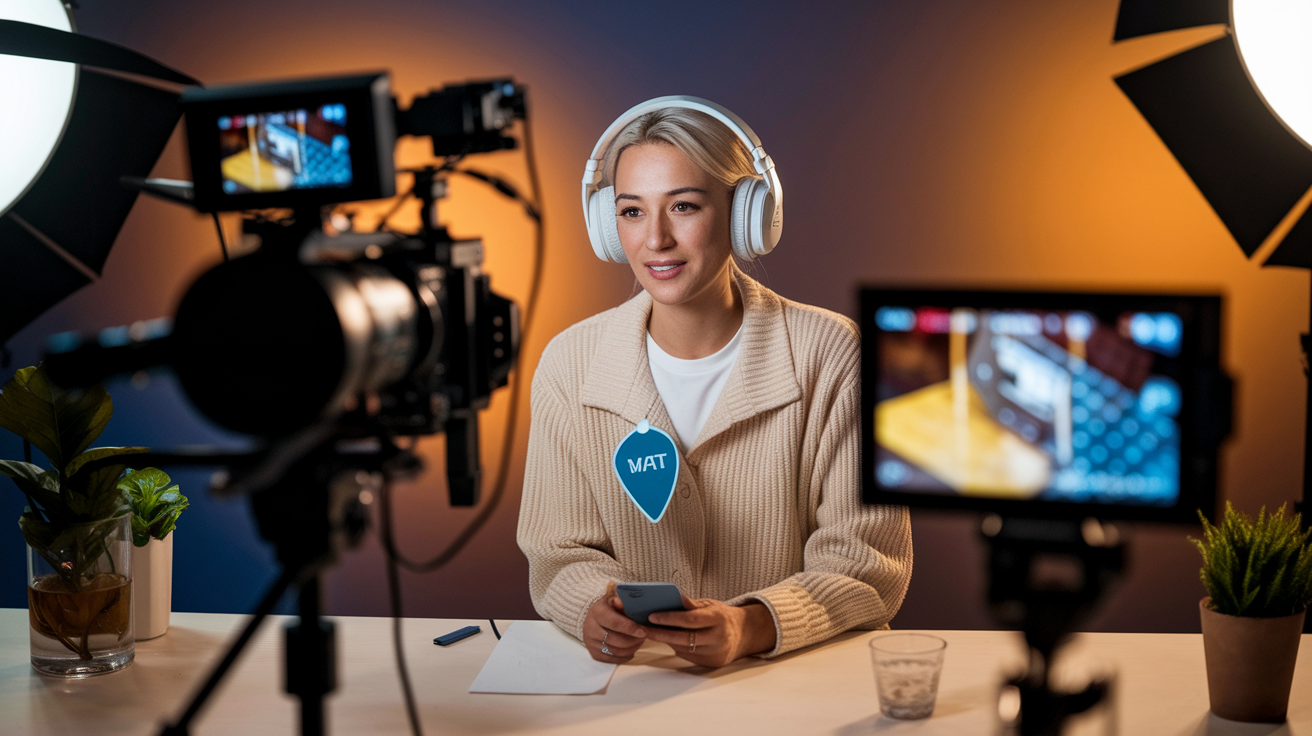
Shoppable videos let you tag products straight into short-form content, turning entertainment into a storefront. When a viewer taps the tag, they jump to the product page without leaving the app. This works best when the product’s integrated naturally. Tutorials, unboxings, styling demos, problem-solution narratives. A 15-second video showing how a gadget solves a common frustration, with the product tagged at the moment of the solution, converts faster than a static ad. Authenticity and pacing matter more than production polish. Viewers skip slick, overly branded content.
TikTok LIVE takes real-time engagement further by letting hosts pin products during a broadcast, answer questions live, and create limited-time offers that expire when the stream ends. This urgency, combined with the social proof of watching others ask questions and buy, drives immediate conversion. Gen Z buyers especially respond to LIVE formats. 78% report purchasing after seeing influencers feature products. Hosting regular LIVE sessions (weekly or bi-weekly) builds a habit among followers and keeps the shop top-of-mind.
Effective LIVE selling depends on preparation and energy. Hosts should script key product benefits, prep demo setups, and announce the session in advance through posts and Stories. Pinning a hero product at the start focuses attention, then rotating through additional items maintains interest. Offering a LIVE-exclusive discount (10% off for the next hour) or bundling products during the stream adds urgency. Collaborating with a creator or micro-influencer to co-host brings their audience and adds credibility.
Live Selling Tactics
Use countdown timers and verbal cues to create urgency. “Next five buyers get free shipping” or “This price ends when we hit 100 viewers.” Pin the featured product at the top of the screen so it’s always visible and one tap away. Rotate hosts or bring on guest creators to vary presentation style and reach new segments. Schedule LIVE sessions consistently (same day and time each week) to build routine viewership. Highlight user questions and comments on-screen to increase participation and make viewers feel heard. After each session, post a recap video tagging all featured products so latecomers can still convert.
Influencer and Creator Collaboration Strategies for TikTok Ecommerce

Picking the right creator starts with alignment, not follower count. Look for creators who already use similar products, whose audience demographics match your target buyer, and whose content style feels authentic to your brand. A micro-influencer with 10,000 engaged followers in your niche will often outperform a celebrity with a million disengaged ones. Credibility and trust drive conversion on TikTok. Viewers can spot a forced partnership immediately.
The TikTok Shop Affiliate Program lets creators promote products in exchange for a commission on each sale. You set commission rates, send product samples, and provide key talking points or creative briefs. Creators then produce content (unboxings, tutorials, reviews) and tag the product. When their followers buy through the tagged link, the creator earns a percentage. This performance-based model reduces upfront costs and aligns incentives. Creators earn more when they drive real sales, not just impressions.
User-generated content (UGC) campaigns amplify reach and authenticity. Encourage customers to post videos using your product and tag your account or a branded hashtag. Repost the best UGC to your own feed and Shop tab. This social proof builds trust faster than brand-created ads. Some sellers run challenges or giveaways to seed UGC. “Post your morning routine with our product and tag #YourBrandMorning for a chance to win.” The resulting flood of organic content extends reach and gives you a library of assets for future ads.
Co-creating product lines with influencers (limited editions, exclusive colorways, bundled kits) deepens partnership and gives creators ownership. When a creator’s name or input’s tied to a SKU, their audience sees it as a genuine recommendation, not a paid spot. Launch these collaborations with a joint LIVE session or series of posts to maximize visibility.
| Creator Type | Best Use Case | Expected Outcome |
|---|---|---|
| Micro-influencer (5K–50K followers) | Niche products, high engagement rates, authentic reviews | Higher conversion per view, strong trust signals, lower cost per acquisition |
| Mid-tier creator (50K–500K followers) | Broader awareness campaigns, product launches, seasonal pushes | Balanced reach and engagement, scalable traffic, moderate commission costs |
| Mega-influencer (500K+ followers) | Brand credibility, mass-market products, major launches | High impressions, brand halo effect, premium commission or flat fee required |
| Brand advocates / UGC contributors | Ongoing content supply, community building, social proof | Low or no cost, authentic testimonials, steady stream of repostable assets |
| Co-creator / product collaborator | Exclusive product lines, limited drops, deep partnerships | High perceived value, strong audience loyalty, differentiated SKUs |
TikTok Shop Checkout, Payments, and Order Management

In-app checkout removes the friction of redirects and manual payment entry. Users tap “Buy Now,” confirm shipping address and payment method, and complete the purchase without leaving TikTok. This streamlined flow seriously cuts cart abandonment compared to external links. Mobile optimization’s built in. Forms autofill, and the interface adapts to screen size. You can enable cart recovery messaging for users who add items but don’t finish checkout. Source data cites up to 15% recovery of abandoned carts through follow-up notifications.
Payment options include all major card networks (Visa, Mastercard, American Express, Discover), digital wallets (Apple Pay, Google Pay, Samsung Pay), and buy-now-pay-later services like Affirm and Klarna. Offering BNPL lifts average order value by making higher-ticket items accessible to budget-conscious buyers. Payment processing runs through gateway partners including Adyen, Stripe, and PayPal, ensuring secure transactions and fraud protection. Peer-to-peer transfers between TikTok users aren’t supported. All transactions must go through the Shop checkout flow.
Order management’s on you. You get notifications when orders come in, fulfill from your own inventory or via dropship partners, and upload tracking info to the TikTok Seller Center. Real-time inventory syncing (via platform integrations) prevents oversells. Automated shipment notifications keep buyers informed and cut “where is my order” tickets. Fulfillment speed matters. Delayed shipping hurts seller ratings and future algorithmic reach. Set realistic delivery windows and meet them consistently to build trust and repeat purchase rates.
- Card payments: Visa, Mastercard, American Express, Discover accepted for all TikTok Shop transactions.
- Digital wallets: Apple Pay, Google Pay, and Samsung Pay supported for faster mobile checkout.
- Buy-now-pay-later: Affirm and Klarna integrations allow installment purchases, lifting AOV and conversion.
- Payment gateways: Adyen, Stripe, and PayPal handle transaction processing, fraud detection, and secure checkout.
TikTok Ads and Paid Marketing for Ecommerce Sellers
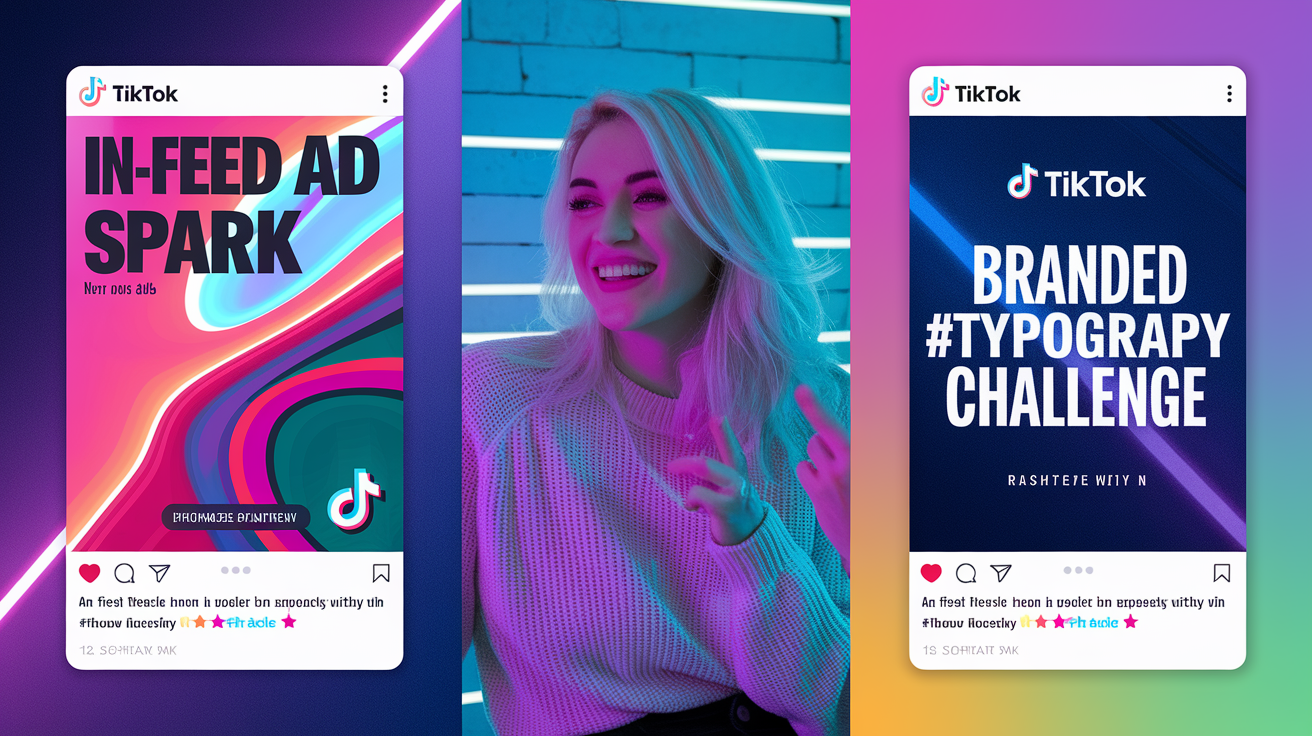
In-Feed Ads show up in users’ For You feeds as native content, blending with organic posts. They support product tags, so viewers can tap through to purchase mid-scroll. Effective In-Feed Ads use the same creative style as organic TikTok content. Quick hooks, real people, trending sounds. Not polished commercial formats. Testing multiple creative variants and letting the algorithm surface winners is standard practice. Budgets can start small (as low as $20/day) to validate creative before scaling.
Spark Ads amplify organic posts that are already performing well. If a product video or creator collaboration gains traction organically, turning it into a Spark Ad extends reach without creating new assets. This format preserves all engagement (likes, comments, shares) on the original post, adding social proof as the ad runs. Spark Ads often outperform standard In-Feed Ads because they’re riding existing momentum and authenticity.
TopView Ads and Branded Hashtag Challenges are higher-budget formats suited for major launches or brand awareness pushes. TopView places a video at the top of the feed when users open the app, guaranteeing visibility. Branded Hashtag Challenges invite users to create content around a theme, product, or trend, generating a wave of UGC and participation. Both formats require larger budgets but deliver mass reach and cultural impact when done right.
GMV Max Overview
GMV Max is TikTok’s AI-driven campaign optimization tool built to maximize gross merchandise value. It automates bid adjustments, audience segmentation, and creative rotation across the entire funnel, from awareness to purchase. The platform analyzes behavioral signals (watch time, engagement, add-to-cart events) and reallocates budget toward the highest-converting segments in real time. Benefits include better return on ad spend, less manual optimization work, and faster scaling of winning campaigns. GMV Max works best when paired with a diverse creative library and a catalog of at least 20 to 30 SKUs to give the algorithm enough options to test and optimize.
TikTok Analytics, KPIs, and Performance Measurement
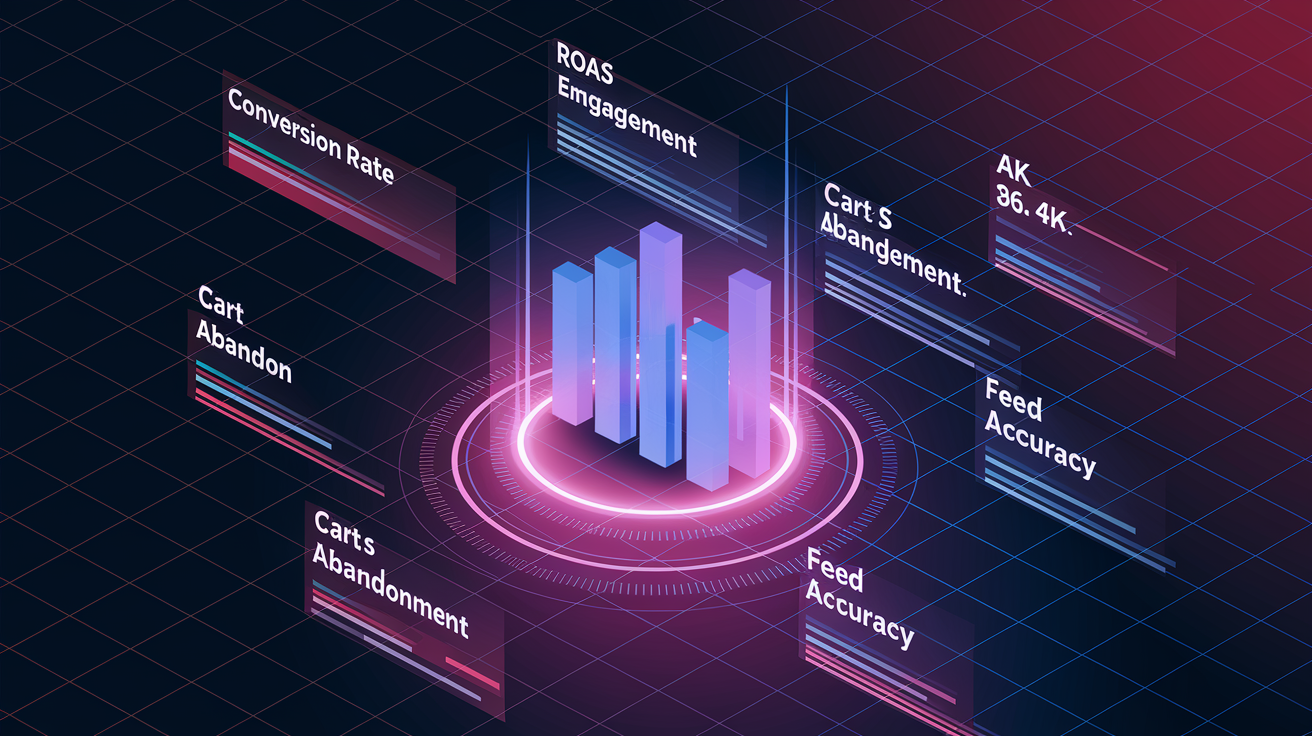
TikTok Seller Center dashboards track traffic, customer reviews, and transaction data in one view. You can filter by date range, product, or campaign to isolate what’s working. Key performance indicators include conversion rate (orders divided by product page views), return on ad spend (revenue divided by ad cost), and engagement rates (likes, shares, comments per video). Top-performing product analysis highlights which SKUs drive the most revenue and margin, telling you what to restock and what to push.
Cart abandonment and recovery metrics show how many users add items but don’t finish checkout, and how many return after follow-up messaging. Source data indicates recovery rates up to 15% when cart abandonment prompts are enabled. Feed accuracy (keeping product availability, pricing, and descriptions current) directly impacts conversion and customer satisfaction. Outdated listings cause order cancellations and poor reviews, which hurt algorithmic distribution.
- Conversion rate: percentage of product page views that result in completed purchases. Benchmark and optimize listing quality, pricing, and checkout flow.
- Return on ad spend (ROAS): revenue generated per dollar spent on TikTok ads. Track by campaign, creative, and product to identify high performers.
- Engagement rate: total likes, shares, and comments divided by impressions. Higher engagement signals content relevance and lifts organic reach.
- Top-performing products: rank SKUs by revenue, margin, and units sold to prioritize inventory, restocks, and promotional focus.
- Cart abandonment and recovery: monitor add-to-cart events that don’t convert, and measure recovery lift from automated follow-up messages.
- Feed accuracy and sync status: ensure real-time inventory, pricing, and product details are current to prevent oversells and customer service issues.
Product Research, Pricing, and Selection for TikTok Shop
Winning products on TikTok share common traits: visual appeal, clear benefit demonstration, trend alignment, and impulse-friendly price points. Categories that perform well include beauty (skincare, makeup tools), fashion (accessories, athleisure), home decor (organizers, lighting), lifestyle items (phone gadgets, self-care), and tech accessories (charging cables, earbuds). Products that solve a specific problem or simplify a routine resonate because TikTok content thrives on before-and-after storytelling.
Content trends shape product demand. Hashtags like #TikTokMadeMeBuyIt pull together user endorsements and create social proof at scale. Monitoring trending sounds, challenges, and formats helps identify which products are gaining traction and why. If a cleaning gadget goes viral in a satisfying-to-watch demo, similar items in your catalog can capitalize on that momentum with adapted creative. Competitive analysis involves watching what other sellers in your category are posting, which products get tagged most, and how they position benefits and pricing.
Pricing strategy needs to balance margin and conversion. TikTok buyers expect competitive pricing. They compare quickly and have low tolerance for markups that feel exploitative. Offering a hero SKU at a lower margin to drive volume, then upselling higher-margin accessories or bundles, is a common tactic. Transparent shipping costs (or free shipping thresholds) reduce cart abandonment. Seasonal pricing and limited-time offers create urgency, especially when paired with LIVE sessions or influencer drops.
- Scan trending hashtags (#TikTokMadeMeBuyIt, category-specific tags) to identify products gaining organic traction and user endorsements.
- Analyze competitor shops in your niche: note which products they feature most, pricing levels, and content formats that drive engagement.
- Source a small test batch (10 to 20 units) of a new SKU and launch with short-form video and one influencer collaboration to validate demand.
- Monitor early sales velocity, engagement, and customer feedback (reviews, comments) over two weeks to confirm product-market fit.
- Scale inventory and ad spend only after hitting target conversion rate and positive ROAS on the test cohort.
Case Studies and Real-World Examples of TikTok Shop Success
A large fashion retailer combined shoppable In-Feed Ads with influencer collaborations to drive traffic and sales through TikTok Shop. The campaign featured multiple creators styling the brand’s products in trend-aligned videos, each tagged with direct purchase links. While specific revenue figures weren’t disclosed, the retailer reported measurable improvements in conversion rates and attributed sales volume directly to creator-driven content. Key success factors included selecting creators whose audiences matched the brand’s target demographic, giving creative freedom rather than rigid scripts, and maintaining an optimized product catalog with real-time inventory updates.
Another example involved a beauty brand using TikTok LIVE sessions hosted by micro-influencers to launch limited-edition product drops. The LIVE format allowed real-time Q&A, product demos, and time-sensitive discount codes that expired when the stream ended. This created urgency and social proof as viewers watched others purchase during the broadcast. Post-campaign analysis showed higher average order values and repeat purchase rates from buyers acquired via LIVE compared to standard ads.
- Prioritize creator authenticity and audience alignment over follower count to drive genuine engagement and conversion.
- Use real-time inventory sync and feed optimization to prevent stockouts and ensure accurate product information during high-traffic campaigns.
- Combine organic shoppable content with paid amplification (Spark Ads, In-Feed Ads) to extend reach and capitalize on momentum.
- Use LIVE shopping and time-limited offers to create urgency, boost AOV, and build repeat buyer habits.
Final Words
In the action, we showed TikTok Shop as a discovery-led storefront with in-app checkout, product tags, and Live selling.
You learned setup steps, Shopify and API integration, listing and video tactics, creator strategies, checkout options, paid formats, and key KPIs to watch.
Next: pick 1 top SKU, sync it to your catalog, run a shoppable video or Live, and measure ROAS for two weeks.
Start small and iterate. With testing and good feed hygiene, tiktok shop for ecommerce can drive repeatable sales.
FAQ
Q: Is TikTok Shop an e-commerce?
A: TikTok Shop is an e-commerce channel that provides native in-app storefronts, checkout, product tagging in videos and Lives, and algorithmic discovery to drive purchase-ready traffic and conversions.
Q: Does TikTok pay $1 per 1000 views?
A: TikTok does not pay a fixed $1 per 1,000 views; Creator Fund and other monetization payouts vary by region, engagement, watch time, and program, so earnings per 1,000 views are inconsistent.
Q: What is the 3 second rule in TikTok?
A: The 3 second rule on TikTok is the idea that creators must hook viewers within the first 3 seconds to reduce drop-off; strong openings boost watch time, engagement, and algorithmic reach.
Q: Do you need 1000 followers for TikTok Shop?
A: You don’t need 1,000 followers to open a TikTok Shop merchant account; access depends on business verification and region, though live selling and some creator features often require around a 1,000-follower minimum.