


Think fulfillment is just shipping? Think again.
It’s everything between a click and a box on a porch, and it often decides whether a customer returns or never buys again.
This post breaks down four fulfillment models, explains the tradeoffs that hit delivery speed, margins, and brand control, and shows who benefits at different order volumes.
You’ll leave with a short checklist to vet partners and three practical moves you can run this week.
What Is Ecommerce Fulfillment and How It Works
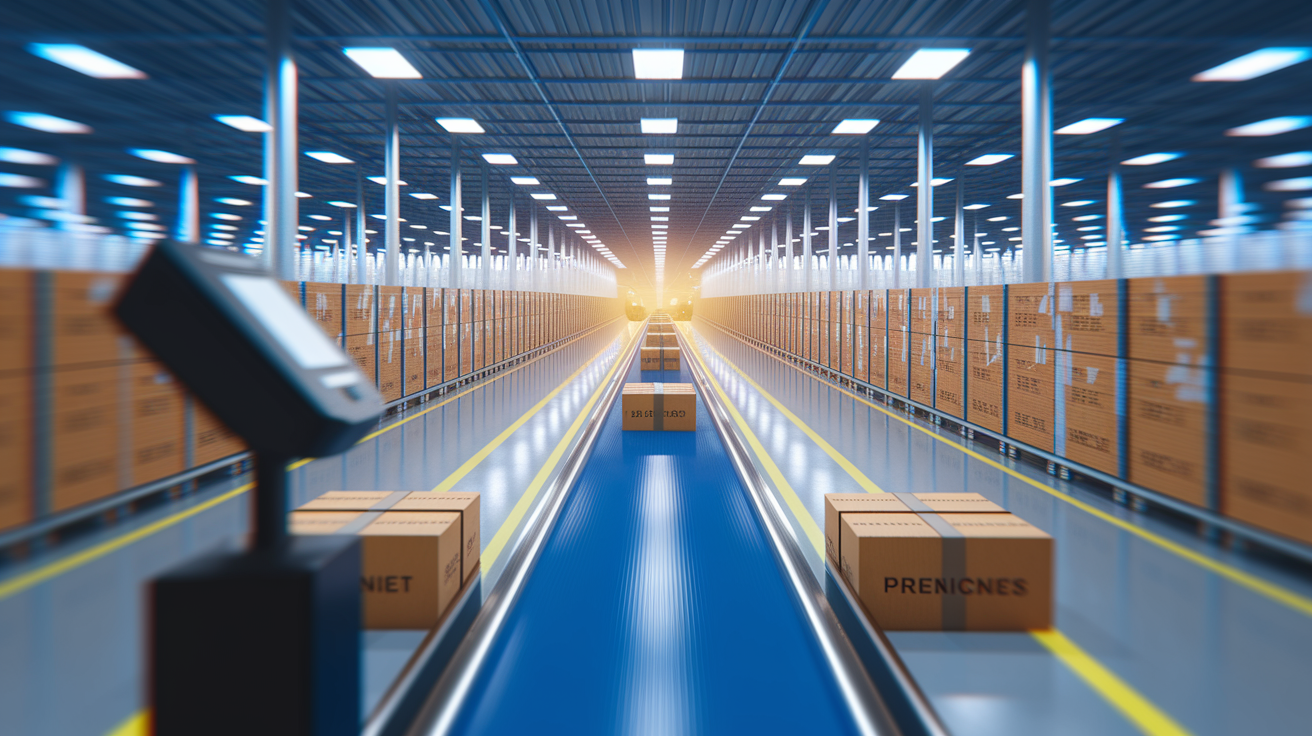
Ecommerce fulfillment is everything that happens between a customer clicking “buy” and a box landing on their porch. You’re receiving inventory from suppliers, storing it in organized bins or shelves, tracking what you’ve got across different locations, picking the right items when an order comes in, packing them so they don’t arrive crushed, and handing them off to a carrier. Each step directly affects how fast an order ships, whether the customer gets what they paid for, and if they’ll come back for round two.
A 2025 survey found that 61 percent of shoppers pick online channels over physical stores because it’s easier. That convenience vanishes the second an order shows up late, broken, or wrong. Good fulfillment cuts those failure points, lifts satisfaction scores, and lets you scale volume without hiring a new warehouse crew every quarter.
The workflow has five connected stages:
Receiving and storage – Inbound shipments get checked against purchase orders, logged into a warehouse management system, and slotted into bins or racks using layouts that keep picker travel short.
Order processing – When a customer checks out, the order moves from your ecommerce platform into an order management system that syncs with inventory software, confirms stock, applies rules like FIFO or batch control, and sends the order to whichever fulfillment location sits closest to the delivery address.
Picking and packing – Staff or robots grab items using batch, zone, or wave picking methods, scan each SKU to confirm accuracy, and pack orders with protective materials and optional inserts to cut damage and remind people whose box they just opened.
Shipping and delivery – Fulfillment software compares carriers by cost and speed, prints labels and tracking numbers, and hands parcels to the selected carrier. A network optimization system can crunch order data to figure out the cheapest warehouse placement and routing paths.
Returns and reverse logistics – Returned items come back through a branded portal, get inspected to see if they can go back on the shelf, and feed return reasons into inventory and product teams so you can fix upstream problems like bad sizing charts or photos that don’t match reality.
Every stage depends on clean data handoffs. When inventory counts fall out of sync between your store, your OMS, and your WMS, you oversell stock, let customers down, and burn hours fixing the mess manually.
Core Fulfilment Models for Online Retail
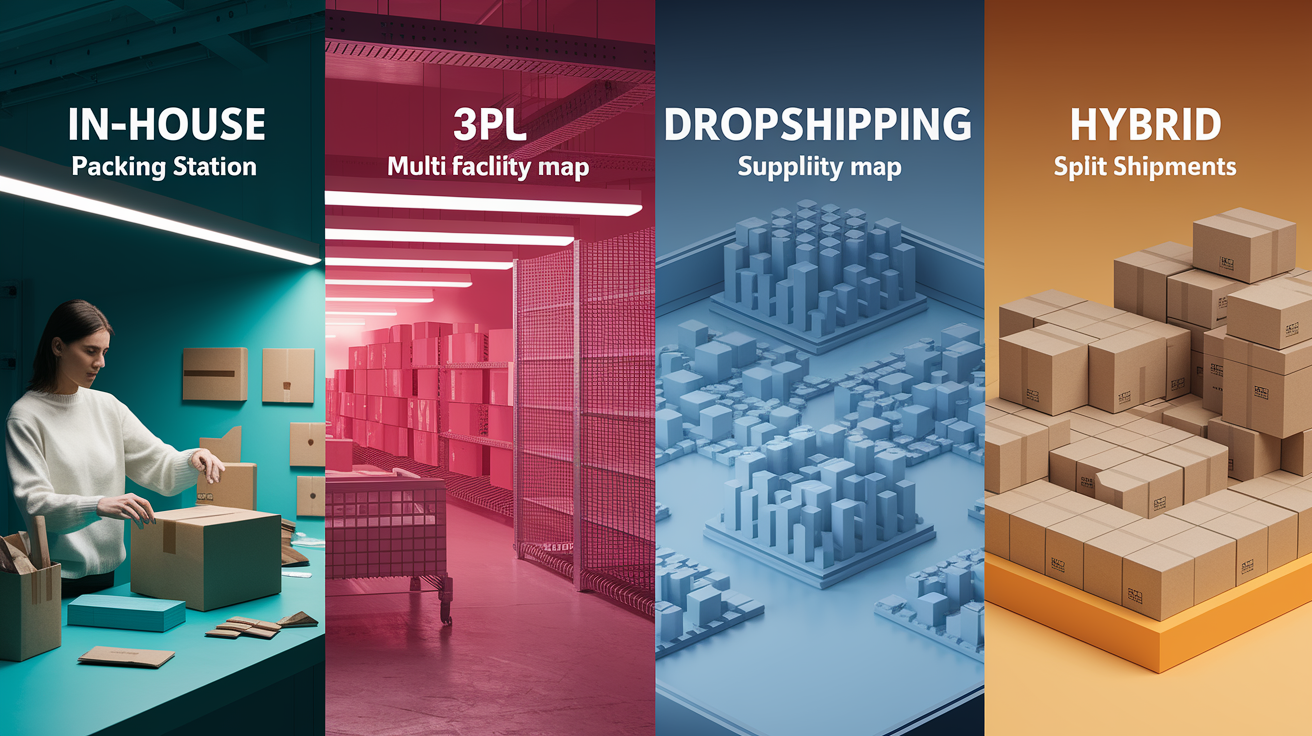
Online merchants pick from four main fulfillment structures, each swapping cost, control, and complexity in different ways. In-house fulfillment means you handle receiving, storage, picking, packing, and shipping from your own space with your own team. You get complete control over packaging, you can react instantly to order surges or product changes, and you don’t pay third-party fees. It works efficiently when monthly volume stays under about 100 orders. Scale past that and you’re hiring pickers, leasing bigger warehouse space, negotiating carrier contracts, and building or buying warehouse software, all of which pulls time and cash away from product development and marketing.
Third-party logistics providers take over the physical tasks. You ship inventory to their warehouses, and they handle receiving, storage, picking, packing, and carrier handoff. Most 3PLs run multiple facilities across regions, which shortens transit times and cuts shipping costs by putting stock closer to customer clusters. The catch is you get less visibility into real-time inventory, packing quality or branding can be inconsistent, and you’re dependent on their tech stack and customer service responsiveness. Industry guidance says consider a 3PL when you’re shipping at least five orders per day. Some large networks are built for businesses processing 3,000 or more orders each month.
Dropshipping outsources both production and fulfillment to suppliers, who ship directly to your customers under your brand. You carry no inventory and only pay when a sale happens, which keeps upfront capital low. The flip side is longer transit windows (delays of up to 10 days are normal), limited control over packaging and product quality, and thinner margins because suppliers take a bigger cut of each sale. Hybrid models mix elements of all three. You might fulfill best sellers and high-margin SKUs in-house to keep control, send core catalog items to a 3PL for speed and scale, and use dropshipping for long-tail or test products that don’t justify holding inventory.
Key advantages by model:
In-house: Full brand control, instant reaction time, no per-order third-party fees.
3PL: Geographic reach, scalable capacity, carrier volume discounts and pre-negotiated rates.
Dropshipping: Zero inventory risk, minimal upfront cost, catalog breadth without warehousing complexity.
Key Benefits of Effective Ecommerce Fulfilment
Solid fulfillment operations deliver measurable wins that directly hit revenue and customer lifetime value. Fast, accurate order processing shrinks the gap between purchase and delivery, which builds trust and pushes repeat orders. In a 2024 consumer survey, cost of delivery, transparency of shipping info, and flexibility of returns ranked as the top three delivery priorities. All three depend on how well your fulfillment setup performs.
Strong fulfillment systems also cut operational drag. When inventory data syncs automatically between your store, your OMS, and your warehouse software, you skip manual reconciliation, reduce overselling incidents, and free your team to focus on higher-value work like customer service escalations or product launches. Returns processing gets faster and cheaper when you use inspection workflows and branded return portals that move items back into sellable stock quickly or flag quality issues for supplier follow-up.
Core benefits of well-executed fulfillment:
Higher customer satisfaction and retention – 85 percent of shoppers say they won’t return to a retailer after one bad delivery experience.
Lower return rates – Accurate picking, secure packing, and clear product presentation cut damage and buyer remorse.
Improved cash flow – Faster inventory turns and lower shrinkage rates free working capital for growth investments.
Scalable capacity – Distributed networks and smart routing let you handle seasonal spikes or geographic expansion without doubling fixed costs.
Common Challenges in Ecommerce Fulfilment

Inventory inaccuracy stays one of the most stubborn fulfillment bottlenecks. When your WMS shows 47 units of a SKU but the physical shelf holds only 39, you either oversell and cancel orders or hold excess safety stock that locks up cash and warehouse space. Discrepancies pile up from receiving errors, mis-picks, unrecorded damages, and theft. Operators who skip regular cycle counts or don’t use barcode scanning at every touch point see shrinkage rates drift upward, eating margin and customer trust at the same time.
Carrier delays and service inconsistencies create a second layer of risk. You can control pick speed and pack quality inside your four walls, but once a parcel leaves your dock, delivery timing depends on the carrier’s network health, weather disruptions, peak-season overload, and last-mile contractor reliability. Customers don’t usually distinguish between your internal performance and carrier failures. They blame your brand when a package shows up three days late, even if your team shipped it on time. Tracking transparency and proactive exception alerts help, but they don’t eliminate the underlying dependency on external logistics partners.
Seasonal volume spikes and rapid growth expose capacity limits fast. Systems and processes that run smoothly at 1,000 orders per month often break at 3,000 or more without new infrastructure, additional labor, or a shift to distributed fulfillment. High operational costs during these transitions (overtime wages, expedited carrier rates, emergency warehouse space) squeeze margins right when revenue growth should be improving profitability. Planning ahead with flexible capacity agreements or hybrid fulfillment models softens the worst of these pain points, but a lot of operators wait until throughput issues become customer-facing problems before making changes.
Costs Involved in Ecommerce Fulfilment

Understanding the full cost structure of fulfillment helps you forecast margin accurately and compare providers on equal footing. Receiving fees cover the labor and system time to check inbound shipments against purchase orders, record quantities in your WMS, and move items into storage. Storage fees are usually charged per pallet, per bin, or per cubic foot per month, with additional long-term storage penalties for inventory that sits unsold past 90 or 180 days. Pick and pack fees reflect the labor and materials needed to grab items, scan for accuracy, pack securely, and print shipping labels. These fees often scale by item count per order or by order complexity, like kitting or custom inserts.
Packaging materials and carrier shipping costs add variable expenses that shift with order weight, dimensions, destination zone, and service speed. Providers with large networks and consolidated volume negotiate bulk carrier rates. Discounts can lower your per-parcel cost by 20 to 45 percent compared to retail shipping rates. Returns processing fees cover inbound inspection, restocking labor, and disposition decisions for damaged or unsellable items. Some providers also charge for inventory shrinkage when cycle counts reveal missing or damaged stock.
| Cost Type | Description | Typical Range |
|---|---|---|
| Receiving | Inbound check, WMS entry, slotting labor | $0.25–$0.75 per unit or $25–$50 per pallet |
| Storage | Monthly space rental per pallet, bin, or cubic foot | $5–$15 per pallet/month; long-term surcharges after 90–180 days |
| Pick & Pack | Labor, scanning, materials, label generation | $2–$5 per order + $0.30–$0.60 per additional item |
| Shipping | Carrier rates by weight, zone, speed; volume discounts apply | $4–$12 for standard parcel; expedited and oversized higher |
| Returns Processing | Inspection, restocking, or disposal labor | $2–$4 per returned item |
Pricing transparency varies a lot across providers. Some publish rate cards and offer online calculators that estimate per-product costs. Others require a sales call and custom quote. When you’re evaluating providers, ask for a complete fee schedule that includes receiving, storage, pick and pack, kitting or bundling, returns, shrinkage, and any specialized charges for hazardous materials, temperature control, or battery storage.
How to Choose an Ecommerce Fulfilment Provider

Selection starts with understanding your own operational thresholds and growth trajectory. If you’re fulfilling hundreds or thousands of orders per month, dealing with seasonal spikes that strain internal capacity, or expanding into new markets where shipping costs from a single warehouse eat margin, those are clear signals that a fulfillment partner makes sense. Match provider capabilities to your product constraints first. If you sell food, cosmetics, or supplements, confirm the provider holds relevant certifications like SQF, FDA registration, or Health Canada approval and can handle temperature-controlled storage if you need it.
Warehouse network and location matter directly for delivery speed and cost. A provider with facilities in California, Texas, Illinois, Georgia, and New Jersey can position inventory close to major population centers and reduce shipping zones, which lowers carrier fees and shortens transit windows. Ask each candidate for their on-time delivery rate (the percentage of orders delivered within the promised window) and their dock to stock speed, which measures how quickly received inventory becomes available for sale. Real-time inventory visibility across all locations, accessible through a unified dashboard or API, prevents overselling and lets you promise accurate delivery dates on your storefront.
Integration depth and software quality determine how much manual work you’ll carry every day. Confirm that the provider connects natively or via pre-built middleware with your ecommerce platform, order management system, and any marketplace channels you use. Returns integrations with tools like ReturnGo, Loop, AfterShip, or Narvar automate the reverse-logistics workflow and capture return reason data that feeds product and marketing improvements. Check the provider’s customer support structure: dedicated account managers, response time SLAs, and access to technical implementation support for ERP or custom integrations reduce friction during onboarding and ongoing operations.
Five core evaluation criteria to prioritize:
Warehouse network and proximity to your customer clusters, with measurable on-time delivery rates and zone reduction data.
Integration capabilities with your platform, OMS, and returns management stack.
Transparent pricing that includes all applicable fees and gives cost-per-order projections for your volume.
Scalability and flexibility to handle seasonal peaks, new product launches, and geographic expansion without penalty fees or capacity caps.
Specialized capabilities like kitting, branded packaging, cold-chain handling, or certifications for regulated product categories.
Integration With Ecommerce Platforms and Tools
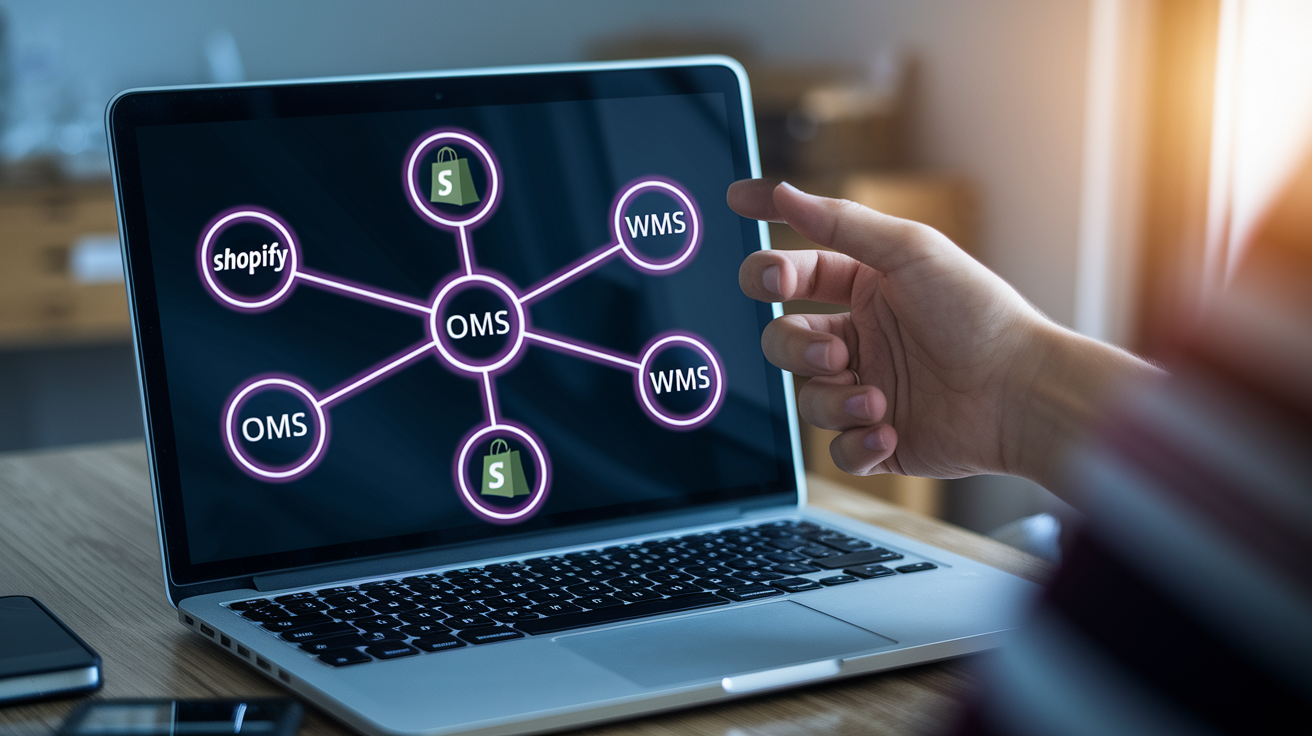
Smooth integration between your ecommerce platform, order management system, inventory software, and fulfillment provider cuts out manual data entry, reduces errors, and speeds order to ship time. When an order flows automatically from Shopify, WooCommerce, or BigCommerce into your provider’s WMS, inventory gets allocated in real time, pick lists are generated instantly, and tracking numbers sync back to your store without human intervention. This closed-loop automation prevents the most common failure modes: duplicate order processing, inventory drift between systems, and missing tracking updates that trigger customer service inquiries.
Most established fulfillment providers offer pre-built integrations or certified middleware for major platforms and marketplaces (Shopify, Amazon, eBay, Walmart, and others) plus order management systems like SellerCloud or ShipStation. Some providers support EDI connections and custom ERP integrations for larger merchants with legacy systems, often assigning dedicated technical resources to manage the implementation. Returns management integrations close the loop on reverse logistics. When a customer starts a return through Loop or AfterShip, the fulfillment provider gets the return authorization automatically, routes the inbound item to inspection, and updates inventory availability once the item passes quality checks and goes back to stock.
Best Practices for Streamlining Ecommerce Fulfilment

Building a high-performance fulfillment operation starts with accurate demand forecasting and inventory positioning. Use historical sales data, seasonality patterns, and promotional calendars to predict SKU-level demand by region, then spread inventory across your warehouse network to minimize shipping zones and carrier costs. One 3PL reported that customers using AI-driven inventory placement saw a 15 percent drop in shipping zones and a 16 percent jump in in-region fulfillment between 2024 and 2025, which translated directly into lower freight spend and faster delivery.
Operational improvements to prioritize:
Optimized slotting and zone layouts – Put fast-moving SKUs near packing stations and group complementary items to cut picker travel time and error rates.
Automated allocation rules – Set up FIFO (first-in, first-out) or FEFO (first-expired, first-out) logic in your WMS to rotate stock, minimize spoilage for perishables, and keep batch-lot traceability for regulated products.
Batch, zone, or wave picking – Pick picking strategies based on order volume and warehouse layout. Batch picking bundles multiple orders into a single pick run, zone picking assigns staff to dedicated areas, and wave picking schedules pick rounds at set intervals to balance labor and carrier cutoff times.
Secure, branded packaging – Use materials that protect products during transit, reduce dimensional weight where you can, and optionally include branded inserts or eco-friendly packaging to reinforce your identity and appeal to sustainability-conscious customers.
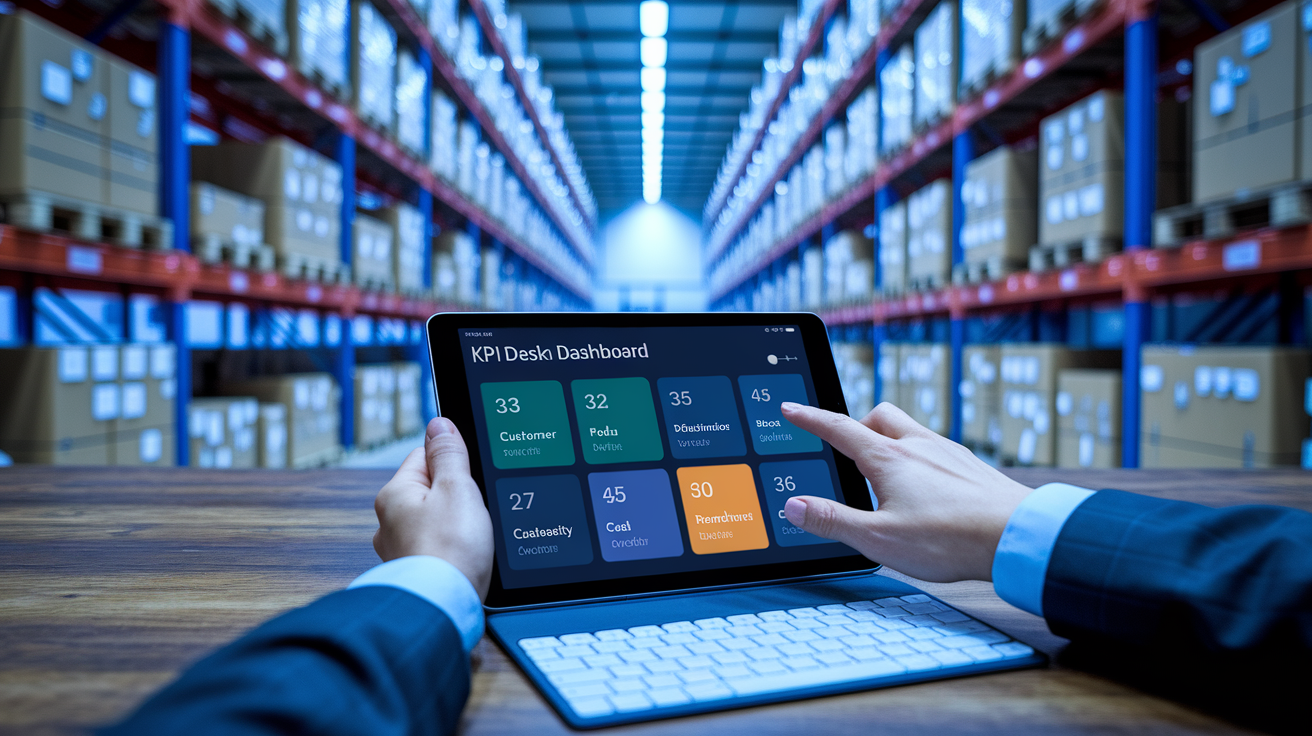
Regular performance audits and KPI tracking – Watch on-time delivery rate, dock to stock speed, inventory accuracy, returns rate, and order to ship time. Set improvement targets and review weekly to catch process drift early.
Returns analytics complete the feedback loop. Track return reasons by SKU, spot patterns like sizing issues or misleading product descriptions, and push that data to your merchandising and content teams. US online shoppers returned about 890 billion dollars in merchandise in 2024, which makes returns handling and prevention a real margin lever. Generous return policies improve conversion, but only if your reverse-logistics workflow is fast enough to restock items and resell them before they age out of demand.
Final Words
We jumped straight into the workflows—receiving, storing, picking, packing, and shipping—and mapped how in‑house, 3PL, and dropshipping trade control for cost.
We covered benefits, common bottlenecks, pricing components, integrations, and practical best practices. Next steps: audit your top 20 SKUs for packaging and weight, check warehouse locations against customer density, run a 2‑week carrier test, enable platform integrations, and set weekly fulfilment KPIs.
Getting ecommerce fulfilment right trims cost, speeds delivery, and lifts conversion. Start small, measure, iterate. You’ve got this.
FAQ
Q: What is eCommerce fulfilment?
A: Ecommerce fulfilment is the process of receiving, storing, managing inventory, picking, packing, shipping orders, and handling returns for online sales to ensure faster delivery and higher customer satisfaction.
Q: What are the 4 types of e-commerce?
A: The four types of e-commerce are B2C (business to consumer), B2B (business to business), C2C (consumer to consumer), and C2B (consumer to business), differing by buyer-seller relationship and scale.
Q: How much money do you need to start an eCommerce?
A: The money needed to start an eCommerce store depends on model: $500–$2,000 for a lean dropship or basic store; $5,000–$50,000 for stocked inventory, branding, and initial ads. Estimate product, fulfillment, and ad costs first.
Q: What is shein fulfillment in the USA?
A: Shein fulfillment in the USA describes Shein’s use of US warehouses and fulfillment centers to store inventory, pick-and-pack orders, and speed shipping plus returns for American customers.