

What if offering “free returns” is quietly eating your margin?
Every change to who pays return shipping, the return window, or refund timing hits transportation bills, warehouse space, and resale value.
This post shows how those policy levers shift parcel volume, labor, and inventory risk, who gains or loses, and three small moves you can run in 2 weeks: audit top 20 SKUs, model free vs paid returns, and pilot a hybrid for high-AOV orders.
How Changes to Return Shipping Policies Impact Reverse Logistics Costs
Every tweak to who covers return shipping, how long customers can send things back, or which refund method gets offered immediately hits transportation budgets, warehouse schedules, and inventory write-downs. When a retailer stops charging for return labels and eats the cost instead, parcel volume can jump 15 to 25 percent. Carrier invoices climb. You need more dock capacity to handle the influx. Tighten a return window from 90 days to 30 and you’ll cut temporary holding costs, plus reduce the chance that returned stock sits until it’s out of season or worthless. But expect complaints to spike and repeat purchases to take a hit.
Policy variables dictate the volume, speed, and mess of reverse flow. Free returns with a generous 60-day window mean customers return stuff whenever they feel like it instead of batching trips, which drives up per-parcel shipping costs and spreads labor demand unevenly across the month. Refund method matters. Immediate refunds to the original payment method force you to finish inspection, restocking, and system updates faster to dodge negative cash-flow gaps. Store credit buys time but still ties up warehouse space and handling hours.
Each policy lever touches multiple cost buckets at once. Shortening return windows cuts warehousing days and obsolescence risk but concentrates receiving labor into a narrower time frame, sometimes requiring temps or overtime. Charging restocking fees or making customers pay return shipping lowers inbound parcel counts and sorting overhead, yet those same friction points can kill conversion rates and customer lifetime value, wiping out any reverse-logistics savings.
Major cost drivers created or intensified by return shipping policy updates:
- Transportation expenses: pickup charges, return-label postage, and consolidation routing costs scale directly with return volume and carrier service-level requirements.
- Labor hours: unpacking, inspecting, photographing damage, entering disposition codes, repackaging, and moving items to resale or liquidation bins all expand as return counts rise.
- Warehouse occupancy: returns eat up staging space, often in prime dock areas, and longer return windows mean more SKUs sitting in limbo instead of back on sellable shelves.
- Restocking and system reconciliation: inventory adjustments, quality-control checks, and ERP updates add administrative overhead per returned unit.
- Disposition losses: products that can’t be resold at full price need markdowns, refurbishment labor, or disposal fees, all amplified by higher return rates.
- Seasonal capacity stress: holiday and post-holiday surges in returns often run 40 to 60 percent above baseline, forcing costly short-term capacity expansions when policy changes amplify volume spikes.
Core Cost Components Within Reverse Logistics
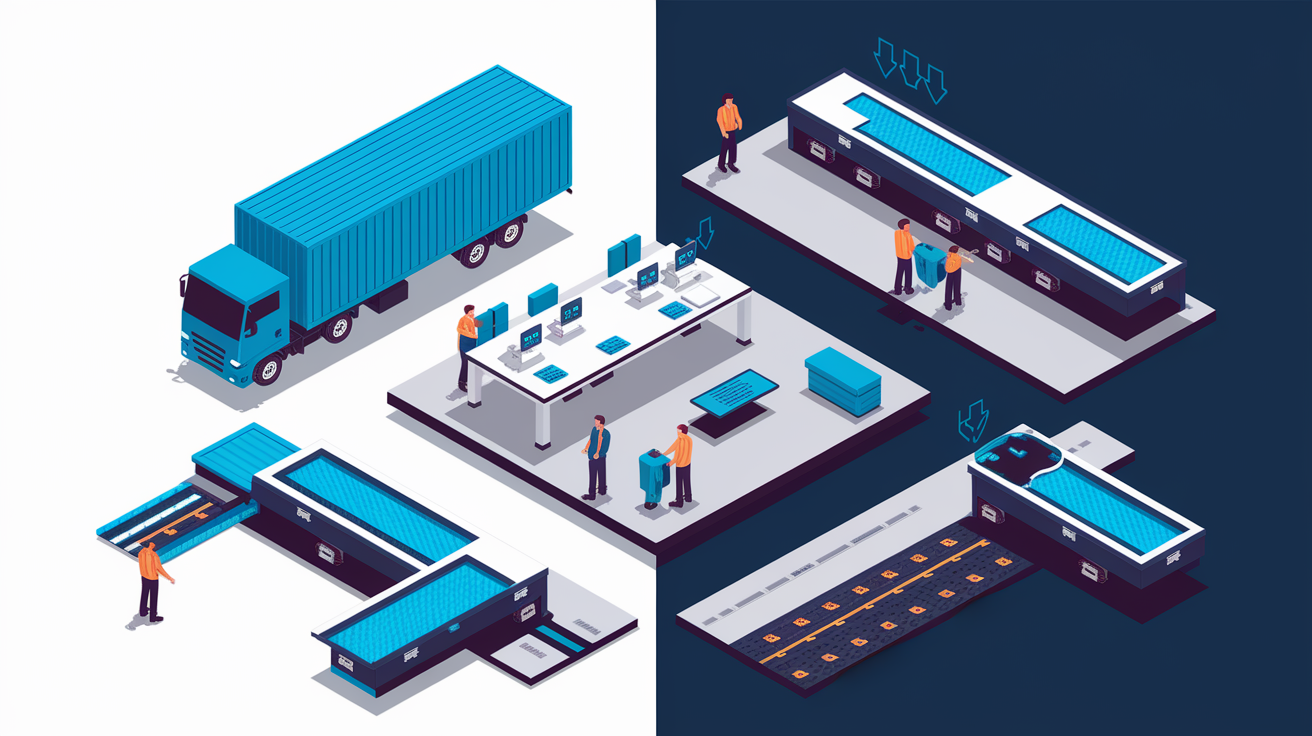
Reverse logistics splits into six repeating cost categories: inbound transportation to bring the item back, receiving and initial sorting at the dock, detailed inspection to determine condition, reconditioning or repackaging to make the item resellable, disposition routing to resale/refurbishment/liquidation channels, and disposal or recycling for unsellable goods. Each stage has its own labor rate, equipment depreciation, consumable material cost, and system overhead.
Transportation typically eats 20 to 30 percent of total reverse-logistics spend. That share climbs when policies push single-item returns instead of consolidated batches, or when expedited return labels promise faster refunds. Processing and labor accounts for another 25 to 35 percent. Electronics require functional testing and data-wipe procedures that apparel doesn’t.
Warehousing and inventory carrying costs include space rental, utilities, insurance, and opportunity cost of capital stuck in returned stock. This bucket grows when return windows stretch or when disposition decisions lag, leaving pallets of unsorted returns hogging high-value floor space. Restocking expenses cover the labor and system transactions needed to move an item from “returned” status back to “available,” plus any repackaging material, new barcodes, or condition tags.
Disposition losses hurt margin directly. Not every return goes back on the shelf at full price. Some items require discounts of 15 to 50 percent to clear, others flow to liquidators who pay 5 to 20 cents on the dollar, and a small percentage ends up as landfill or recycling cost. The faster and more accurately you grade returns and route them to the right channel, the higher the recovery rate and the lower the net loss per returned unit.
Free vs. Paid Return Models and Their Financial Outcomes

Free returns paid by the seller increase return frequency because customers face zero friction for sending items back, often trying multiple sizes or colors with the intent to keep only one. That behavior lifts transportation and processing costs proportionally. If baseline return rate is 15 percent and free shipping pushes it to 22 percent, you absorb roughly 50 percent more parcels to receive, inspect, and restock. Customer satisfaction and conversion rates typically rise under free-return programs, but the incremental reverse-logistics expense can exceed the revenue lift unless recovery rates and resale speed improve in parallel.
Paid returns, where the customer covers return-label cost or pays a flat restocking fee, suppress casual returns and reduce parcel volume by 30 to 40 percent compared to free models. Lower return counts translate directly into lower carrier invoices, less dock congestion, and reduced labor hours for sorting and inspection. The tradeoff is measurable: conversion rates may drop 2 to 5 percentage points, and repeat-purchase rates can decline if customers see the policy as punitive, especially in categories like apparel where fit uncertainty is high.
Hybrid models set conditions. Free returns above a certain order value, or free returns exchanged for store credit but paid returns for refunds. These tiered structures require clear communication and system logic to enforce rules at checkout and in the returns portal, but they let you steer high-value customers toward frictionless returns while dampening low-margin, high-return behavior.
| Model | Cost Impact | Consumer Behavior Effect |
|---|---|---|
| Free Returns (Seller Pays) | +40–60% transport/processing cost vs. paid; higher labor and warehouse demand | Increases trial purchases and multi-item orders; raises return rate 30–50% |
| Paid Returns (Customer Pays) | –30–40% return volume; lower carrier and labor expense | Suppresses casual returns; may reduce conversion 2–5 points and repeat rate |
| Hybrid (Conditional Free) | Moderate increase in processing cost; controllable via thresholds | Rewards high-AOV customers; nudges credit over refund; balances satisfaction and cost |
Operational Implications of Return Policy Adjustments

Shortening a return window from 60 days to 30 compresses the timeline for customers to ship items back, which concentrates receiving activity into fewer calendar days and forces warehouse managers to staff dock doors and inspection stations more heavily during that peak window. If the window shortens too much, you risk a last-minute surge as customers rush to meet the deadline, creating bottlenecks at receiving and slowing down the inspection queue. The upside is that items spend less time in returns limbo and get back to sellable status faster, cutting holding cost and obsolescence risk.
Changing carrier partnerships or return-label terms affects dock operations and system integrations. Switching from a single national carrier to a multi-carrier network improves cost per label through rate shopping but requires warehouse staff to handle different label formats, tracking protocols, and pickup schedules. If the new policy mandates QR-code returns instead of pre-printed labels, the returns portal and receiving workflow must support barcode scanning and real-time manifest updates, adding technology overhead but cutting paper and shipping-material waste.
Packaging requirements embedded in return policies also shape warehouse workload. Policies that require original packaging for a full refund push customers to keep boxes and inserts, which lowers repackaging labor at the warehouse but increases customer friction and may raise the number of disputed refunds when packaging is damaged or discarded. Return-ready packaging like resealable mailers or boxes with peel-and-stick return labels streamlines the customer experience and reduces warehouse repack time, but the upfront material cost per shipment is 10 to 20 percent higher than standard cartons.
Industry Benchmarks and Cost Ranges for Return Handling
Processing a single return typically costs between $10 and $20 when all labor, transportation, warehousing, and system overhead is included, though that figure varies widely by industry and product type. Apparel returns cluster toward the higher end at $15 to $25 per item because of inspection time for wear and damage, folding and repackaging labor, and the need to update size and color inventory in real time. Electronics returns can hit $30 to $50 per unit when functional testing, data wiping, and cosmetic grading are required before the item can be resold.
Transportation alone accounts for $3 to $8 of the per-return cost, depending on parcel weight, distance, and carrier service level. Labor for receiving, inspection, and restocking adds another $4 to $10, with the upper range reflecting complex SKUs that need photography, multi-point quality checks, or repair triage. Warehousing and disposition contribute the remaining $3 to $7 per return.
Key benchmark datapoints you can use to evaluate reverse-logistics efficiency:
- Average cost per return: $10–$20 for general merchandise; $15–$25 for apparel; $30–$50 for electronics with testing requirements.
- Return rate as percentage of orders: 8–10% in brick-and-mortar channels; 20–30% for online apparel; 15–20% for home goods and general ecommerce.
- Resale rate: 60–75% of returns restocked at full price; 15–25% sold at discount; 5–15% liquidated or disposed.
- Processing cycle time: 2–5 days from dock receipt to disposition decision for simple SKUs; 5–10 days for items requiring testing or repair evaluation.
- Transportation cost per return parcel: $3–$8 depending on zone, weight, and negotiated carrier rates.
Strategies to Reduce Reverse Logistics Costs After Policy Updates

Consolidating returns through centralized processing hubs instead of scattering them across multiple forward-fulfillment centers reduces per-unit handling cost by 15 to 25 percent. A dedicated returns facility allows specialized labor training, batch processing of similar SKUs, and purpose-built inspection stations with integrated disposition software, all of which speed throughput and improve recovery rates. The tradeoff is transportation cost to move returns from regional drop-off points to the central hub, which you can offset by negotiating hub-and-spoke carrier agreements or co-locating the returns center near a major freight terminal.
Encouraging exchanges instead of refunds preserves revenue and cuts net reverse-logistics cost because the replacement item ships through existing forward-logistics workflows and the returned item often bypasses certain inspection steps when the customer has already committed to a substitute. Offering a small discount, free expedited shipping, or loyalty points on exchanges can shift 20 to 30 percent of would-be refunds into exchanges, which lowers the number of items that must be restocked, discounted, or liquidated.
Dynamic return policies that adjust based on SKU, customer history, or order value let you apply stricter rules to high-return, low-margin segments while keeping friction-free returns for high-value customers. Rule engines in returns-management software flag patterns such as serial returners or wardrobing behavior and apply conditional policies automatically, reducing abuse-driven costs without harming the experience for most customers.
Six practical steps to lower reverse-logistics expenses after a policy change:
- Negotiate volume-tiered carrier contracts that reduce per-label cost as return parcel count rises, locking in predictable transportation rates even when policy adjustments increase return frequency.
- Deploy returns automation software to enforce policy rules, generate pre-paid labels, collect reason codes, and route returns to the correct disposition channel without manual customer-service or warehouse intervention.
- Set up in-store or partner drop-off networks to eliminate outbound parcel shipping cost and consolidate returns into bulk transfers from drop-off hubs to processing centers.
- Use AI-powered triage and grading tools that analyze return reason codes, product condition photos, and historical resale data to make faster, more accurate disposition decisions and lift recovery rates by 10 to 15 percent.
- Offer tiered refund methods like instant store credit at full value, bank refund in 5–7 days at full value minus return shipping, or partial refund for returns outside the standard window to steer customers toward lower-cost settlement paths.
- Track and act on root-cause data by flagging SKUs with abnormal return rates and adjusting product descriptions, images, size guides, or sourcing to reduce returns at the source instead of managing the cost downstream.
Technology Solutions That Support Return Policy Changes

Automated returns management systems enforce policy rules at the customer touchpoint, generate carrier-compliant shipping labels, collect structured return-reason data, and create warehouse receiving tasks without manual intervention. These platforms integrate with order-management, inventory, and warehouse-management systems to update stock levels in real time, trigger refunds or exchanges automatically when disposition is complete, and provide dashboards that track return volume, processing time, and recovery rates by SKU and policy variant.
AI-powered disposition engines analyze product condition, return reason, historical resale velocity, and current inventory levels to recommend the best path within seconds of receiving dock scan. Restock as new, mark down and clear, send to refurbishment, route to liquidation, or dispose. That speed reduces warehouse holding time and improves capital efficiency by moving returned inventory back into sellable channels faster. Early adopters report 12 to 18 percent improvements in recovery rate and 20 to 30 percent reductions in days-in-returns inventory after deploying machine-learning-based triage.
Returns routing and carrier selection algorithms embedded in logistics platforms compare real-time carrier rates, transit times, and service-level requirements to assign each return the lowest-cost label that still meets policy commitments such as refund speed or customer convenience. When policy changes increase return volume or shift geographic distribution, these tools automatically rebalance carrier mix and consolidate pickups to avoid cost spikes, delivering 8 to 15 percent transportation savings versus static carrier assignments.
| Technology | Primary Function | Cost Impact |
|---|---|---|
| Automated RMA & Label Generation | Self-service portal; policy enforcement; instant carrier label creation | Reduces customer-service labor 40–60%; cuts manual label cost and errors |
| AI Disposition & Grading Engine | Analyzes condition, reason codes, resale data; recommends restock/liquidate path | Lifts recovery rate 10–15%; shortens holding time 20–30% |
| Returns Routing & Carrier Optimization | Real-time rate shopping; consolidation logic; multi-carrier orchestration | Lowers transportation cost per return 8–15%; smooths dock receiving flow |
Final Words
In the action, updated return shipping rules shift costs across transportation, handling, restocking, and disposition. Who pays, return windows, and refund method change carrier spend, labor hours, and liquidation rates.
Run a quick SKU-cost audit, test free vs paid models, and lean on routing and RMA tools to cut touch time and carrier spend.
Understanding how returns shipping policy updates affect reverse logistics costs gives you a clear set of trade-offs to tune policy, staffing, and tech. Do small tests now and protect margin — you’ll see the impact fast.
FAQ
Q: What are the factors affecting reverse logistics?
A: The factors affecting reverse logistics include who pays return shipping, return window length, product type and condition, carrier choice, inspection and repackaging rules, refund method, and return volume — all drive transport, labor, and warehousing costs.
Q: What are the problems associated with reverse logistics or product returns, and what are the top five challenges of reverse logistics today?
A: The problems associated with reverse logistics and the top five challenges are high transport costs, labor-intensive processing, complex inspection and refurbishment, inventory valuation and disposition losses, and return fraud or abuse — all pressure margin and operations.
Q: How to reduce reverse logistics?
A: You can reduce reverse logistics costs by tightening return windows, using conditional paid returns, automating RMA triage, routing returns to nearest disposition, consolidating carriers, and partnering for refurbishment or liquidation to cut processing and transport spend.