

What if you promised customers no surprise customs fees, then paid the bill yourself?
Delivered Duty Paid (DDP) does exactly that: the seller handles and pays all duties, taxes, and customs so the buyer just receives the goods.
That boosts conversion and removes checkout friction, but it forces sellers to model landed cost, tie up cash, and absorb customs risk.
This post explains how DDP works, who benefits, and the practical next steps sellers should take before offering it, from cost modeling to choosing customs partners.
What Is DDP (Delivered Duty Paid) in Shipping?
Delivered Duty Paid (DDP) is an Incoterm where the seller takes on maximum responsibility for an international shipment. Under DDP, the seller covers all costs and manages every step from the origin warehouse to the buyer’s delivery location. That includes export formalities, international freight, import duties, taxes, VAT or GST, and customs clearance. The buyer? Their only job is to unload the goods once they arrive.
DDP is the most buyer-friendly Incoterm out there. No surprise fees. No customs nightmares. The seller quotes a single landed price that covers everything, so the buyer knows exactly what they’re paying upfront. Risk stays with the seller until the shipment shows up and is ready for unloading at the agreed address.
What the seller handles under DDP:
- Arranging and paying for export clearance and all documentation
- Covering all freight charges (air, sea, road, rail) from origin to destination
- Managing import customs clearance and filing in the destination country
- Paying import duties, tariffs, VAT, GST, and any government taxes
- Delivering goods to the buyer’s location and providing proof of delivery
Responsibilities of Buyer and Seller Under DDP

The defining feature of DDP? The extreme imbalance of responsibility. The seller carries the shipment door to door. The buyer just receives and unloads. This works well when the seller has customs know-how, local logistics contacts, or uses a fulfillment provider that can handle multi-country compliance.
Sellers have to prepare export documentation, book carriers, arrange insurance, and file customs entries in a foreign country where they might not even have a legal entity. They also pay duties and taxes upfront, tying up working capital. If customs assesses higher charges than expected, the seller eats the cost. Most DDP deals don’t allow for retroactive billing.
Buyers get predictable costs and almost no administrative work. They don’t need to understand HS codes, tariff schedules, or customs brokerage. They receive the goods like it’s a domestic shipment, unload them, and inspect for damage or issues under the purchase agreement.
Typical responsibilities breakdown under DDP:
- Seller: pays export duties, origin handling, main carriage, destination customs clearance, import duties and VAT, and final delivery
- Buyer: unloads the shipment at delivery, provides site access, and inspects the goods on arrival
- Seller: arranges all freight and insurance, files electronic customs entries, and provides proof of delivery
- Buyer: pays the agreed purchase price, accepts the goods if they meet contract terms, and handles any internal warehousing after unloading
- Seller: bears risk of loss or damage during export, transit, customs clearance, and delivery
- Buyer: assumes risk only after the goods are delivered and available for unloading at the named destination
Cost Components Included in DDP Shipping
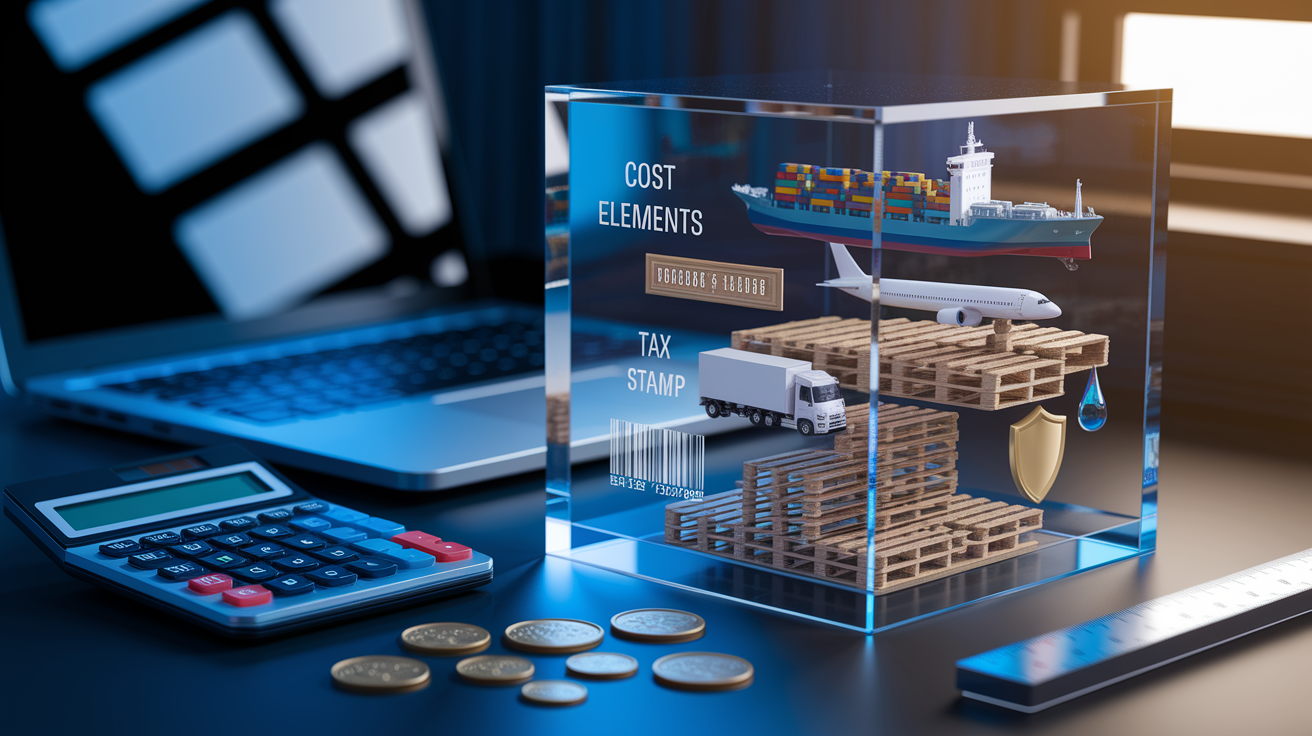
DDP pricing bundles every cross-border charge into a single seller obligation. For the seller, that means modeling a complex landed cost. Hard freight costs, variable government fees, and operational charges can shift based on commodity classification, country of origin, or seasonal carrier surcharges. Sellers usually add a margin or buffer to cover unknowns, which is why DDP quotes often look higher than alternative Incoterms where the buyer pays duties separately.
Forecasting DDP costs accurately requires knowledge of destination-country tariff schedules, VAT or GST rates, and any anti-dumping duties that apply to the product category. Sellers also have to account for dimensional weight rules, fuel surcharges, and demurrage or storage fees if customs holds the shipment for inspection. Miss these variables and margin erodes fast. Or worse, the seller has to request additional payment mid-shipment, damaging buyer trust.
| Cost Component | Description |
|---|---|
| Product Value | The invoice value of the goods being shipped, which forms the basis for ad-valorem duties. |
| Export Customs & Documentation | Filing fees, certificates of origin, and any export licenses required by the origin country. |
| International Freight | Air, ocean, road, or rail charges from origin port or facility to destination port or facility. |
| Shipping Insurance | Coverage for loss or damage in transit, optional but commonly included under DDP to protect seller liability. |
| Import Duties & Tariffs | Charges assessed by the destination country based on HS code, product value, and applicable tariff schedules. |
| VAT / GST / Sales Tax | Value-added or goods-and-services tax collected by customs, typically 15 to 20 percent of the duty-inclusive value. |
| Final-Mile Delivery & Handling | Domestic trucking, courier fees, and any storage or demurrage if delivery is delayed. |
Advantages and Disadvantages of DDP
DDP appeals to buyers who want simplicity and sellers who want control over the customer experience. When duties and taxes show up as a single line item or get folded into the product price, conversion rates usually improve. Buyers don’t hit sticker shock at delivery. One merchant reported nearly a 25 percent revenue lift after switching from DDU to DDP for cross-border orders.
Advantages of DDP:
- Buyer gets a fully landed price with no surprise fees at delivery
- Faster customs clearance because duties and taxes are prepaid, reducing holds and inspections
- Lower cart abandonment and fewer customer service disputes over unexpected charges
- Seller controls carrier selection, routing, and customs strategy, ensuring consistent delivery performance
- Works well for high-average-order-value shipments where absorbing duties is financially viable
Disadvantages of DDP:
- Seller bears full cost and risk of customs delays, unexpected duties, storage fees, and regulatory changes
- Complex to scale across multiple destination countries with varying tariff and VAT structures
- Higher upfront capital requirements because seller pays duties and taxes before collecting full payment from buyer
- Limited transparency for buyers who can’t see the breakdown of freight versus duties, leading to potential mistrust
- Seller must navigate foreign customs regulations and may need local legal entities, customs bonds, or importer-of-record designations
DDP works best when the seller has deep logistics expertise, reliable local customs brokers, or partners with a fulfillment provider that automates duty calculation and customs filing. For sellers new to cross-border shipping or dealing with price-sensitive buyers, DDP can erode margins faster than expected if duty estimates miss the mark or if customs holds trigger demurrage charges.
Risk Transfer in DDP Shipping

Under most Incoterms, risk transfers early in the journey when goods are handed to a carrier or cross a port threshold. DDP reverses that pattern. The seller keeps risk throughout export, main carriage, import clearance, and final delivery. Risk only transfers to the buyer when the shipment arrives at the named location and is ready for unloading.
This extended liability period means sellers must carry insurance all the way to the destination address and stay responsible for any loss, damage, or theft during customs inspections or domestic trucking. If a shipment gets damaged in the buyer’s country before delivery, the seller files the claim, arranges replacement or repair, and absorbs any time-value costs. Buyers appreciate this protection, but sellers must price in the risk or accept occasional unrecoverable losses when claims fall below deductibles or when carriers dispute liability.
Comparing DDP With Other Incoterms
DDP sits at the far end of seller responsibility. Understanding how it differs from DAP, CIF, and FOB helps sellers and buyers choose the right term for their shipment profile and risk tolerance.
DDP vs DAP: DAP (Delivered At Place) requires the seller to deliver goods to a named destination, but the buyer pays import duties, taxes, and customs clearance. DDP pushes those costs and formalities onto the seller. If predictable landed cost matters more than minimizing seller obligation, choose DDP. If the buyer has customs expertise or wants to control duty classification, DAP is cleaner.
DDP vs CIF: CIF (Cost, Insurance, and Freight) covers shipment to the destination port, with the seller paying freight and insurance. The buyer then handles unloading, import customs, duties, and onward transport. Risk transfers when goods pass the ship’s rail at the origin port under CIF, but under DDP risk stays with the seller until final delivery. CIF suits bulk commodity trades. DDP suits finished-goods e-commerce.
DDP vs FOB: FOB (Free On Board) transfers risk and responsibility to the buyer as soon as goods are loaded onto the vessel at the origin port. The buyer pays all freight, insurance, duties, and delivery costs. FOB gives buyers maximum control and visibility, but requires them to manage international logistics and customs. DDP inverts that entirely, making it the opposite end of the Incoterms spectrum.
DDP vs DDU: DDU (Delivered Duty Unpaid) is an older term now replaced by DAP in Incoterms 2020. Under DDU, the seller delivered to destination but the buyer paid duties and taxes. Sellers using DDU faced high rates of refused or returned shipments when buyers were surprised by duty bills. DDP eliminates that failure mode by prepaying everything.
| Incoterm | Who Pays Duties | Risk Transfer Point | Import Clearance Responsibility |
|---|---|---|---|
| DDP | Seller | Delivery at buyer’s location | Seller |
| DAP | Buyer | Delivery at named place (before unloading) | Buyer |
| CIF | Buyer | Goods pass ship’s rail at origin port | Buyer |
| FOB | Buyer | Goods loaded on vessel at origin port | Buyer |
Practical Examples of DDP in Real Shipping Scenarios

An online retailer in Germany sells ergonomic office chairs to customers across the United States. The retailer chooses DDP because U.S. buyers expect a simple checkout with no hidden fees. The retailer partners with a fulfillment provider that calculates duties and VAT at checkout, prepays import charges via a customs bond, and delivers directly to residential addresses. Buyers see a single total price, conversion improves, and customer service tickets drop because no one receives a surprise bill from the carrier.
A machinery manufacturer in South Korea ships CNC milling equipment to a factory in Poland. The buyer is a small operation with no customs department, so the contract specifies DDP delivery to the factory loading dock. The seller arranges ocean freight, files Polish customs entries through a local broker, pays the applicable 3.7 percent machinery duty and 23 percent VAT, and coordinates final trucking. When the equipment arrives, the buyer’s team unloads it and begins installation immediately. No paperwork or payment delays.
A fashion brand sources apparel from suppliers in China and Vietnam and sells to customers across Europe, the U.K., Canada, and Australia. The brand negotiates DDP terms with suppliers, ensuring all samples and production shipments arrive duty-paid at the brand’s fulfillment centers. By making the supplier the importer of record for inbound inventory, the brand avoids establishing legal entities in every origin country and simplifies accounting. The brand then re-exports finished goods under its own DDP terms to end customers, controlling the buyer experience and protecting margin by quoting accurate landed costs at checkout.
Final Words
In the action, DDP means the seller covers duties, taxes, import clearance, and final delivery, buyer mostly receives the goods. We also listed seller obligations so you can see where costs and risks sit.
The article then compared buyer vs seller duties, cost components, pros and cons, risk transfer timing, and how DDP stacks up against DAP, CIF, and FOB.
If you’re considering ddp shipping, start small: test a few routes, track landed cost closely, and it can simplify cross-border sales and improve buyer experience.
FAQ
Q: What does DDP mean in shipping?
A: DDP (Delivered Duty Paid) means the seller covers transport, duties, taxes, insurance, and import clearance, delivering goods to the buyer’s named place while the buyer only unloads and accepts delivery.
Q: What is better, DDP or DAP?
A: Whether DDP or DAP is better depends on who handles import costs and risk. DDP favors buyers wanting all‑in pricing; DAP favors sellers who don’t want import duties or customs responsibility.
Q: Who pays freight on DDP terms?
A: On DDP terms the seller pays freight and all transport-related costs until the goods reach the buyer’s named place. The buyer typically only handles unloading and local receipt unless agreed otherwise.
Q: Does USPS allow DDP?
A: USPS can be used for DDP shipments if the shipper arranges payment of duties and customs clearance before import. Confirm required paperwork and broker services with USPS and the destination country.