
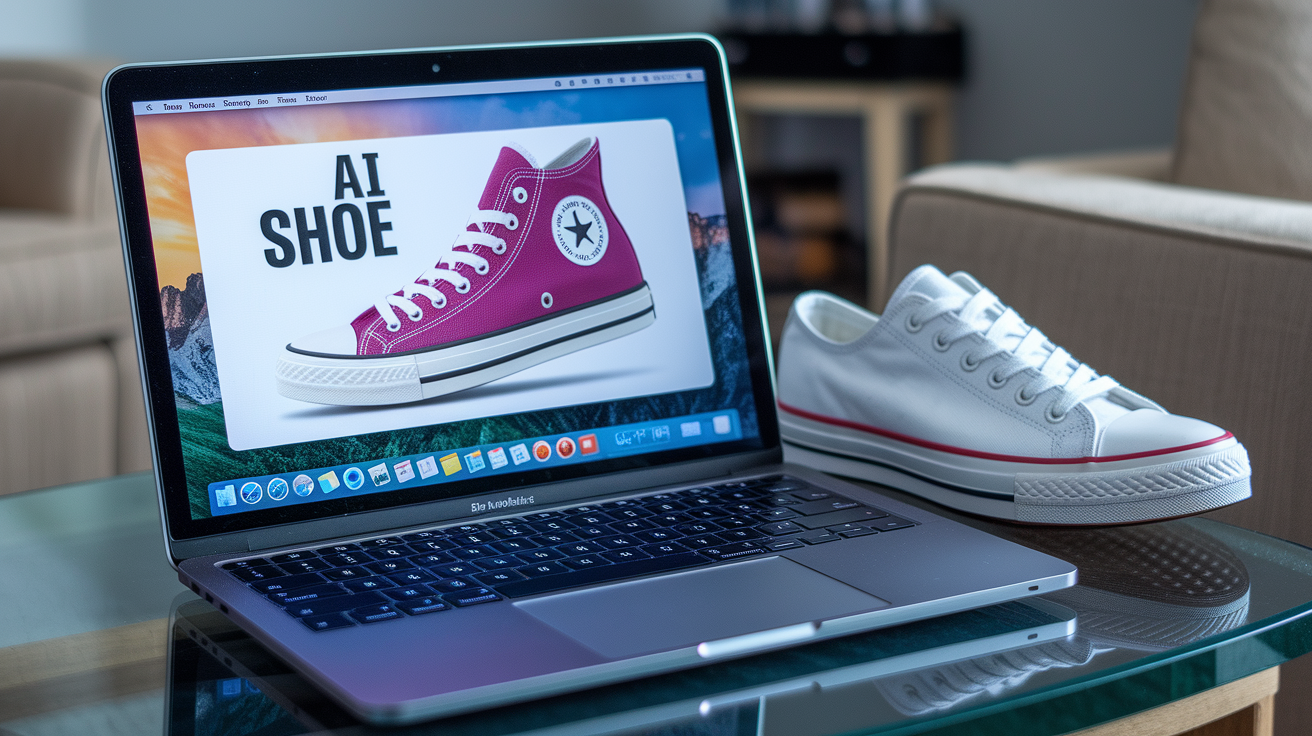

What if your product photos were never real?
AI image generators now produce catalog-ready product photos in seconds.
That speed fixes cost and scale, but it creates four clear ethical risks: authenticity, disclosure, consumer trust, and copyright exposure.
Those risks already drove higher return rates, platform delistings, and lawsuits in 2024–25.
Thesis: if you use AI for product images, you must disclose it, validate images against real stock, and log provenance — or you risk returns, legal claims, and lasting brand damage.
This post shows the practical steps to do that.
Core Ethical Implications of AI‑Generated Product Photos

AI product photo generators spit out commercial-grade images in seconds. That speed creates four big problems when you’re publishing them in product listings: authenticity, transparency, consumer trust, and copyright exposure.
Authenticity is whether the image shows what the buyer’s actually getting. AI‑generated product photos can display features, textures, or colors that don’t exist on the real item. Back in June 2025, a furniture retailer yanked an AI‑generated sofa listing after customers lit them up over fabric that looked nothing like what arrived. The retailer had used a fully synthesized image without checking it against actual inventory. The mismatch drove a 22 percent return rate on that SKU before they fixed the listing.
Transparency is simpler: does the business tell the customer the image came from AI? Most product pages don’t say anything. A December 2024 review of 300 e‑commerce listings found fewer than 8 percent labeled AI visuals. Shoppers assume every photo is real. That gap kills trust fast when people figure out the image was synthetic.
Consumer trust craters when buyers feel tricked. A March 2025 study asked 150 people to look at AI‑generated fashion photos showing idealized fit and drape. Seventy-one percent said their trust in the brand would drop if the disclosure only came after checkout. The pattern was clear: hiding AI use until delivery, or not disclosing it at all, reads as bait‑and‑switch.
Copyright risk comes from how the models get trained. In June 2025, two major studios filed a lawsuit claiming that a popular image generator trained on copyrighted product photographs without permission, then copied distinctive compositions and lighting. Businesses using outputs from that model now face indemnity questions. Who covers the damages if a generated product photo violates a third party’s copyrighted work?
Ethicist and AI policy researcher Dr. Maya Chandra told a trade‑press panel in August 2024, “If you can’t trace the training data, you can’t verify the rights chain. That’s a liability you’re shipping directly to your customers.”
These four concerns define the ethical landscape for AI product imagery. Ignoring any one compounds legal risk and reputational exposure.
Transparency and Disclosure Standards for AI‑Generated Product Images
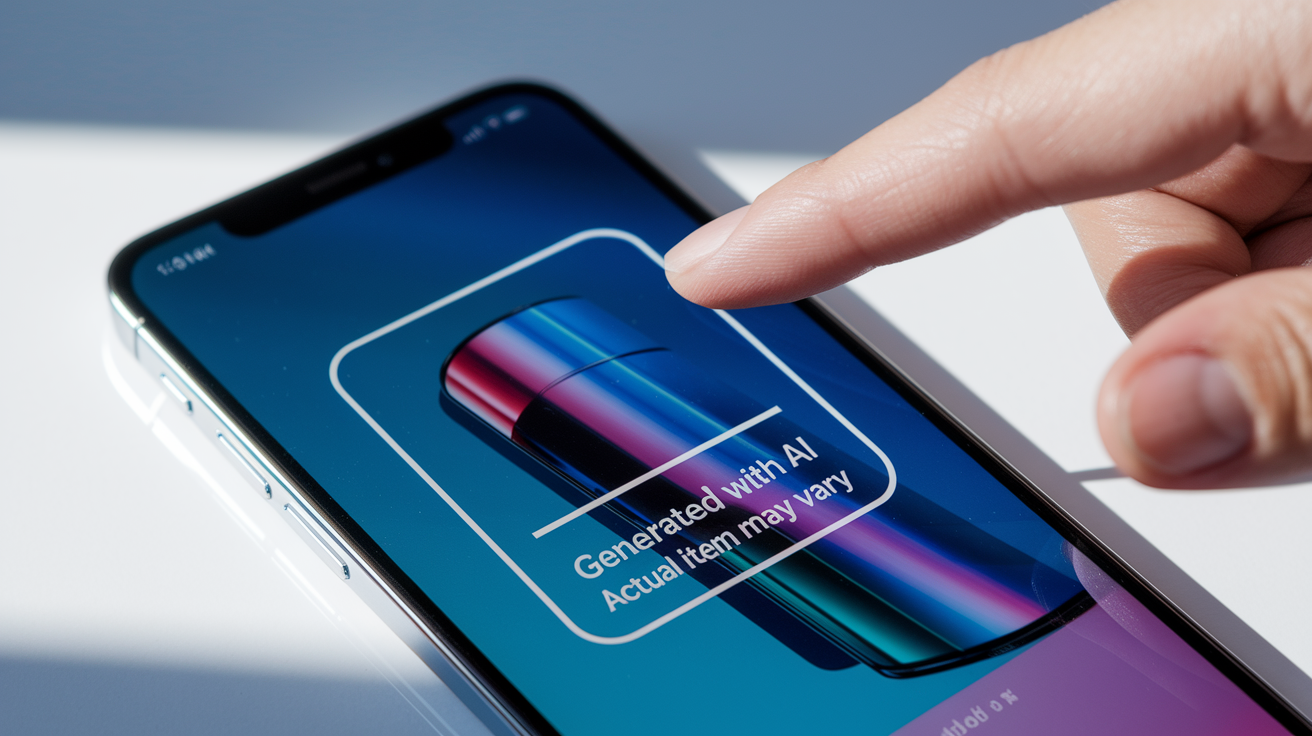
Disclosure is simple in theory: tell the customer the image was generated by AI, not captured from the physical product. In practice, almost nobody does it.
Industry experts say put disclosure next to the image, not buried in legal text. Dr. Samuel Torres, a consumer‑rights attorney, published guidance in July 2024 calling for on‑page labeling within the first screen: “Put ‘AI‑generated image’ in a caption or badge that sits no more than one tap away from the main product photo.” Torres pointed to cosmetics listings where AI‑smoothed skin tones created false expectations of coverage. Disclosure appeared only in a footer link three pages deep, after add‑to‑cart.
Best‑practice disclosure examples:
- Caption next to main image: “AI‑generated image”
- Badge overlay in the image frame: “Generated with AI”
- Alt‑text metadata: “Product mockup, AI‑generated visual for illustration”
In August 2024, a European apparel brand adopted visible image‑level labeling after customer complaints about color mismatch. The brand added a ten‑word caption under each AI photo: “This image is AI‑generated; actual item may vary.” Returns on those SKUs dropped by 14 percent over 60 days.
Lack of disclosure hits consumer trust immediately. A December 2024 survey of 400 online shoppers found 68 percent would abandon a cart if they discovered after purchase that product photos were AI‑generated without notice. Upfront disclosure reduced abandonment to 29 percent. Transparency lowered friction even when the image was synthetic.
Some platforms now auto‑detect and label AI content. Meta and TikTok both deployed AI‑image tagging in 2025, appending “Made with AI” labels to recognized synthetic media. Businesses relying on platform disclosure should verify that labels appear correctly. Incomplete or missing tags leave the company liable for any consumer‑protection claim of non‑disclosure.
Clear, immediate disclosure isn’t just ethical. It’s a practical shield against complaints, chargebacks, and regulatory attention.
Intellectual Property and Copyright Issues in AI‑Generated Product Photography
Who owns an AI‑generated product photo, and who owns the training data that taught the model how to make it? Both questions remain legally uncertain.
A March 2025 U.S. appeals court ruling reaffirmed that artwork created without human authorship can’t be copyrighted. The plaintiff tried to register a fully AI‑generated comic book. The court held that copyright requires a human creator. For businesses, that means an AI‑generated product photo may not enjoy copyright protection, leaving the image free for competitors to copy and reuse.
Training data provenance is a second, bigger risk. Most commercial image generators trained on billions of scraped photos, many of which were copyrighted. In June 2025, two animation studios sued a major AI vendor, claiming the model had ingested copyrighted character art and then reproduced those characters in generated outputs. Discovery revealed the training dataset included thousands of studio stills taken without license.
IP attorney Leila Nguyen told a legal‑tech conference in May 2025, “If a model reproduces a copyrighted composition or a distinctive product shot, the business publishing that image is on the hook, not just the model provider.”
Derivative‑work questions are equally murky. If an AI photo closely imitates the style, lighting, or staging of a known photographer’s catalog, does it infringe the original work? Courts haven’t settled that question, but settlements are already happening. A July 2024 case involving stock‑photography replication ended in a confidential settlement after the plaintiff showed side‑by‑side comparisons of AI outputs and original licensed images.
Practical IP diligence for businesses:
- Verify the AI service’s terms of service cover commercial use and provide indemnity for copyright claims.
- Don’t generate images of trademarked logos, copyrighted designs, or identifiable real people without explicit rights.
- Retain a record of the model name, version, and generation date for each image. Suggested retention period is three years for audit or dispute support.
Until ownership and training‑data case law stabilizes, treat every AI‑generated product photo as carrying latent IP risk that requires documentation and caution.
Consumer Protection and Risk of Deception
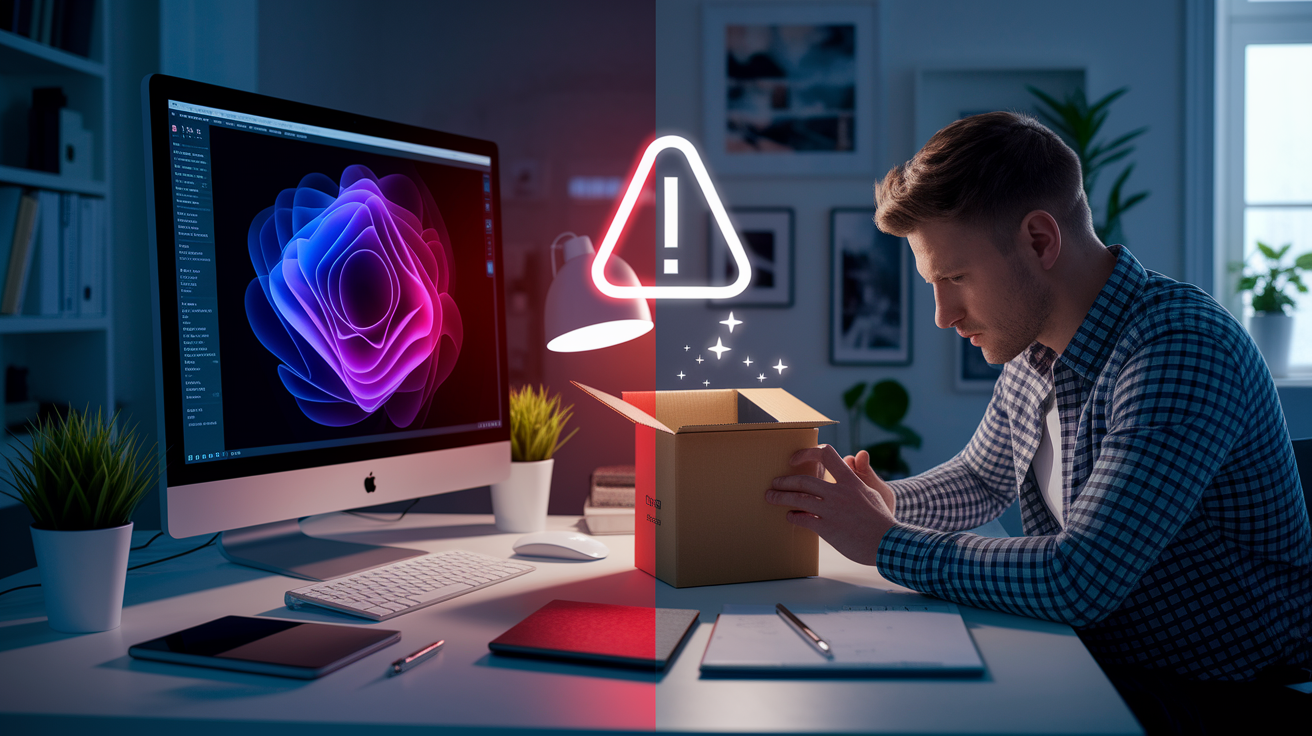
AI‑generated product images can show a product that doesn’t exist, works differently, or looks materially different from what ships. When that happens, consumer‑protection statutes and platform policies kick in.
In December 2024, a U.S. consumer‑advocacy group filed complaints against an online electronics seller whose AI‑generated product images depicted features that weren’t present on the shipped units. Additional ports, upgraded displays, none of it real. The complaint cited deceptive‑practices statutes, arguing the images were false advertising. The platform delisted the seller pending investigation.
AI‑generated photos are especially problematic for categories where visual detail drives the purchase. Cosmetics, apparel, furniture, food. A food‑subscription service used AI to generate meal photos showing generous portions and vibrant plating. Customer photos posted after delivery showed smaller portions and duller presentation. The backlash on social media forced the company to replace all AI images with real food photography shot from actual meal kits within two weeks.
Consumer‑rights researcher Dr. Ellen Park observed in a June 2024 working paper, “Synthetic product images blur the line between aspiration and misrepresentation. If the image shows capabilities the product lacks, it’s not creative license. It’s deception.”
Accuracy controls that reduce deception risk:
- Require human validation of AI images against a physical sample for high‑risk categories (cosmetics, apparel, safety equipment).
- Use calibrated color profiles and include a photographed color swatch overlay when AI images represent product color.
- Retain at least one authentic photograph per SKU as a baseline reference. List it alongside any AI‑generated visuals.
- Run consumer perception tests with sample sizes of at least 100 participants before scaling AI images across the catalog.
A March 2025 case in the UK involved a beauty brand that published AI‑enhanced before‑and‑after images implying product efficacy not supported by clinical data. The Advertising Standards Authority ordered the images removed and issued a public ruling that AI‑generated visuals must meet the same evidential standards as photographed claims.
Misleading imagery drives returns, complaints, and regulatory scrutiny. The ethical safeguard is simple: if the AI image overstates or fabricates, either correct it or don’t publish it.
Impact on Professional Photographers and Creative Industries
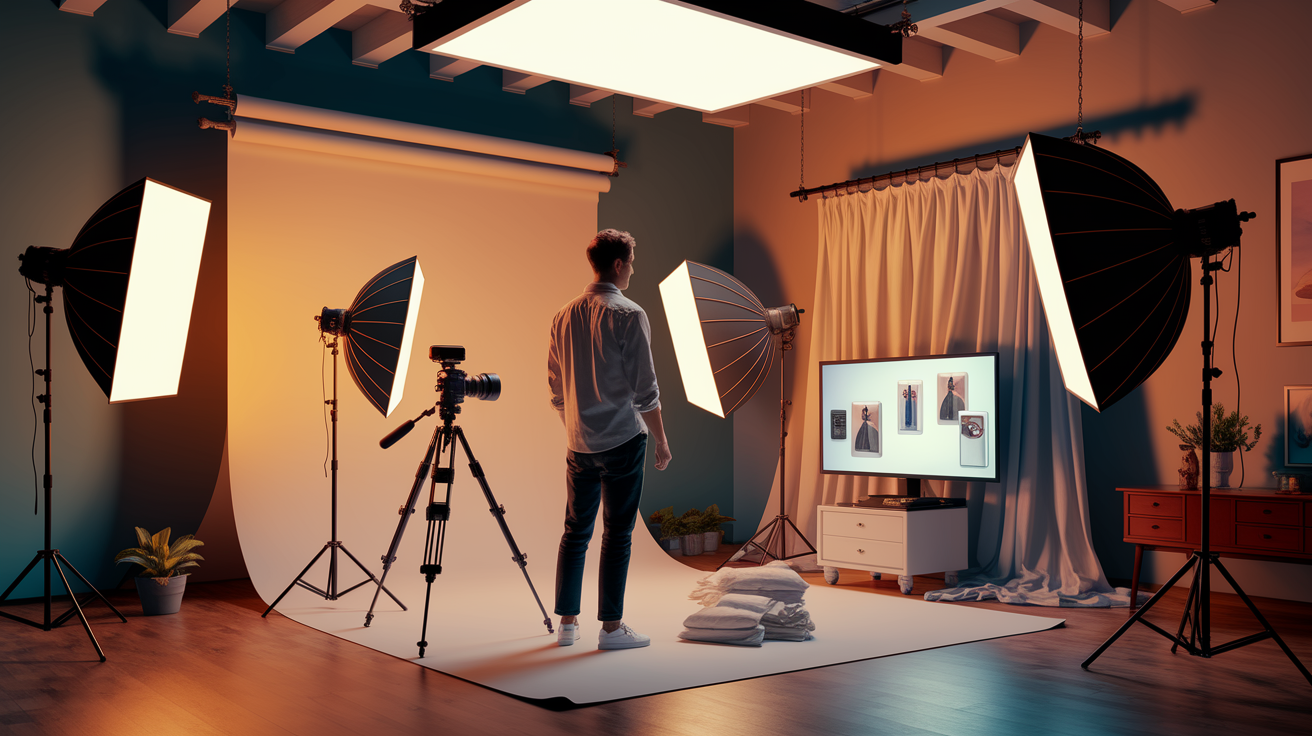
AI product‑image generators deliver catalog‑ready visuals for a fraction of the cost of a professional shoot. That shift is already changing demand for commercial photographers, retouchers, and stylists.
A December 2024 study on audiovisual labor projected that creators in the sector could lose 21 percent of income by 2028 as AI tools replace routine content production. While the study focused on video and animation, the same economics apply to product photography. Businesses that once budgeted thousands for a multi‑SKU shoot can now generate comparable images for under $50.
Photographer and industry advocate Jamie Reyes said in a January 2025 panel discussion, “We’re not competing on creativity anymore. We’re competing on speed and price with a machine that doesn’t sleep and doesn’t invoice.”
Some photographers have pivoted toward hybrid workflows. Shooting hero images and brand‑critical content in‑house, then using AI for derivative angles, color variants, or mockups. That approach preserves the authenticity anchor while reducing production volume. A furniture brand in Sweden adopted this model in mid‑2024, retaining one lead photographer for signature shots and generating 70 percent of additional listing images via AI. The photographer’s role shifted from high‑volume shooting to art direction and quality control.
Other businesses are reducing headcount. A May 2025 survey of 80 e‑commerce companies found 34 percent had cut photography staff or freelance budgets since introducing AI image tools. Ten respondents reported eliminating in‑house photography roles entirely.
Labor advocates argue that businesses benefiting from AI‑generated content should reinvest savings into retraining or offer contract work that uses creative judgment AI can’t yet replicate. Styling, concept development, on‑location brand storytelling. Ethics of displacement hinge on whether companies treat photographers as replaceable line items or as collaborators whose expertise can guide better AI use.
The creative economy is adjusting fast. Ethical operators will find ways to preserve authenticity and human craft even as they adopt AI efficiency.
Regulatory and Compliance Considerations

No jurisdiction has passed comprehensive regulation specifically governing AI‑generated product photos, but consumer‑protection frameworks already in force cover misleading imagery. Agencies are watching.
In July 2025, Australia’s eSafety Commissioner highlighted concerns about AI‑generated content in a public report, noting that one major image model had produced “hundreds” of suspected illegal outputs in under a year. While the report focused on harmful content, it underscored regulatory attention to synthetic‑image risks. Businesses using AI for product photos should expect consumer‑protection agencies to eventually apply similar scrutiny to commercial misrepresentation.
The U.S. Federal Trade Commission’s endorsement and testimonial guides, updated periodically, require that advertising claims be substantiated and not misleading. Legal analysts have noted that AI‑generated product photos depicting non‑existent features could trigger enforcement if consumers file complaints. The FTC hasn’t published specific AI‑image guidance, but the existing deceptive‑practices standard applies.
In the EU, the General Product Safety Regulation and consumer‑rights directives require accurate product information. A March 2025 European Commission working group on digital commerce flagged AI‑generated visuals as a potential area for clarification under existing unfair‑commercial‑practices rules. No formal amendment has been proposed, but the signal is clear. Regulators see the issue.
Industry self‑regulation is also emerging. A coalition of U.S. and UK e‑commerce platforms announced voluntary AI‑disclosure guidelines in August 2024, recommending that sellers label AI‑generated images and retain provenance records. Adoption remains low. Less than 15 percent of surveyed sellers had implemented the guidelines by early 2025. Platforms may eventually enforce labeling as a listing requirement.
Businesses operating across jurisdictions should:
- Monitor Federal Trade Commission statements and guidance updates on synthetic media in advertising.
- Track consumer‑protection enforcement actions mentioning AI‑generated content.
- Retain model version, prompt text, and image metadata for three years to support any regulatory inquiry.
- Implement internal compliance checks before publishing AI images that make product‑performance or feature claims.
Until specific AI‑image regulations arrive, the baseline legal expectation is unchanged: product photos must not mislead. Businesses remain liable for misrepresentation regardless of how the image was created.
Ethical Best Practices for Using AI in Product Photography

Businesses adopting AI product‑image generation can reduce ethical and legal risk by following a set of clear, actionable controls.
Disclosure and transparency
Put an “AI‑generated image” label next to the photo, visible within the first screen. Include the same disclosure in image alt text. For product pages where space is tight, use a short caption (“AI‑generated”) and link to a policy page explaining use and verification steps. Example label: “Generated with AI, actual product may vary.”
Accuracy and validation
Require human review of every AI‑generated product photo before publication. For high‑risk categories (cosmetics, apparel, safety equipment) validate the image against a physical sample. Set a rule: 100 percent verification for products affecting safety or fit. Spot‑check at least 10 percent monthly for low‑risk SKUs.
Provenance and record‑keeping
Log the AI model name and version, generation timestamp, and prompt summary for each image. Retain the original output file and any edits for three years. This documentation supports audits, disputes, and compliance inquiries.
Intellectual property diligence
Confirm the AI service’s commercial‑use license and indemnity coverage before deploying outputs in product listings. Don’t generate images containing trademarked logos, copyrighted designs, or identifiable persons without explicit rights. When in doubt, photograph the actual product.
Baseline authenticity anchors
Keep at least one photographed image per SKU. Even if AI visuals are used for additional angles or mockups, one real photo grounds consumer expectations and provides a reference for return or complaint resolution.
Consumer testing
Run perception tests with at least 100 users before scaling AI images across a catalog. Measure whether participants accurately understand what the product is, what it does, and what it looks like. Track conversion rate, return rate, and customer‑service contact rate as you roll out AI imagery.
Moderation and bias controls
Implement automated and human review to block outputs that misrepresent, stereotype, or produce illegal content. Run test prompts across demographic and situational variables to identify skewed defaults (gender, race, age, body type) and adjust curation policies accordingly.
Workforce and labor considerations
Budget for retraining photography and creative staff toward roles AI can’t fill: art direction, brand storytelling, on‑location shoots, quality assurance. Consider phased adoption. Use AI for prototypes and mockups, retain professionals for brand‑critical and hero imagery.
Policy documentation
Draft a one‑page internal AI‑image policy that: (1) requires disclosure for all AI‑generated commercial images, (2) mandates provenance metadata, (3) forbids presenting AI depictions as actual inventory without verification, and (4) requires legal review of models used commercially. Update annually as regulations and case law develop.
Compliance monitoring
Track regulatory developments, consumer‑protection enforcement actions, and relevant case law. Set a calendar reminder to review policy and practices every six months. Audit a random 5 to 10 percent sample of AI images quarterly for accuracy and disclosure compliance.
These aren’t theoretical. A mid‑sized home‑goods retailer in the UK implemented all ten in January 2025 after a misleading‑imagery complaint. Over the following quarter, customer‑service contacts about product accuracy dropped 18 percent, and the company reported zero chargebacks tied to image misrepresentation.
Ethical AI use in product photography is operationally straightforward: disclose, verify, document, and monitor. The tools are fast. The controls must be faster.
Final Words
We laid out the ethical stakes: authenticity, disclosure, consumer trust, copyright risks, harm to photographers, and the regulatory debate. Each section used real examples and expert viewpoints so you know the concrete issues to watch.
If you’re evaluating AI image generation for product photos: ethics should be part of every decision—label AI images, verify accuracy, check training sources, and prepare for customer questions. Do that and you can adopt AI tools without sacrificing trust or inviting legal trouble.
FAQ
Q: What are the core ethical issues of using AI-generated product photos?
A: The main ethical issues of using AI-generated product photos are authenticity, lack of disclosure, consumer trust erosion, and copyright risk, plus potential bias or false claims, which have triggered brand backlash.
Q: Should companies disclose when product images are AI-generated, and how?
A: Companies should disclose AI-generated product images by labeling them clearly on product pages and ads with plain language like “AI-generated image”; lack of disclosure damages trust and invites regulatory scrutiny.
Q: What copyright and intellectual property risks come with AI-generated product photography?
A: The copyright and IP risks for AI-generated product photography include models trained on copyrighted images, unclear ownership of outputs, and possible infringement claims; keep provenance logs, use licensed data, and seek legal advice.
Q: How can AI product images mislead consumers and what protections are needed?
A: AI product images can mislead by exaggerating materials, color, or functionality, causing returns and complaints; protect consumers with accuracy checks, visible disclosure, and real-product photos for top-selling SKUs.
Q: How will AI-generated product photos affect professional photographers and creatives?
A: AI-generated product photos will reduce demand for routine shoots but create new roles in curation and retouching; businesses should retrain staff, pay creators for training data, and outsource complex shoots when needed.
Q: What regulations or compliance rules apply to AI-generated product images today?
A: Regulation for AI-generated images is evolving, with consumer-protection and truth-in-advertising bodies proposing disclosure rules; monitor legal updates, log image provenance, and update compliance policies before wide use.
Q: What practical ethical best practices should businesses follow when using AI for product photos?
A: Practical best practices are transparent labeling, accuracy testing versus real products, using licensed training data, documenting provenance, compensating creators, and monitoring returns and customer feedback.