


Think you need an agency or a 40‑page deck to make a usable marketing plan? You don’t. These free marketing plan templates (Word, Excel, PDF, Google) give ready sections: executive summary, audience, goals, strategy, budget, timeline, KPIs, and pre-filled examples for small businesses, startups, nonprofits, and enterprises. The point: skip the blank page, get a measurable plan fast, and avoid wasted spend. Pick the format that fits how you work, download the right variation, and fill the top three fields to have an actionable plan in under an hour.
Downloadable Marketing Plan Templates

Each template comes in four formats. Download whichever one fits how you actually work, whether that’s solo editing in Word, crunching numbers in Excel, sharing a clean PDF, or collaborating live in Google Docs.
What you’ll find in each format:
- Word (.docx) – Editable sections, formatted headers, placeholder text for every part, paragraph blocks for narrative strategy, print-ready layouts.
- Excel (.xlsx) – Budget worksheets with formulas, pivot tables for tracking spend, channel calculators, quarterly grids, KPI dashboards with conditional formatting, sample data showing how reporting structures work.
- PDF – Clean, read-only format that’s mobile-friendly, annotatable for team review, ready to share with stakeholders who don’t need editing rights.
- Google Docs / Sheets – Cloud-based, real-time multi-user editing, comment threads, version history, instant link sharing without attachments.
Same core sections in every format: executive summary, target audience, goals, strategies, budget, timeline, metrics. Switch between file types without losing structure.
Template Variations for Different Business Types

Marketing plans aren’t one size fits all. A three-person startup moves fast and tests distribution experiments. A 200-employee enterprise coordinates across product lines, regions, departments. These templates include structural variations for four business types.
Small Business Marketing Plan Template
Small businesses run lean. Tight budgets, small teams. This version prioritizes resource allocation and low-cost tactics. Six-month cycle with monthly milestones, focused on local reach, direct-response campaigns, clear cost-per-acquisition targets.
- Budget section shows $1,000 to $5,000 monthly brackets with prioritized channel recommendations.
- Simplified persona framework. Two primary customer segments instead of sprawling multi-persona maps.
- Tactical checklist for free and low-cost channels: Google Business Profile, local partnerships, email list building, referral programs, community events.
- Quarterly goals emphasizing revenue per marketing dollar and customer retention.
- One-page executive summary. Solo owners or partnerships don’t need board-level reporting.
Startup Marketing Plan Template
Startups chase go-to-market speed and product-market fit validation over long-term brand campaigns. This template structures planning around launch phases, early adopter acquisition, iterative testing that aligns with fundraising timelines.
- Launch-phase roadmap: pre-launch (90 days), launch (30 days), post-launch growth (180 days).
- Hypothesis-driven goals. Each tactic includes a testable assumption, success threshold, pivot criteria.
- Channel experiment tracker with test budgets, learning objectives, decision gates for scaling or pausing.
- Positioning and messaging section built for iteration. Fields to document messaging tests and audience response.
- Investor-friendly metrics: CAC, LTV, payback period, growth rate. Formatted to support fundraising decks.
Nonprofit Marketing Plan Template
Nonprofits balance mission communication with donor acquisition, volunteer engagement, program awareness. This version structures the plan around multiple stakeholder groups. Storytelling, impact reporting, community partnerships over transactional marketing.
- Mission-aligned messaging framework tying every campaign to organizational values and beneficiary outcomes.
- Multi-audience segmentation: donors (one-time, recurring, major gifts), volunteers, beneficiaries, community partners.
- Campaign calendar tied to giving seasons, awareness days, grant cycles, volunteer recruitment windows.
- Budget section separating donated services, in-kind contributions, cash expenses to reflect nonprofit accounting.
- Impact measurement tracking both marketing KPIs (reach, engagement, conversions) and mission KPIs (funds raised, volunteers activated, beneficiaries served).
Enterprise Marketing Plan Template
Enterprises coordinate marketing across business units, geographies, product lines, functional teams. This template supports matrix planning with cross-departmental dependencies, portfolio budgeting, stakeholder alignment processes.
- Multi-tier goal structure cascading from corporate objectives to business unit targets to campaign KPIs.
- Resource allocation by division, region, product line. Consolidated roll-up views and variance tracking.
- Campaign portfolio calendar showing dependencies, shared assets, cross-functional launch gates.
- Governance section documenting approval workflows, brand compliance checkpoints, legal and regulatory review.
- Executive dashboard summarizing performance across all initiatives. Drill-down into individual campaigns and channels.
Pre-Filled Marketing Plan Examples

Seeing a completed plan clarifies what good looks like. These three examples show how different businesses structure their plans, populate each section, connect tactics to measurable outcomes.
Example 1: E-commerce Brand (6-Month Campaign)
An online home goods retailer planning a summer product launch. Q2 and Q3, targeting millennial homeowners with a $5,000 monthly budget.
| Section | Example Entry | Purpose |
|---|---|---|
| Executive Summary | “Launch the Coastal Collection to capture 15% of summer home décor searches, targeting 25 to 40 year old homeowners in coastal metro areas with $60,000+ household income.” | States campaign focus, audience, success threshold in one sentence. |
| Target Audience | “Sarah, 34, designer in San Diego, shops Instagram and Pinterest, values sustainable materials, pain point: struggles to find coastal décor that isn’t cliché.” | Creates a specific persona with demographic, psychographic, behavioral details. |
| SMART Goal | “Generate $180,000 in Coastal Collection revenue by August 31, maintaining a 3.2% site conversion rate and CAC below $75.” | Quantifies expected outcome, timeline, efficiency threshold. |
| Channel Strategy | “Paid Social 40% ($2,000/month): Instagram feed and Stories, Pinterest promoted pins. Paid Search 30% ($1,500): Google Shopping for ‘coastal throw pillows’ and related high-intent terms.” | Allocates budget across channels and specifies platform tactics. |
| Timeline | “May 1 to 15: creative production. May 16 to 31: campaign setup and soft launch. June 1: full launch. Weekly optimization through August 31.” | Sequences activities and identifies key dates for execution and review. |
| KPIs | “Weekly: CTR >1.5%, CPC <$0.85. Monthly: ROAS >3.5:1, email list growth +500 subscribers, return rate <8%." | Defines leading indicators (CTR, CPC) and lagging indicators (ROAS, revenue) with thresholds. |
Example 2: B2B SaaS (12-Month Plan)
A project management software company targeting mid-market teams. Annual plan with $180,000 budget focused on inbound lead generation and product-led growth.
| Section | Example Entry | Purpose |
|---|---|---|
| Executive Summary | “Acquire 1,200 qualified leads and convert 120 to paying accounts (10% close rate), targeting operations managers at 50 to 500 employee companies in professional services.” | Quantifies pipeline and revenue goals tied to a specific buyer role and company size. |
| Target Audience | “Mike, 42, operations manager at a 120-person consulting firm, frustrated by scattered project tracking in email and spreadsheets, searches ‘project management software for consultants.'” | Describes the buyer’s role, pain point, search behavior to guide content and keyword strategy. |
| SMART Goal | “Generate 1,200 MQLs by December 31 with CAC below $150 and demo-to-trial conversion rate above 35%.” | Sets lead volume, cost efficiency, conversion benchmarks to measure funnel health. |
| Channel Strategy | “Content Marketing 35% ($5,250/month): SEO-optimized guides, comparison pages, case studies. Paid Search 25% ($3,750): Google Ads on high-intent keywords. Email Nurture 15%: drip sequences for trial users.” | Balances inbound content investment with paid acquisition and lifecycle nurture. |
| Timeline | “Q1: content production and site optimization. Q2 to Q4: ongoing publishing (2 guides/month), weekly paid search optimization, monthly email campaign launches.” | Phases content creation, then shifts to sustained execution and optimization cadence. |
| KPIs | “Monthly: 100 MQLs, organic traffic +15% MoM, trial signups 200, trial-to-paid conversion 12%. Quarterly: pipeline value $500K+, closed revenue $150K.” | Tracks funnel progression from traffic to closed revenue with monthly and quarterly checkpoints. |
Example 3: Local Service Business (3-Month Launch)
A new home cleaning service launching in a suburban market. Three-month plan with $3,000 total budget to establish brand presence and acquire first 50 customers.
| Section | Example Entry | Purpose |
|---|---|---|
| Executive Summary | “Launch GreenSweep Home Cleaning in Westfield, acquire 50 recurring customers by end of Month 3, emphasizing eco-friendly products and flexible scheduling.” | Defines geographic scope, customer target, unique positioning in one sentence. |
| Target Audience | “Jessica, 38, dual-income household with two kids, searches ‘house cleaning near me,’ values non-toxic products, pain point: unreliable cleaners who cancel last-minute.” | Captures local search intent, household composition, the reliability gap that drives switching. |
| SMART Goal | “Sign 50 recurring bi-weekly customers by Day 90, achieving $8,000 in monthly recurring revenue and 4.5+ star average rating on Google.” | Sets customer count, revenue, reputation benchmarks as success criteria. |
| Channel Strategy | “Google Local 40% ($400/month): optimized Business Profile, local service ads. Referral Program 30%: $25 credit for referrals. Neighborhood Outreach 20%: door hangers, community board posts. Social Proof 10%: request reviews after every job.” | Prioritizes local discovery and word-of-mouth over broad digital advertising. |
| Timeline | “Month 1: Business Profile setup, service area definition, door hanger distribution (500 homes). Month 2: launch referral program, request first reviews. Month 3: optimize ad spend based on call volume, expand service radius.” | Sequences foundational setup, customer acquisition, optimization in a tight launch window. |
| KPIs | “Weekly: inbound calls 10+, booked appointments 6+, completed jobs 5+. Monthly: new customers 15 to 20, repeat booking rate 60%, cost per customer <$60." | Tracks lead flow, conversion, acquisition cost to assess viability and scale readiness. |
How to Customize Your Marketing Plan Template

A downloaded template is a starting point. Not a finished document. Customization turns generic structure into a plan that reflects your audience, positioning, resources, goals.
Core Customization Steps
-
Audit current marketing assets and performance. Before setting new goals, document what you have. Website traffic over the past six months, email list size, social followers, conversion rates by channel, customer acquisition cost, average transaction value. If you’ve run campaigns before, pull performance data to identify what worked, what didn’t, where budget got wasted. Example: “Our Instagram ads delivered a $42 CAC, but Google Shopping hit $78 CAC. Shift more budget to Instagram.”
-
Define SMART goals tied to business objectives. Start with the company’s revenue target or growth goal. Work backward to calculate how many customers you need, how many leads that requires, what traffic or reach is necessary to generate those leads. A SMART goal looks like this: “Generate 500 qualified leads by June 30, converting at 8% to produce 40 new customers and $120,000 in revenue, with total marketing spend under $15,000 (CAC $375).” Vague goals like “increase brand awareness” don’t cut it. Every goal needs a number and a deadline.
-
Map strategies to channels and assign owners, timelines, budgets. For each channel (paid search, social, email, content, partnerships), write down the tactic, the person responsible, start and end dates, allocated budget. Use a table to keep it organized. If your team is small, one person may own multiple channels. The key is making ownership explicit so nothing falls through the cracks. Each tactic should directly support a goal from Step 2. If it doesn’t, cut it.
-
Populate target audience sections with real demographic and behavioral data. Replace placeholder text with specifics. Age range, income, job titles, geographic locations, preferred platforms, search terms they use, pain points they express, objections they raise during sales conversations. If you have customer data, pull the top three segments by revenue contribution. If you don’t, interview recent buyers or analyze competitor reviews to infer audience characteristics. Example: “Target segment: 28 to 45 year old parents in suburban zip codes, household income $75K+, active on Facebook and Pinterest, search ‘non-toxic kids’ toys,’ concerned about product safety and fast shipping.”
-
Adjust budget allocations to reflect your constraints and priorities. The template includes sample budget splits, but your actual allocation depends on CAC targets, lifetime value, cash flow. If you’re bootstrapped, shift budget toward organic and referral channels. If you have venture backing and aggressive growth targets, load up on paid acquisition. Document both monthly spend and total campaign or annual budget. Include a 10% to 15% contingency line for tests and unexpected opportunities.
-
Set reporting cadences and assign measurement responsibilities. Decide who pulls the data, how often you review it, what triggers a strategic adjustment. Weekly check-ins track activity completion and surface roadblocks. “Did we publish the two blog posts planned for this week?” Monthly reviews assess KPI performance and tactical adjustments. “Paid search CAC climbed to $92. Pause underperforming keywords.” Quarterly reviews evaluate strategic direction and market conditions. “Competitor launched a similar product. Do we need to adjust positioning or pricing?”
Avoiding Common Mistakes
A well-structured template doesn’t prevent planning errors if you skip critical thinking during customization.
- Setting goals without baseline data. If you don’t know your current conversion rate, traffic volume, or CAC, your projections are guesses. Pull historical data first, even if it’s incomplete.
- Allocating budget before defining tactics. Budget follows strategy. Not the other way around. Decide which channels and tactics will drive results, then allocate dollars to support those tactics.
- Ignoring resource constraints. A plan that requires ten blog posts per month fails if you have one part-time writer. Match the plan’s execution demands to your team’s actual capacity.
- Copying competitor strategies without adaptation. What works for a competitor with a different audience, product, or budget may not work for you. Use competitor research to inform your plan. Not dictate it.
- Failing to document assumptions. Write down what you’re assuming about conversion rates, market conditions, customer behavior. When results miss targets, review assumptions first. They’re usually where plans break.
Visual Frameworks and Planning Tools Included in the Template

Marketing plans are easier to execute when supported by visual frameworks that organize information and clarify relationships between tactics, audiences, outcomes. Each template includes pre-built tools for situational analysis, audience definition, funnel mapping, timeline planning, budget tracking.
| Framework | Purpose | Where Used | Level of Detail |
|---|---|---|---|
| SWOT Analysis Grid | Identify internal strengths and weaknesses, external opportunities and threats to inform strategic priorities. | Situational analysis section, completed before setting goals. | Four quadrants with 4 to 6 bullet points each. Updated quarterly to reflect changing conditions. |
| Buyer Persona Map | Document demographic, psychographic, behavioral, need-based attributes for each target segment. | Target audience section, referenced throughout channel and messaging planning. | One-page profile per persona including age, income, job role, pain points, preferred channels, objections, purchase triggers. |
| Marketing Funnel Template | Visualize customer journey stages (awareness, consideration, decision, retention) and map tactics to each stage. | Strategy section, used to align channel tactics with funnel stage and avoid gaps in coverage. | Four-stage funnel with tactics, KPIs, conversion benchmarks listed for each stage. |
| Gantt Chart / Timeline Planner | Sequence activities, assign owners, identify dependencies, track progress against milestones. | Timeline section, updated weekly or bi-weekly as activities complete or shift. | Monthly or weekly grid showing start/end dates, responsible parties, status indicators (not started, in progress, complete, delayed). |
| Budget Allocation Sheet | Distribute total budget across channels, track spend vs. plan, calculate cost per outcome (lead, customer, sale). | Budget section, reviewed monthly to identify over/underspend and reallocate as needed. | Line-item budget by channel and tactic, with formula fields for cost per acquisition, return on ad spend, variance from plan. |
SWOT analysis forces you to ground the plan in reality. It surfaces competitive advantages you can use (a loyal customer base, proprietary technology) and vulnerabilities you need to address (limited brand awareness, narrow distribution). Opportunities might include underserved market segments or seasonal demand spikes. Threats could be new competitors, rising ad costs, regulatory changes.
Buyer personas prevent generic messaging and wasted channel spend. When you know your target customer searches “best CRM for real estate agents” instead of “CRM software,” you write content and buy keywords that match their intent. Personas also help you choose channels. If your audience is on LinkedIn but not TikTok, you don’t waste budget testing TikTok ads.
Funnel mapping ensures you’re not ignoring a stage. Many plans over-invest in top-of-funnel awareness but under-invest in nurturing consideration-stage prospects or retaining existing customers. The funnel template prompts you to assign tactics and KPIs to every stage, so you spot gaps before launching.
Timeline planners make dependencies and bottlenecks visible. If your paid search campaign launch depends on landing page design, and design is delayed, the timeline shows the downstream impact immediately. Gantt charts also help you avoid overloading one person or one week with too many simultaneous tasks.
Budget sheets enforce discipline and transparency. When every dollar is assigned to a tactic, you can’t quietly overspend without a reallocation decision. Monthly variance tracking highlights when a channel is burning budget faster than planned, triggering a pause or pivot before cash runs out.
Comparison of Template Versions
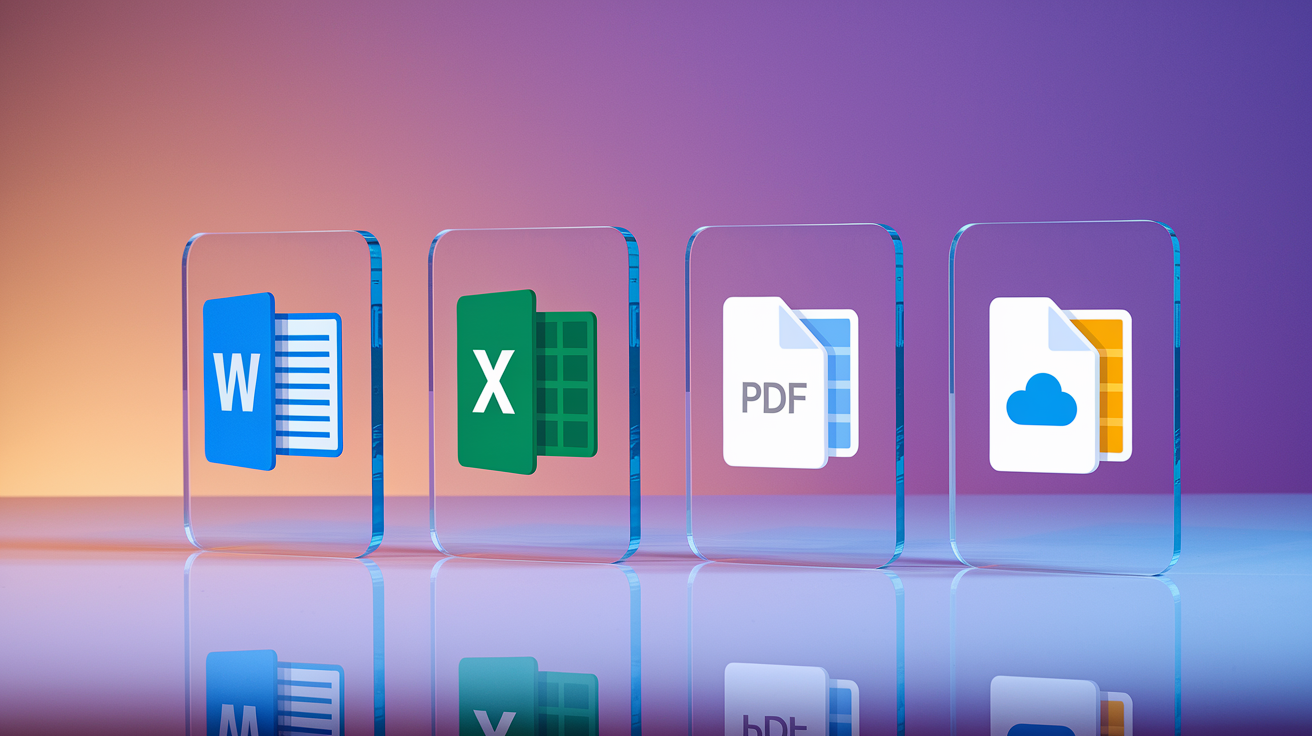
Choosing the right file format depends on how you plan to use the template, who needs access, whether you need formulas, collaboration features, universal compatibility.
| Format | Best For | Editing Level | Collaboration Ability |
|---|---|---|---|
| Word (.docx) | Narrative-heavy plans with detailed strategy explanations, positioning statements, audience descriptions. | Full editing: add/delete text, adjust formatting, insert images, customize headers. | Sequential: one person edits at a time. Track changes for multi-contributor review. |
| Excel (.xlsx) | Budget tracking, timeline management, KPI dashboards, any plan requiring formulas, pivot tables, data analysis. | Full editing: modify formulas, create charts, add conditional formatting, link sheets. | Sequential: one editor at a time. Copy to Google Sheets for simultaneous multi-user editing. |
| Final distribution to stakeholders, printable versions for offline review, read-only sharing when you don’t want recipients to alter content. | Limited: annotation and commenting only. No structural or content changes. | None: recipients can comment but cannot edit. Best for one-way communication. | |
| Google Docs / Sheets | Remote teams, real-time collaboration, version history tracking, instant sharing without email attachments. | Full editing: all features available in-browser, automatically saves changes, accessible from any device. | Simultaneous: multiple users edit at once, comment threads for feedback, suggestion mode for review. |
If your team works in Microsoft Office and doesn’t need real-time collaboration, Word and Excel provide the most control over formatting and formulas. If your team is distributed or works in Google Workspace, start with Google Docs or Sheets to avoid version-control headaches. PDF is the go-to format for board presentations, investor updates, final sign-offs where editing should be locked.
Most teams end up using a combination. Draft the plan in Word or Google Docs for narrative sections, build budgets and timelines in Excel or Google Sheets for formula-driven tracking, then export a PDF for executive review or archival. Pick the format that matches the task. Don’t force a narrative section into Excel cells. Don’t try to track a monthly budget in a Word table without formulas.
How to Use These Templates to Build Your Marketing Strategy

Templates organize information, but execution requires turning that information into assigned tasks, scheduled reviews, continuous adjustments based on performance data.
-
Start by completing every section of the template, even if some entries are tentative. Don’t skip sections because you don’t have perfect data. Use your best estimate, mark it as an assumption, commit to refining it within 30 days. A complete draft forces you to think through the entire plan and identify gaps early. If you can’t articulate your target audience or your USP, that’s a strategic gap that needs to be resolved before you spend a dollar on marketing.
-
Convert each tactic into a discrete task with an owner, due date, success criteria. “Launch paid search campaign” becomes a series of tasks. Research keywords (Owner: Sarah, Due: March 5, Success: 50 keywords prioritized by search volume and intent), write ad copy (Owner: Tom, Due: March 8, Success: 10 ad variations with clear CTAs), set up campaign structure (Owner: Sarah, Due: March 10, Success: campaigns live with $50/day budget and conversion tracking enabled). Breaking tactics into tasks makes them actionable and surfaces dependencies or bottlenecks.
-
Schedule recurring reviews at three levels. Weekly tactical check-ins, monthly performance reviews, quarterly strategic evaluations. Weekly check-ins focus on execution. What got done? What’s delayed? What’s blocking progress? Monthly reviews assess KPIs. Are we on track to hit lead, revenue, or customer targets? Which channels are outperforming or underperforming? Do we need to reallocate budget? Quarterly reviews step back to evaluate market conditions, competitive moves, whether the overall strategy still makes sense. If a new competitor launched, if CAC spiked across all channels, or if product-market fit shifted, the quarterly review is where you decide whether to adjust the plan.
-
Build a dashboard that tracks leading and lagging indicators in one place. Leading indicators (website traffic, ad impressions, email open rates, demo requests) predict future outcomes. Lagging indicators (closed revenue, CAC, customer count, retention rate) measure actual results. Your dashboard should show both so you can spot problems early. If traffic is up but conversions are flat, you have a landing page or offer problem. If CAC is rising, you need to improve targeting or creative before profitability erodes.
-
Use the template as a communication tool. Not just a planning document. Share the plan with your team, with leadership, with cross-functional partners in sales, product, customer success. A plan that lives in one person’s laptop doesn’t drive alignment. When everyone knows the goals, the target audience, the key tactics, the timeline, coordination improves and competing priorities become easier to resolve. If sales wants more leads but marketing’s budget is fixed, the plan becomes the reference point for discussing trade-offs.
-
Adapt the plan as you learn. Marketing plans are hypotheses. You assume certain tactics will work, certain channels will convert, certain messages will resonate. When reality diverges from the plan, update the plan. If paid search CAC is double your assumption, document the new CAC and either adjust the budget, improve the landing page, or shift spend to a more efficient channel. Plans that never change are either perfect (unlikely) or ignored (common).
-
Archive past versions and track what you learned. At the end of each quarter or campaign, save a snapshot of the plan alongside performance data. Note what worked, what didn’t, why. Over time, this creates an institutional knowledge base that prevents repeated mistakes and accelerates future planning. If last year’s holiday campaign crushed email open rates but flopped on Facebook, you know where to focus this year.
Strategic execution means treating the marketing plan as a living document that guides daily work, informs budget decisions, evolves as market conditions and performance data change. A plan that sits untouched after the first draft is decoration. Not strategy.
Final Words
Jump in: pick the file (Word, Excel, PDF, Google Docs), open a pre-filled example, and try the variation that fits your business.
Use the customization steps and visual frameworks to set clear KPIs, timelines, and budgets. Compare formats so the team can edit and collaborate without friction.
Download, tweak, and run a 90-day test. Treat the template as a living document, not a one-time task.
This marketing plan template is ready to turn your ideas into measurable action. You’re set.
FAQ
Q: What are the 7 steps of a marketing plan and how do I write one?
A: The 7 steps of a marketing plan and how to write one are: do a situation analysis, define target segments, set SMART goals, craft positioning and strategy, pick channels/tactics, allocate budget and timeline, and set KPIs for measurement.
Q: What are the 5 components of a marketing plan?
A: The 5 components of a marketing plan are market analysis, target audience, goals and KPIs, marketing strategy (positioning and messaging), and the tactics plus budget and measurement plan.
Q: What is the 3 3 3 rule in marketing?
A: The 3‑3‑3 rule in marketing often means focus on 3 target audiences, test 3 core messages, and use 3 primary channels to keep planning simple and measurement clear.