

What if every new seller had to pass a live facial scan before listing on U.S. marketplaces?
Starting January 1, 2026, amendments to the INFORM Consumers Act force platforms to verify identities, run automated counterfeit detection, and report cases into a centralized FTC database.
It matters because unverified accounts, slow investigations, or missed reports now trigger steep fines, frozen payouts, and seller suspensions.
This post explains what changed, who gets hit, and the urgent steps to take now: gather documents, add biometric checks, and test detection pipelines before enforcement kicks in.
2026 Regulatory Changes: New Marketplace Seller Verification and Counterfeit Penalties

Starting January 1, 2026, U.S. online marketplaces face much tougher seller verification and counterfeit rules after amendments to the INFORM Consumers Act plus coordinated state enforcement. The net effect is simple. Platforms must prove who’s selling, detect counterfeit listings faster, and report problems into a centralized FTC database. If they don’t, penalties climb quickly.
Key mandates coming online January 1, 2026:
- Universal seller verification. Every third party seller must complete identity checks before listing, no matter how many sales they do.
- Verify within 72 hours. Platforms must approve or reject applications within 72 hours of submission. Manual reviews can extend to 10 days for complex cases.
- Biometric authentication. Sellers need multi factor authentication that includes a live facial scan or fingerprint capture.
- Supply chain proof. Sellers of branded goods must upload invoices, distributor agreements, or authorization letters before listings go live.
- Automated counterfeit detection. Marketplaces must run machine learning systems that flag suspect listings based on images, pricing, seller history, and consumer reports.
- Continuous monitoring and reporting. Suspected counterfeit activity gets reported to the FTC’s centralized database and regulators expect ongoing surveillance.
Detailed Seller Verification Protocols for 2026

The rules standardize verification across marketplaces. New seller accounts must pass a multi stage process before any listing privileges activate. Platforms combine government database cross checks, bank validations, and live biometric matches to ensure the person or entity on the account matches submitted documents.
What platforms must do and keep:
- Government photo ID. Sellers upload a valid driver’s license, passport, or national ID. Platforms must verify authenticity using document analysis, OCR, and security feature checks.
- Live biometric capture. A real time facial scan or fingerprint is matched to the photo ID. Pre recorded images aren’t allowed.
- Bank account validation. Sellers link a bank or payment account in their legal name and confirm ownership through micro deposits or equivalent validation.
- Address verification. Platforms mail a physical code to the registered address that must be entered within 10 days. PO boxes don’t qualify unless paired with an agent service.
- Business registry cross check. Entity sellers are validated against state and federal business registries for active status and good standing.
- Fraud and sanctions screening. Platforms screen identities against commercial fraud lists and government sanctions records.
Platforms must retain verification records for seven years and provide them to regulators within 48 hours on request. Sellers must recertify annually. Miss the annual recertification and listing privileges are suspended until the seller updates documents.
Documentation and Identity Standards Required Under 2026 Enforcement
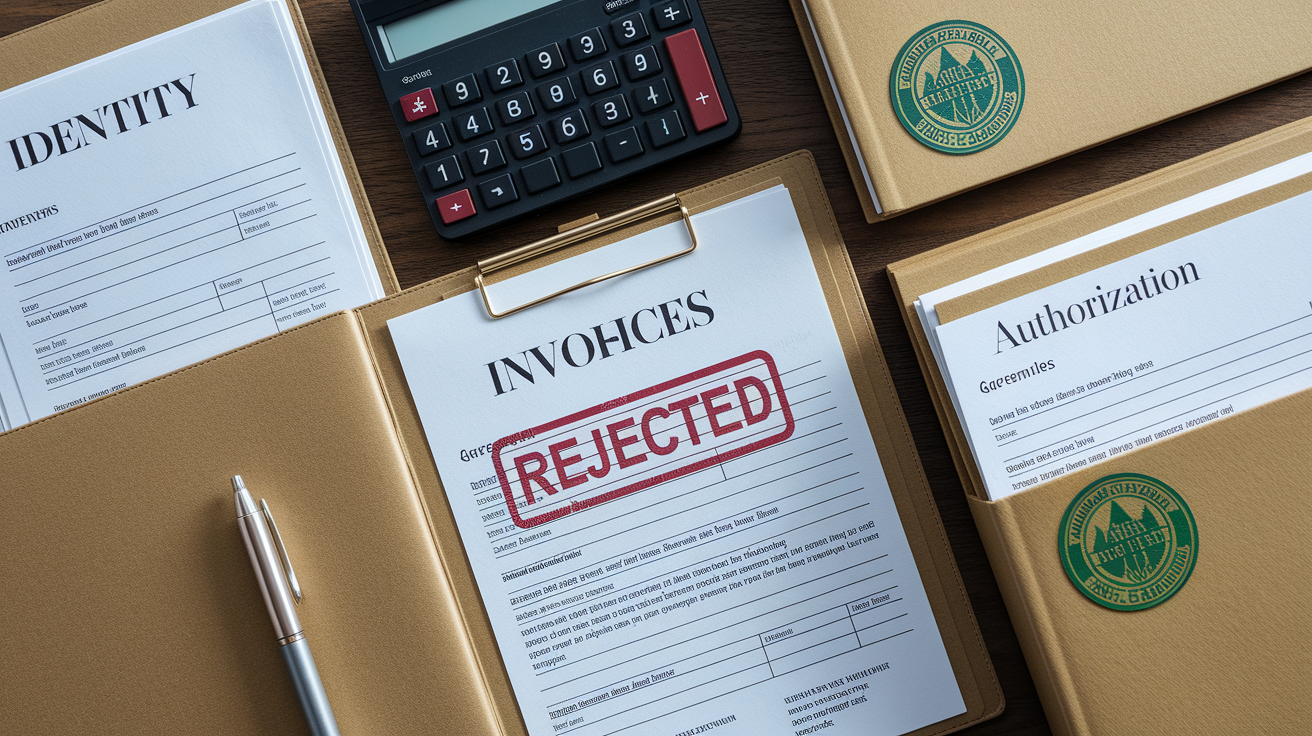
Sellers must prove both identity and the right to sell branded products. Individual sellers need a government photo ID, a proof of address dated within 90 days, and a tax ID number. Businesses must supply formation documents, an EIN, current licenses, and evidence that the listed account operator is authorized.
For trademarked merchandise, acceptable supply chain proof includes signed distributor agreements, authorized reseller certificates, wholesale invoices from authorized channels, or letters of authorization from IP holders. Marketplaces must reject applications lacking supply chain proof for any product category with a counterfeit complaint rate above 2 percent. 2026 high risk categories include consumer electronics, luxury apparel and accessories, cosmetics and skincare, pharmaceuticals and supplements, and automotive parts.
Ongoing rules. Sellers must renew documents every 12 months. Any address changes, ownership transfers, or structural changes trigger immediate re verification. Platforms must suspend accounts when documents expire.
Common documentation problems that block approval:
- Expired IDs. Documents must be valid for at least 90 days after submission.
- Name mismatches. The legal name on ID must match bank, tax, and business records.
- Weak supply chain proof. Generic invoices that don’t show authorized channels won’t pass.
- Incomplete address verification. Mail forwarding alone won’t do.
Marketplace Platform Obligations Under the 2026 Counterfeit Enforcement Rules

Platforms are now on the hook for monitoring, investigating, and reporting. They must run real time systems that detect patterns like image duplication from brand catalogs, prices far below retail, or seller accounts with repeat IP violations. When a brand owner or consumer files a complaint, platforms must acknowledge receipt within 24 hours and complete an initial investigation within 72 hours. If the complaint is substantiated, the product must be delisted within 48 hours.
When counterfeit activity is confirmed, platforms must suspend the seller, freeze pending payouts, and file a report to the FTC database within five business days. That report needs seller identity, transaction history, product details, and supporting evidence. Missed deadlines trigger fines starting at $25,000 per incident.
Platforms also must be proactive. Expect mandatory quarterly audits of high risk categories, automated image matching against brand authorized catalogs, and seller behavior analysis that flags rapid scaling or frequent name changes. Platforms must staff compliance teams with authority to suspend sellers, delist products, and escalate cases to legal review without waiting for external complaints. Regulators want counterfeit prevention treated like payment processing or customer service, with measurable targets and executive accountability.
Penalty Structure and Enforcement Mechanisms for 2026
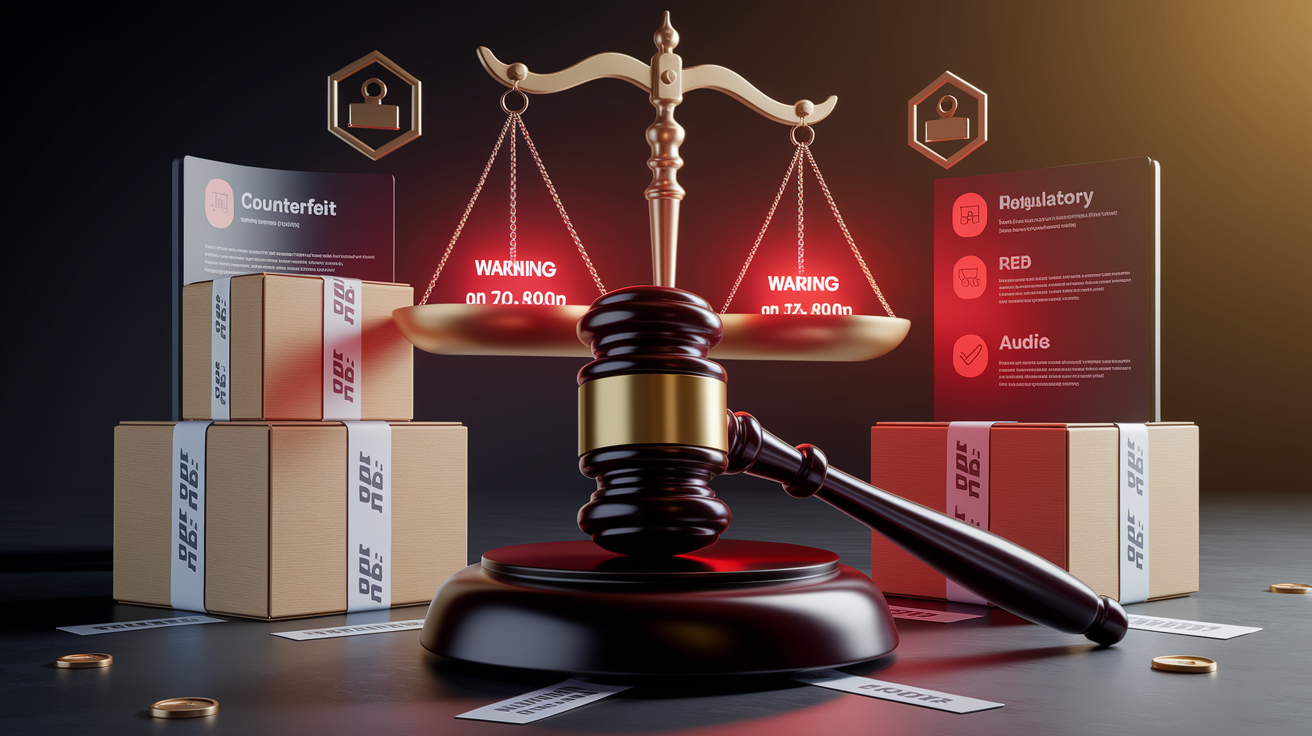
Penalties escalate based on how severe the violation is, the seller’s history, and how quickly the platform responds. First time seller violations lead to delisting and a 30 day suspension. Repeat seller violations within 24 months mean permanent termination and placement on a cross platform counterfeit registry used during seller verification.
Platforms face fines for verification failures, delayed investigations, and reporting lapses. The FTC can assess penalties per unverified seller listing, per delayed investigation, and per unreported substantiated counterfeit case. State attorneys general can add their own civil penalties under state laws, sometimes calculated per transaction.
| Violation Type | Penalty | Enforcement Trigger |
|---|---|---|
| Unverified seller listing products | $75,000 per seller | Automated detection during FTC audits or consumer complaints about unverified accounts |
| Delayed counterfeit investigation beyond 72 hours | $25,000 per incident | Brand owner or consumer complaint with documented platform response delay |
| Failure to report substantiated counterfeit case to FTC database | $50,000 per unreported case | Regulatory audit or cross reference with brand owner enforcement data |
| Repeat counterfeit listings by same seller after prior violation | $150,000 per repeat case plus mandatory third party compliance audit | Second substantiated counterfeit complaint against previously penalized seller account |
| Inadequate monitoring systems allowing pattern counterfeit activity | $500,000 plus quarterly compliance reporting requirement | Regulatory review showing systemic counterfeit activity in specific categories without platform detection |
Platforms can reduce fines by showing good faith efforts. That includes investing in detection tech, responding fast to complaints, and voluntarily reporting suspected counterfeit activity. Small marketplaces with fewer than 1,000 active sellers may get reduced penalties for the first 18 months if they document improvements and keep complaint rates low.
Implementation Timeline and Compliance Deadlines

The rollout is phased across 2025 and 2026 to give platforms and sellers time to build systems and gather documents. The FTC published final rules in March 2025 setting biometric standards and reporting protocols.
Key milestones:
- March 2025. FTC publishes final technical standards for verification, biometric protocols, and database integration.
- September 1, 2025. Platforms must start collecting enhanced documentation from new sellers, including biometric captures and supply chain attestations.
- January 1, 2026. Full enforcement begins for platforms with more than 10,000 active sellers, with all verification, monitoring, and reporting obligations mandatory.
- March 31, 2026. Grace period ends for existing sellers. Sellers active as of December 31, 2025 must complete enhanced verification by this date or lose listing privileges.
- April 1, 2026. Compliance deadline for mid sized platforms with 1,000 to 10,000 sellers.
- July 1, 2026. Final deadline for platforms under 1,000 sellers, though core identity verification must still be in place by January.
New sellers after January 1, 2026 must complete full verification before any listings go live, with no grace period.
How Sellers Can Prepare for 2026 Verification and Anti counterfeit Compliance

Start prep in mid 2025. Don’t wait.
Practical steps:
- Gather current identity documents and renew anything that expires before June 2026.
- Make sure the legal name on your ID matches your bank account, tax filings, and business registration exactly. Name mismatches are the top reason for denial.
- For businesses, confirm state registration is active and registered agent info is current. Consider forming an LLC or corporation if you’re a sole proprietor and want clearer documentation.
- Collect supply chain proof for every branded product, including invoices, distributor agreements, and authorization letters. Organize files by product category and keep digital copies ready.
- Test biometric capture. Have a smartphone or computer camera that works with live facial or fingerprint verification.
- Review your seller history for past IP complaints or policy violations. Clear unresolved issues now.
- Expect verification costs. Some platforms may charge between $50 and $200 for enhanced or expedited verification.
Key Differences Between Previous Rules and the 2026 Framework
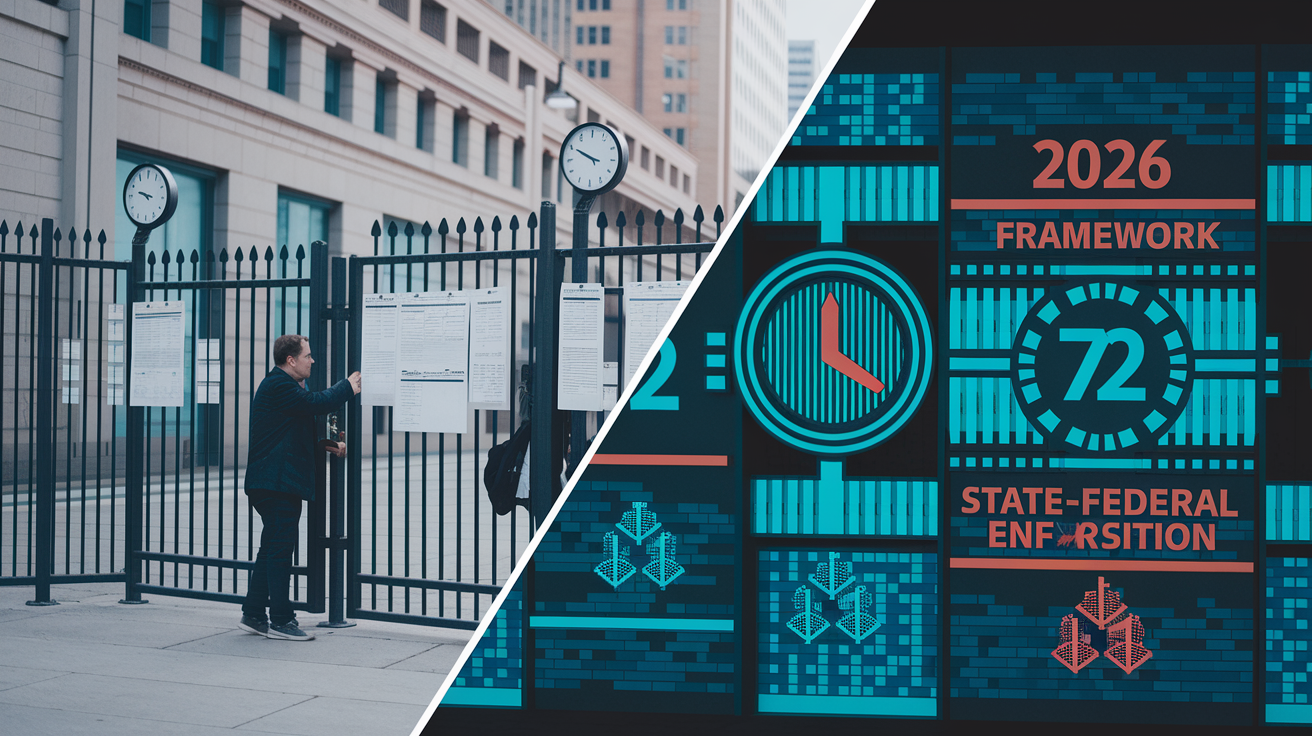
The original INFORM Act required verification only for high volume sellers meeting transaction and revenue thresholds. Platforms had longer windows for verification and enforcement was primarily federal. The 2026 changes remove the revenue threshold, tighten verification windows to 72 hours, add mandatory biometric capture and supply chain proof, and expand enforcement power to state attorneys general.
| Previous Requirements | 2026 Requirements |
|---|---|
| Verification only for sellers meeting 200 transactions and $5,000 revenue threshold | Verification required for all third party sellers, no transaction or revenue minimum |
| 10 day verification window after seller submits information | 72 hour verification and approval window, 10 day extension only for manual review of complex cases |
| Government ID or tax document required for individual sellers | Government photo ID plus live biometric capture required for all sellers |
| No supply chain documentation required | Supply chain proof required for all branded merchandise; invoices, distributor agreements, or authorization letters mandatory |
| Reactive complaint response with no defined investigation timeline | 24 hour complaint acknowledgment, 72 hour investigation completion, 48 hour product delisting for substantiated cases |
| Base penalty about $50,000 per violation | Base penalty $75,000 per violation, with escalating penalties for repeats, delayed investigations, and inadequate monitoring |
Expert and Legal Analysis of the 2026 Enforcement Regime

Lawyers and e commerce specialists see this as a major operational and compliance lift for platforms and sellers. Removing the high volume threshold brings millions of casual and small sellers into a rigorous identity verification system. Expect seller counts to fall as some casual sellers opt out rather than submit biometrics or supply chain proof.
Platforms will need scalable automated verification systems. Manual review won’t work at scale. Early cost estimates for large marketplaces run in the tens of millions for build out, with ongoing costs per verified seller. Regulators are likely to push early, visible enforcement to set expectations. The combination of federal and state enforcement makes coordinated multi state actions a real risk, so platforms should prioritize compliance in large markets to limit exposure.
Final Words
Act now: 2026 brings mandatory seller ID checks, stricter documentation, tighter marketplace monitoring, and heavier fines and account actions.
This post ran through the new seller verification protocols, required documents, platform obligations, penalty tiers, rollout timeline, and practical prep steps. It also flagged likely legal wrinkles and what marketplaces must change.
Marketplace counterfeit enforcement 2026 new seller verification requirements and penalties raise the stakes, but they also make risk easier to spot. Start audits, tighten onboarding, and you’ll convert compliance into fewer shocks and steadier revenue.
FAQ
Q: What is the inform act policy?
A: The INFORM Act policy requires online marketplaces to collect, verify, and retain seller identity and payment details (government ID, tax ID, bank info) to curb fraud and stop counterfeit listings.
Q: What is integrity notification and fairness in online retail marketplaces for consumers act?
A: The Integrity, Notification, and Fairness in Online Retail Marketplaces for Consumers Act requires platforms to disclose verified seller information, notify buyers about third‑party sellers, and enforce fair rules, raising platform liability for counterfeit and fraud.