
Think any influencer platform will do? Choosing the wrong one wastes months and money.
In 2026 there are dozens of options, but a handful—Grin, Aspire, Upfluence, Influencity, CreatorIQ, Impact—keep showing up.
They differ mainly in discovery speed, execution automation, and analytics.
Why it matters: those differences decide whether you scale creator programs or drown in admin.
Match platform complexity to your workflow: small teams need discovery and gifting; mid-market need approvals and CRM; enterprises need global payments and attribution.
Start by listing your top 3 goals and test a lightweight discovery tool before committing.
Leading Platforms Overview and Quick Comparison
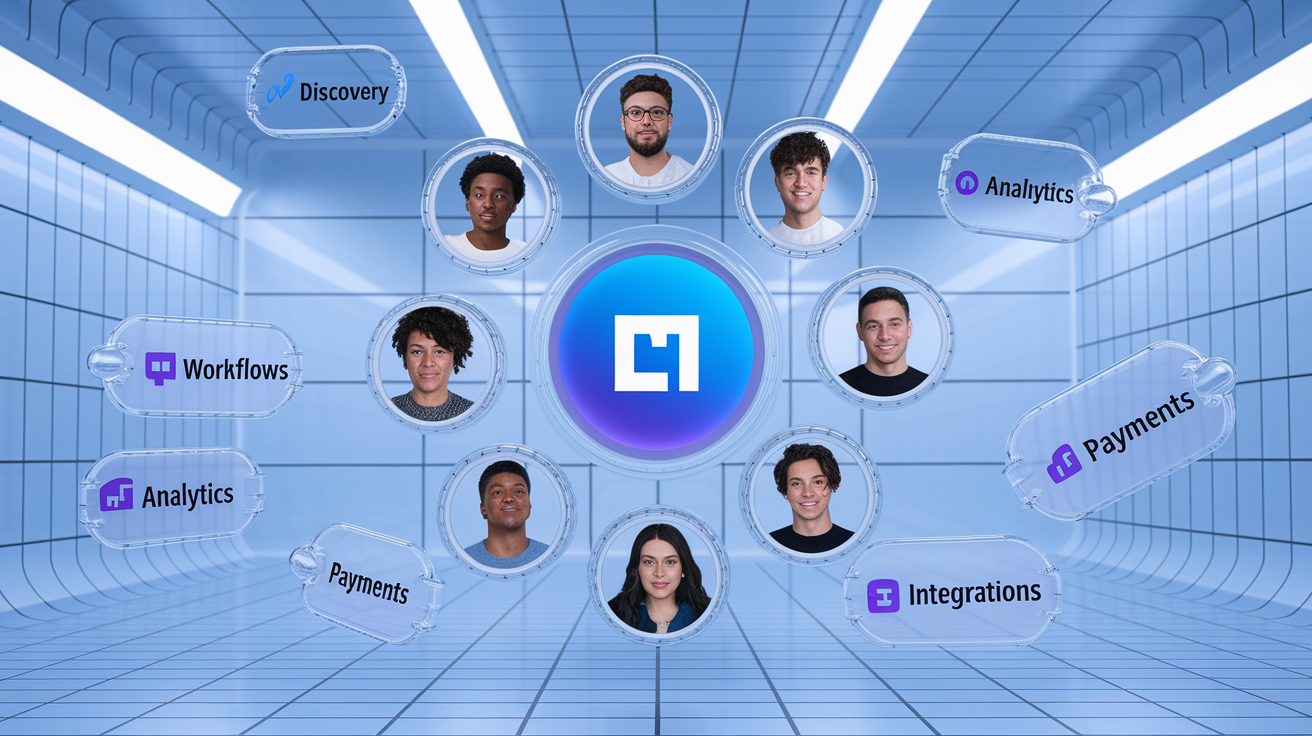
Influencer marketing platforms are centralized hubs where brands find creators, run campaigns, track performance, and handle payments without drowning in spreadsheets or chasing emails. The market in 2026 has dozens of options, but six platforms show up in most operator conversations: Aspire, Grin, Upfluence, Influencity, CreatorIQ, and Impact.com. Each one brings a different mix of discovery power, workflow automation, and analytics depth. There’s no universal “best” here. It’s about what you’re actually trying to run.
Most brands evaluate platforms on three things: how fast they can find the right creators, how smoothly they can execute from brief to payout, and whether the analytics answer the real question: did this work? The platforms below cover the spectrum from lean e-commerce tools to enterprise suites built for global programs and compliance-heavy environments.
| Platform | Ideal For | Key Strengths | Starting Price |
|---|---|---|---|
| Grin | E-commerce brands running product seeding | Shopify integration, gifting workflows, affiliate tracking | $399/month |
| Aspire | Mid-market teams needing UGC and content approvals | Polished collaboration tools, 170M+ creator database | Custom pricing |
| Upfluence | Brands managing large creator rosters across channels | CRM-style management, Amazon affiliate integration | ~$1,000/month |
| Influencity | Teams prioritizing discovery and audience insights | 200M+ profiles, detailed demographic filters | $398/month |
| CreatorIQ | Enterprise programs needing security and global payments | 1B+ analyzed accounts, Salesforce integration, deep API | Custom (enterprise) |
| Impact.com | Performance marketers combining affiliate and influencer channels | Unified tracking, cross-channel attribution | Custom pricing |
Selection patterns break down pretty cleanly: small e-commerce teams go for Grin or Shopify Collabs when they need integrated product gifting and affiliate tracking. Mid-market brands pick Aspire or Upfluence when they’re managing hundreds of creator relationships and need polished workflows. Enterprise operators choose CreatorIQ or Brandwatch when global compliance, Salesforce sync, or advanced attribution modeling actually matters. If you’re just testing influencer as a channel, you’ll probably start with a cheaper discovery tool like Modash or a marketplace like Collabstr, then graduate to a full suite once you’re running structured campaigns every month.
In-Depth Platform Feature Comparison

Influencer platforms look similar at first. Search for creators, send messages, track posts. But the execution details separate tools that save you hours from tools that add admin work.
Core feature categories worth comparing:
Discovery filters and AI-powered search. Platforms differ a lot in how deeply you can filter by niche, audience demographics, engagement quality, content themes, and platform coverage (Instagram, TikTok, YouTube, LinkedIn, Twitch, blogs). Advanced tools use AI to surface creators based on intent and relevance, not just keyword matches. Example: “Find fitness creators who discuss recovery supplements and have audiences aged 25 to 40 in the U.S.” versus basic hashtag search.
Vetting and authenticity checks. Fake follower detection, engagement rate validation, audience quality scores, and brand safety reporting help you avoid wasted spend on inflated accounts or misaligned content.
Campaign management and approvals. End-to-end tools provide brief templates, automated outreach sequences, content approval workflows, contract generation, and deliverable tracking in a single dashboard. Lighter platforms stop at discovery and leave you to manage execution in email or spreadsheets.
Payment and gifting automation. Some platforms handle invoicing, tax forms, automated payouts via Stripe or PayPal, and product seeding workflows that sync with your e-commerce stack. Others require manual payment coordination outside the platform.
Analytics and ROI measurement. Basic platforms show likes and comments. Advanced platforms tie creator posts to conversions, revenue, and ROAS through UTM tracking, discount codes, or direct e-commerce integration (Shopify, WooCommerce, Amazon). A few integrate with Google Analytics 4 to attribute revenue at the creator or post level without manual UTM management.
Social network coverage. Not all platforms support all networks equally. YouTube BrandConnect only covers YouTube. Modash and Grin are strong on Instagram and TikTok but weaker on LinkedIn. Favikon and CreatorIQ provide broader cross-platform profiles, including LinkedIn, Twitter, Substack, and Twitch.
Integrations and export access. API connections to Shopify, HubSpot, Salesforce, Google Analytics, and the ability to export campaign data as CSV matter when you need to feed influencer performance into broader marketing dashboards or run custom analysis.
Feature depth directly impacts campaign speed and cost per result. Platforms with automated post detection and unified creator profiles cut discovery time from hours to minutes. Tools that handle payments and contracts reduce the admin overhead that often kills momentum in small teams. If your workflow involves dozens of creators per quarter, approval automation and integrated analytics become non-negotiable. Manual tracking breaks down fast once you’re running more than a handful of partnerships at once.
The tradeoff? Platforms with the deepest feature sets carry higher price tags and longer onboarding. If you’re running a single campaign with five creators, a lightweight marketplace or discovery tool will close faster than an enterprise CRM. Match feature complexity to actual workflow needs, not aspirational program scale.
Pricing Models and Cost Structures

Influencer platform pricing follows four common models. Understanding which model a vendor uses helps you predict total cost before the first invoice.
Subscription tiers charge a flat monthly or annual fee, often with feature gates (discovery vs. full campaign management) or usage limits (number of creator contacts, number of active campaigns). Examples: Grin starts at $399/month, Influencity at $398/month, Favikon at $99/month. These models work well when you know roughly how many creators you’ll work with each month. Watch for add-on fees. Extra user seats, advanced analytics modules, or API access often cost more.
Usage-based or tiered pricing charges per influencer contacted, per campaign launched, or per transaction processed. Shopify Collabs is free to install but takes a 2.9% payment processing fee on automatic payouts. Izea charges $2 per transaction. This model keeps entry costs low but can scale unpredictably if your program grows fast. Budget for both platform fees and the actual influencer payments when modeling costs.
Enterprise and custom contracts are common for tools like CreatorIQ, Traackr, Upfluence, and Brandwatch. Pricing starts around $20,000/year and scales with team size, feature access, and integrations. These contracts often include onboarding, training, and dedicated support. Enterprise pricing makes sense when you’re running global programs, need advanced compliance features, or require deep integrations with Salesforce or Google Analytics. Expect longer sales cycles and annual commitments.
| Pricing Model | Typical Cost Range | Best For |
|---|---|---|
| Flat subscription | $99–$1,000/month | Small to mid-size teams with predictable creator volume |
| Usage-based / per-transaction | 2–3% of payouts or $2–$5 per transaction | Brands testing influencer channels or running sporadic campaigns |
| Enterprise custom | $20,000–$100,000+/year | Global programs, compliance-heavy industries, deep integrations |
| Freemium / free tier | $0 (limited features or contacts) | Very small teams or testing before committing budget |
Hidden costs to budget for: onboarding and training time (especially on enterprise tools), transaction or processing fees on top of subscription costs, extra charges for add-on features (advanced reporting, additional user seats, API access), and the internal labor cost of manual workflows if the platform doesn’t automate approvals or payments. Total cost of ownership includes both the platform fee and the time your team spends managing campaigns inside it. An expensive platform that cuts admin hours in half often delivers better ROI than a cheap tool that requires constant spreadsheet work.
Pros and Cons of Popular Platforms

Grin. Deep Shopify integration automates product gifting, affiliate tracking, and payout workflows, making it the fastest option for e-commerce brands running seeding programs. But pricing starts at $399/month and scales quickly. The browser extension for social discovery can feel clunky compared to native in-platform search.
Aspire. Polished end-to-end workflows for outreach, briefs, approvals, content tracking, and reporting, plus access to 170 million creator profiles. Custom pricing with no free trial and a process-heavy interface that can slow down small, lean teams who want to move fast.
CreatorIQ. Built for enterprise scale with 1 billion+ analyzed social accounts, Salesforce and Google Analytics integrations, global payment support, and advanced security features. Expensive (typically $20,000+/year) and requires longer onboarding. Overkill for small programs or brands running fewer than 50 partnerships per year.
Upfluence. Strong CRM-style creator management and Amazon affiliate integration. Good for brands managing large rosters across multiple channels. No free trial, complex UX, high cost, and limited LinkedIn data. Slower time to value for teams without dedicated campaign managers.
Modash. Best-in-class discovery and filtering for Instagram and TikTok at scale, with access to 250 million+ profiles and fake follower detection. Pricing starts around $299/month. Weak LinkedIn and blog coverage. No built-in creator scoring, so you rely entirely on demographic and engagement filters to assess fit.
Trade-offs follow a consistent pattern. Platforms built for discovery and audience insights (Modash, Influencity, Heepsy) offer broad databases and strong filtering but lighter campaign management and attribution. Full-suite tools (Grin, Aspire, Upfluence) provide end-to-end workflows but cost more and take longer to onboard. Enterprise platforms (CreatorIQ, Brandwatch, Traackr) deliver advanced analytics, compliance features, and integrations but require annual contracts and dedicated internal resources to extract value. Marketplace and transactional platforms (Collabstr, Shoutcart) enable fast one-off deals at low cost but sacrifice long-term relationship tools and performance tracking. Choose the tool that matches your current scale and primary bottleneck. If discovery is easy but execution is slow, pick workflow automation over database size.
Analytics and Performance Measurement

Influencer analytics separate platforms that help you prove ROI from platforms that only show vanity metrics. Basic tools report likes, comments, shares, and reach. Useful for awareness campaigns but insufficient when you need to justify budget or tweak spend.
Advanced platforms track conversions, revenue, cost per acquisition (CPA), and return on ad spend (ROAS) by tying creator posts to actual purchase behavior. This requires UTM tracking, unique discount codes, or direct integration with your e-commerce platform (Shopify, WooCommerce, Amazon). A few platforms, like Favikon, integrate with Google Analytics 4 to automatically generate unique tracking codes per creator and per post, eliminating manual UTM management and enabling post-level attribution without extra setup.
Key metrics to prioritize:
Engagement rate. Comments, shares, and saves divided by reach. Higher engagement signals audience trust and content relevance.
Conversion rate and revenue attribution. How many clicks turned into purchases, and how much revenue each creator or campaign drove.
Cost per acquisition (CPA). Total spend (platform fees + creator payments) divided by conversions. Compare CPA across creators to identify top performers.
Audience quality and authenticity scores. Fake follower detection, engagement authenticity, and demographic alignment with your target customer.
Platforms differ sharply in how they surface this data. Some require you to manually upload performance CSVs or tag posts with UTMs. Others automatically detect posts via keywords, hashtags, or @mentions and pull performance data directly from social APIs or your e-commerce backend. The best tools show creator-level and campaign-level ROI in a single dashboard, so you can compare performance across channels (Instagram vs. TikTok vs. YouTube) and adjust budgets in real time.
If attribution matters to your business (and it should if you’re spending more than a few thousand dollars per quarter), confirm during trials that the platform can tie creator activity to revenue, not just engagement. Ask vendors to show you a sample report with conversion data, and verify that UTM or discount-code tracking works cleanly with your existing analytics stack.
Audience Data and Verification Capabilities

Fake followers and bot engagement waste influencer budgets fast, which is why audience verification tools matter as much as discovery filters.
Modern platforms provide demographic breakdowns (age, gender, location, interests), authenticity ratings, and fraud-detection alerts that flag suspicious follower growth, engagement spikes, or bot-heavy audiences. These insights help you avoid partnerships with inflated accounts and identify creators whose audiences actually match your target customer.
Audience attributes platforms typically provide:
Geographic distribution. Where the creator’s followers live, broken down by country, state, or city. Critical for local or regional campaigns.
Age and gender split. Audience composition by demographic segment. Helps confirm alignment with your product’s target market.
Interest and affinity data. What topics, brands, and content types the audience engages with most. Useful for assessing thematic fit beyond surface-level niche tags.
Follower authenticity score. Percentage of real versus fake or inactive followers. Platforms calculate this by analyzing engagement patterns, account age, and follower behavior.
Engagement quality metrics. Ratio of comments to likes, sentiment analysis, and whether engagement comes from the creator’s core audience or random accounts.
Platforms like HypeAuditor and Modash specialize in authenticity scoring and fake follower detection, making them strong choices when vetting new creators or auditing an existing roster. Broader tools like CreatorIQ, Brandwatch, and Aspire include audience verification as part of their full feature set, so you can vet and manage campaigns in one place.
Audience data becomes especially important when you’re scaling from a handful of hand-picked creators to dozens of partnerships per quarter. Manual vetting doesn’t scale, and a single partnership with a fake-follower account can tank your campaign CPA and waste budget that could have gone to real creators.
Campaign Management and Workflow Tools

Campaign management tools determine whether your influencer program runs smoothly or bogs down in email chains, missed deadlines, and content approval bottlenecks.
Full-featured platforms provide brief templates, automated outreach sequences, centralized messaging dashboards, content approval workflows, deliverable tracking, and contract management in a single interface. You can draft a campaign brief, send it to fifty creators, review submitted content, approve posts, and track deliverables without leaving the platform or switching to email and spreadsheets.
Platforms like Grin and Aspire do workflow automation well. You upload a product brief, the platform suggests matching creators based on past performance or audience fit, you send personalized outreach messages in bulk, and creators submit content directly through the platform for approval before publishing. Once approved, the platform monitors post publication, tracks engagement in real time, and flags missing deliverables automatically. This end-to-end orchestration cuts campaign execution time from weeks to days and reduces the risk of miscommunication or forgotten follow-ups.
Lighter platforms stop at discovery and leave execution to you. Marketplaces like Collabstr and Shoutcart facilitate one-off sponsored posts but don’t provide tools for long-term relationship management, content versioning, or multi-touchpoint campaigns. If you’re running a single Instagram Story swap, a marketplace works fine. If you’re managing quarterly ambassador programs with dozens of creators producing multiple posts each, you need a platform with structured workflows, approval gates, and automated reminders. Otherwise you’ll spend more time chasing creators than analyzing results.
The tradeoff is setup time and cost. Platforms with deep workflow automation require onboarding, brief configuration, and sometimes custom integrations with your e-commerce or CRM stack. But once configured, they scale efficiently. Adding ten more creators to a campaign takes minutes, not hours. If your team is already stretched thin managing social media, paid ads, and email marketing, investing in workflow automation pays back fast by freeing up time for strategy and optimization instead of admin tasks.
Payment and Contract Management

Payment and contract features often get overlooked during platform evaluation, but they become critical once you’re managing more than a few creator partnerships per quarter.
Platforms like Grin, Upfluence, and Aspire handle invoicing, tax form collection (W-9s for U.S. creators, international tax documents for global programs), automated payouts via Stripe or PayPal, and contract generation from templates. You can send a partnership agreement, track signed contracts, approve deliverables, and trigger payment all inside the platform, without manual invoice tracking in accounting software or chasing creators for tax paperwork. For brands running product seeding programs, some platforms sync directly with Shopify or WooCommerce to automate gifting workflows. When a creator accepts a partnership, the platform generates a discount code or triggers a product shipment automatically.
Shopify Collabs, for example, is free to install and automates affiliate payouts through Shopify Billing, charging a 2.9% processing fee. Creators generate their own affiliate links, and the platform calculates commissions and processes payments automatically based on tracked sales. This removes manual payout reconciliation entirely, though it also means less control over who joins your program. Any creator can generate a link and start promoting.
Payment automation matters most when you’re scaling from five partnerships per quarter to fifty. Manual payment tracking breaks down fast. Missed invoices, late payouts, and tax-form chaos create friction with creators and waste internal time. Platforms that automate payouts and handle compliance reduce operational overhead and improve creator satisfaction, which translates to better long-term partnerships and higher content quality.
Contract management follows a similar pattern. Template-based contract tools let you standardize terms (usage rights, exclusivity, deliverables, payment terms) and track signed agreements in one place. This is especially important for brands that need documented usage rights for repurposing creator content in ads or for compliance-heavy industries where influencer disclosure and FTC guidelines require clear, signed agreements.
Supported Social Networks and Integrations

Not all platforms support all social networks equally, and integration depth varies widely. Confirm compatibility during trials to avoid surprises after onboarding.
Most platforms provide strong coverage for Instagram, TikTok, and YouTube, which account for the majority of influencer activity in 2026. Coverage for LinkedIn, Twitch, Snapchat, Pinterest, and blogs is less consistent. Favikon and CreatorIQ offer broad cross-platform profiles including LinkedIn and Substack, while tools like Modash and Grin focus heavily on Instagram and TikTok but provide limited LinkedIn data.
| Social Network | Integration Depth | Common Use Cases |
|---|---|---|
| Full discovery, analytics, post tracking | E-commerce promotions, product seeding, Stories, Reels | |
| TikTok | Full discovery, engagement metrics, hashtag tracking | Viral campaigns, Gen Z reach, short-form video content |
| YouTube | Discovery, video performance, audience demographics | Long-form reviews, tutorials, unboxings, high-intent traffic |
| Limited on most platforms; strong on Favikon, CreatorIQ | B2B campaigns, thought leadership, SaaS product launches | |
| Twitch | Basic coverage; best on gaming-focused platforms | Gaming, live events, real-time engagement |
Integration depth refers to how much data the platform pulls from each network and whether it supports automated post detection, performance tracking, and audience insights. Full integration means the platform can discover creators, analyze their audience, track campaign posts automatically, and measure engagement without manual input. Basic integration means the platform lists creators but requires manual tracking or external tools to measure performance.
Beyond social networks, integrations with e-commerce platforms (Shopify, WooCommerce, Amazon), CRM tools (Salesforce, HubSpot), analytics platforms (Google Analytics 4), and marketing automation tools (Klaviyo, Zapier) determine how smoothly influencer data flows into your broader marketing stack. CreatorIQ’s Salesforce integration, for example, lets enterprise teams manage creator relationships inside their CRM and tie influencer performance to account-based marketing campaigns. Grin’s Shopify integration automates product gifting and affiliate tracking, eliminating manual order entry and payout reconciliation.
If your primary channel is LinkedIn or you’re running B2B influencer campaigns, verify that the platform provides real LinkedIn discovery and tracking. Most tools built for DTC e-commerce offer weak or nonexistent LinkedIn support. Conversely, if you’re focused on Instagram and TikTok, prioritize platforms with deep social API integrations and automated post detection, since manual tracking doesn’t scale past a few dozen partnerships.
Case Studies and Real-World Use Examples
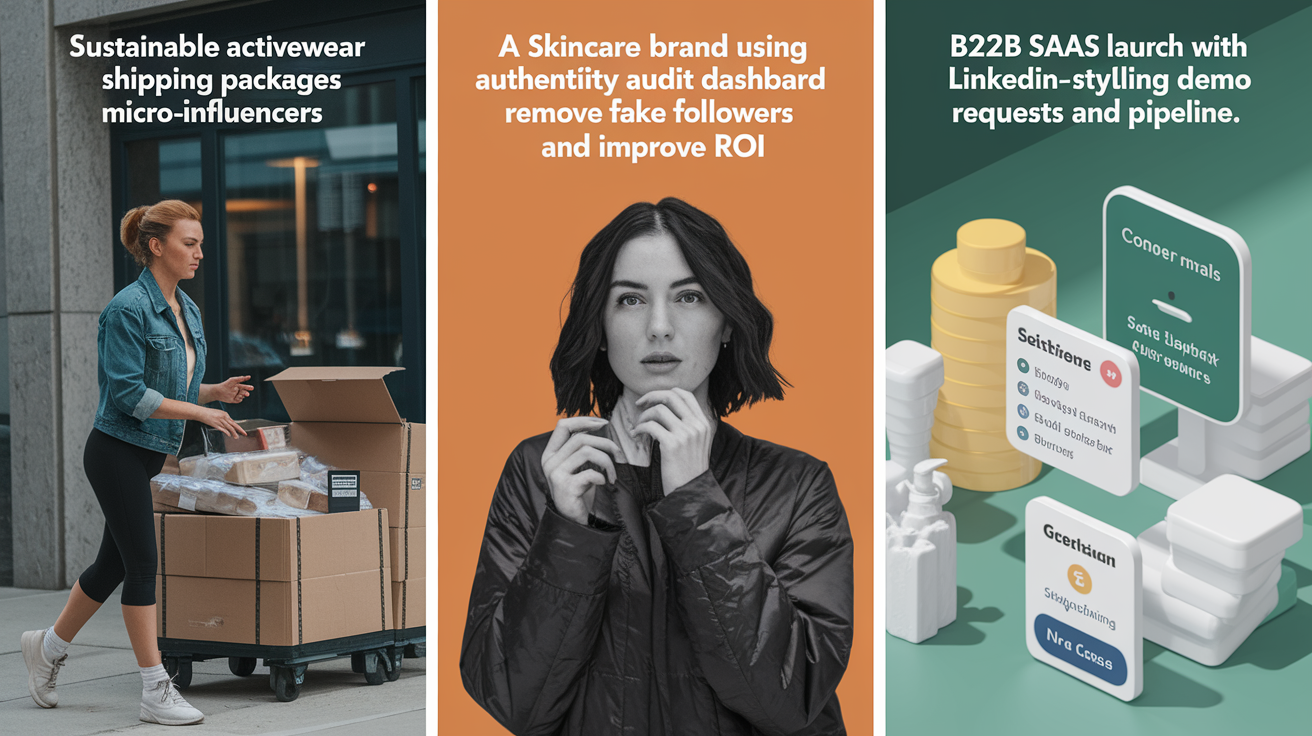
Small e-commerce brand running product seeding. A Shopify store selling sustainable activewear used Shopify Collabs to recruit micro-influencers (10,000 to 50,000 followers) and scale their ambassador program from 20 creators to over 400 in six months. By offering creators a 10% commission on sales tracked via unique affiliate links, the brand drove more than 4,400 orders and $200,000 in affiliate revenue with minimal manual work. The automated payout system eliminated invoice tracking, and the Shopify Admin integration meant the team managed the entire program without leaving their existing workflow. Total platform cost: $0 subscription, 2.9% processing fee on payouts.
Mid-market DTC brand optimizing campaign ROI. A skincare brand with a $20,000 quarterly influencer budget used Modash to audit their existing creator roster and discovered that 30% of their partnerships had inflated follower counts or low engagement authenticity. After cutting underperforming creators and reallocating budget to vetted micro-influencers with stronger audience alignment, their cost per acquisition dropped from $45 to $28, and overall campaign ROAS improved from 3.2x to 5.1x. The brand now runs monthly audits and uses audience demographic filters to pre-qualify creators before outreach, cutting discovery time from hours to minutes and reducing wasted spend on misaligned partnerships.
Enterprise SaaS company running LinkedIn thought-leadership campaigns. A B2B SaaS company spent $20,000 on LinkedIn influencer partnerships in 2026, working with industry analysts, consultants, and niche thought leaders to drive awareness for a new product launch. Using Favikon’s LinkedIn-native discovery and GA4 integration, the team tracked post-level conversions and attributed 180 demo requests and 22 closed deals directly to influencer content. The platform’s AI search surfaced niche experts who weren’t discoverable via keyword filters alone, and automated GA4 tracking eliminated manual UTM management. Total program ROI: $5.40 in pipeline value for every $1 spent, including platform fees and creator payments.
How to Choose the Right Platform
Choosing the right influencer platform starts with defining what you’re actually trying to accomplish and what resources you have to execute.
Six evaluation criteria to structure your decision:
Primary social networks. If Instagram and TikTok drive most of your sales, prioritize platforms with deep coverage and automated tracking for those channels. If you’re running B2B campaigns on LinkedIn, confirm the platform provides real LinkedIn discovery and audience insights, not just a token listing.
Campaign volume and complexity. Running one campaign per quarter with five creators requires different tools than managing ongoing ambassador programs with hundreds of partnerships. Marketplace and discovery tools work for sporadic campaigns. Full-suite platforms make sense once you’re executing monthly.
Budget and pricing model. Match the pricing model to your program maturity. Subscription tools work well when you know your monthly creator volume. Usage-based pricing keeps entry costs low when you’re testing. Enterprise contracts make sense for global programs with compliance needs but require annual commitments and higher spend.
Feature priorities. Rank discovery, workflow automation, analytics, and payment handling by importance. If discovery is easy but execution is slow, prioritize campaign management and approval workflows. If you’re struggling to prove ROI, prioritize attribution and GA4 integration over database size.
Internal resources and team size. Lean teams need platforms that automate outreach, approvals, and payments. Enterprise teams with dedicated campaign managers can handle more manual workflows but benefit from deep integrations with CRM and analytics tools.
Integration requirements. Confirm the platform connects cleanly with your e-commerce stack, CRM, analytics tools, and marketing automation software. Manual CSV exports and disconnected workflows add friction and slow down reporting.
Start by testing two or three platforms that match your primary channel and budget range. Run a single campaign or partnership through each platform’s trial, and evaluate based on actual workflow experience, not feature lists. Pay attention to how long it takes to find the right creators, send outreach, approve content, and measure results. Platforms that promise advanced features but require manual workarounds or slow you down aren’t worth the cost, even if pricing looks attractive.
If you’re just starting influencer marketing, begin with a lower-cost discovery tool (Modash, Heepsy) or a free option like Shopify Collabs to validate the channel before committing to a full-suite platform. Once you’re running structured campaigns every month and managing dozens of creator relationships, upgrade to a tool with end-to-end workflows and attribution. If your program scales to hundreds of partnerships or goes global, evaluate enterprise platforms that provide compliance features, global payments, and deep CRM integrations. But not before you’ve proven ROI at smaller scale.
The wrong platform at the wrong stage wastes time and budget. A lightweight tool that gets you moving fast beats an expensive enterprise suite that sits unused because your team isn’t ready for the complexity.
Frequently Asked Questions
What is the best influencer marketing platform? There’s no single best platform. The right choice depends on your primary social network, budget, team size, and whether you prioritize discovery, workflow automation, or attribution.
How much do influencer marketing platforms cost? Pricing ranges from free (Shopify Collabs) to $99 to $1,000/month for subscription tools, $2 to 3% of payouts for usage-based models, and $20,000+/year for enterprise contracts.
Do influencer platforms handle creator payments? Some platforms (Grin, Upfluence, Aspire, Shopify Collabs) automate invoicing, tax forms, and payouts. Others require manual payment coordination outside the platform.
Can I track influencer campaign ROI? Advanced platforms integrate with Google Analytics 4, Shopify, or WooCommerce to tie creator posts to conversions and revenue. Basic platforms only report engagement metrics like likes and comments.
Which platforms support LinkedIn influencer marketing? Favikon and CreatorIQ provide strong LinkedIn discovery and audience insights. Most e-commerce-focused platforms (Modash, Grin) offer limited or no LinkedIn coverage.
Do I need a platform if I only work with a few influencers? For one-off campaigns with fewer than five creators, a marketplace (Collabstr) or manual outreach may be faster and cheaper than onboarding a full platform. Platforms add value once you’re running monthly campaigns or managing dozens of partnerships.
Final Words
We ran through the top influencer marketing platforms—overview, feature comparison, pricing models, pros and cons, analytics, audience verification, campaign workflows, payments, integrations, case studies, and a buying framework.
It matters because the right platform changes how fast you find creators, how clean your measurement is, and how much it costs. Next step: shortlist 2–3 tools, map them to your must-have features, and run a short pilot on your top 10 creators.
Start small, learn fast, and pick the influencer marketing platforms that move your KPIs upward.
FAQ
Q: What platform is best for influencer marketing?
A: The best platform for influencer marketing depends on your goals; ecommerce brands often prefer Grin or Aspire, enterprises lean to CreatorIQ or Impact, while Upfluence suits broad discovery and campaign automation.
Q: How many influencers make over $100,000?
A: The number of influencers making over $100,000 is small; only a minority—likely under a few thousand worldwide—reach that level, driven by large followings, high-demand niches, agency deals, and diversified revenue.
Q: What are 5 niches commonly used by influencers?
A: The five commonly used influencer niches are fashion, beauty, fitness/health, gaming, and tech, each offering clear product fits, steady audience demand, and multiple monetization paths for brands.
Q: What are the big four of influencer marketing?
A: The big four of influencer marketing are Instagram, TikTok, YouTube, and Facebook, which together provide the largest creator audiences, varied content formats, and most ad and commerce tools for campaigns.