

Most marketing automation tools promise revenue and deliver busywork.
Platforms have added predictive send, multichannel orchestration, and tighter CRM ties, but that doesn’t mean they all drive profit.
We tested HubSpot, ActiveCampaign, Marketo, Mailchimp, and Pardot across workflow builders, integrations, and reporting to see which platforms actually move revenue.
This guide shows which tools deliver real ROI, who benefits, and how to pick based on contact size, tech stack, and budget.
Start by auditing your top workflows and match needs to platform depth.
Best Marketing Automation Platforms (Ranked and Compared)

Picking the right marketing automation platform comes down to understanding what your business actually needs, what you can afford, and how technical your team is. The platforms here range from enterprise monsters to focused tools built for specific channels or business types. Testing included hands-on use across multiple client accounts, digging into workflow builders, running integration tests, and checking how deep the reporting goes.
HubSpot works best if you need unified CRM, marketing, sales, and service automation with tight native attribution. ActiveCampaign fits small to mid-sized businesses that want powerful automation without the enterprise price tag, especially once you’re past 1,000 contacts. Marketo (owned by Adobe) serves large enterprises running complex, multi-touch attribution and ABM workflows, but you’ll need serious implementation resources. Mailchimp’s still a solid entry point for solopreneurs and small teams who want ease of use and fast setup. Pardot (now called Salesforce Marketing Cloud Account Engagement) is built for B2B teams already deep in Salesforce, offering tight CRM alignment but at enterprise pricing.
Platform selection hinges on three things: feature depth versus usability, what it needs to integrate with, and total cost of ownership once you factor in onboarding and training. Startups and small businesses do better with tools that offer free tiers or low entry prices plus visual automation builders. Mid-market and enterprise buyers need advanced segmentation, lead scoring, and multi-channel orchestration. That often means significantly higher monthly costs and longer implementation timelines.
| Platform | Best For | Key Features | Starting Price |
|---|---|---|---|
| HubSpot | All-in-one CRM + marketing for B2B and agencies | Unified CRM, landing pages, lead scoring, deep analytics, native attribution | $890/month (Marketing Hub Professional, billed annually) |
| ActiveCampaign | Small businesses scaling email and CRM automation | Visual automation builder, predictive sending, built-in CRM, automation split tests | $15/month (Starter, billed annually) |
| Marketo Engage | Enterprise B2B with complex attribution needs | Advanced ABM, multi-touch attribution, revenue cycle modeling, Salesforce sync | Custom (typically $800+/month) |
| Mailchimp | Solopreneurs and small teams prioritizing simplicity | Email automation, landing pages, AI content tools, up to 100 multi-step automations at Standard tier | Free (up to 500 contacts); Essentials from $13/month |
| Pardot | B2B teams embedded in Salesforce ecosystem | Salesforce-native lead management, engagement scoring, dynamic lists, account-based marketing | Custom (typically $1,250+/month) |
Core Features of Marketing Automation Software
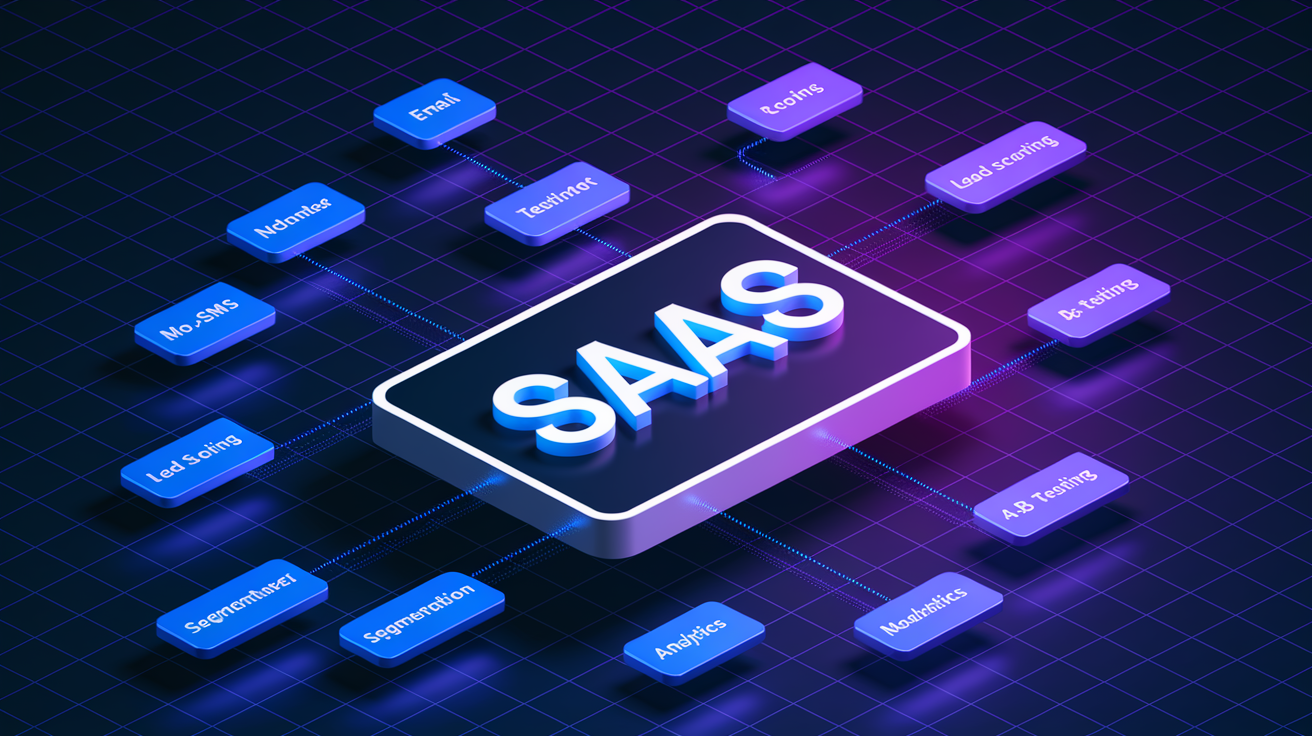
Marketing automation platforms share a core set of features designed to cut manual repetition, personalize customer journeys, and measure campaign performance across channels. Email automation’s still the foundation. You build sequences triggered by subscriber actions like form fills, link clicks, or time delays. Modern platforms extend beyond email to SMS, push notifications, in-app messages, and even direct mail. That lets you orchestrate multichannel campaigns from a single workflow canvas.
CRM integration and lead scoring turn raw contact data into something you can act on. Platforms sync contact records, deal stages, and custom fields bidirectionally with CRMs like Salesforce, HubSpot CRM, or Pipedrive. Lead scoring assigns point values to behaviors (opens, page views, demo requests) and demographic attributes. It then automatically routes high-scoring leads to sales teams. Segmentation engines slice audiences by behavior, lifecycle stage, purchase history, or custom properties. This enables targeted messaging that drives higher engagement and conversion rates.
Dynamic content and personalization features let you tailor email copy, landing pages, and calls to action based on recipient attributes or real-time data. For example, an e-commerce automation might insert different product recommendations based on browsing history. Or a B2B sequence might adjust messaging by company size and industry. Reporting dashboards aggregate metrics across campaigns (open rates, click-through rates, conversion rates, revenue attribution) and visualize funnel performance, letting teams identify bottlenecks and fix workflows.
Advanced platforms include A/B testing at the automation level. You can compare subject lines, send times, content variations, or entire workflow paths side by side. Predictive features (available in tools like ActiveCampaign and HubSpot) use machine learning to dial in send times, recommend next-best actions, or forecast churn risk. Workflow builders range from simple linear sequences to complex branching logic with conditional splits, wait steps, and goal-based exits. That covers both basic drip campaigns and sophisticated lifecycle journeys.
Pricing Breakdown of Popular Marketing Automation Tools

Marketing automation pricing structures vary a lot. Factors include contact list size, feature tiers, sending volume, and enterprise add-ons. Free tiers exist but carry real limitations. Mailchimp caps free accounts at 500 contacts. HubSpot’s free tier restricts automation to basic chatflows. Entry-level paid plans typically run $9 to $50 per month and unlock core automation features, though you’ll still hit constraints on contact counts, automation complexity, or channel access until you upgrade.
Mid-tier plans (ranging from $50 to $300 per month) suit growing businesses that need multi-step workflows, CRM integration, A/B testing, and deeper reporting. At this level, platforms like ActiveCampaign, Brevo, and Omnisend offer solid automation libraries and predictive features, with pricing scaling based on contact volume. Enterprise plans start around $800 per month and include dedicated IP addresses, advanced security (SSO, SAML, audit logs), higher API limits, and premium support. HubSpot’s Marketing Hub Professional starts at $890 per month plus a mandatory $3,000 onboarding fee. Customer.io’s Premium tier begins at $1,000 per month billed annually.
| Platform | Free Plan | Entry Price | Notable Limitations |
|---|---|---|---|
| Mailchimp | Yes (up to 500 contacts) | $13/month (Essentials) | 4-step automation limit on lower tiers; 100-step cap at Standard |
| Brevo | Yes (up to 300 contacts) | $9/month (Starter, billed annually) | 300 emails/day on free plan; branding present until Starter tier |
| ActiveCampaign | No | $15/month (Starter, billed annually) | Predictive sending available only at Pro tier |
| HubSpot | Yes (limited features) | $890/month (Marketing Hub Professional, billed annually) | $3,000+ mandatory onboarding fee; free tier restricted to chatflows |
| Klaviyo | Yes (up to 250 active profiles) | $20/month (Email plan) | 500 monthly email sends on free; pricing scales rapidly with profile count |
Use Cases: Which Platform Fits Your Business Type?
Matching a marketing automation platform to your business model and growth stage prevents costly mismatches. Startups and solopreneurs benefit from tools with free tiers, simple onboarding, and broad template libraries. Brevo, Mailchimp, and Kit (formerly ConvertKit) fit this profile. These platforms put ease of use and speed to first campaign ahead of advanced segmentation or multi-touch attribution. When you’re just running basic email sequences, landing pages, and newsletters, lightweight tools reduce both cost and training overhead.
E-commerce brands need platforms that natively understand product catalogs, cart events, and revenue attribution. Omnisend and Klaviyo lead this category. They offer pre-built flows for abandoned cart recovery, post-purchase follow-up, win-back campaigns, and product recommendations. Both integrate tightly with Shopify, WooCommerce, and Magento, pulling behavioral data to trigger highly targeted automations. Klaviyo’s drag and drop flexibility across workflows, dashboards, and forms makes it a strong choice for stores doing significant volume. Omnisend’s free plan and 24/7 support appeal to smaller shops testing automation for the first time.
B2B mid-market companies and agencies need deeper CRM alignment, lead scoring, and multi-channel orchestration. HubSpot and ActiveCampaign excel here. HubSpot provides unified marketing, sales, and service hubs with native attribution from content to closed deal. ActiveCampaign delivers similar functionality at a lower price point, especially attractive when contact counts exceed 1,000. Customer.io fits teams that rely on product usage data to trigger lifecycle messaging. It offers enterprise-grade journey builders with branching logic and up to eight simultaneous A/B test variants.
Startups should look at Brevo, Mailchimp, or Kit. Focus on free tiers, simple workflows, and fast time to value. E-commerce stores benefit from Omnisend or Klaviyo, which require native product catalog integration, cart event triggers, and revenue reporting. B2B mid-market companies need ActiveCampaign or HubSpot for lead scoring, CRM pipelines, and multi-touch attribution. Enterprises should consider HubSpot, Customer.io, or ActiveCampaign Enterprise for scalability, advanced security (SSO, audit logs), and dedicated infrastructure. Creators and content teams might prefer Kit or beehiiv, which focus on newsletter growth, plain-text authenticity, and subscriber monetization.
Pros and Cons of Top Marketing Automation Software

Marketing automation platforms deliver substantial benefits but come with tradeoffs that affect implementation speed, ongoing cost, and team adoption. The strongest advantage is time savings. Automations run 24/7, nurturing leads, re-engaging dormant customers, and delivering personalized messages at scale without manual intervention. Behavioral triggers ensure timely, relevant outreach. A cart abandonment email fires minutes after a shopper leaves. A welcome series begins immediately upon signup. Renewal reminders activate based on subscription end dates. Advanced segmentation and lead scoring let teams focus sales effort on high-intent prospects, improving conversion rates and shortening sales cycles.
Integration breadth and workflow flexibility further strengthen the case for automation platforms. Tools like Zapier, HubSpot, and ActiveCampaign connect to thousands of apps. That lets data flow between CRM, helpdesk, analytics, advertising, and e-commerce systems. Visual workflow builders make it possible to design complex, branching customer journeys without developer resources. You can accelerate campaign launches and iterate rapidly based on performance data.
Cost and complexity represent the primary challenges. Entry-level plans often restrict key features: multi-step automations, A/B testing, predictive sending, or CRM access. That forces upgrades as businesses grow. Contact-based pricing can escalate quickly. A list that doubles in size may triple monthly costs. Implementation timelines vary. Simple tools like Mailchimp or Brevo can go live in days. Enterprise platforms like HubSpot or Marketo require weeks to months of configuration, data migration, onboarding, and training, often accompanied by fees ranging from $3,000 to $6,000.
On the plus side, you get 24/7 automated nurturing, behavioral triggers for timely outreach, and advanced segmentation and lead scoring. Visual workflow builders work for non-technical users. Integration with thousands of apps is standard. Real-time reporting and attribution help you see what’s working. Scalability runs from hundreds to millions of contacts. AI-powered optimization (send time, content, churn prediction) is becoming more common.
But pricing escalates with contact counts and feature tiers. Total cost of ownership includes onboarding, training, and specialist fees. Implementation complexity for enterprise tools can delay time to value by quarters. And misconfigured automations risk over-messaging, poor targeting, and customer frustration if you don’t monitor carefully.
Integrations and Ecosystem Compatibility
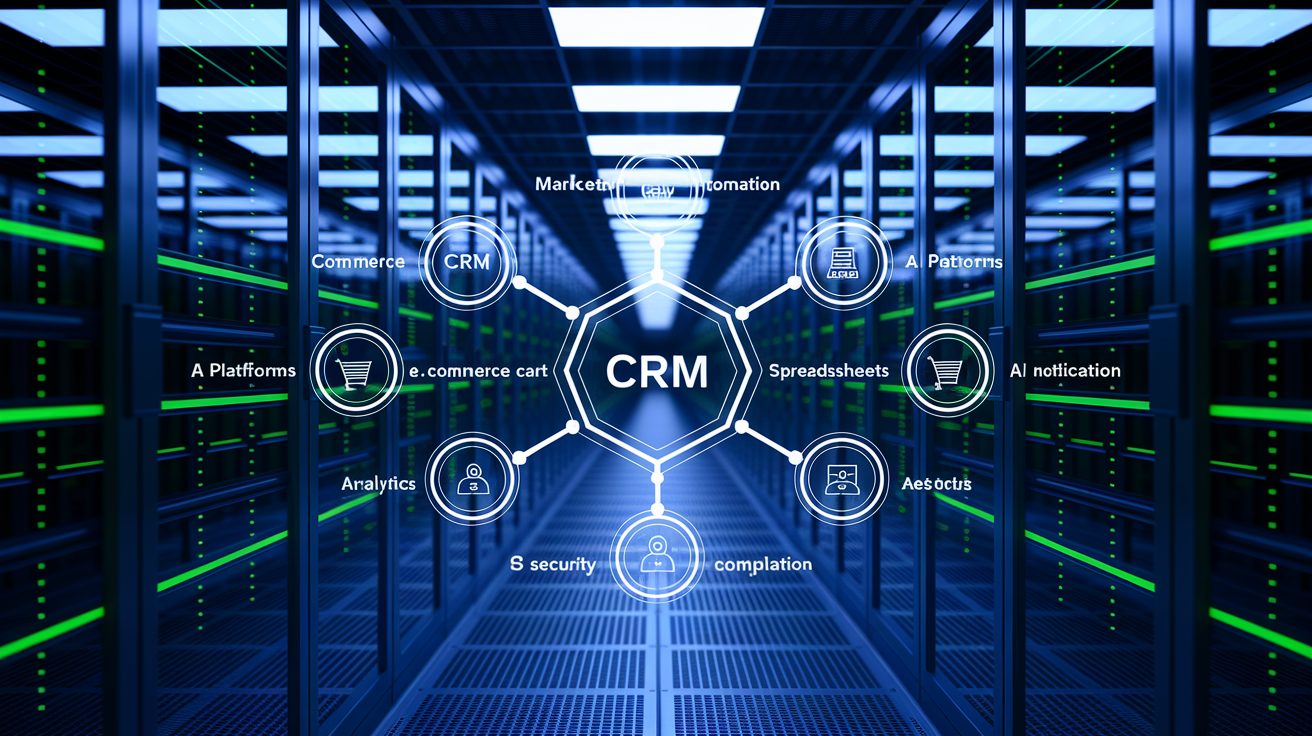
Integration depth determines how easily a marketing automation platform fits into existing workflows and whether data flows seamlessly between systems. CRM integration ranks as the highest priority. Platforms must sync contact records, deal stages, custom fields, and activity logs bidirectionally with systems like Salesforce, HubSpot CRM, Pipedrive, or Zoho. HubSpot offers native CRM capabilities, eliminating the need for external syncing. ActiveCampaign includes a built-in CRM with lead scoring and pipeline management. Standalone email tools like Mailchimp and Klaviyo integrate with third-party CRMs via API or middleware such as Zapier.
E-commerce platforms require tight product catalog and cart event integration. Klaviyo and Omnisend pull real-time data from Shopify, WooCommerce, Magento, and BigCommerce. That enables automations triggered by cart abandonment, product views, purchase history, and post-order milestones. These integrations surface revenue attribution at the campaign and workflow level, showing which automations drive the most sales and highest average order value. Beyond e-commerce, integrations with ad platforms (Facebook Ads, Google Ads, TikTok) allow audience syncing and retargeting based on email engagement or lifecycle stage.
Middleware and orchestration tools extend platform capabilities by connecting disparate systems. Zapier supports over 6,000 apps and enables workflows that span multiple platforms. For example, a Facebook Lead Ad submission can flow into Brevo, trigger a Slack notification, and create a row in Google Sheets, all without code. Gumloop offers AI-powered orchestration, connecting any LLM (GPT-4, Claude, Gemini) to marketing tools and enabling automations like sentiment monitoring, web scraping, contact enrichment, and SEO agent workflows. Enterprise buyers care about security and compliance integrations: SSO via SAML, role-based access controls, audit logs, and SOC 2 Type II certification. Those features are available in tools like Zapier, HubSpot, and Customer.io at higher pricing tiers.
Scalability and Automation Complexity

Scalability separates platforms that serve small teams from those capable of supporting enterprise-grade marketing operations. As contact lists grow from thousands to hundreds of thousands, platforms must maintain deliverability, workflow performance, and reporting accuracy without degradation. Contact-based pricing models mean costs rise in tandem with list size. Mailchimp, Klaviyo, and Omnisend all scale monthly fees as active profiles increase. Brevo takes a different approach, charging based on monthly send volume rather than contact count. That can benefit businesses with large, less frequently engaged lists.
Automation complexity scales through features like branching logic, conditional splits, wait steps, goal-based exits, and nested workflows. Simple linear sequences (welcome series, post-purchase follow-ups) work well in any tool. Multi-path journeys that adapt based on behavior, lifecycle stage, or external data require advanced builders. ActiveCampaign’s visual automation canvas supports complex if/then logic and integrates CRM pipeline stages directly into workflows. Customer.io and Ortto offer enterprise-grade journey builders with annotation layers, revision history, and the ability to trigger actions in external tools natively, reducing reliance on middleware.
Enterprise buyers face additional scalability considerations: dedicated IP addresses for email deliverability, API rate limits that support high-volume integrations, role-based access for large teams, and audit logs for compliance. HubSpot’s Enterprise tier and ActiveCampaign Enterprise include these features, along with premium support SLAs and onboarding assistance. Platforms like Marketo and Pardot cater exclusively to large organizations, offering sophisticated multi-touch attribution, account-based marketing, and revenue cycle modeling. But implementation often requires quarters and dedicated specialists to realize value.
Comparison Tables and Visual Summaries

Condensed side-by-side comparisons clarify tradeoffs across platforms, helping buyers match features and pricing to their specific needs. The table below highlights standout capabilities, ease of use assessments based on testing, and entry-level pricing to guide initial shortlisting. Standout features differentiate platforms in crowded categories. Zapier’s 9,000+ app integrations. Gumloop’s no-code LLM orchestration. Klaviyo’s e-commerce revenue attribution. HubSpot’s unified CRM. ActiveCampaign’s multilingual automation library. Ease of use reflects onboarding speed, builder intuitiveness, and documentation quality. Simpler tools like Mailchimp and Brevo require minimal training. Enterprise platforms demand structured implementation.
| Platform | Standout Feature | Ease of Use | Starting Price |
|---|---|---|---|
| HubSpot | Unified CRM + marketing + sales + service with native attribution | Moderate (onboarding required) | $890/month (Marketing Hub Professional, billed annually) |
| ActiveCampaign | Visual automation builder with 14+ language workflows and predictive sending | High (extensive templates and AI chatbot for automation drafting) | $15/month (Starter, billed annually) |
| Klaviyo | E-commerce revenue attribution and 60+ pre-built workflows for Shopify | High (drag-and-drop flexibility, Shopify-first onboarding) | $20/month (Email plan) |
| Zapier | 9,000+ app integrations and AI orchestration via Zapier MCP | High (simple Zaps for non-technical users) | $19.99/month (Pro) |
| Omnisend | E-commerce focus with 160+ native integrations and 24/7 support on free plan | High (pre-built flows and extensive resources) | Free; Standard from $16/month |
Final Words
You just ran through ranked platforms (HubSpot, ActiveCampaign, Marketo, Mailchimp, Pardot), core features, pricing tiers, use cases, pros/cons, integrations, scalability, and comparison tables.
Next: shortlist 2 tools that match your team size, test their free tier or trial, and map 2–3 priority workflows to compare time saved and conversion lift.
The right marketing automation software should cut manual work and lift revenue. Start with a small pilot, measure results, and scale what works.
FAQ
Q: Is there a 100% free CRM?
A: A 100% free CRM exists but usually with major limits: HubSpot and Zoho offer free tiers with limited contacts and features; truly unlimited, no‑cost CRMs are rare for growing businesses.
Q: Is HubSpot a CRM or marketing automation?
A: HubSpot is both a CRM and a marketing automation platform: its free CRM stores contacts and pipelines, while Marketing Hub adds automated email, workflows, and tracking on paid plans.
Q: What are the top 5 automation tools?
A: The top 5 marketing automation tools are HubSpot, ActiveCampaign, Adobe Marketo, Mailchimp, and Salesforce Pardot—selected for features, integrations, and scalability across small to enterprise users.
Q: What are the top 5 CRMs?
A: The top 5 CRMs are Salesforce, HubSpot CRM, Zoho CRM, Microsoft Dynamics 365, and Pipedrive—each fits different needs from enterprise scale to simple sales pipelines.